




Persian Bakhtiari Carpet
A persian bakhtiari carpet brings the robust tribal weaving of western Persia into your home with enduring wool and geometric character.
Persian Bakhtiari Carpet
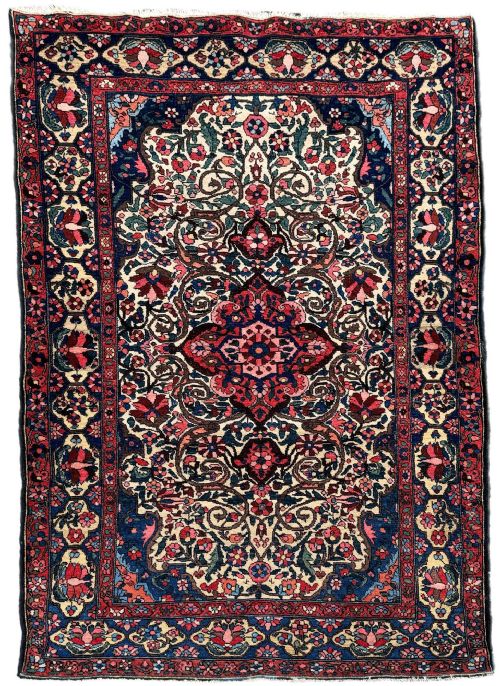
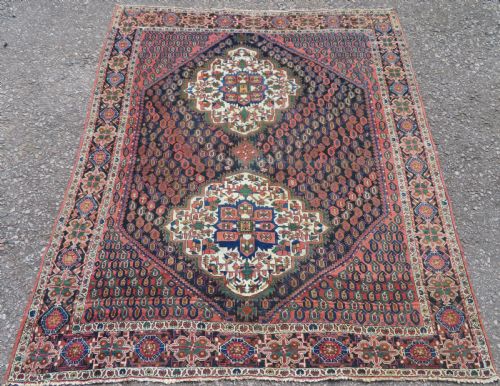
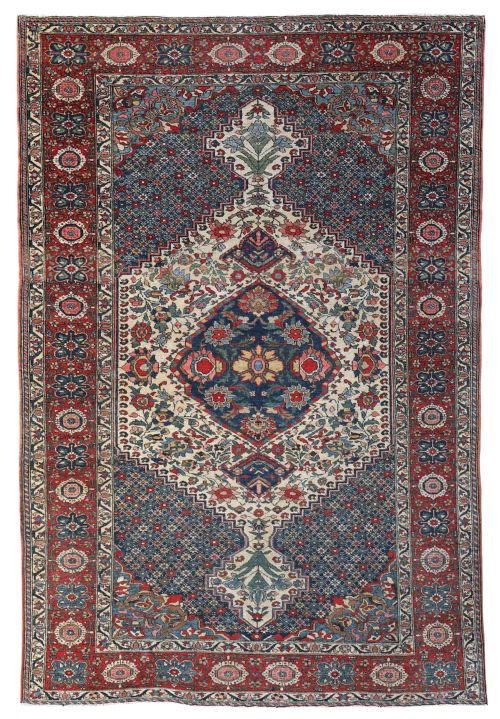
When you search for a persian bakhtiari carpet, you encounter heavy tribal textiles originating from the Chahar Mahal valley region of western Persia. These pieces include large carpets, corridor carpets, village rugs, and long runners woven by local tribes and Kurdish groups.
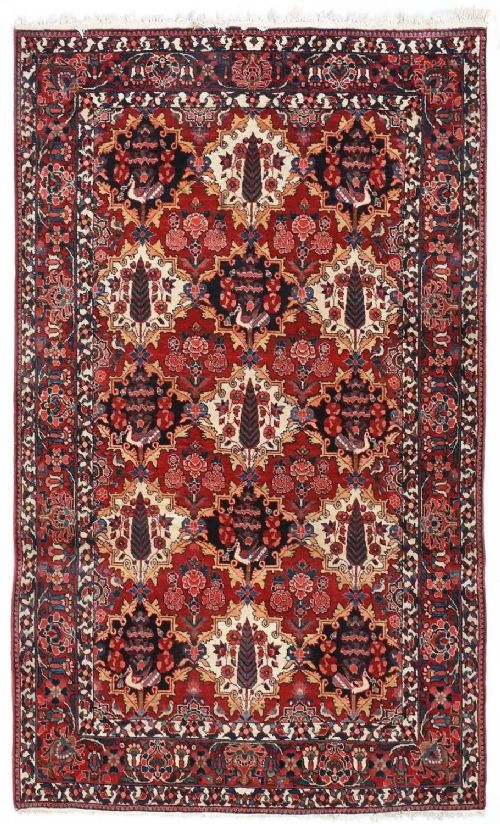
You are most likely to meet examples dating from the late nineteenth century through to the 1930s on this page. The designs encompass traditional village motifs, tribal patterns, and the distinct compartment garden layouts characteristic of the area.
Materials and construction
Weavers constructed a persian bakhtiari carpet using sturdy wool for the pile and foundation, often paired with cotton for the structural warps and wefts. This combination creates a hard-wearing fabric designed to withstand heavy daily use in corridors and living spaces.
The makers relied on natural dyes to colour the wool, producing deep tones that soften gracefully over decades of age and exposure. Handweaving techniques passed down through generations ensured dense knotting and structural resilience.
Selected early finds include a half-face tribal saddle bag, demonstrating how everyday utility items joined the export trade.
Assessing quality and depth
Quality in a persian bakhtiari carpet rests upon the density of the weave, the clarity of the tribal drawing, and the vibrancy of the natural dyes. Tightly knotted specimens display sharper geometric and floral patterns with greater longevity.
The distinction between standard village production and exceptional examples lies in the complexity of the design, such as multi-compartment garden layouts, and the preservation of the original wool pile across large dimensions.
The Persian Bakhtiari Carpet Glossary
- Kelleh
- A long, narrow format of carpet traditionally used in Persian interiors. It offers distinctive proportions well-suited to hallways and extended rooms.
- Chahar Mahal
- The high-altitude valley region in western Persia where these tribal textiles originate. Local weavers developed unique village styles here.
- Garden design
- A compartment layout dividing the rug field into geometric squares or panels filled with floral and tree motifs. This format represents a hallmark of the tradition.
- Natural dyes
- Colourants derived from plants, roots, and minerals rather than synthetic compounds. They yield rich, variegated hues that age with distinct character.
- Runner
- A long, narrow carpet format designed for corridors and passages. These pieces provide durable floor coverings for high-traffic areas.
Persian Bakhtiari Carpet: Frequently Asked Questions
Where were these carpets made?
These pieces originate from the Chahar Mahal region and surrounding valleys in western Persia. Local village weavers and Kurdish tribes produced them.
Production centres relied on regional wool supplies and traditional handweaving methods passed through generations.
How do I care for an antique rug?
Protect the wool pile by vacuuming gently without a rotating brush bar. Keep the textile away from prolonged direct sunlight to preserve the natural dyes.
Professional cleaning suited to antique textiles ensures the cotton and wool foundations remain stable.
How do I date these carpets?
Dating relies on stylistic markers, structural analysis of the wool and cotton foundation, and dye characteristics. Pieces from the nineteenth century show distinct wear patterns compared to 1930s examples.
Minor variations in tribal borders and colour palettes help place items within specific decades.