




Hand Knotted Bakhtiari Rug
A hand knotted bakhtiari rug brings the rich wool and traditional patterns of western Persia directly to a floor.
Hand Knotted Bakhtiari Rug
A hand knotted bakhtiari rug originates from the Chahar Mahal region of western Persia, woven by tribal and village makers. These floor coverings arrive in various formats, from square carpets and smaller mats to long runner rugs and even saddle bags.
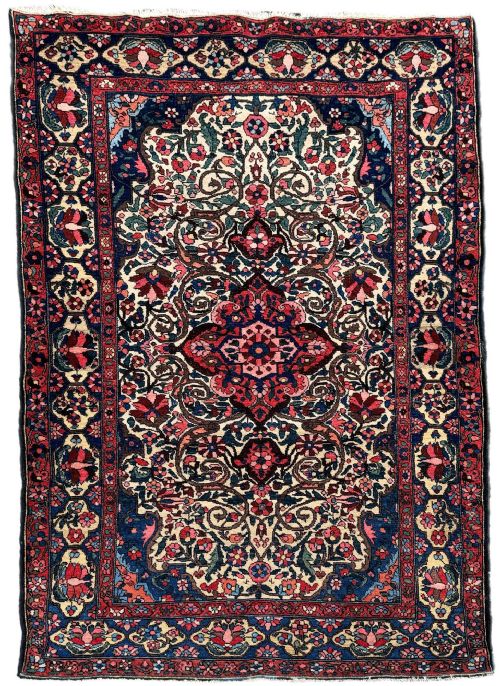
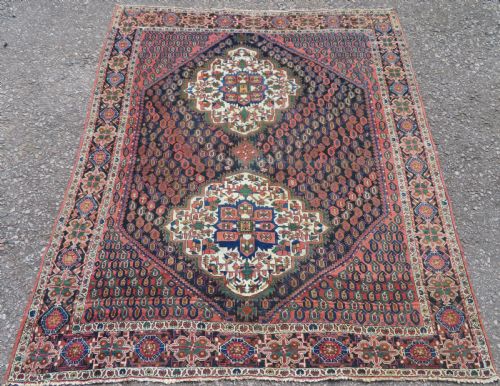
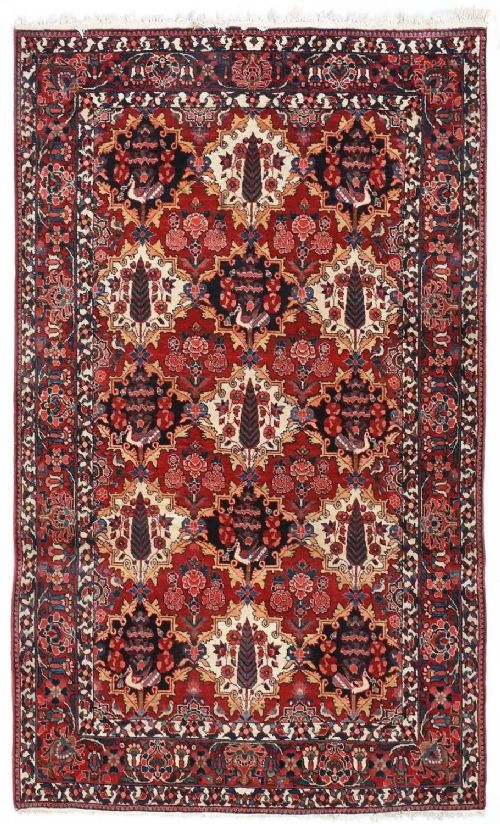
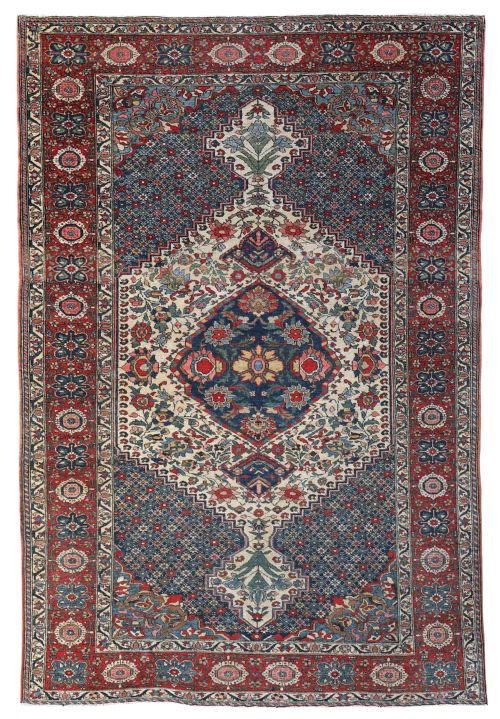
The pieces seen on this page span from the nineteenth century through to the nineteen thirties, covering periods like nineteen ten and nineteen twenty. They include traditional Persian tribal designs, garden motifs, and floral medallions.
Buyers frequently encounter room-sized carpets alongside corridor carpets and smaller village rugs. Each piece reflects the specific heritage of the Bakhtiari and Kurdish tribes who worked in the western valleys.
How they were made
Makers constructed each hand knotted bakhtiari rug using durable wool pile tied onto cotton foundations. Natural dyes provided the deep and lasting colour palette found across these village carpets.
Weavers knotted the yarn by hand to create dense, hardwearing structures designed for daily use in homes. This traditional technique ensured that large carpets and long runners maintained their integrity over decades.
What varies in quality
The fineness of the knotting and the complexity of the design dictate the upper tier of these textiles. Garden patterns and elaborate floral medallion layouts require superior precision from the weaver.
Condition and scale also define the hierarchy among these regional carpets. Intact village runners and large room-sized carpets with well-preserved natural dyes sit at the higher end of the spectrum.
The Hand Knotted Bakhtiari Rug Glossary
- Kelleh
- A long, narrow format of Persian carpet. This rectangular shape served as a corridor or room-dividing floor covering.
- Chahar Mahal
- The high valley region in western Persia where these tribal textiles originated. It remains the geographical centre of Bakhtiari weaving.
- Medallion
- A central ornamental motif set within the field of a rug. Traditional examples often feature geometric or floral arrangements.
- Natural dye
- Colouring derived from plant and mineral sources rather than synthetic chemicals. These substances create the rich, shifting tones seen in older village rugs.
Hand Knotted Bakhtiari Rug: Frequently Asked Questions
Where were these rugs made?
These textiles were produced by tribal and village weavers in the Chahar Mahal region of western Persia. The makers included Bakhtiari and Kurdish communities working in local valley settlements.
Production spanned the nineteenth and early twentieth centuries, relying on traditional methods passed down through generations.
How do I care for a wool rug?
Regular gentle vacuuming without a rotating brush helps remove embedded dust from the wool pile. Professional cleaning is recommended when the textile requires deeper maintenance.
Keeping the piece out of direct sunlight prevents the natural dyes from fading over time. Using an appropriate underlay protects the cotton foundation from friction against hard floors.
What is a garden carpet design?
A garden design divides the field of the rug into compartmentalised squares or panels, each depicting flowers, shrubs, or cypress trees. This layout imitates traditional Persian walled garden plans.
Such patterns require meticulous planning by the weaver to maintain the symmetry and detail across the entire surface.
Are runners and carpets different?
Runners are narrow, elongated floor coverings specifically woven for hallways, corridors, and staircases. Carpets are broader, larger formats intended for open floor spaces in principal rooms.
Both utilise the same wool materials and knotting techniques characteristic of western Persian tribal workshops.