


Period Watercolour Portrait
A period watercolour portrait captures a likeness on paper using fluid pigments, offering an intimate glimpse into past lives through delicate brushwork and colour.
Period Watercolour Portrait
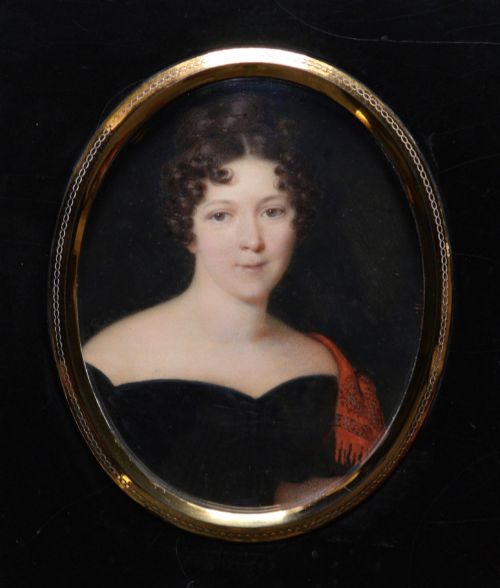
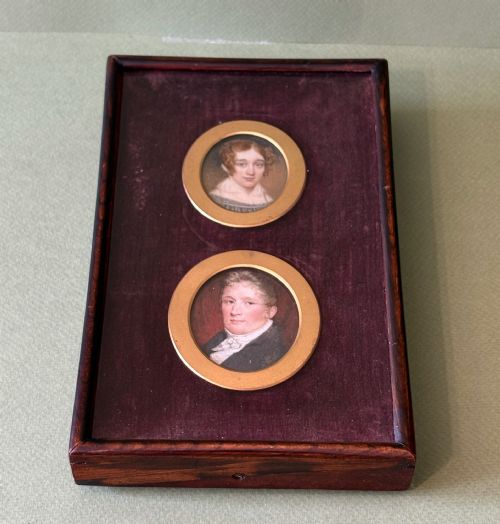
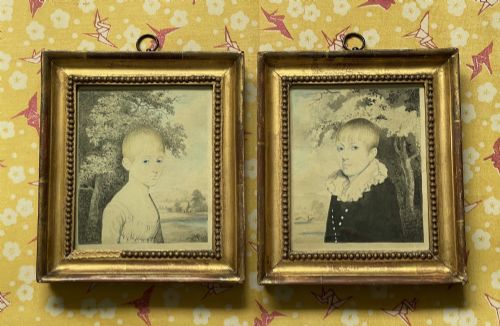
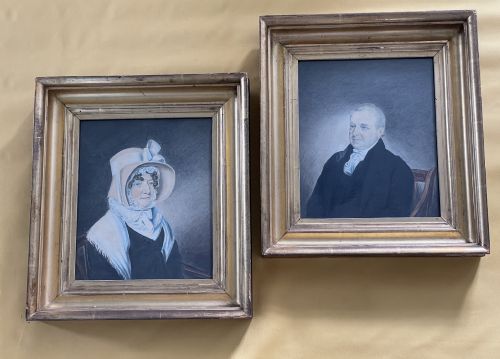
A period watercolour portrait represents an individual likeness rendered primarily on paper using water-soluble pigments, spanning intimate miniature paintings to larger framed studies. These works record sitters from the eighteenth century through the early twentieth century, encompassing distinct aesthetic movements such as the Regency era, Victorian period, and Pre-Raphaelite circles.
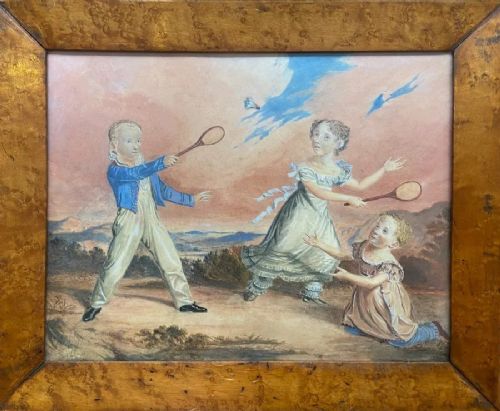
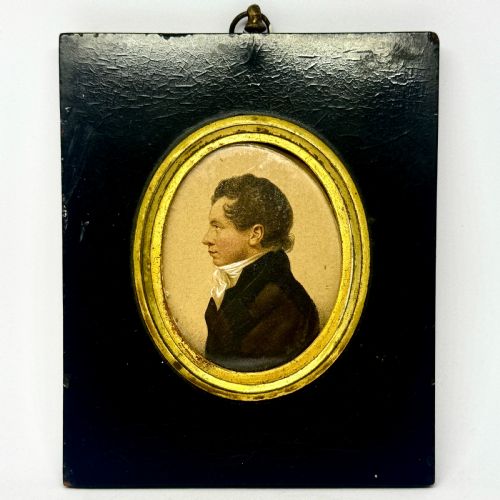
Buyers encounter diverse formats on this page, ranging from single gentleman studies and pairs of children to expansive sets and triptychs. Styles shift from crisp Georgian miniatures in ebonised frames to romantic Victorian compositions featuring detailed gouache highlights and ornate gilded surrounds.
The origins of these pieces extend across English, French, and Japanese traditions, demonstrating how portraiture adapted across regions. Works span specific dates from the 1780s into the 1920s, reflecting changing costume, framing techniques, and societal ideals over those centuries.
How they were made
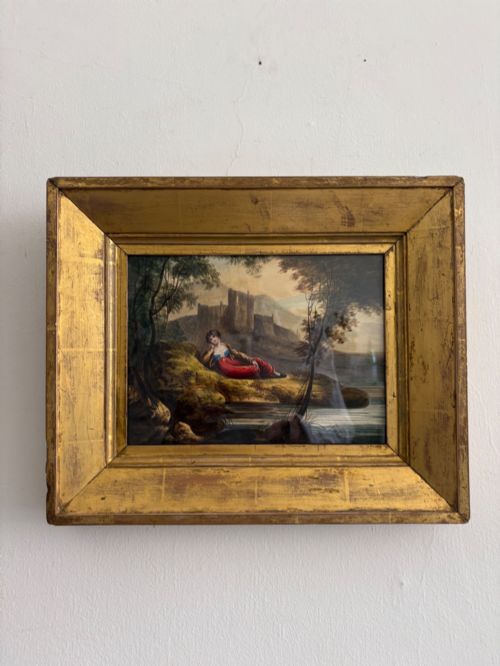
Framing played an integral role in preservation and presentation, utilising wood, brass, gilt metal, and gilded wood to protect the fragile paper surface behind glass. Ebonised timber frames and ornate moulded surrounds secured the works while complementing the aesthetic of each specific period.
One young sitter wears summer meadow flowers tucked jauntily into her straw hat.
What varies in quality
Quality rests upon the draughtsmanship and the artist's ability to render expression and anatomy with precision. Superior examples capture the sitter's individual psychology and fine details of costume with controlled brushwork, whereas lesser works exhibit stiff proportions or muddy pigment application.
The integrity of the materials and the survival of the original frame heavily influence the standing of a piece. Works retaining their period glass, gold leaf, and undamaged paper surfaces without excessive fading command greater appreciation among collectors.
Henry Travis·Philip Richard Morris·Alice Anne Renshaw·Thomas Woolnoth·Emma Kendrick·Takashi Nakayama·Frederick Thomas Baynes·Robert Kemp
The Period Watercolour Portrait Glossary
- Gouache
- An opaque watercolour medium containing pigment mixed with a binding agent and white filler. It creates solid, flat areas of colour and allows artists to add sharp highlights to a portrait.
- Miniature
- A small-scale painting executed with fine detail, often housed in an intimate frame for personal carriage or display. These works frequently depict family members or notable figures.
- Ebonised
- Wood finished with a dark stain or polish to imitate the appearance of ebony. This treatment was common for nineteenth-century frames to provide high contrast against gilt mounts.
- Triptych
- A work divided into three sections or panels hinged together. In this context, it refers to three related portrait paintings presented as a single cohesive unit.
- Pre-Raphaelite
- An artistic movement from the mid-nineteenth century characterised by detailed observation, bright colours, and complex composition. Portraiture from this sphere often incorporates botanical elements and symbolic narratives.
Period Watercolour Portrait: Frequently Asked Questions
How should I display a watercolour portrait?
Watercolours are sensitive to strong light, so hang them away from direct sunlight to prevent the pigments from fading over time.
Keep them in stable room conditions away from excessive moisture to protect both the paper and the original frame.
How do I date a portrait?
Examine the style of clothing, hairstyle, and framing materials, which often reflect the prevailing fashions of the sitter's era.
Signatures, inscriptions on the reverse, or known dates for listed artists also provide precise chronological markers.
Are these portraits always signed?
Many works bear the artist's signature or monogram, while others remain anonymous due to the informal nature of private portrait commissions.
Unsigned pieces are typically attributed through stylistic comparison with documented works from the same period or school.
What is the difference between a miniature and a standard portrait?
Miniatures are painted on a much smaller scale, designed for close viewing and often housed in specialised pocket frames or protective cases.
Standard portraits offer larger compositions intended for wall display in domestic interiors.