




Period Walnut Armchairs
Period walnut armchairs bring rich grain and classical silhouette into a room, offering enduring seating forms from the seventeenth century onwards.
Period Walnut Armchairs
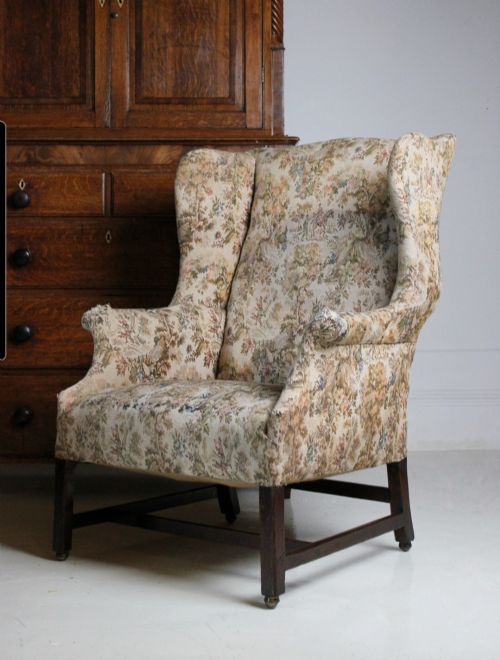
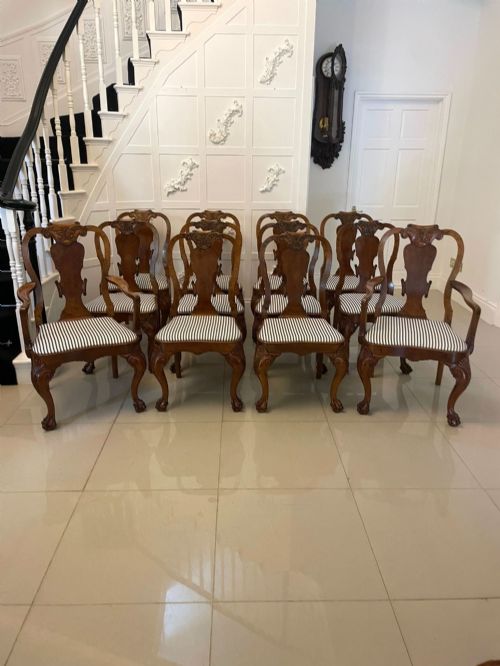
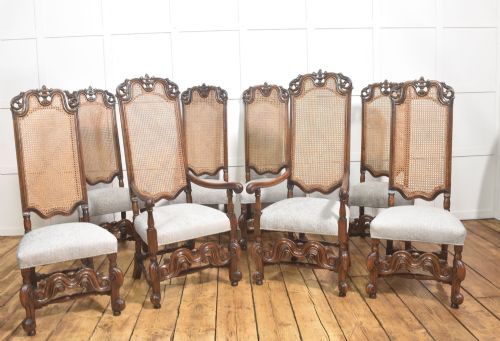
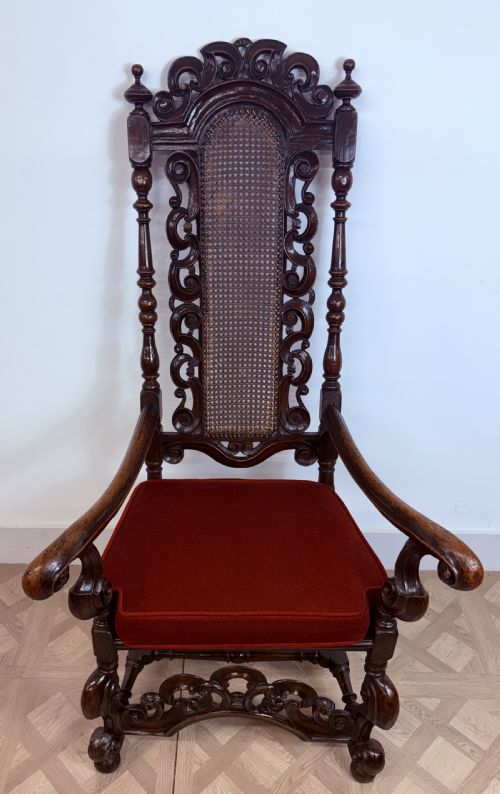
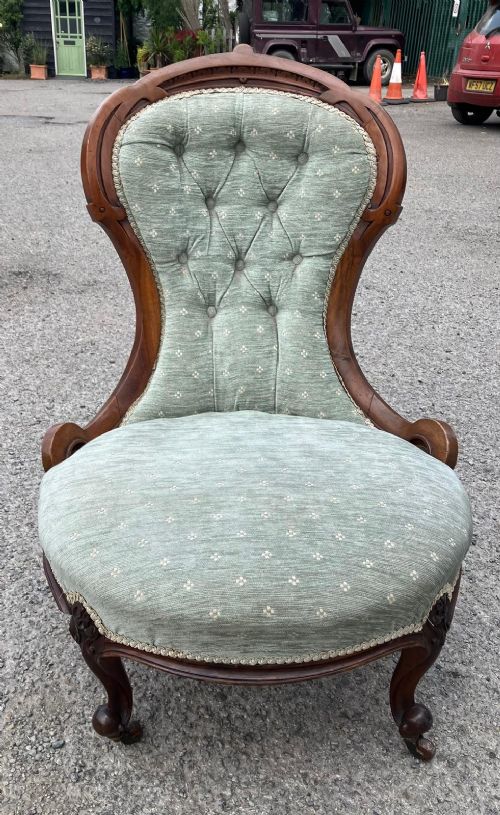
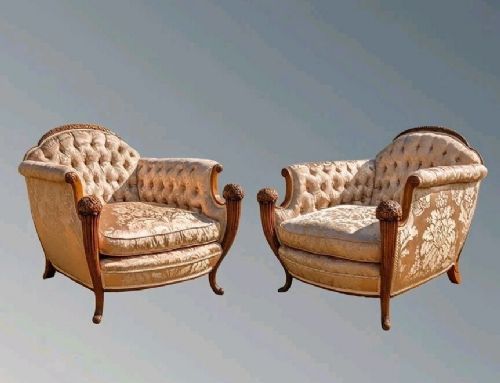
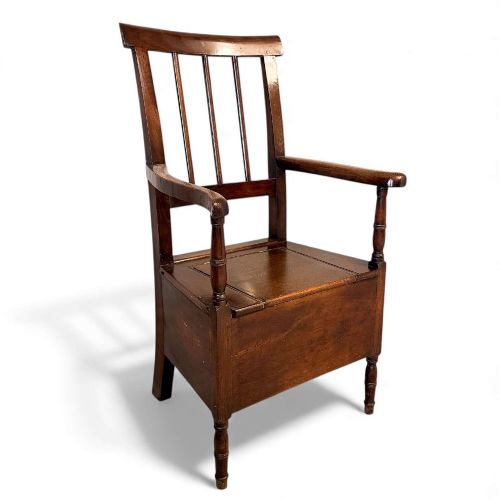
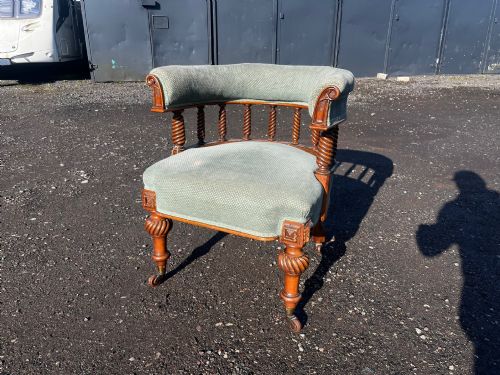
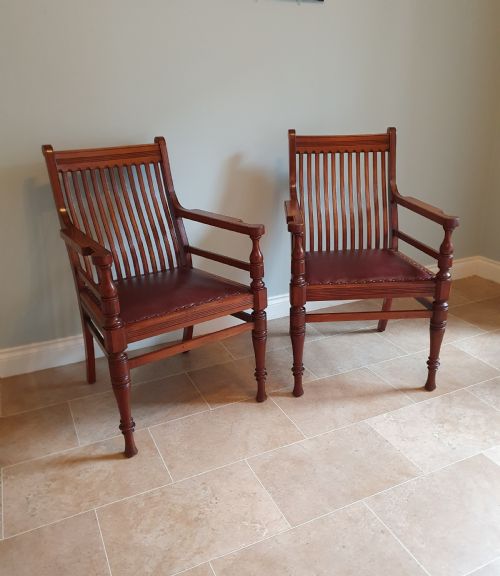
Period walnut armchairs encompass a wide variety of seating forms, including dining chairs, high-back cane chairs, nursing chairs, desk chairs, rocking chairs, and wing armchairs. These pieces span multiple eras, most notably the seventeenth, eighteenth, and nineteenth centuries, alongside early twentieth-century revivals.
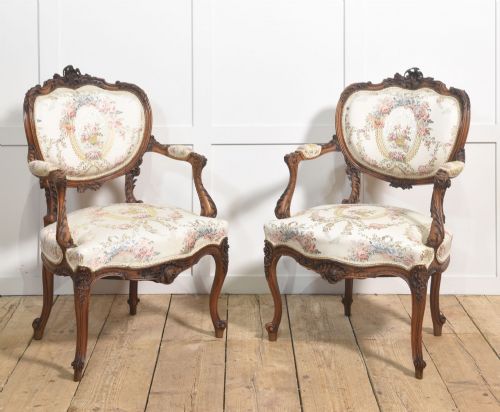
Makers and designers drew upon diverse aesthetic traditions, resulting in styles ranging from Carolean and Queen Anne to French Louis XV, Art Deco, and Early Georgian. English and French origins appear frequently, alongside revival pieces produced during the Victorian and Edwardian periods.
Materials and technique
The primary timber is walnut, occasionally accompanied by burr walnut veneers or paired with ebony and oak elements. Frames feature detailed carving, turned wooden supports, and painted or parcel gilt surfaces.
Upholstery relies on traditional textiles, including leather, silk, velvet, tapestry, needlepoint, and cane inserts, secured with brass detailing where appropriate.
Several miniature child's rocking chairs demonstrate that historical cabinetmakers built down to scale with the exact same care.
Gradations of execution
Distinctions in quality arise from the crispness of the carved ornamentation on the wooden frame and the selection of figured walnut or burr timber for the visible sections. Finer examples display meticulous joinery and harmonious proportions that reflect their specific period style.
The integrity of the original upholstery materials, whether antique needlepoint, silk, leather, or cane panels, contributes significantly to the character and authenticity of each seating piece.
The Period Walnut Armchairs Glossary
- Carolean
- A British stylistic period spanning the mid to late seventeenth century, noted for ornate carved woodwork and high backs.
- Fauteuil
- An open-framed French armchair with upholstered back and seat, typically featuring exposed wooden arms.
- Burr walnut
- A specialised timber cut from walnut tree growths, prized for its swirling, intricate grain patterns on furniture surfaces.
- Needlepoint
- A form of counted thread embroidery traditionally used to cover the seats and backs of formal historic chairs.
Period Walnut Armchairs: Frequently Asked Questions
How do I identify a seventeenth-century walnut armchair?
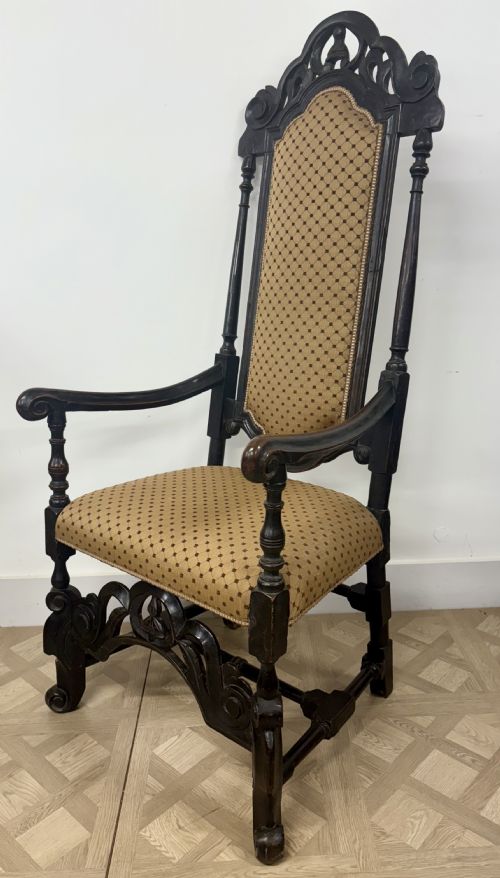
Seventeenth-century chairs typically feature high straight backs, block and turn supports, and carved crest rails made of solid walnut. They often incorporate cane panels or simple upholstered elements reflective of the Carolean era.
Closer inspection reveals hand-cut joinery and signs of oxidation on the timber that distinguish genuine early pieces from later nineteenth-century revival interpretations.
Where should I place a walnut wing armchair?
Wing armchairs work well in studies, libraries, or living spaces where their high backs and upholstered sides provide both presence and enclosed seating comfort. They anchor a room effectively when positioned near a fireplace or reading corner.
Ensure the scale of the chair complements surrounding furniture, allowing adequate clearance for the open arms and carved wooden legs.
How do French and English walnut armchairs differ?
French armchairs, such as those in the Louis styles or later fauteuil designs, often emphasise curved lines, exposed carved frames, and luxurious coverings like silk or tapestry. English examples tend to display more restrained classical proportions, particularly in Queen Anne and George II revival forms.
Both national traditions utilise high-grade walnut, but the carving motifs and structural silhouettes reflect distinct regional aesthetic developments.
Can I use an antique desk chair for daily work?
Victorian and Edwardian walnut desk chairs provide sturdy wooden frames and ergonomic heights suited for occasional writing or study tasks. Their construction is designed for upright support rather than deep lounging.
To preserve the historic upholstery and timber, consider adding a protective pad that matches the existing leather or fabric without altering the frame.