


Period Style Dining Seating
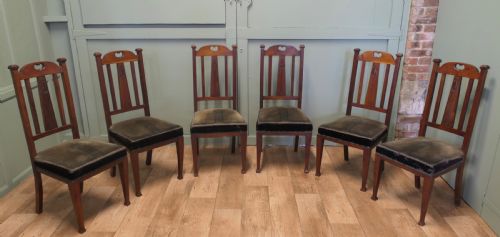
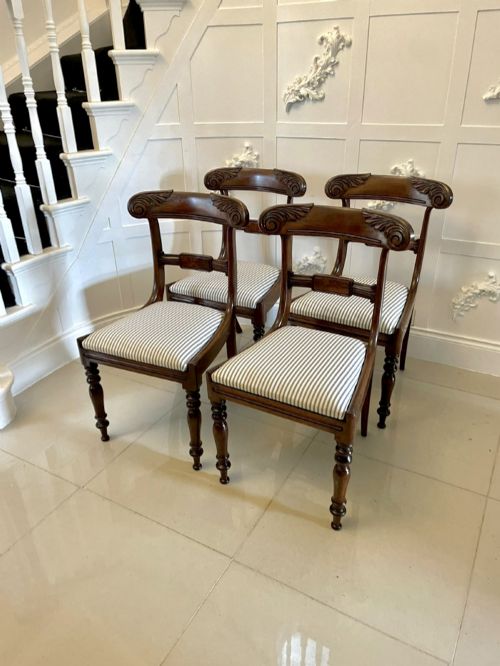
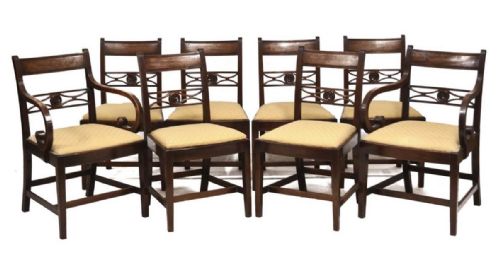
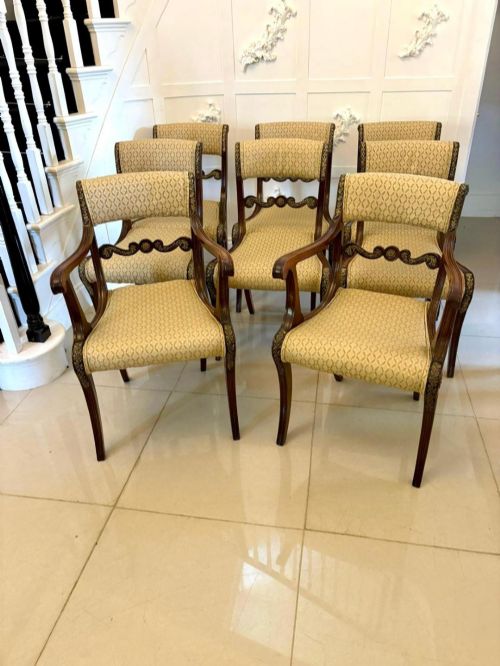
Period style dining seating brings together timber frames and upholstered seats from the eighteenth, nineteenth and twentieth centuries to furnish a table.
Materials and Construction
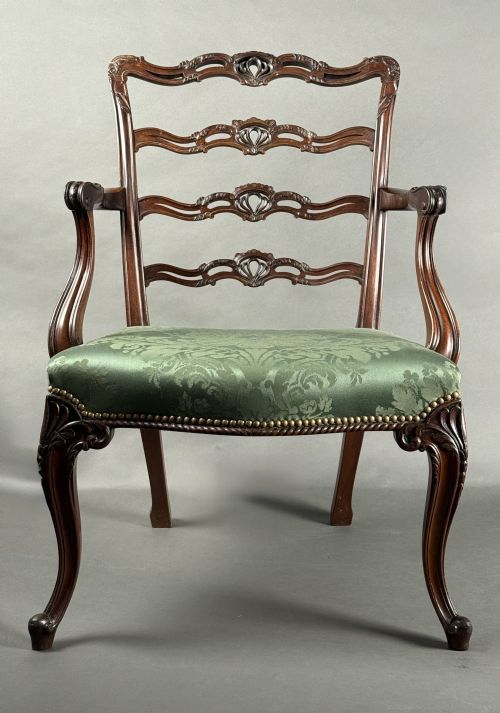
Framing relies predominantly on solid timber such as mahogany, oak, walnut, maple and elm, shaped through traditional joinery to form upright backs and sturdy legs.
Seats incorporate fabric, velvet, textile and upholstery fabric, sometimes finished with original tapestry or newly applied coverings secured with brass elements.
Judgement of Quality
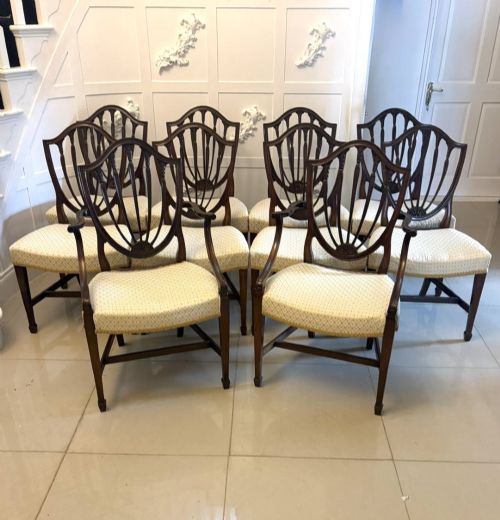
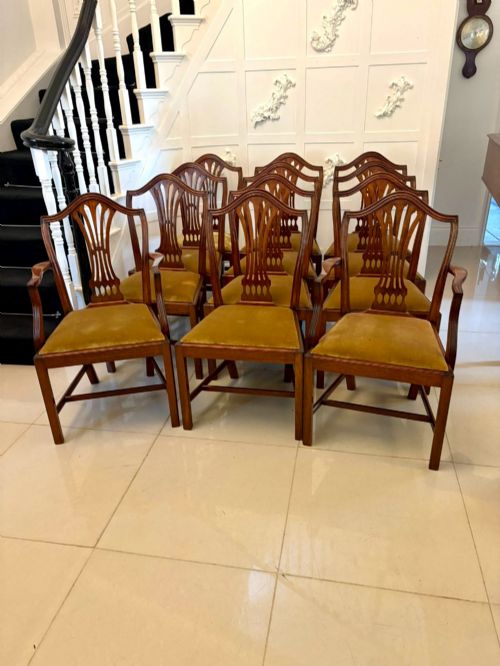
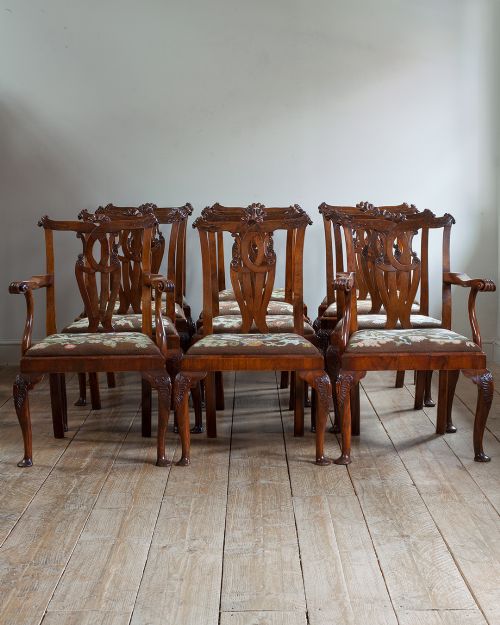
The distinction between standard examples and exhibition quality sets rests on the crispness of carved details in the timber, the symmetry of shield or bar backs, and the integrity of the underlying joinery.
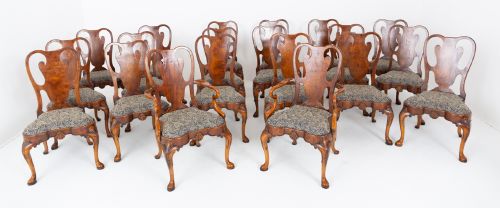
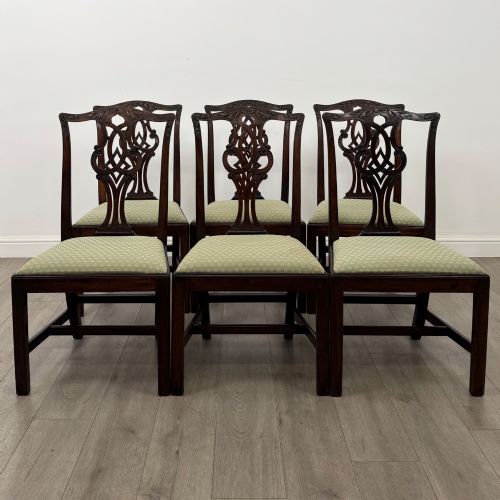
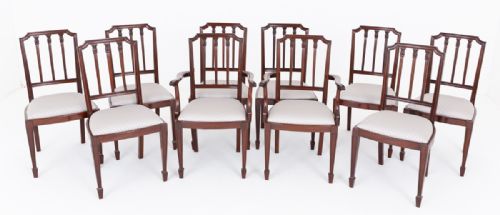
Consistency across a larger set influences standing, as matching grain patterns and uniform proportions across six, ten or twenty chairs demand greater skill from the maker.
Period Style Dining Seating Retail Price Guide 2026
Typical asking prices for period style dining seating among the pieces listed under this phrase on Sellingantiques today, from the lower quarter to the upper quarter. They describe what is for sale here now, not the wider market.
Listings feature mahogany, oak, walnut, maple and elm framed dining seating across Georgian, Regency, Victorian and Edwardian periods.
Charles Tozer·Maple and Co
The Period Style Dining Seating Glossary
- Carver chair
- An armchair designed with elbow rests, traditionally placed at the head of a dining table and paired with matching side chairs.
- Shield back
- A chair back design shaped in the outline of a heraldic shield, popularized during the eighteenth century by makers like Hepplewhite and Sheraton.
- Bar back
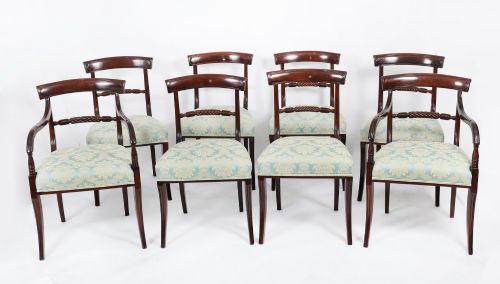
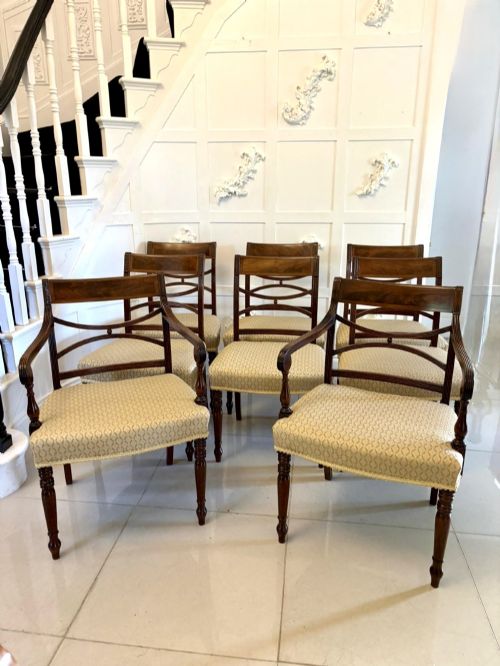
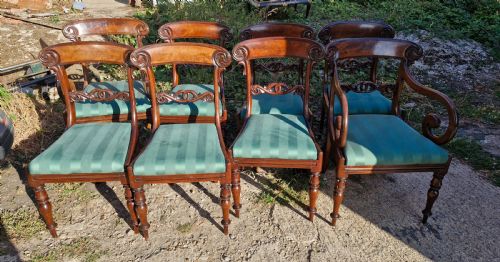
- A horizontal wooden rail across the upper backrest of a chair, characteristic of the nineteenth century and William IV designs.
- Side chair
- A chair without arms intended for general seating around the sides of a dining table.
- Derbyshire chair
- A regional seventeenth century chair type known for turned posts and open wooden backs.
Period Style Dining Seating: Frequently Asked Questions
What defines period style dining seating?
These pieces comprise wooden chairs built in historical forms from the eighteenth, nineteenth and twentieth centuries, designed to accommodate diners around a table.
The category includes matching sets, carvers and side chairs spanning Georgian, Regency, Victorian, Edwardian and revival aesthetics.
How were these chairs used historically?
Dining seating served formal domestic meals, placed around large dining tables in private residences and institutions.
Armchairs and carvers typically accommodated the head of the household or honoured guests, while side chairs filled the remaining places.
How do I live with antique dining chairs?
Integrating older seating into a modern interior involves balancing historical timber tones with contemporary tables and everyday use.
Regular care of mahogany, oak and walnut frames alongside attention to upholstered fabric helps maintain the condition of older sets.
How are different periods identified?
Dating relies on observing structural forms, wood selection, carving styles and construction methods characteristic of specific eras like Georgian or Victorian.
Details such as shield backs, bar backs and turned legs provide clear indicators of chronological origin or subsequent revival periods.