
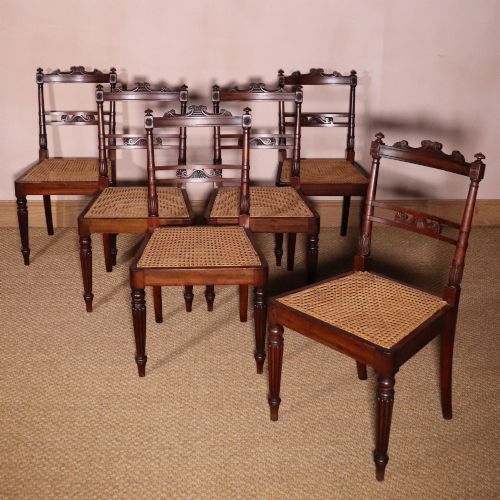
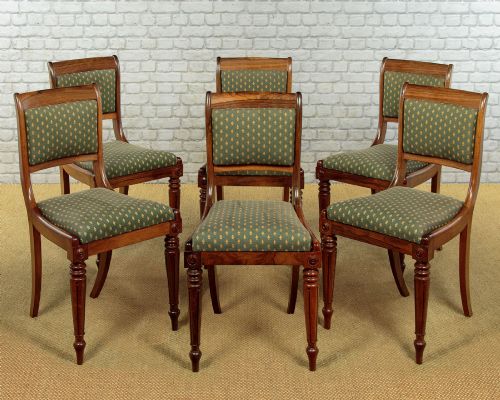
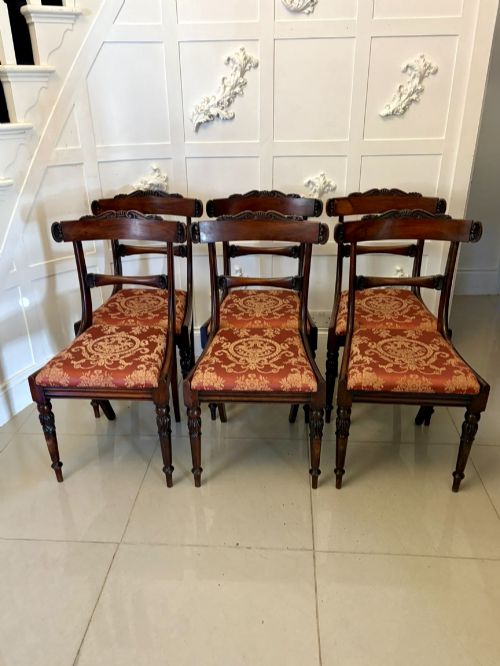
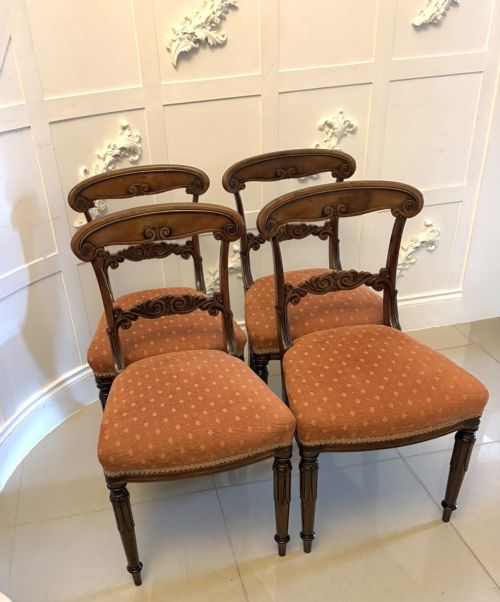


Period Rosewood Chairs
Period rosewood chairs bring deep tropical timber and classical design to a room, offering enduring seating from the Regency and Victorian eras.
Period Rosewood Chairs
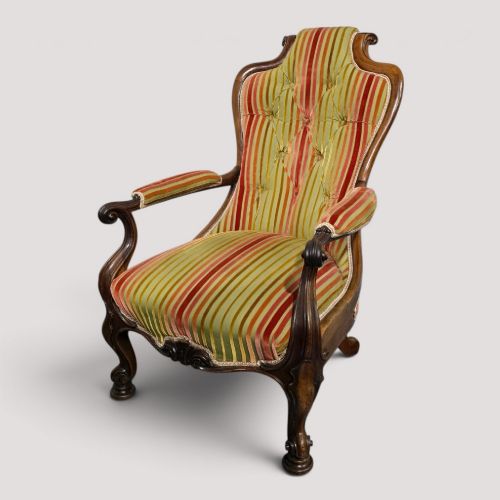
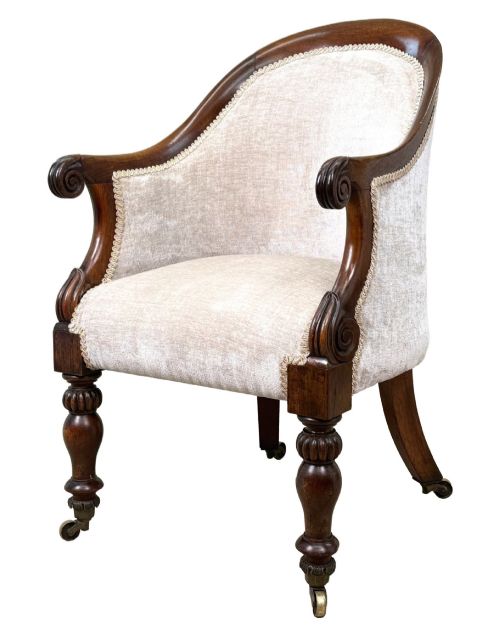
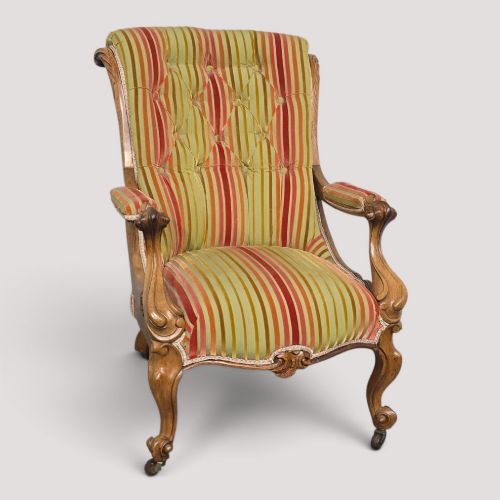
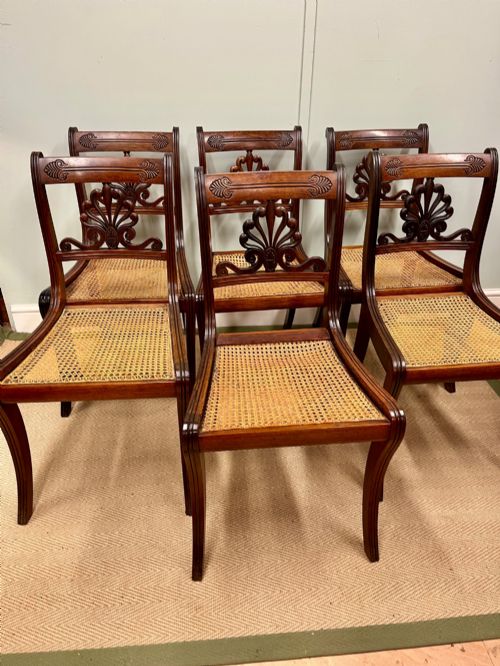
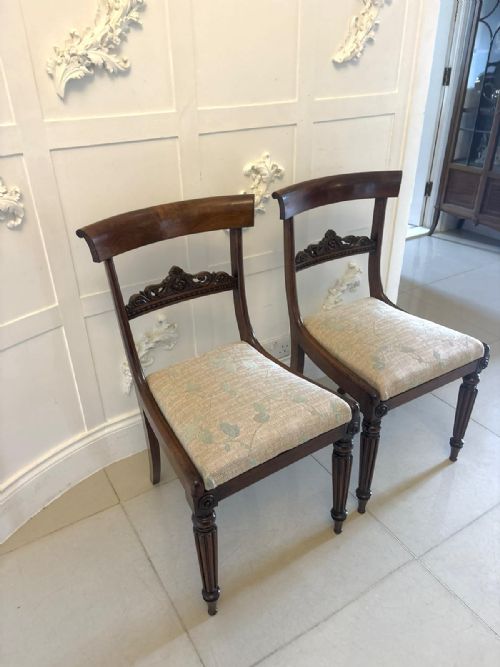
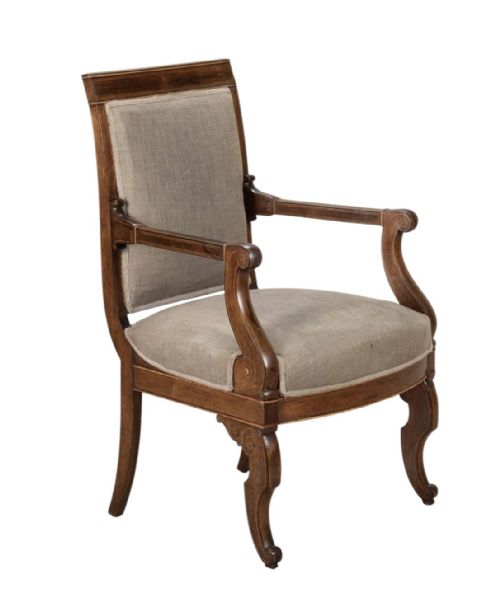
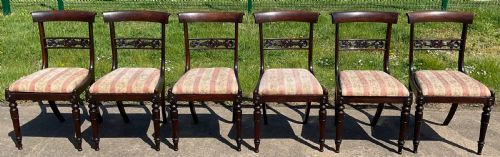
When you search for period rosewood chairs, you encounter seating designed primarily during the Regency and Victorian eras, spanning the early to mid-nineteenth century. The selection ranges from pairs of side chairs and library armchairs to matched sets of dining chairs intended for formal interiors.
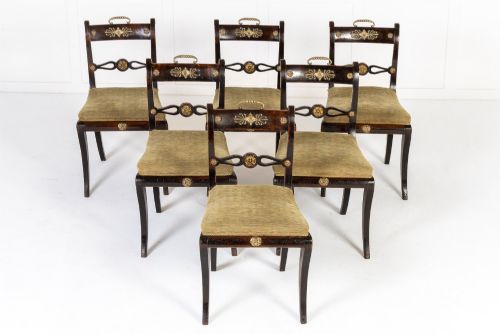
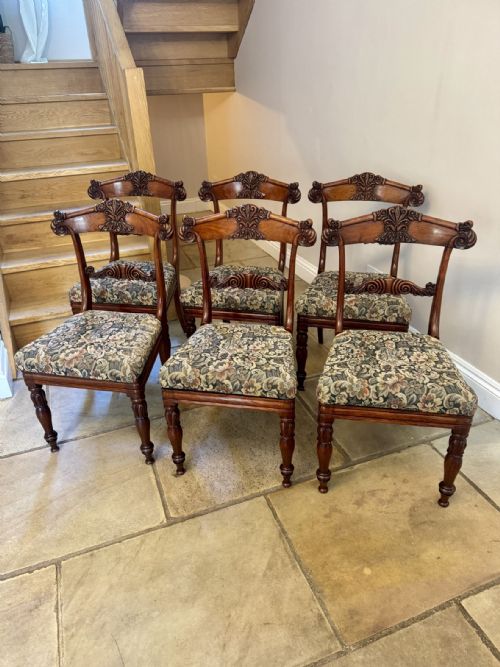
The most common forms on this page are dining chairs, often found in sets of four, six, or eight, alongside single library armchairs and elbow chairs. Styles shift from the classical lines of the Regency and George IV periods to the robust carved backrests of William IV and Victorian designs.
How They Were Made
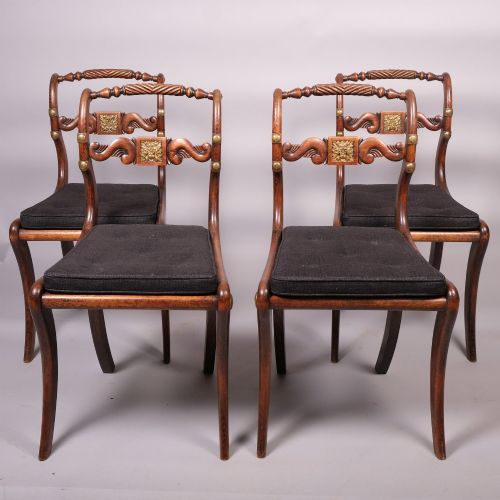
Cabinetmakers constructed these seats using solid rosewood or applied veneers over secondary timbers, frequently embellishing the frames with brass inlay or gilt bronze mounts. Workshops also utilised simulated or faux rosewood finishes on alternative woods to achieve the dark, grained aesthetic.
Upholstery methods varied from drop-in seats to complex sprung frames covered in fabric, velvet, leather, or woven cane. Carved details such as rope twist rails, balloon backs, and classical Grecian motifs were hand-shaped into the hardwood frames.
The listings span from the late eighteenth century through the Regency, William IV, and Victorian periods, featuring solid and simulated rosewood alongside brass inlay.
What Varies in Quality
The distinction between ordinary and exceptional chairs rests in the crispness of the hand-carved ornament and the selection of the timber grain. Finer examples display deeply figured rosewood veneers and precisely fitted brass inlays that remain flush with the timber surface.
Structural integrity also separates the tiers, seen in the original joinery of the frame and whether a matching set has stayed together intact over the centuries. Chairs retaining their original upholstery substructure or documented design lineage command greater regard.
John Gee·Gillows of Lancaster
The Period Rosewood Chairs Glossary
- Rosewood
- A dense, heavy tropical timber prized for its dark grain and reddish-brown coloration. It takes a high polish and forms the primary structural and decorative material for these seats.
- Regency
- A design period spanning the early nineteenth century defined by classical restraint and Greek revival motifs. Furniture from this era often incorporates saber legs and brass inlay.
- Simulated Rosewood
- A painted or stained finish applied to a lighter timber to imitate the rich grain of genuine rosewood. This technique was common during the Regency period.
- Bergere
- An enclosed upholstered armchair with exposed wooden framing and cane sides or back panels. These seats originated in France and appeared in refined English libraries.
- Balloon Back
- A rounded, oval-shaped backrest popular on Victorian dining chairs. The curved profile resembles the outline of a hot air balloon.
Period Rosewood Chairs: Frequently Asked Questions
How do I spot simulated rosewood?
Simulated rosewood, or faux rosewood, is a painted finish applied to a lighter domestic timber like beech to mimic tropical grain. Look closely at the edges where wear reveals the pale wood underneath.
Genuine rosewood displays a deep, natural grain that penetrates through the entire thickness of the timber. Craftsmen used simulation techniques during the Regency period to offer the fashionable dark look at a lower cost.
Are these chairs suitable for daily dining?
Period dining chairs from the nineteenth century are structurally sound for regular use when properly maintained. Their sturdy hardwood frames withstand everyday sitting.
However, nineteenth-century seating is typically lower and narrower than modern dining chairs. It is wise to check seat heights against your table before daily use.
How do I care for rosewood furniture?
Rosewood requires stable indoor humidity and protection from direct sunlight to prevent the timber from drying out or fading. Dust the frames regularly with a soft, dry cloth.
Avoid silicone-based polishes, which build up on the historic finish over time. A light application of traditional beeswax preserves the natural lustre of the wood.
What defines a library armchair?
Library armchairs are wide, heavily padded seats designed for reading and extended periods of sitting. They frequently feature low, upholstered armrests and sturdy turned or sabre legs.
Unlike dining chairs, these armchairs were solitary statement pieces placed near bookcases. They often incorporate brass castors to allow easy movement across carpeted rooms.