


Period Oak Box
When you search for a period oak box, you are looking at centuries of functional storage shaped by early craftsmanship.
Period Oak Box
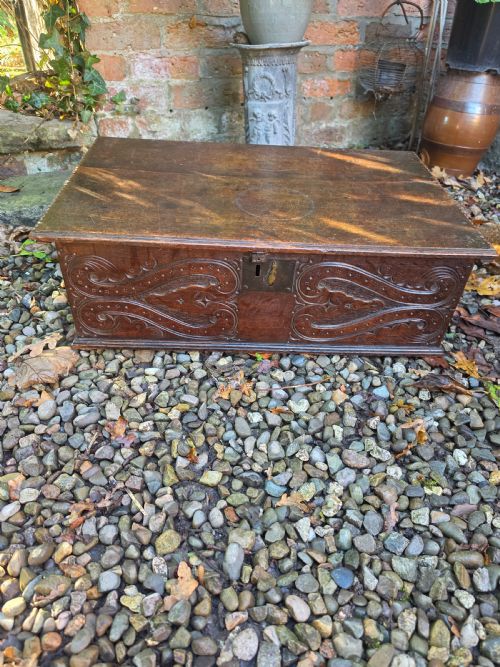
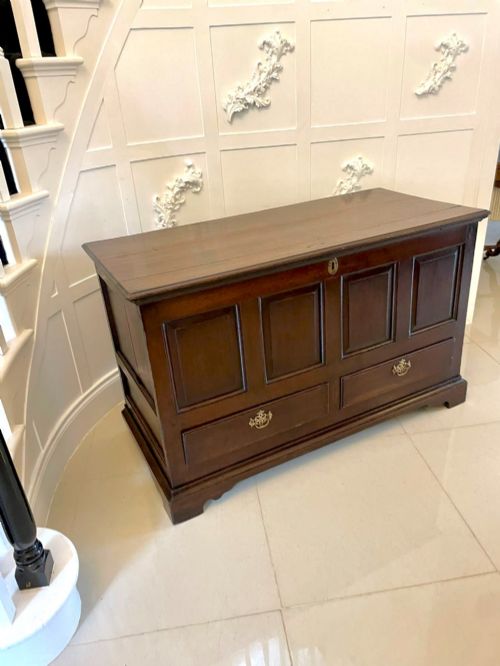
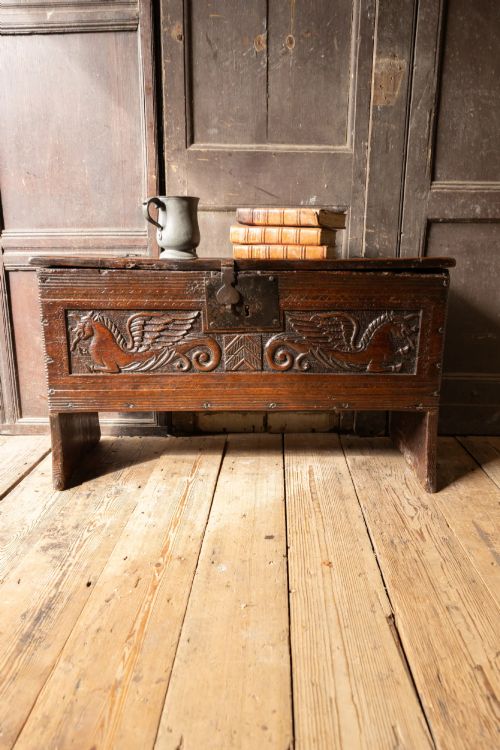
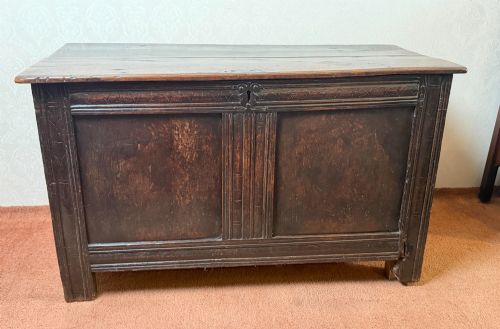
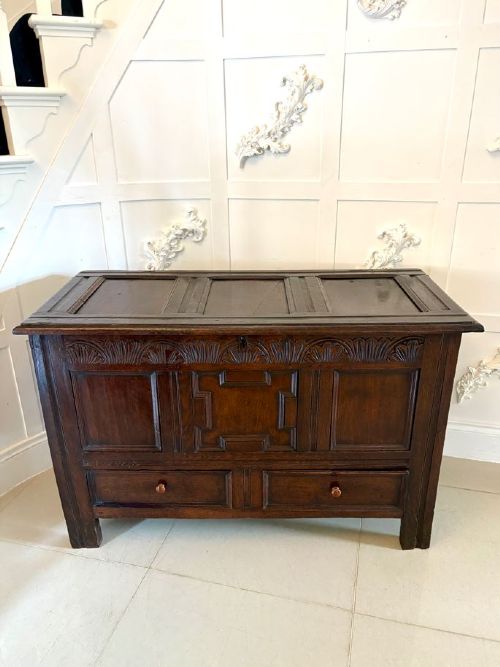
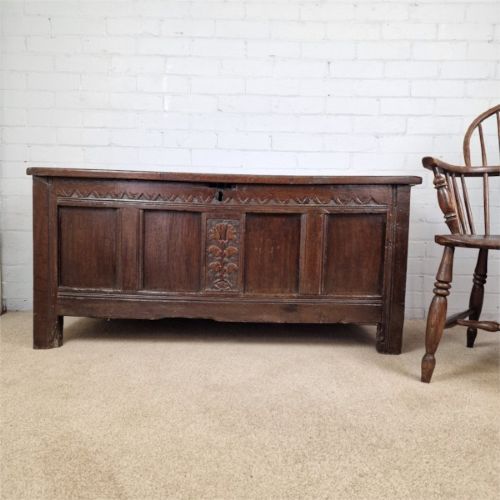
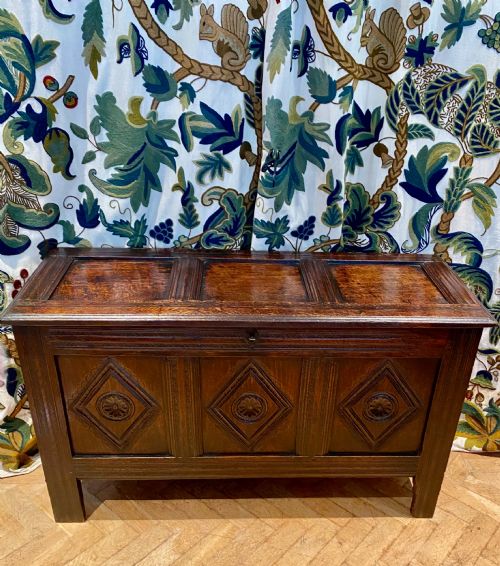
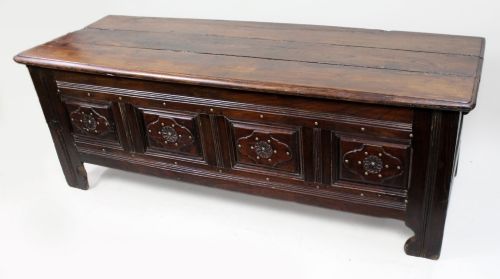
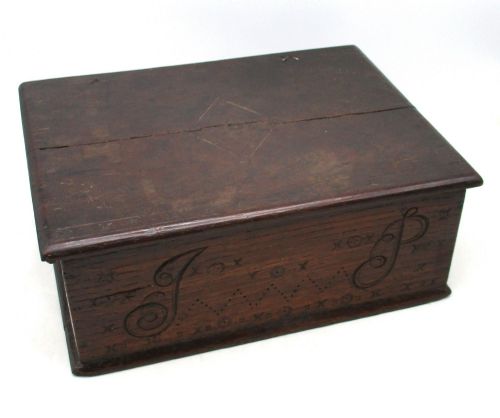
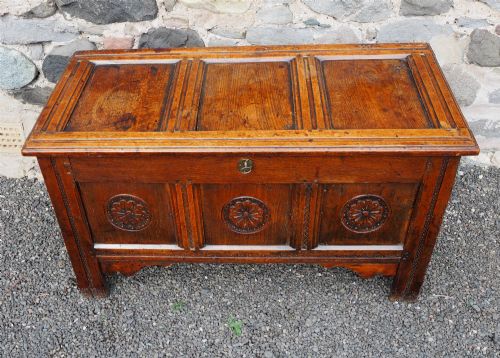
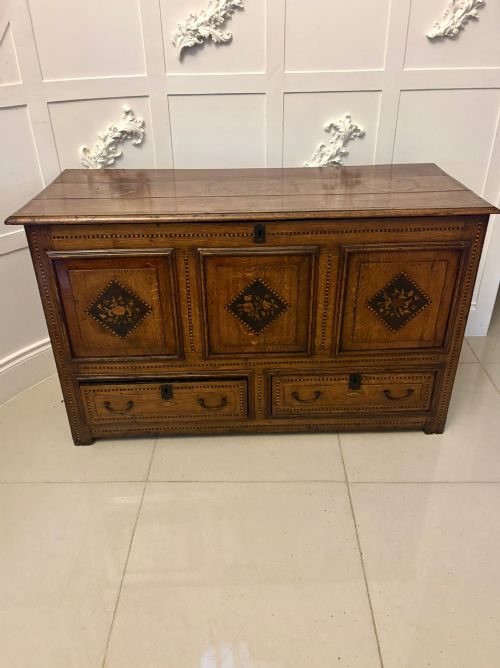
A period oak box encompasses a wide variety of storage forms, ranging from small document and bible boxes to large coffers and mule chests. These items served essential domestic and administrative roles in homes and institutions, keeping valuables, papers, and textiles safe from damp and loss.
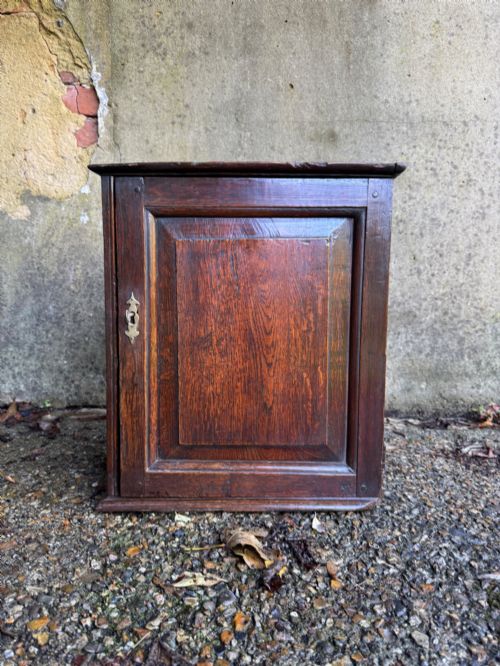
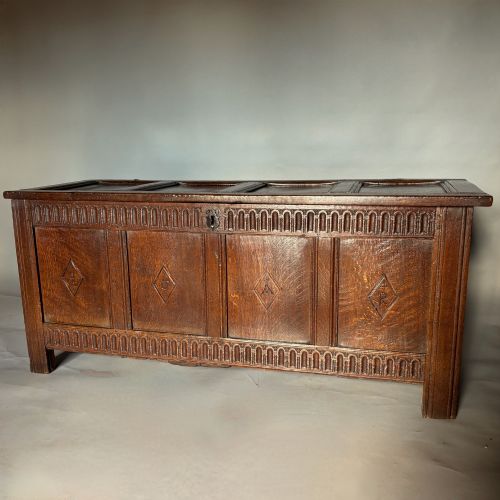
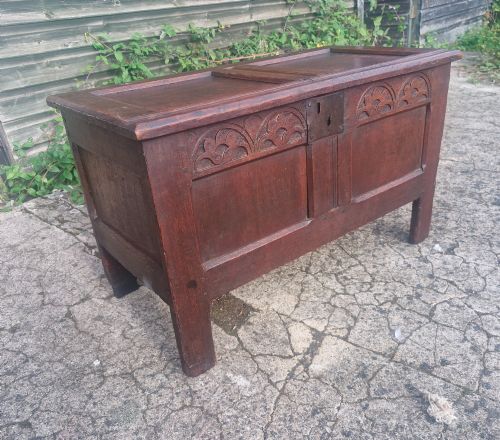
The most common examples on this page are sturdy coffers and smaller desktop or wall-hanging containers dating from the sixteenth to the eighteenth centuries. Pieces span eras from the Elizabethan and Jacobean periods through to the Georgian age, reflecting changing domestic needs over generations.
Regional variations appear across English, Welsh, and continental workshops, showing distinct local preferences in carving and construction. Buyers encounter everything from utilitarian candle boxes to finely panelled blanket chests carrying deep historical resonance.
Materials and Construction Techniques
Makers relied primarily on native oak, chosen for its strength and abundance, often supplemented by fruitwoods and secondary timbers for internal partitions or secondary elements. Iron and brass hardware, including strap hinges, lock plates, and carrying handles, provided necessary security and reinforcement to the heavy wooden structures.
Joinery methods defined early production, utilising frame and panel construction to accommodate the natural expansion and contraction of timber over time. Carved surface enrichment, chip carving, and occasional marquetry or mixed wood inlay decorated the better pieces, executed with chisels and gouges directly into the solid wood.
Early domestic security meant even salt and spoons received their own dedicated wooden wall boxes.
Distinctions in Quality and Survival
Quality rests heavily on the integrity of the original construction and the degree of later alteration. Pieces retaining their original floorboards, hinges, locks, and lids command greater regard than those assembled from mismatched elements or heavily restored timber.
The depth and crispness of carved detail distinguish standard utility items from higher-status commissions. Surface appearance, often described through the warmth of the natural timber and the depth of its accumulated polish, separates well-preserved examples from those stripped or over-cleaned in later centuries.
The Period Oak Box Glossary
- Coffer
- A large wooden chest used for storing valuables, linens, or documents, usually fitted with a hinged lid. They form a primary category of early domestic furniture.
- Mule chest
- A storage chest featuring one or more drawers at the base beneath the main compartment. This hybrid form bridges the traditional coffer and the modern drawer chest.
- Bible box
- A small desk-form or flat-topped box designed to store a family Bible and writing implements. They often sat on tables or stands within the home.
- Marquetry
- The art of applying decorative veneer pieces in various woods to form geometric or floral patterns on a surface. It adds visual complexity to the primary oak structure.
Period Oak Box: Frequently Asked Questions
What is a mule chest?
A mule chest is a storage chest featuring one or more drawers at the bottom beneath the main lidded compartment. This design bridged the gap between traditional trunk storage and modern drawer chests.
Craftsmen developed this form to provide easier access to belongings without requiring users to lift items out from the top of a deep coffer.
How were bible boxes used?
Bible boxes served to protect large family Bibles and important household documents from damp and damage. They often featured sloping lids that doubled as writing surfaces for recording family lineages.
Households placed these portable containers on tables or dedicated stands within central living spaces.
How do I date an oak box?
Dating relies on observing construction methods, such as joined frame-and-panel techniques, hand-cut dovetails, and the style of surface carving. Hardware like wrought iron strap hinges and original locks also offer reliable chronological clues.
Stylistic motifs matching periods like Jacobean or Georgian help narrow down the decade of manufacture.
Are these boxes made of solid oak?
Most period pieces use solid native oak throughout their primary structure, panels, and framing. Secondary woods sometimes appear in hidden areas like internal drawer linings or floorboards.
Makers selected oak for its structural resilience and resistance to heavy daily use in early households.