
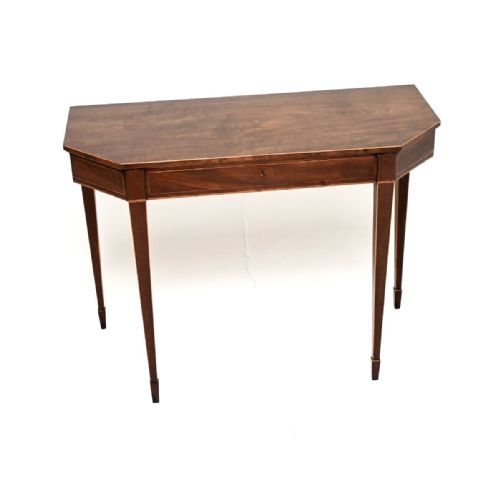
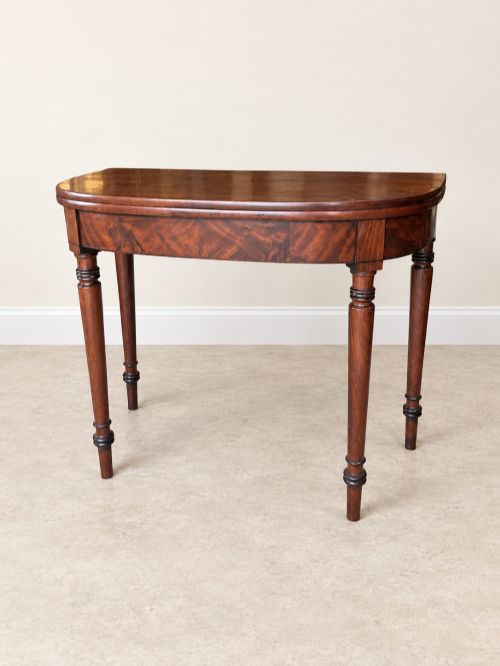
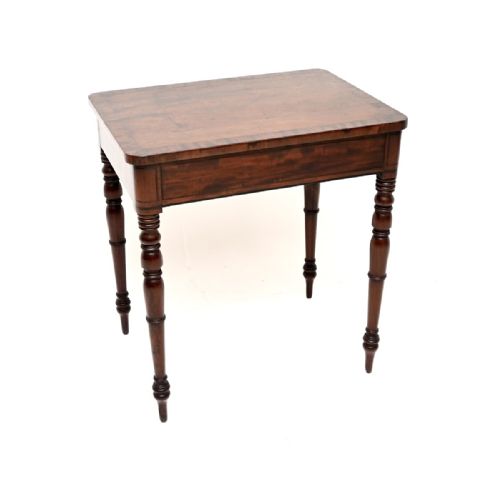
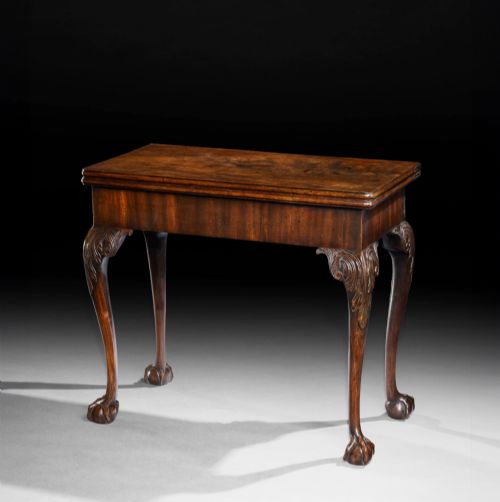
Period Mahogany Tea Tables
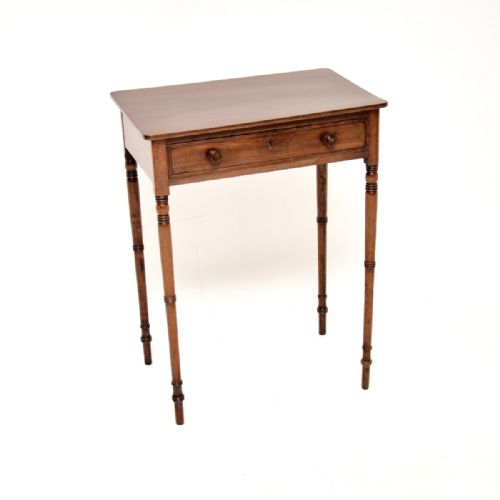
Period mahogany tea tables bring eighteenth and nineteenth-century entertaining into domestic rooms through folding leaves and rich timber grain.
Period Mahogany Tea Tables
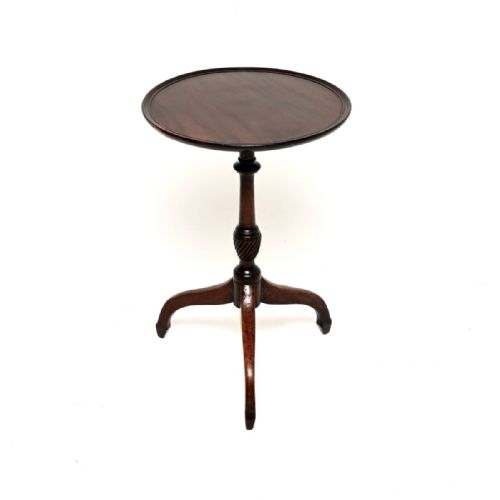
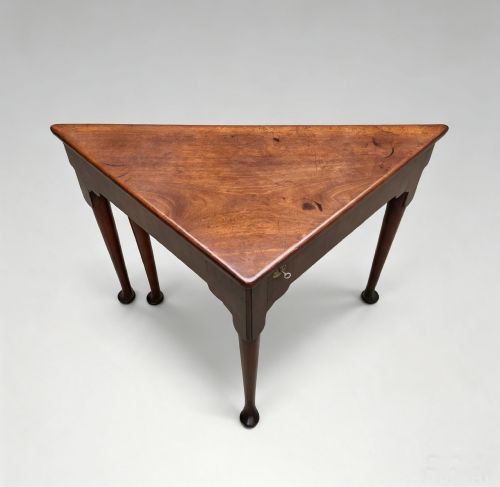
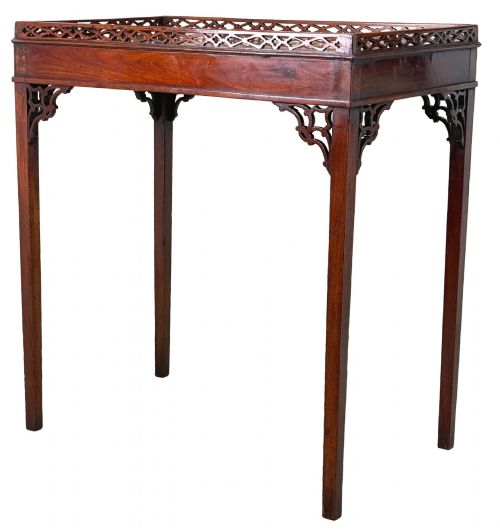
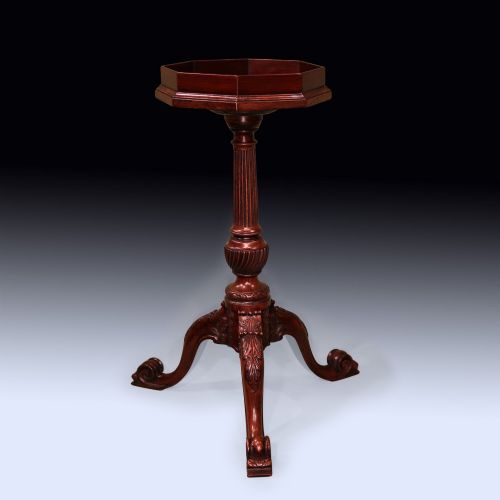
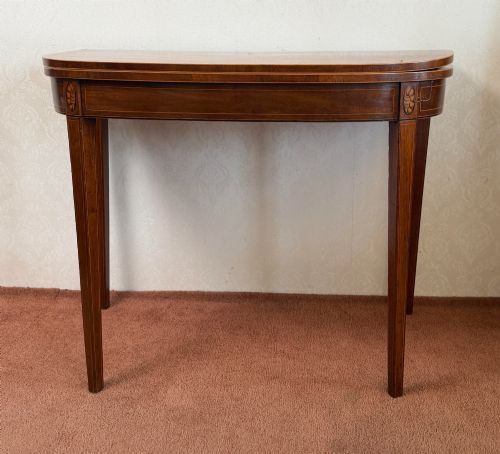
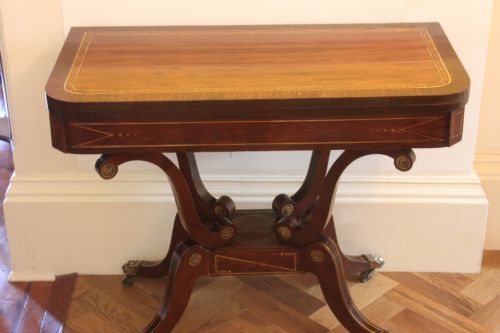
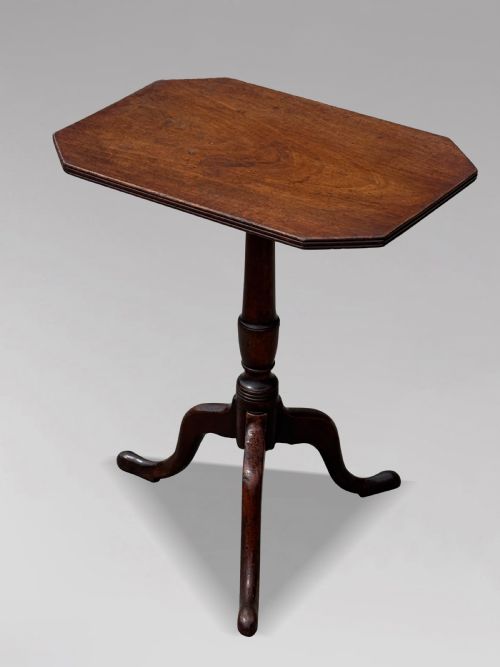
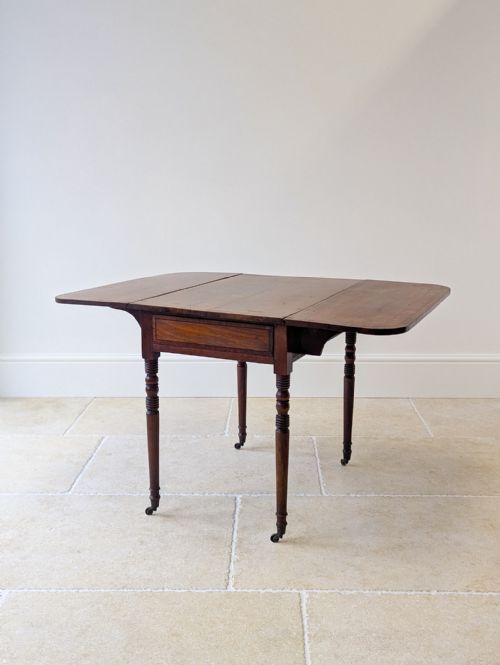
Period mahogany tea tables span the eighteenth and nineteenth centuries, appearing across Georgian, George III, and Regency eras with distinct regional and cabinet-making traits. The examples met on this page include fold-over tops, concertina actions, and tripod configurations designed for social gatherings.
Makers utilised various forms, from D-shaped tea tables to side tables and urn stands, often adopting styles associated with Chippendale or Sheraton. Buyers encounter both plain timber surfaces and those enhanced by brass inlay or satinwood details.
The survival of these tables reflects centuries of domestic use, showing adaptations in function from tea serving to general display. Each piece carries the physical marks of its period, whether through tripod birdcage mechanisms or simple folding leaves.
How they were made
Cabinet-makers relied heavily on solid mahogany and flame mahogany veneer, often selecting Honduras timber for figured tops. These surfaces were paired with structural secondary woods and finished with hand-applied polishes.
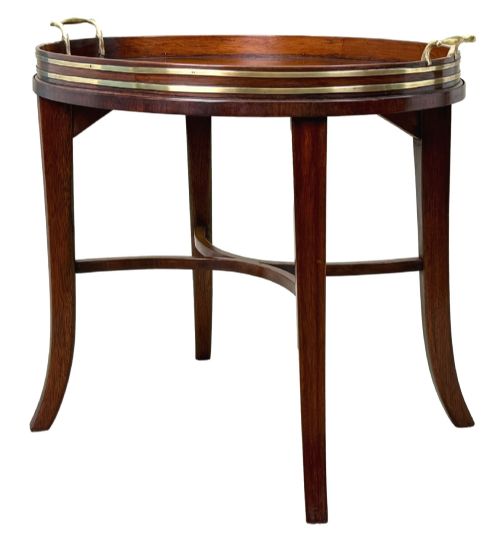
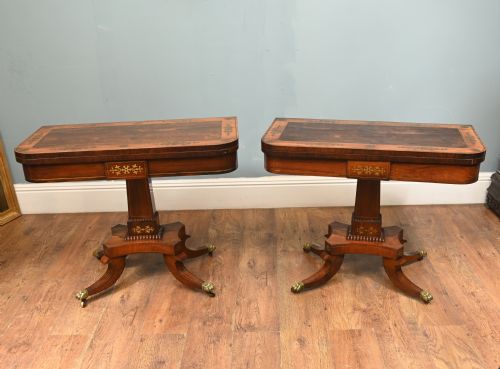
Inlay work incorporated satinwood and ebony, while metal elements such as brass bound decoration and brass inlays added structural and visual contrast to card and tea tables.
Listings feature mahogany, satinwood, rosewood, ebony, and brass across eighteenth and nineteenth-century periods.
What varies in quality
Quality rests on the selection of timber grain, visible in the choice of figured mahogany or flame veneer across the fold-over top. Superior examples maintain crisp carving on tripod legs and crisp edge profiles such as pie-crust designs.
Construction methods define the grade of a piece, seen in the precision of concertina actions, birdcage mechanisms, and the tight fit of folding leaves. Original brass inlays and intact structural joins separate standard workshop production from finer cabinet-making.
Giles Grendey
The Period Mahogany Tea Tables Glossary
- Concertina action
- An expanding frame mechanism that supports a fold-over table top evenly on all four sides when open. This construction requires precise joinery to allow the rails to extend smoothly.
- Tripod table
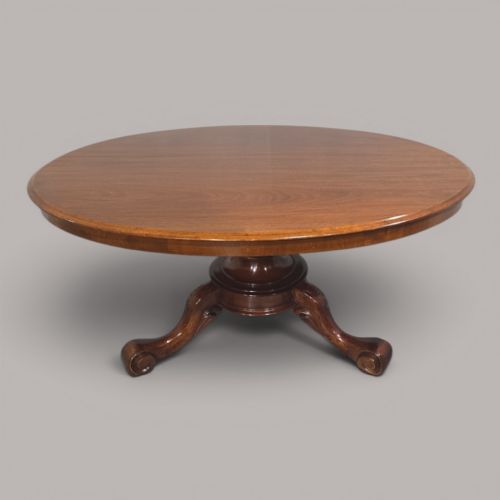
- A small freestanding table supported by a central pillar and three spreading legs. They frequently feature tilt-top or birdcage mechanisms for easy storage.
- Flame mahogany veneer
- A highly figured wood veneer sliced from timber where the grain resembles flickering flames. Cabinet-makers used this on prominent surfaces like table tops to create visual depth.
- Birdcage
- A revolving wooden framework beneath a tilt-top table that allows the top to spin and pivot. It represents a more complex and desirable form of tripod table construction.
- Demi-lune
- A half-moon shape used for console and tea tables designed to sit flush against a wall. These tables often feature fold-over tops supported by pivoting rear legs.
Period Mahogany Tea Tables: Frequently Asked Questions
What is a period mahogany tea table?
These are eighteenth and nineteenth-century wooden tables featuring hinged leaves designed to open for serving tea. They served a central role in formal domestic hospitality during the Georgian and Regency periods.
Today they function as side or display tables in living spaces, offering compact surfaces that expand when needed.
How do I date a mahogany tea table?
Dating relies on observing stylistic markers such as square tapered legs, carved tripod bases, or brass inlay patterns typical of specific reigns. Cabinet-making techniques underneath the top also indicate the manufacturing era.
Comparing structural joints and secondary timbers helps separate eighteenth-century George III pieces from later nineteenth-century Regency examples.
How were folding tea tables used?
Households placed these tables against walls when closed to save space in parlours and drawing rooms. Servants unfolded the leaves and positioned the tables in the centre of the room for tea service.
Many designs also doubled as card or games tables due to the baize-lined interiors hidden beneath the folding top.
What timber was used for these tables?
Joiners primarily used imported mahogany, selecting Honduras timber for its strength and rich reddish-brown tone. Finer pieces incorporated flame mahogany veneer on the top surfaces to highlight the wood grain.
Inlays of satinwood and ebony frequently supplemented the main mahogany construction, particularly on Regency examples.