
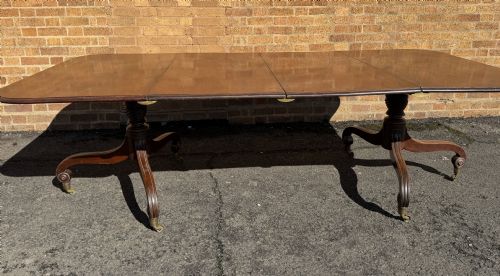
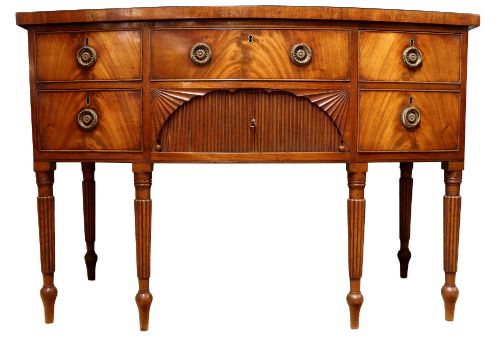
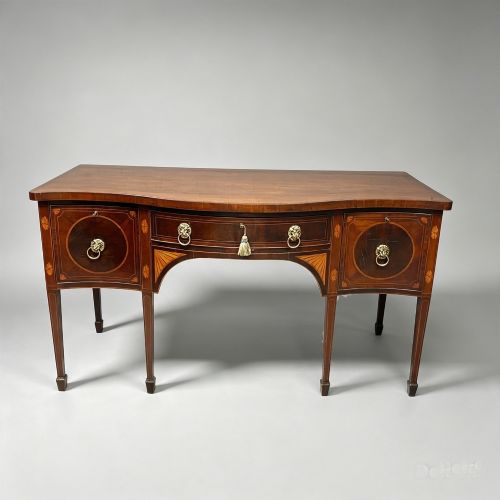
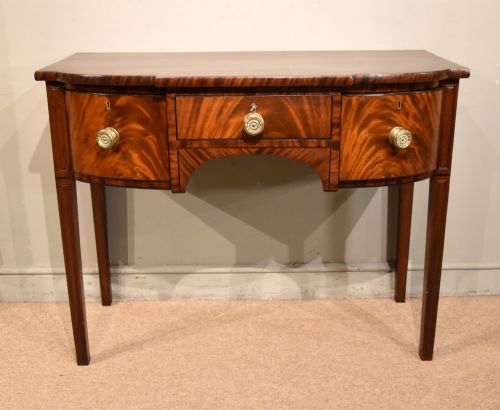
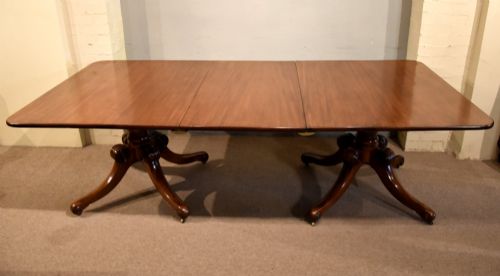
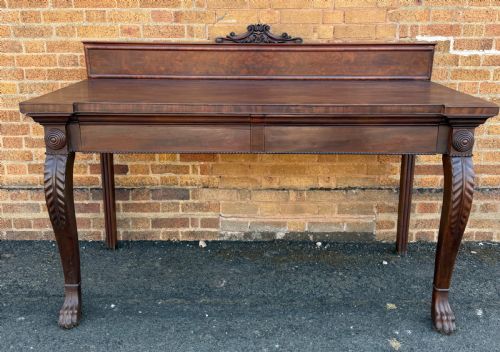
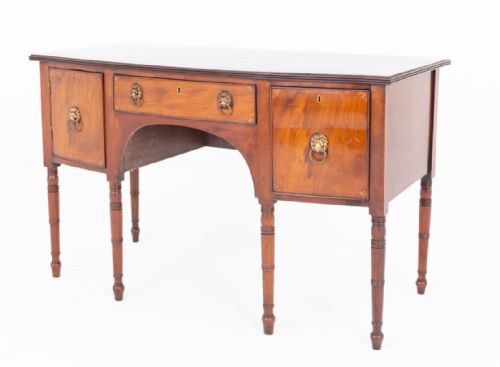
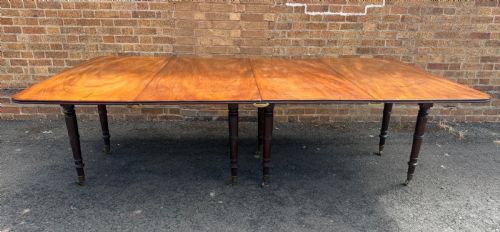
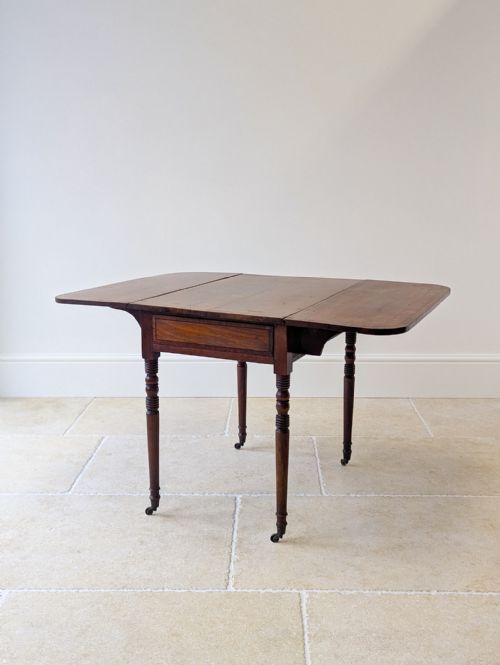


Period Mahogany Dining Table
When you search for a period mahogany dining table, you encounter the robust timber and refined proportions of eighteenth and nineteenth-century craftsmanship.
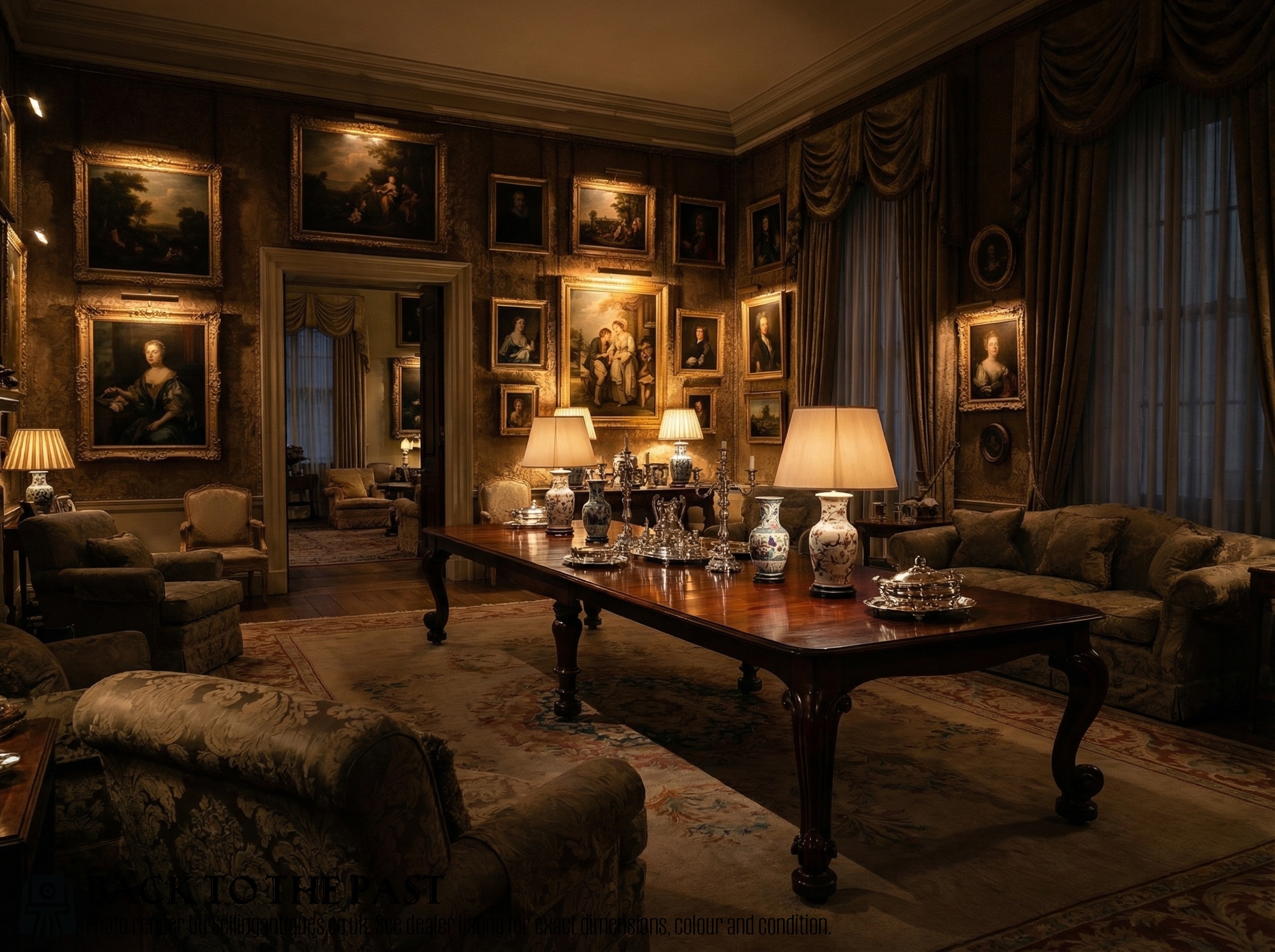
Period Mahogany Dining Table
A period mahogany dining table is a dining surface constructed during the Georgian, Regency, or Victorian eras using dense tropical timber. The selection spans multi-pillar pedestals, D-end configurations, drop-leaf formats, and extending designs suited to versatile room arrangements.
The twin-pillar and triple-pillar pedestal forms appear frequently on this page, often accompanied by drop-leaf and gateleg variants from earlier decades. These pieces reflect the formal dining requirements of their original domestic settings through adaptable leaves and clever internal mechanisms.
Makers adapted these tables for changing households, producing formats ranging from compact breakfast tables to massive extending dining tables capable of seating large gatherings. The overarching design vocabulary remains rooted in George III, Regency, and William IV stylistic traditions.
Distinctions in craftsmanship
Quality rests in the selection of the timber, particularly the choice of single-piece top boards and the lively figuring found in flame mahogany veneer. Superior examples display crisp inlay work in satinwood and boxwood without awkward transitions.
Structural integrity governs the value of extending and pillar formats, where original mechanisms, brass castors, and matching extra leaves dictate the success of the piece. The harmony of proportions between pedestals and tabletops separates standard workshop output from exceptional cabinet work.
One extraordinary table managed to host up to twenty-four diners at once, stretching the limits of nineteenth-century dining room hospitality.
Gillows·James Mein·Mack Williams And Gibton
The Period Mahogany Dining Table Glossary
- Flame mahogany veneer
- A thin slice of timber cut from the fork of the tree to create a distinctive flickering flame pattern. This decorative surface adorned the most fashionable tabletops of the Regency period.
- D-end table
- A dining table format featuring semicircular ends that can stand alone as side tables or join with a central leaf to form a long oval. This versatile configuration originated during the eighteenth century.
- Tilt-top table
- A table equipped with a hinged mechanism allowing the surface to fold vertical when not in use. This clever design saved valuable floor space in smaller period rooms.
- Concertina action
- An expanding frame mechanism that stretches like an accordion to support multiple extra leaves. It represents an advanced piece of engineering found in high-end dining tables.
- Twin-pillar table
- A dining table supported by two central pedestals, usually featuring tripod or quadruped brass-castored legs. This design allowed diners to sit comfortably without corner legs obstructing their chairs.
Period Mahogany Dining Table: Frequently Asked Questions
How do I seat six people comfortably?
Select a twin-pillar pedestal design or a drop-leaf table that accommodates daily meals without overwhelming the floor space. These formats offer clear legroom around the perimeter.
Many examples include additional leaves that drop into the centre when guests arrive, expanding the surface area while maintaining stable proportions.
Can I use an antique table daily?
Period dining tables were built for heavy domestic use from dense hardwoods like Cuban mahogany and standard mahogany. Their robust construction handles regular family meals.
Protecting the polished surface with modern heat mats and sensible maintenance preserves the original timber and veneer for everyday dining.
What is a D-end dining table?
A D-end table consists of two semicircular console sections that pull apart and accept rectangular middle leaves. This modular format appeared frequently during the Georgian era.
When not hosting dinner parties, the separated ends function neatly against dining room walls as side tables.