
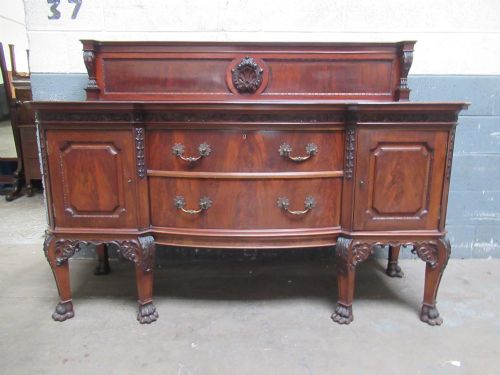
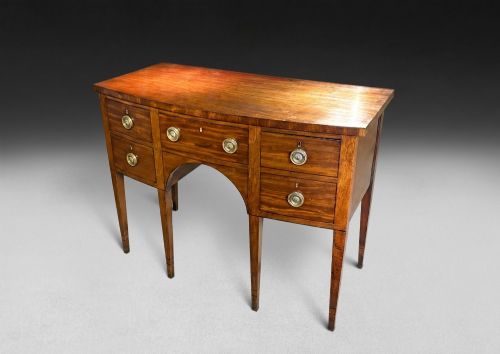


Period Mahogany Dining Sideboard
A period mahogany dining sideboard brings architectural presence and ample storage to a formal dining room through rich cabinetwork.
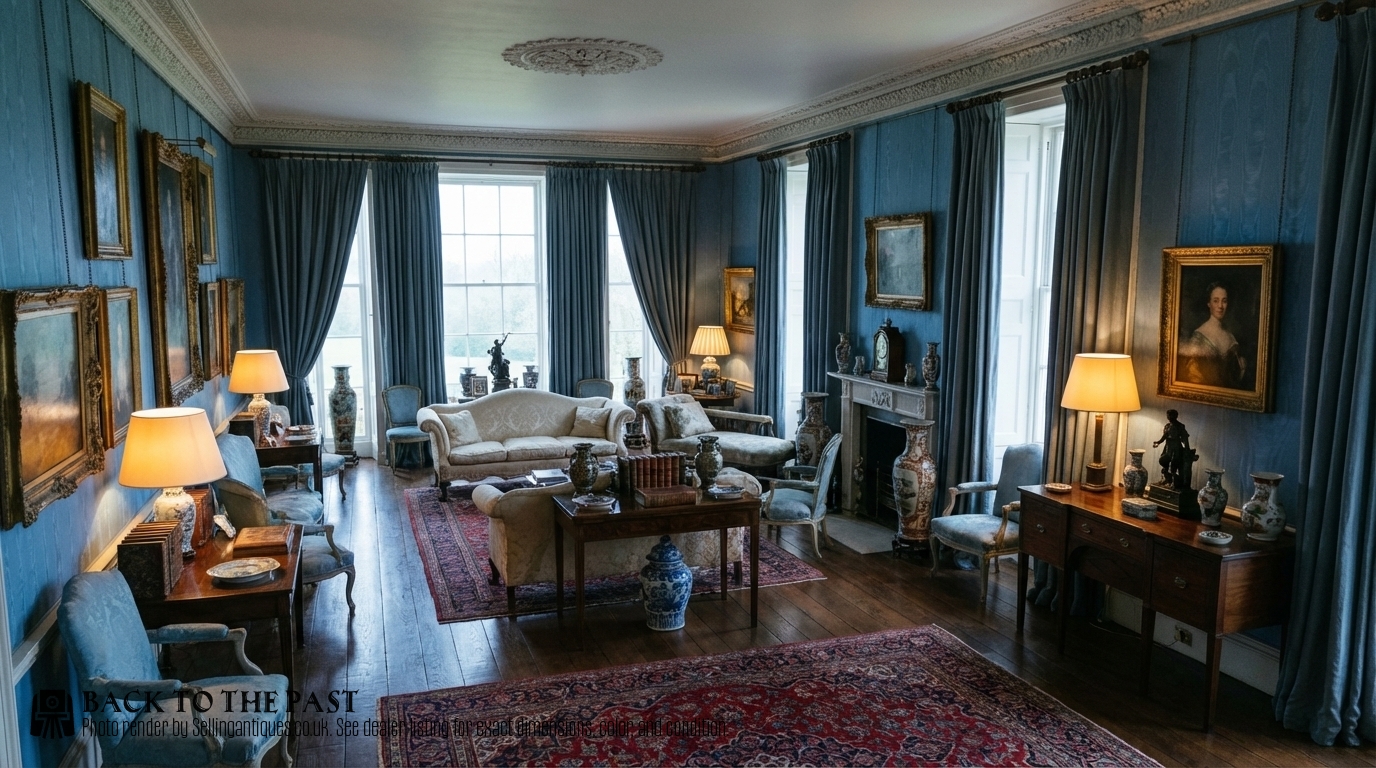
Period Mahogany Dining Sideboard
A period mahogany dining sideboard serves as a commanding functional focal point in a dining room, designed for holding porcelain, silver, and linens. These pieces emerge predominantly from the Georgian, Regency, and Edwardian eras, spanning the eighteenth and nineteenth centuries.
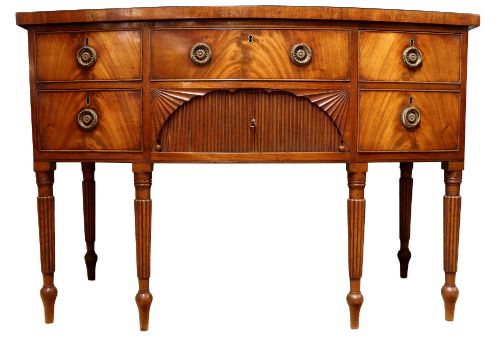
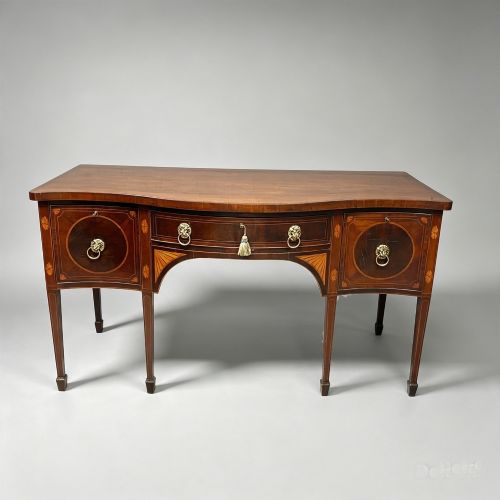
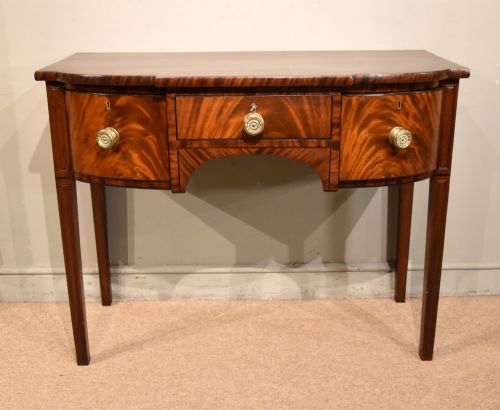
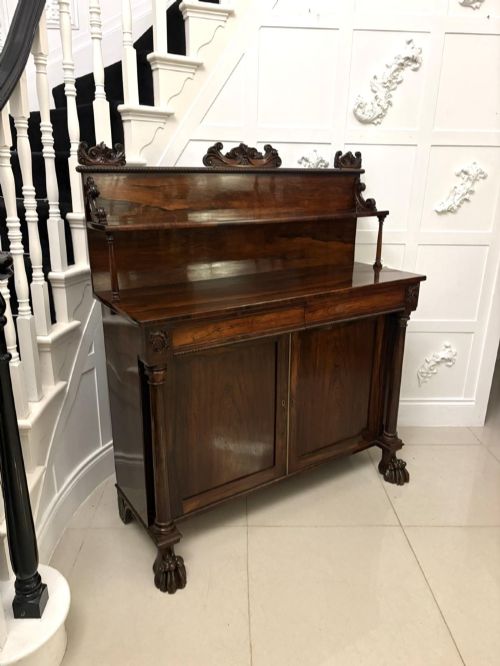
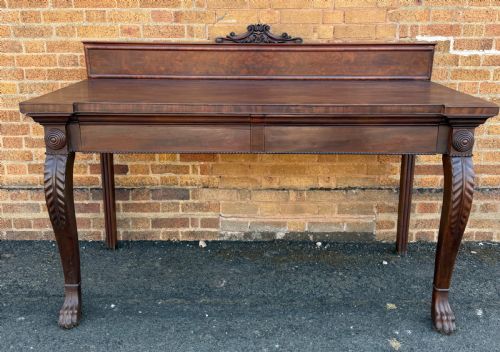
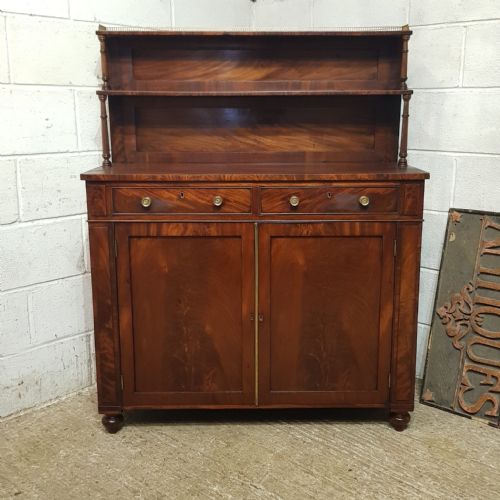
Buyers will most frequently encounter bow-front and serpentine forms from the Regency and George III periods on this page. Sideboards take various configurations including pedestal designs, serving tables, and chiffoniers.
Makers fashioned these dining servers to anchor the dining space, often integrating cupboards, drawers, and drop wells. The substantial scale and formal lines reflect the entertaining habits of elite households in past centuries.
Construction and Materials
Cabinetmakers constructed these sideboards using solid mahogany, frequently applying flame mahogany veneer to large drawer fronts and doors to create dramatic, highly figured grain patterns. The dense wood provides a sturdy carcase capable of supporting heavy serving platters and tableware.
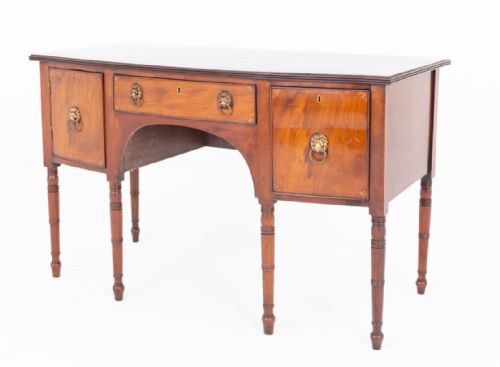
Craftsmen enriched the surfaces with contrasting details, incorporating boxwood and satinwood inlay in linear patterns or delicate swags. Brass hardware, including original ring pulls and lion mask handles, functions as both structural fixings and decorative accents.
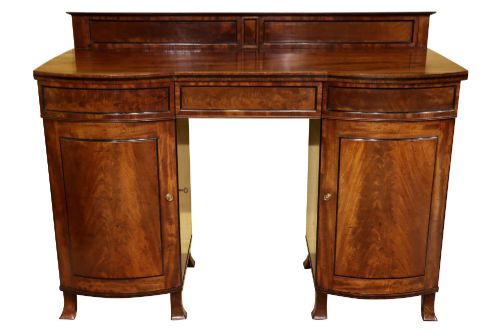
Joiners shaped complex forms such as serpentine fronts and bow fronts using precise timber bending and carcase construction techniques. Pedestal sideboards and twin pedestal variants required robust internal framing to sustain the weight of separate pedestals and central boards.
Materials span solid mahogany and flame mahogany veneer, complemented by boxwood stringing, brass handles, and glass.
Judging Quality
Quality rests significantly on the choice of timber and the dexterity of the veneer work, particularly where flame mahogany creates mirrored patterns across multiple drawers. The crispness of satinwood and boxwood stringing reveals the hand of a skilled maker.
Proportion and scale dictate the visual success of the piece, separating standard production items from masterworks of the Regency and George III periods. Well-executed pedestals, finely turned legs, and original brass fittings elevate a sideboard's standing.
The integrity of the structural joinery and the survival of original interior shelving or bottle drawers indicate how well a piece has endured. Subtle architectural details, such as carved brackets or reeded legs, distinguish superior regional and London workshops.
Gillows·Mack Williams and Gibton
The Period Mahogany Dining Sideboard Glossary
- Bow front
- A cabinet front that curves outward in a convex arc. This shape softens the rigidity of a dining room wall.
- Serpentine front
- A sideboard front featuring a central convex curve flanked by concave sweeps, or vice versa. It demands high cabinetmaking skill to execute.
- Flame mahogany
- A veneer cut from the fork of the mahogany tree where branches meet the trunk. The resulting grain resembles flickering flames.
- Chiffonier
- A low cabinet with doors, developed from the sideboard during the Regency period. It provides compact storage for dining rooms.
- Pedestal sideboard
- A form comprising two separate pedestals joined by a central board or serving table. This layout dominated grand Regency dining rooms.
- Stringing
- Thin inlay lines of contrasting timber, such as boxwood or satinwood, set flush into the mahogany surface. It defines the edges of drawers and panels.
Period Mahogany Dining Sideboard: Frequently Asked Questions
How do I date a sideboard?
Examine the secondary woods used inside drawers and back panels, along with the construction methods of the drawer dovetails. Stylistic cues such as brass hardware styles and inlay motifs also point to specific decades.
Regency pieces often display bold flame veneers and brass lion mounts, while George III examples tend toward restrained satinwood stringing and elegant serpentine profiles.
Where were sideboards placed?
These dining pieces stood against the primary dining room wall, positioned to allow servants easy access during formal meals. They held serving dishes, cutlery, and wine bottles before service.
Larger twin pedestal versions required substantial wall space, while smaller bow-front cabinets suited more intimate dining rooms.
What is a pedestal sideboard?
A pedestal sideboard consists of two distinct cabinet pedestals supporting a central serving table or board. This grand configuration gained popularity during the Regency period.
The pedestals often housed cupboards or specialised cellarette drawers for cooling wine bottles during long dinners.
How do I maintain mahogany?
Keep the wood away from direct sunlight and radiators to prevent the flame mahogany veneer from drying and splitting. Regular dusting and occasional feeding with quality wax maintain the rich patina.
Avoid harsh chemical polishes that can damage the historic polish and dull the fine grain figure.