




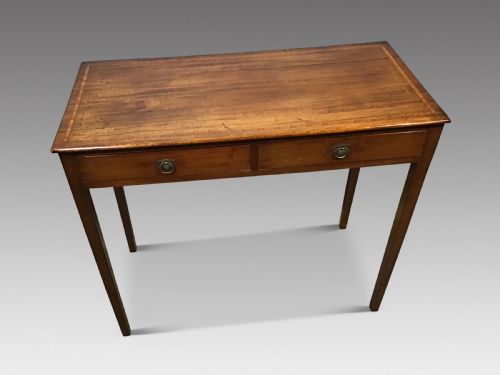


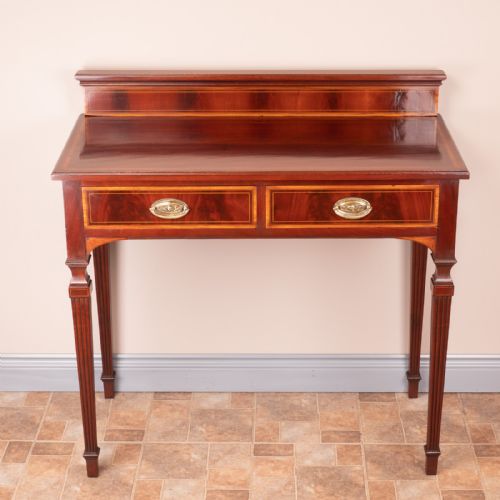
Inlaid Mahogany Server Desk
An inlaid mahogany server desk brings timeless timber and crisp stringing into a room, offering both practical surface space and distinct period character.
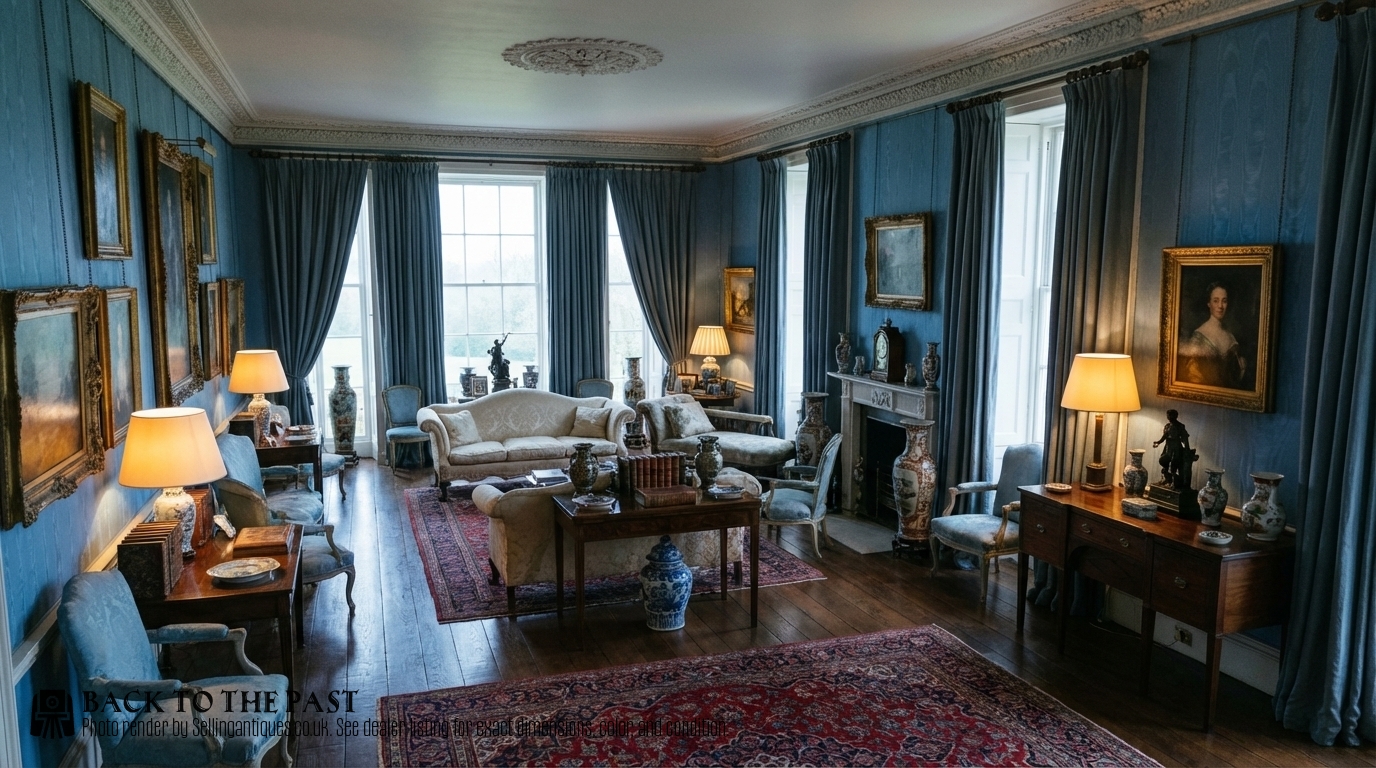
Inlaid Mahogany Server Desk
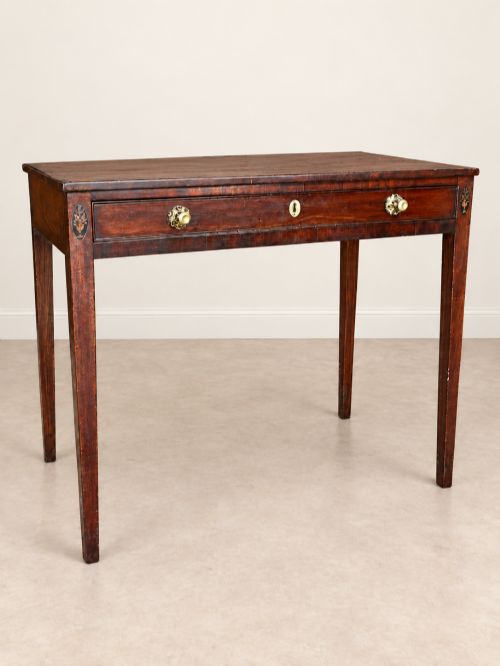
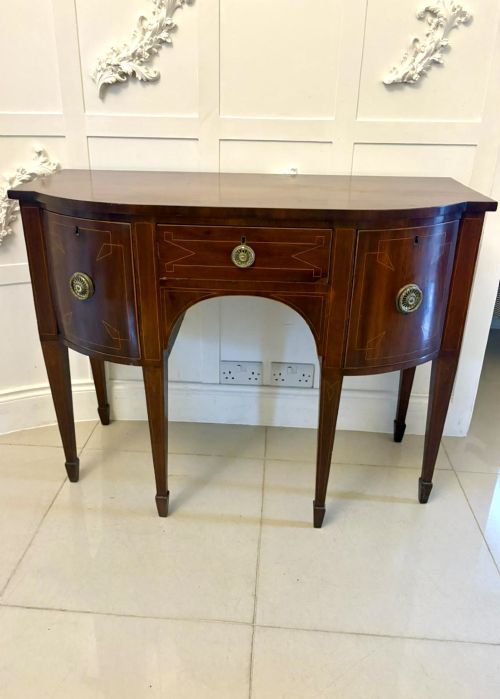
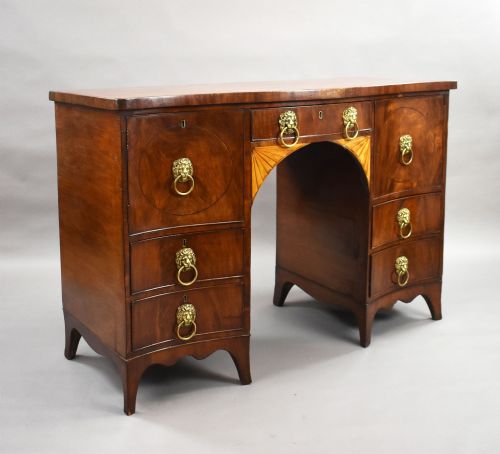
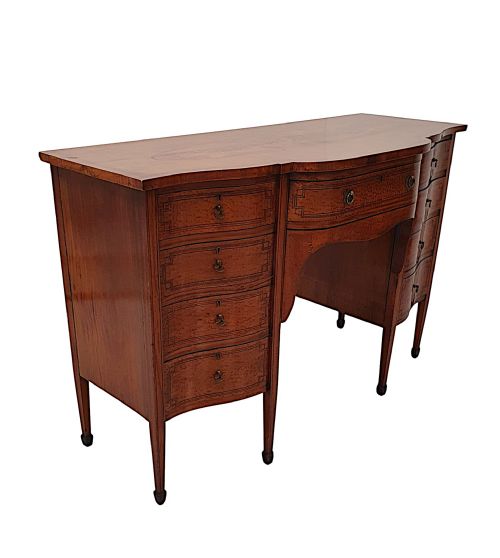
When you search for an inlaid mahogany server desk, you are looking at utilitarian and formal furniture designed for serving and storage, spanning Georgian, Regency, Edwardian and Victorian eras. The forms appearing on this page range from sideboards and side tables to lowboys.
The most common versions you will meet here are sideboards and side tables carrying stylistic traits from the Georgian, Regency, and Edwardian periods, frequently enhanced with boxwood or ebony details.
How they were made
Makers utilised solid mahogany and figured veneers over secondary timbers, shaping carcasses into bow front, breakfront, and serpentine outlines. Construction relied on traditional joinery methods suited to heavy daily domestic use.
Inlay work involved contrasting light woods such as boxwood and satinwood, occasionally paired with brass mounts, creating linear banding and decorative motifs that highlight the mahogany grain.
Listings feature pieces spanning the Georgian, Regency, Edwardian, and Victorian periods, constructed from mahogany, boxwood, satinwood, and brass.
What varies in quality
Quality rests primarily in the selection of the mahogany timber and the crispness of the boxwood or satinwood inlay, where neatly matched grain patterns elevate a piece above standard utility items. The precision of the joinery around curved drawer fronts and bow fronts also marks the tier of craftsmanship.
Hardware choice and the refinement of brass inlay or mounts distinguish standard production from finer workshop output. Structural integrity in the legs and frame separates well-preserved examples from those altered over time.
The Inlaid Mahogany Server Desk Glossary
- Mahogany
- A dense, durable tropical hardwood prized for its rich reddish-brown colour and stable grain. It forms the primary structural and visual base for these pieces.
- Inlay
- A decorative technique where contrasting materials like boxwood or ebony are set into recessed portions of the mahogany surface. This creates borders and geometric patterns.
- Bow front
- A convex curved cabinet or table front that swells outward in the centre. It demands precise woodworking to follow the continuous curve.
- Lowboy
- A small low table with drawers, typically standing on four legs. It functions as a compact side table or serving surface.
Inlaid Mahogany Server Desk: Frequently Asked Questions
What is an inlaid mahogany server desk?
These pieces comprise sideboards, side tables, and lowboys constructed from mahogany and decorated with contrasting wood inlay.
They originate from periods spanning the Georgian era through to the Edwardian period.
How do I identify a Georgian piece?
Georgian and George III examples display restrained proportions, classical stringing, and solid timber construction.
Later Regency Revival and Edwardian pieces often revive these earlier stylistic traits with lighter framing.
Where were these tables used?
They served primarily in dining rooms and parlours for holding dishes, serving food, or storing household items.
Today they function effectively as console tables or hall furniture in domestic spaces.
What woods make up the inlay?
Boxwood and satinwood provide pale, contrasting lines that stand out sharply against the dark red mahogany ground.
Ebony appears occasionally to introduce dark geometric banding and edge definition.