

Period Mahogany Dining Furniture
Period mahogany dining furniture brings together timber and craft across Georgian, Regency and Victorian rooms for daily meals and formal gatherings.
Period Mahogany Dining Furniture
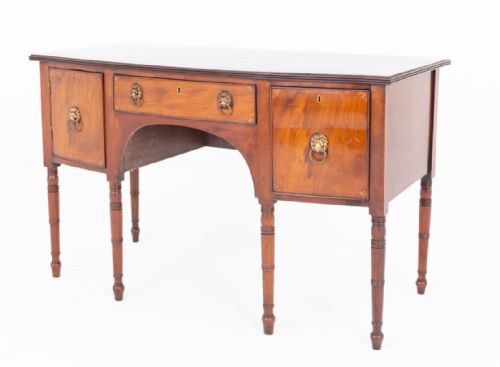
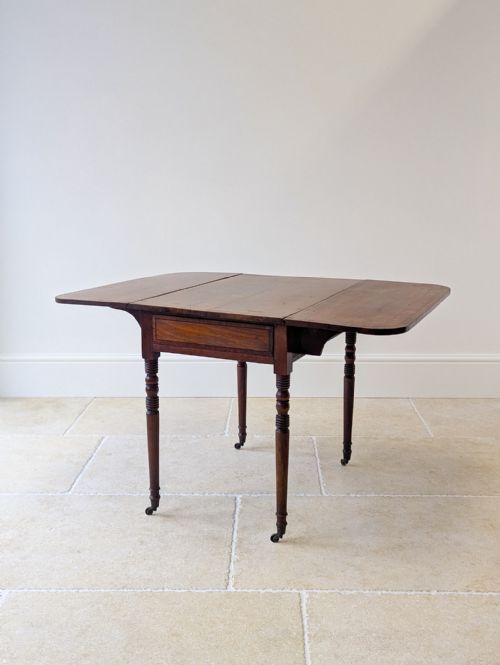
Period mahogany dining furniture spans dining tables, sideboards, wine coolers and large sets of chairs designed to furnish formal dining spaces. These pieces emerge from the eighteenth, nineteenth and early twentieth centuries, covering George III, Regency and Victorian eras.
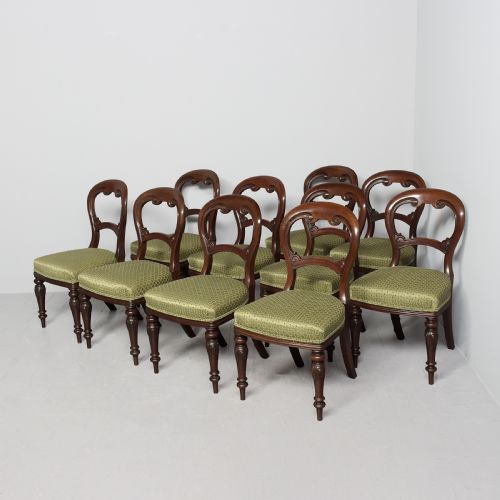
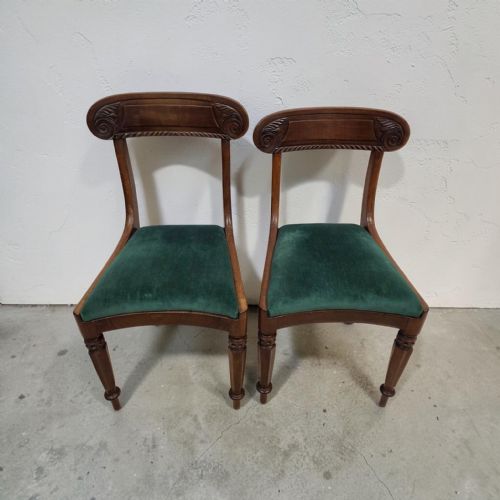
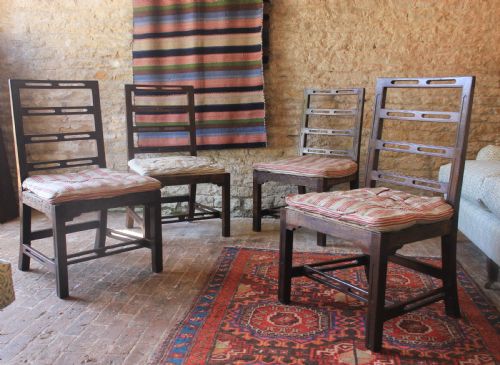
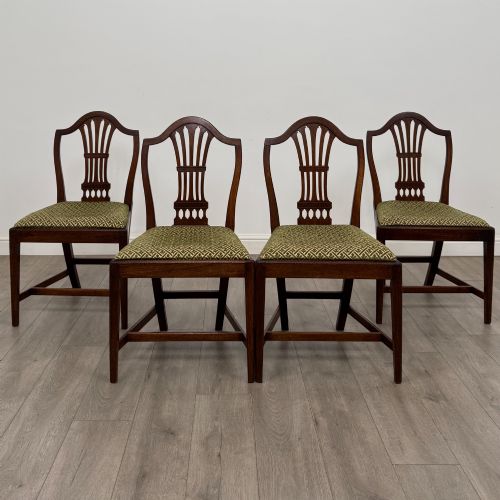
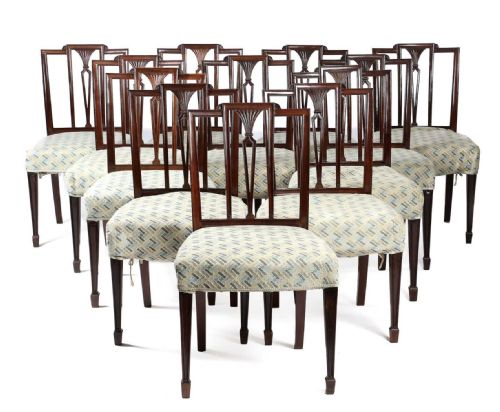
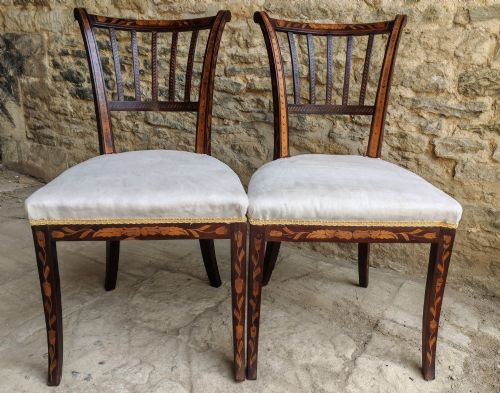
Dining chairs appear most frequently on this page, often found in matched sets ranging from four to twelve pieces. Tables and sideboards accompany them, utilising timber foundations shaped by cabinetmakers across England, Scotland and Ireland.
Buyers encounter regional variations, such as Scottish or Irish chairs alongside English pieces, reflecting local interpretations of Georgian and Regency styles. Materials extend beyond solid timber to incorporate flame mahogany veneers and secondary woods.
Materials and construction
Makers constructed these pieces primarily using solid mahogany and flame mahogany veneers, prized for deep natural grain patterns and dark warmth. Secondary woods provide structural stability inside frames and drawer carcases.
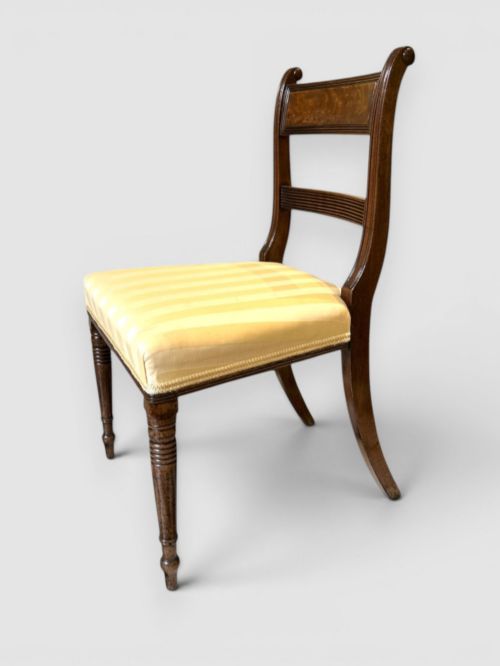
Upholstery materials such as leather, fabric, velvet and original tapestry seats complete chairs and armchairs, while brass fittings accent sideboards, tables and wine coolers. Joinery relies on traditional techniques like mortise and tenon joints to withstand heavy daily use.
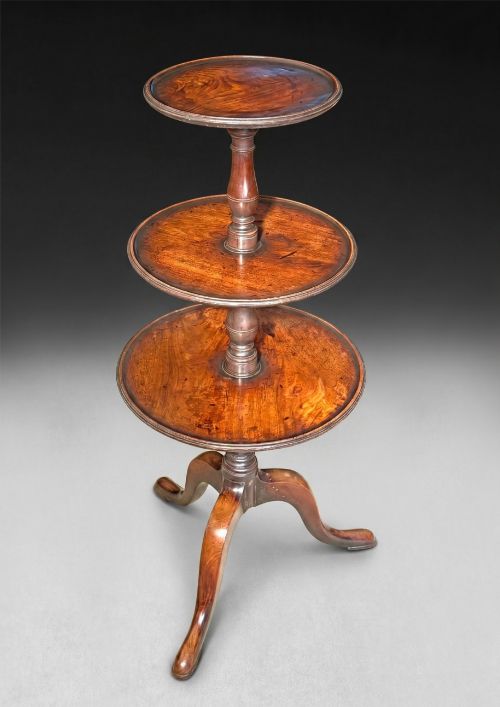
Dumb waiters handled the dessert course independently, allowing diners to spin their own plum pudding without listening to gossip.
Determinants of quality
Quality depends upon the depth of the mahogany grain, the crispness of carved details like scrolls or shield backs, and the integrity of the original construction. Matched sets maintaining uniform colour and matching timber across every chair command higher regard than assembled groups.
Proportion and cabinetmaking skill dictate overall excellence, seen in well-balanced pedestal tables and sideboards with intact brass hardware. The survival of original upholstery elements or untouched timber surfaces preserves the historical integrity of each item.
Maple and Co·Gillows·James Mein
The Period Mahogany Dining Furniture Glossary
- Carver
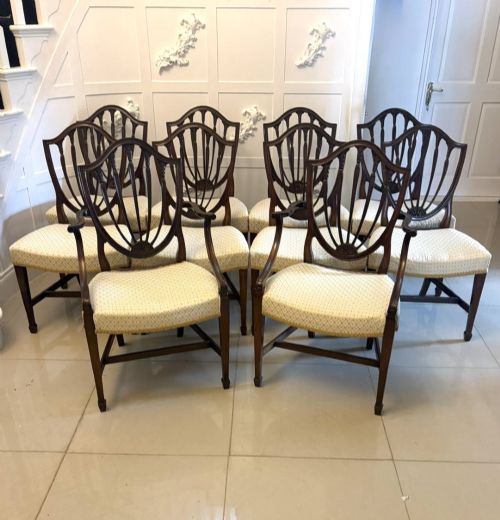
- An armchair designed for the head of the dining table, featuring supportive armrests. These pieces usually match a larger set of side chairs.
- Flame mahogany
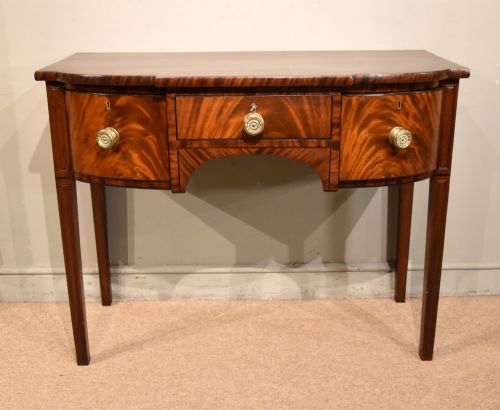
- A decorative veneer cut from wood where the branch meets the trunk, producing a rippling flame pattern. Cabinetmakers applied this to drawer fronts and tabletops.
- Chiffonier
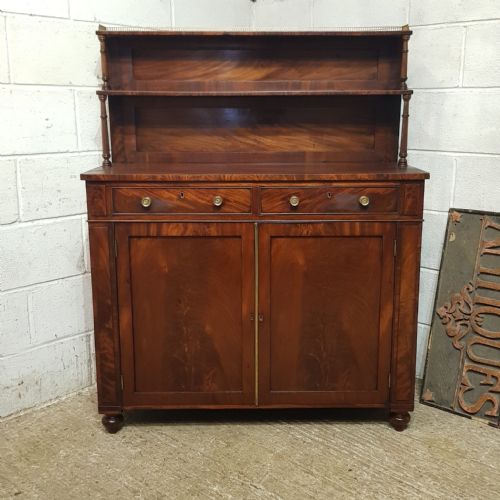
- A low sideboard or cabinet with shelves and doors, used for storing dining silver and glassware. These items date primarily to the Regency and Victorian periods.
- Dumb waiter
- A tiered revolving stand placed beside the dining table to hold dishes without requiring servants. These practical items feature multiple graduated round trays.
- Bar back
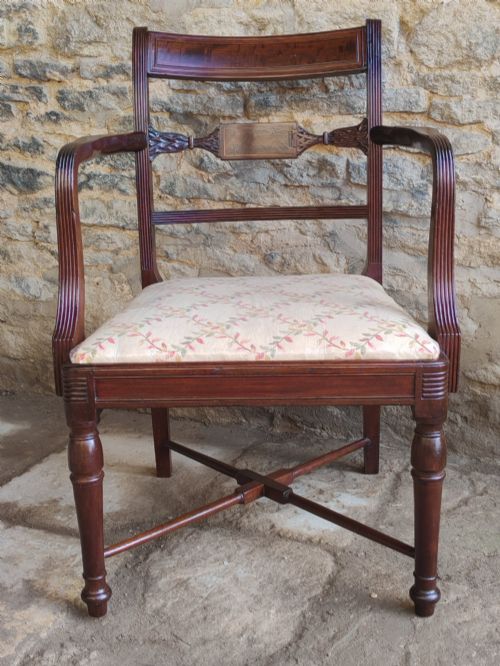
- A chair design featuring a horizontal top rail shaped like a curved bar, common in Regency dining furniture. This style provides solid back support.
Period Mahogany Dining Furniture: Frequently Asked Questions
How many chairs come in a set?
Sets typically range from four to twelve chairs, frequently including two matching armchairs alongside several side chairs for larger dining tables.
Larger sets of ten or twelve pieces represent significant dining rooms and remain harder to assemble as complete matching groups.
What is a carver chair?
A carver is an armchair positioned at the head of the dining table, built with supportive armrests for the host.
These chairs share the exact design and timber of the smaller side chairs in the set to maintain visual harmony.
How do I date a mahogany table?
Dating relies upon leg styles, stretcher arrangements, and edge moulding details that shifted from Georgian straight legs to Regency pedestals.
Timber choice and construction methods inside the table frame further clarify whether a piece dates to the eighteenth or nineteenth century.
Are these pieces suitable for daily use?
Solid mahogany frames and traditional joinery make these tables and chairs robust enough for everyday dining.
Careful maintenance of polished wood surfaces and periodic checks on upholstery ensure these items endure modern household routines.