

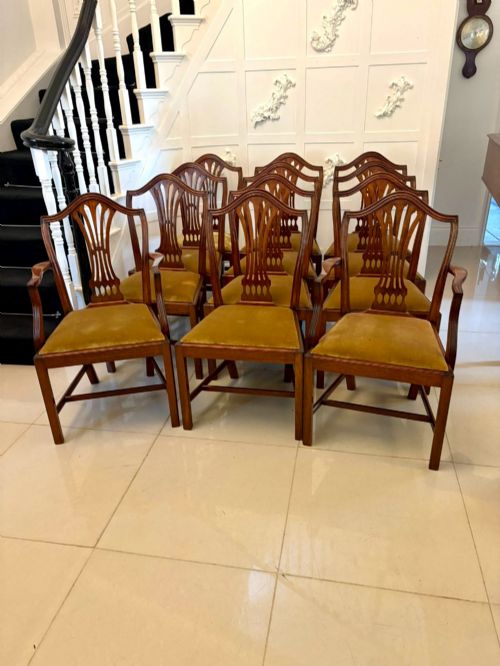
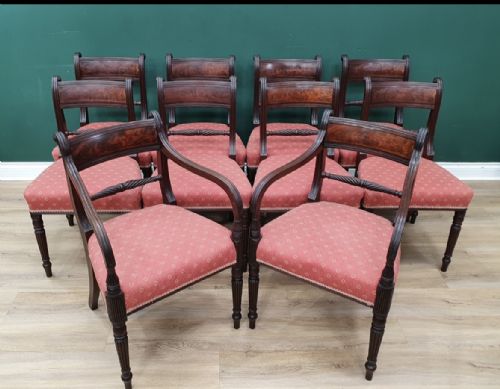
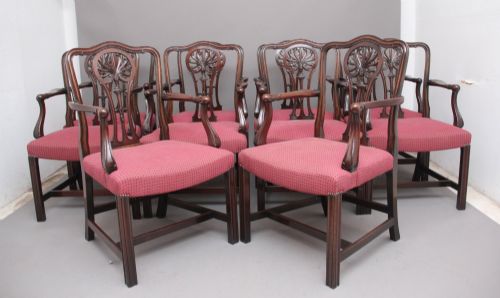
Period Mahogany Carver
A period mahogany carver is a sturdy seated piece with armrests designed to anchor the head of a dining table or sit alone in a study.
Period Mahogany Carver
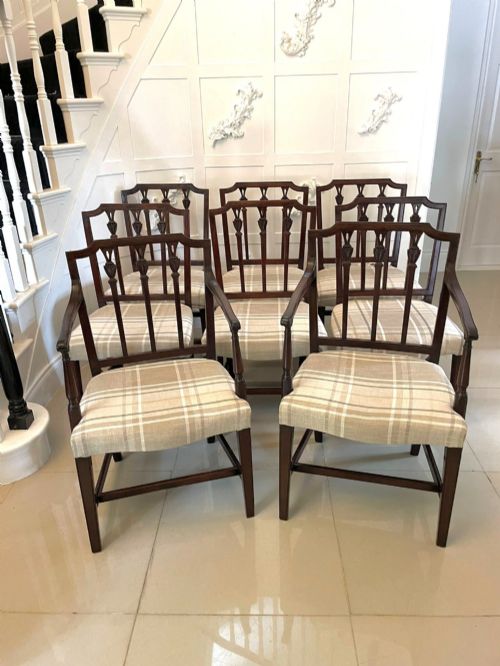
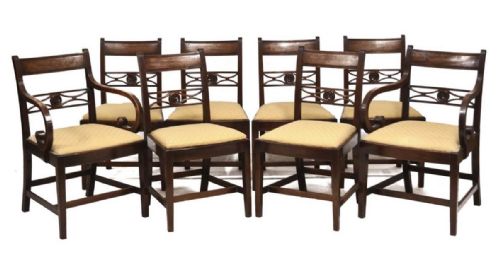
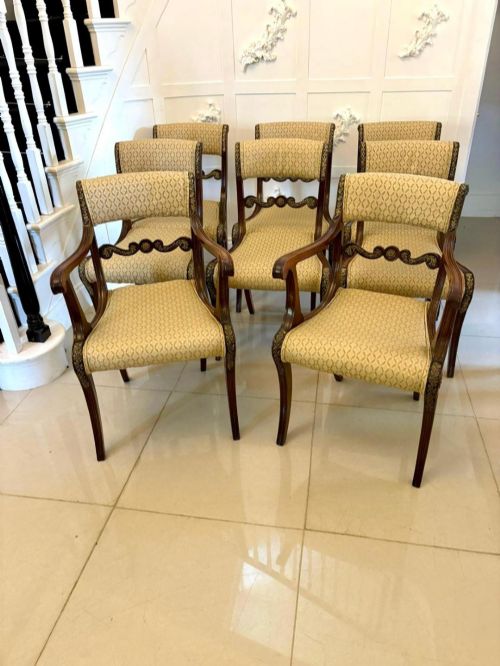
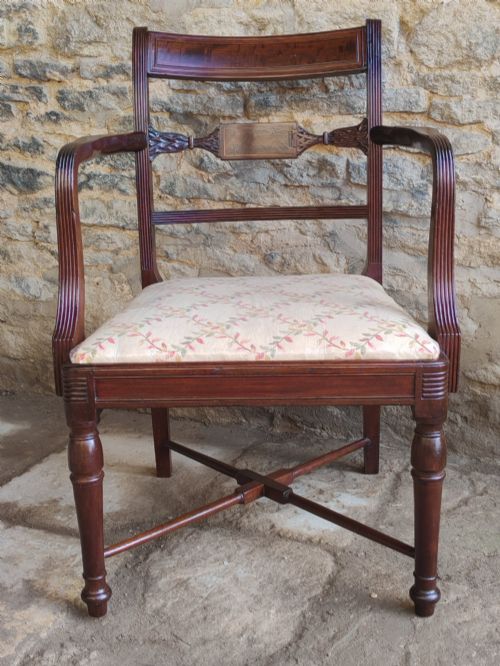
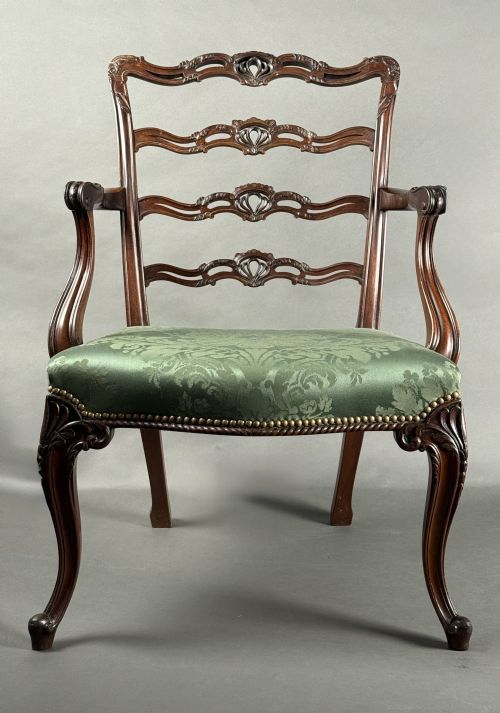
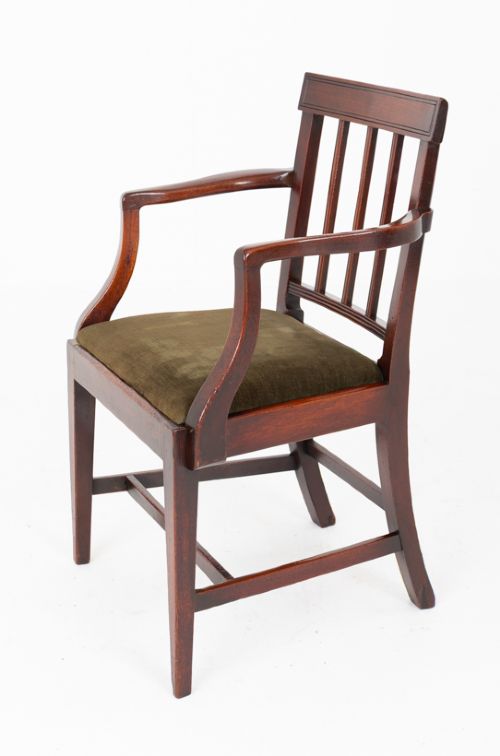
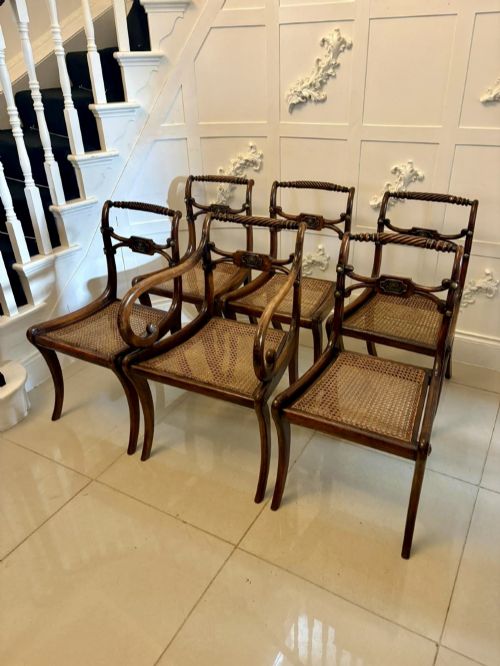
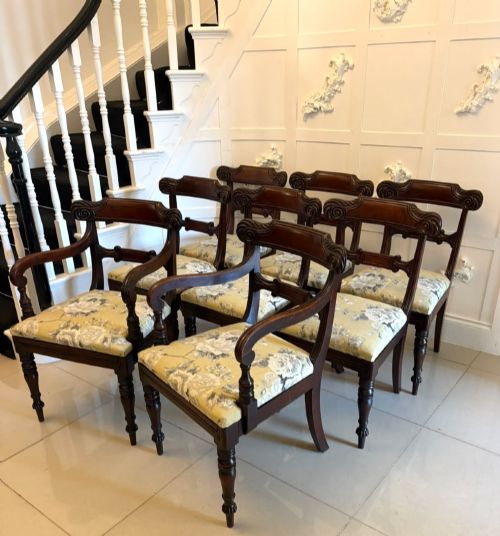
A period mahogany carver stands as the armed companion to a set of dining chairs, offering generous proportions and support at the head of a table. These pieces emerge from the eighteenth and nineteenth centuries, taking forms that range from linear George III designs to scrolling Regency frames.
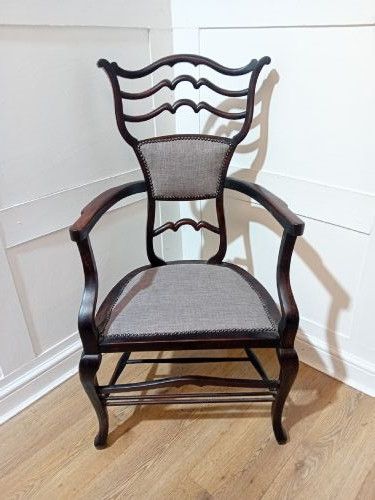
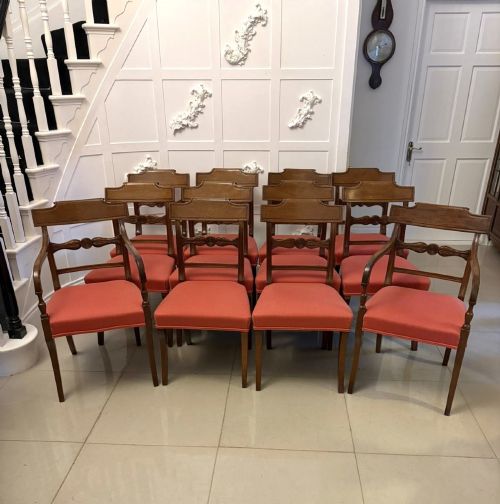
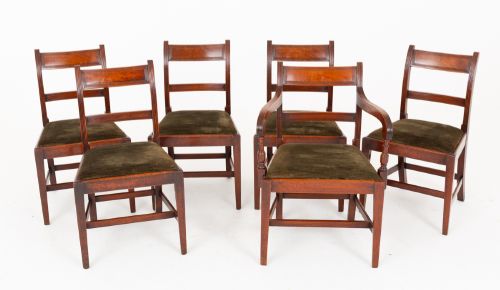
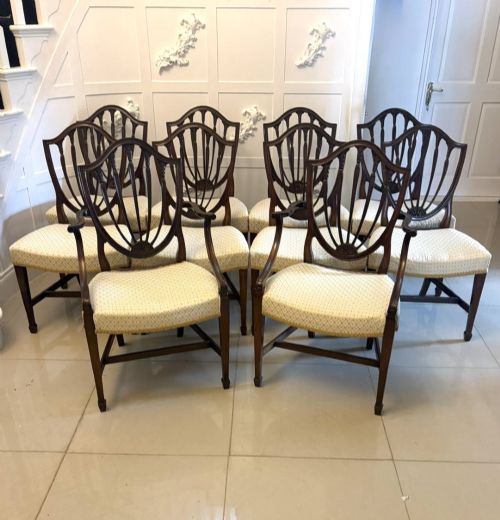
Most examples encountered here appear within larger dining sets or as single armchairs derived from Georgian, Regency, and Edwardian workshops. The inventory spans straightforward ladder-back and shield-back shapes alongside more elaborate elbow chairs fitted with cane seats and upholstery fabric.
How They Were Made
Cabinetmakers built these carvers primarily from dense mahogany, occasionally pairing the timber with secondary woods and embellishing frames with brass details. Joinery relied on precise mortise and tenon construction to ensure the arm joints withstood daily weight and movement.
Seats received support from interlaced webbing, cane panels, or drop-in frames padded with horsehair and covered in textile, velvet, or upholstery fabric.
Listings feature mahogany, fabric, velvet, brass, cane, and wood across Georgian, Regency, Victorian, and Edwardian periods.
What Varies in Quality
The distinction between ordinary and superior examples lies in the sharpness of the hand-carved details on the splats and arms, as well as the selection of the timber. Timber with rich figuring and deep natural warmth elevates a frame above plain stock.
Structural integrity also separates the output of skilled makers from routine production, visible in the snugness of the joints and the retention of original components rather than later replacements.
Maple and Co·Alfred Allen of Birmingham
The Period Mahogany Carver Glossary
- Carver
- An armchair designed to match a set of dining chairs, traditionally placed at the ends of the table.
- Shield-back
- A chair back shaped like a rounded shield, popular during the late eighteenth century.
- Sabre leg
- A curving, concave leg that tapers toward the foot, frequently seen on Regency seating.
- Cane
- Woven rattan material used to form light, supportive seats and backs.
- Elbow chair
- An alternative term for an armchair, referencing the supportive rests for the arms.
Period Mahogany Carver: Frequently Asked Questions
What is a period mahogany carver?
A period mahogany carver is an antique armchair featuring structural arms, built during the Georgian, Regency, or Victorian eras.
These chairs served as the primary seat at the head of a dining table or functioned as an occasional desk chair.
How were carver chairs used historically?
Carvers were positioned at the head and foot of a dining table to seat the host and hostess.
Their wider frames and supportive arms distinguished them from the smaller side chairs used by other guests.
How do I identify a Georgian carver?
Georgian carvers typically exhibit straight legs, solid splats, and robust proportions associated with eighteenth-century design.
Detailing often includes carved wheat ears, Prince of Wales feathers, or geometric fretwork along the back.
Can I use these chairs daily?
These mahogany frames tolerate normal daily use provided the joinery remains tight and stable.
Upholstered and cane seats benefit from gentle treatment and occasional professional inspection of the underlying webbing.