




Period Library Seating
Period library seating brings substantial mahogany, walnut, and rosewood armchairs into study spaces, offering deep seats and robust timber frames.
Period Library Seating
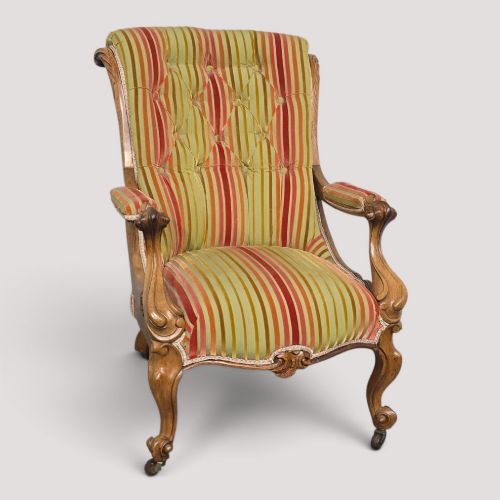
Period library seating comprises sturdy armchairs and desk chairs designed for study and reading spaces, featuring substantial wooden frames and supportive upholstery. The selections on this page span several centuries, with particular emphasis on Regency, Victorian, and Georgian examples.
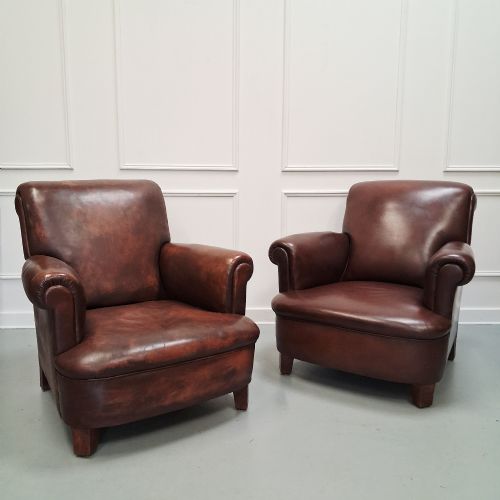
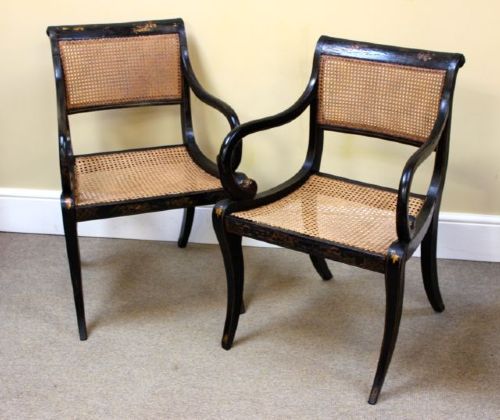
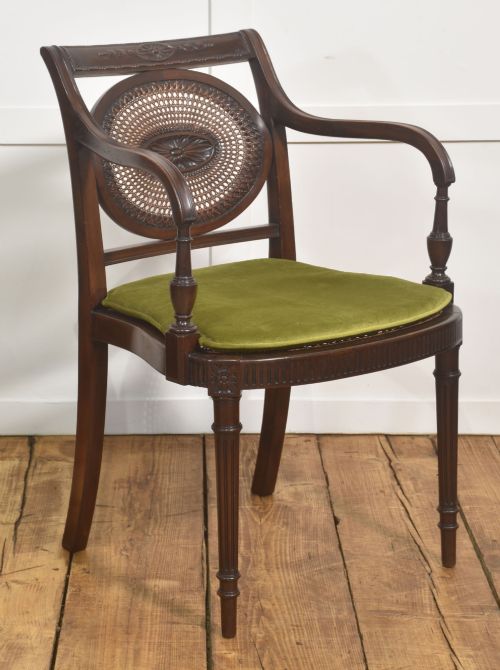
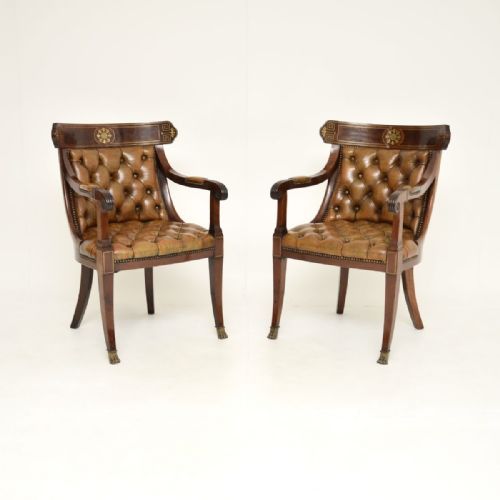
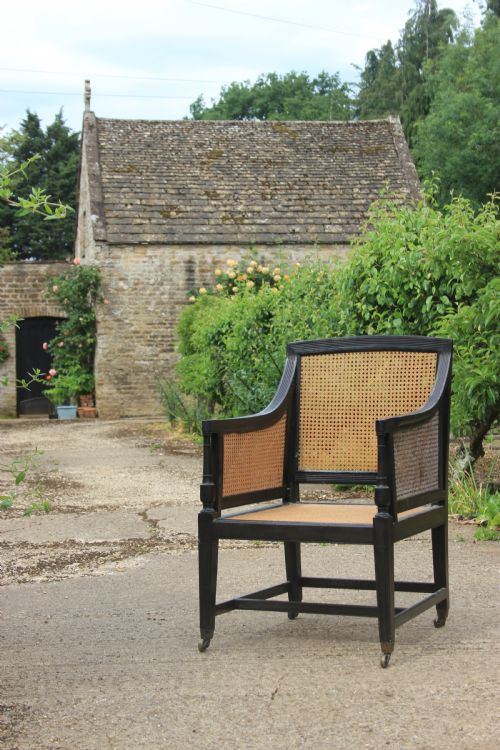
Buyers will encounter various forms ranging from open armchairs to fully enclosed bergères fitted with cane panels. Mahogany and rosewood predominate amongst the offerings, frequently accompanied by leather or fabric seat coverings.
Materials and construction
Cabinet makers utilised dense hardwoods such as mahogany, walnut, and yew to construct durable frames capable of supporting constant use. Carved details and brass inlay enhance specific models, while cane work provides flexible support on bergère panels.
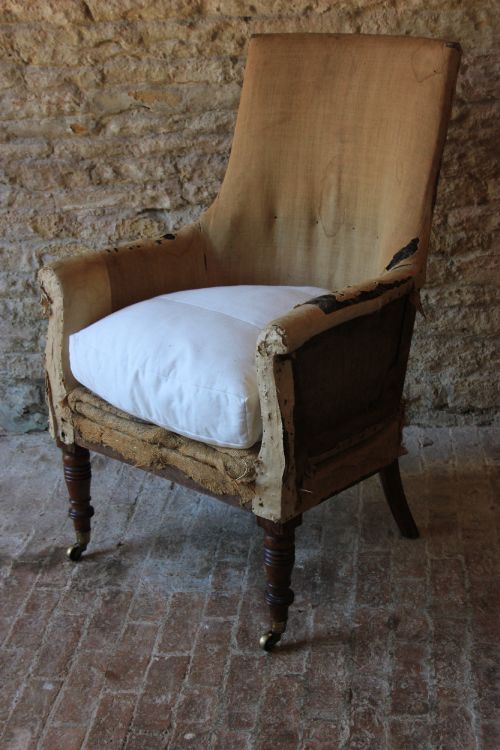
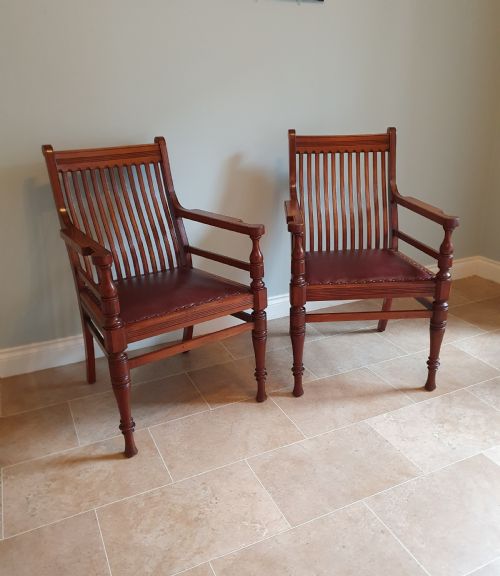
Upholstery relies on traditional stuffing methods contained beneath leather, velvet, fabric, or solid wood seats. Joinery techniques include precise mortise and tenon joints to ensure long-term stability in heavy armchairs.
The listings feature mahogany, walnut, rosewood, oak, ebony, and yew wood, alongside upholstery materials including leather, velvet, and fabric.
Judging quality
The degree of carving finesse and proportion separates standard seating from superior examples. Well-drawn frames exhibit balanced curves and harmonious dimensions that reflect the skill of the original workshop.
Timber selection and the preservation of original surfaces heavily influence overall character. Untouched grain patterns and crisp mouldings indicate higher execution during manufacture.
Charles Bevan·J.Mills·George Smith
The Period Library Seating Glossary
- Bergère
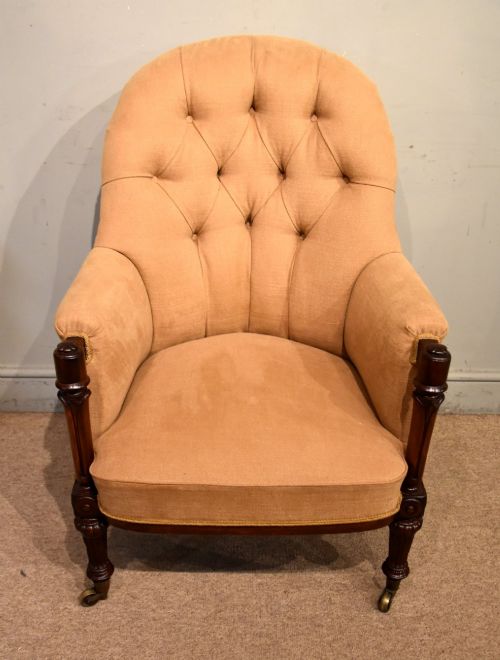
- An enclosed armchair with stuffed upholstery and cane or solid sides. This form appears frequently in Regency and later nineteenth-century pieces.
- Gainsborough armchair
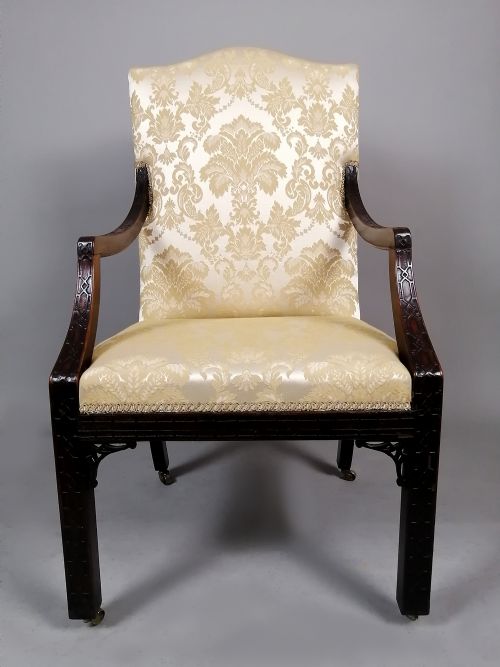
- A wide, low-backed seat with padded arms designed for writing desks. Eighteenth-century versions often display carved mahogany frames.
- Brass inlay
- Thin strips of brass set flush into timber surfaces to create geometric patterns. This decorative technique distinguishes many Regency designs.
- Caning
- Woven rattan material used to form light, supportive panels for backrests and sides. It requires careful tension during installation.
Period Library Seating: Frequently Asked Questions
What defines period library seating?
These pieces are sturdy armchairs and desk chairs built from dense hardwoods like mahogany, walnut, and rosewood. They are designed for reading and study environments.
Most examples feature upholstered leather or fabric seats, while certain models utilise cane panels and carved wooden frames for structural support.
How were library armchairs used?
They served as comfortable seats for reading weighty volumes and working at writing desks within private libraries and studies. Their generous proportions accommodated prolonged periods of sitting.
Many designs incorporated open arms to allow ample room for voluminous historical garments and comfortable posture during scholarly tasks.
How do I identify Regency pieces?
Regency items often display distinctive brass inlay set into dark mahogany or rosewood surfaces. The silhouettes lean towards classical restraint with polished wood frames.
You will also find characteristic bergère forms featuring woven cane panels alongside padded leather or fabric upholstery.
Are these chairs suitable for modern desks?
Many period armchairs and desk chairs fit comfortably beneath standard contemporary working tables. Their open arm designs allow them to slide close to work surfaces.
Buyers should verify seat heights and arm clearance measurements to ensure compatibility with modern furniture layouts.