




Period Furniture Trunk
These period furniture trunk examples are heavy storage pieces built from solid timber to hold household goods through centuries of daily use.
Period Furniture Trunk
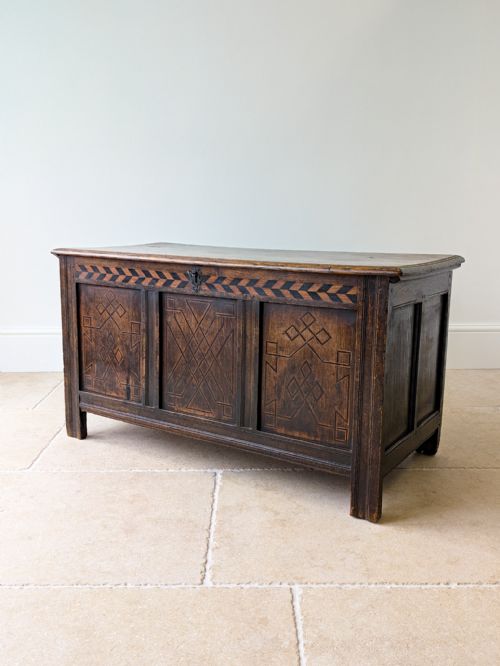
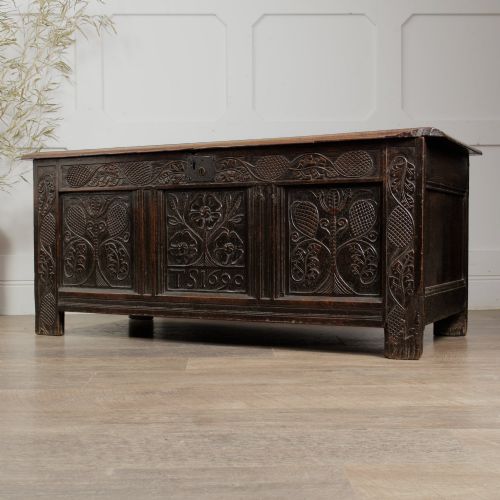
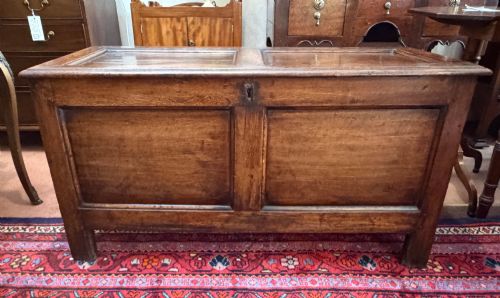
When you search for period furniture trunk, you encounter robust wooden storage items predominantly formed as oak coffers, mule chests, and blanket boxes spanning from the sixteenth to the eighteenth century. These pieces originate from regional English workshops, Welsh communities, and continental makers, reflecting the practical needs of early households.
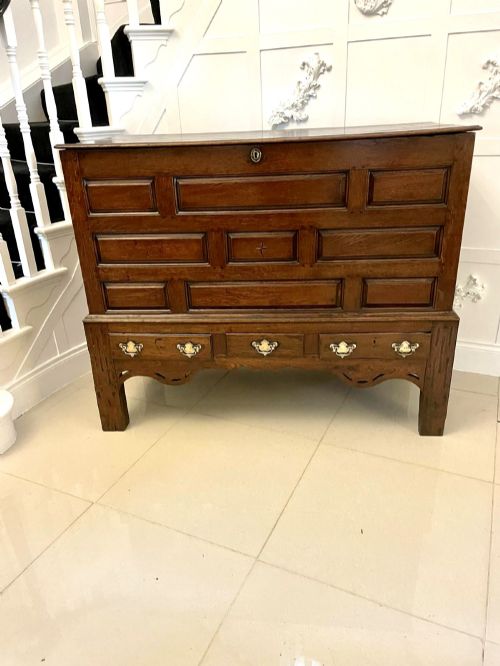
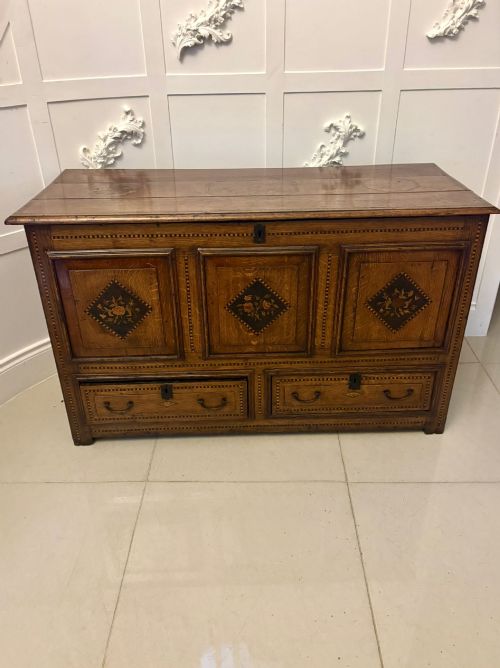
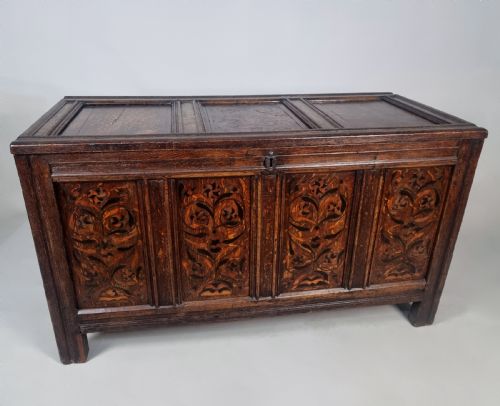
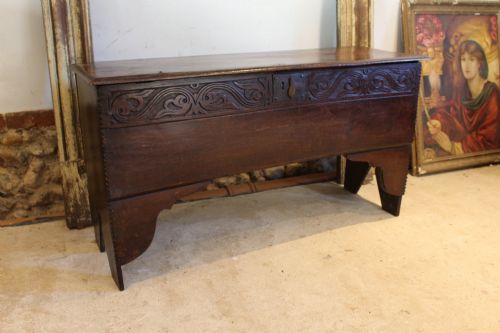
The most common form on this page is the seventeenth century oak coffer, often constructed with panelled sides or as a simpler boarded format. Alongside these stand mule chests featuring lower drawers, alongside specialised regional variations such as grain arks and small Welsh coffor bach units.
How they were made
Makers relied primarily on native oak, supplemented by elm in certain regional boards, shaping structural members with hand tools to build sturdy joints. Panels were frequently fitted into grooved frames to accommodate seasonal wood movement without splitting the primary structure.
Surface enrichment involved carved architectural motifs, arcading, and occasionally marquetry inlay utilising mixed woods to pattern the facade. Iron and brass hinges, locks, and brackets were hand-forged to secure the heavy lids.
Period Furniture Trunk Retail Price Guide 2026
Typical asking prices for period furniture trunk among the pieces listed under this phrase on Sellingantiques today, from the lower quarter to the upper quarter. They describe what is for sale here now, not the wider market.
Listings feature oak, elm, brass, and wrought iron across sixteenth, seventeenth, and eighteenth century periods.
What varies in quality
The distinction between standard utility items and finer examples rests in the depth and execution of the carved decoration and the sophistication of the joinery. Pieces displaying crisp architectural mouldings, well-balanced proportions, and integrated drawer structures demonstrate superior craftsmanship from their period.
The Period Furniture Trunk Glossary
- Coffer
- A heavy wooden chest utilised historically for storing valuables, textiles, and documents. These sturdy containers typically feature hinged lids and boarded or panelled construction.
- Mule chest
- A storage chest featuring one or more drawers built into the base beneath the main compartment. This form bridges the evolution between simple blanket boxes and modern drawer chests.
- Six plank
- A primitive method of chest construction utilising single boards for the front, back, ends, top, and bottom, joined at the corners with nails or dovetails.
- Marquetry
- The art of applying thin veneers of various coloured woods to a structural surface to create pictorial or geometric patterns.
- Arcaded
- A decorative motif carved onto panels to simulate a series of arches supported by columns, common in seventeenth century woodwork.
Period Furniture Trunk: Frequently Asked Questions
What did people store inside a period furniture trunk?
Households used these sturdy containers primarily to safeguard valuable textiles, woollen blankets, clothing, and important family documents away from dampness and pests.
Because domestic architecture of the period lacked built-in closets, these large wooden boxes served as the main secure wardrobe for daily possessions.
How can I tell a seventeenth century piece from an eighteenth century one?
Seventeenth century examples typically display heavier framework, pegged mortise and tenon joinery, and deep geometric or figural carvings reflecting Jacobean and Elizabethan styles.
Eighteenth century pieces often introduce subtle refinements such as cleaner panel lines, fitted drawer bases, and occasional marquetry inlay.
Where were these regional chests built?
Makers constructed them in local carpentry shops across English counties like Lancashire and the West Country, as well as distinct Welsh regions including Snowdonia and the Gower Peninsula.
Each area imparted slight variations in timber selection, such as utilising local elm or native oak, and distinct decorative carving traditions.
How do I care for antique oak furniture at home?
Keep these wooden pieces away from direct heat sources and sudden humidity shifts to prevent the timber from drying out or splitting.
Apply a traditional beeswax polish occasionally to nourish the surface and maintain the natural dark patination built up over centuries.