


Period Entry Table
These period entry table pieces bring hallway architecture to life, offering a practical surface with distinguished historical presence for your home.
Period Entry Table
A period entry table serves as the initial focal point of a hallway, welcoming guests with grounded proportions and historical character. When exploring this selection, you encounter forms that span several centuries, with mahogany and oak examples appearing most frequently.
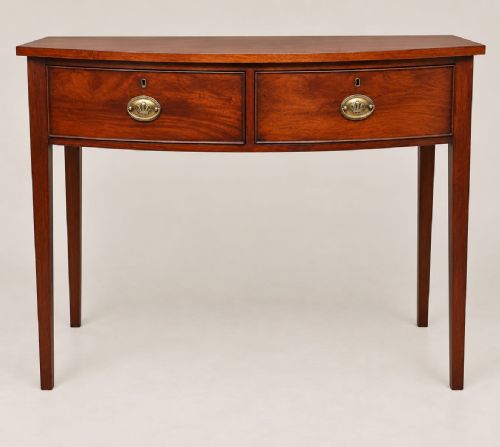
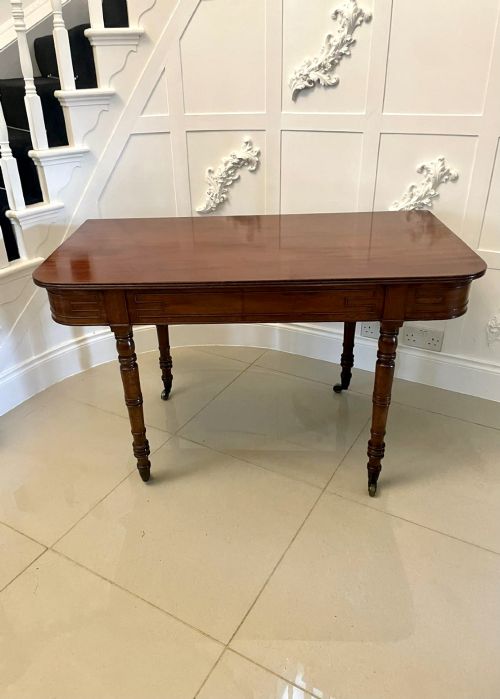
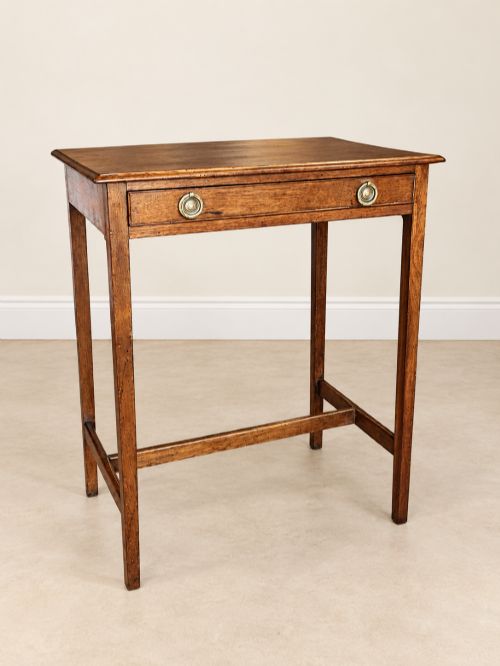
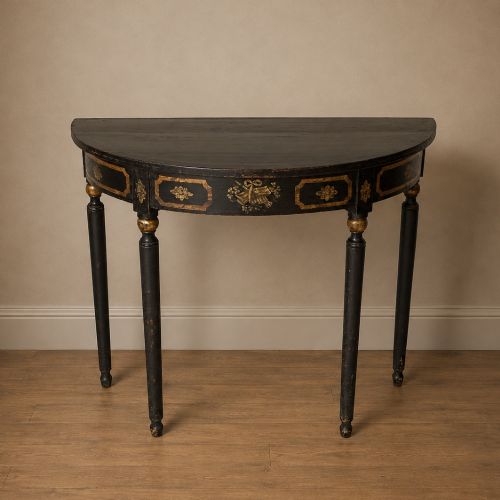
The assortment relies heavily on console tables, side tables, and centre tables originating from Georgian, Regency, and nineteenth-century workshops. These pieces range from restrained oak lowboys to large black painted demi-lune consoles detailed with parcel gilt.
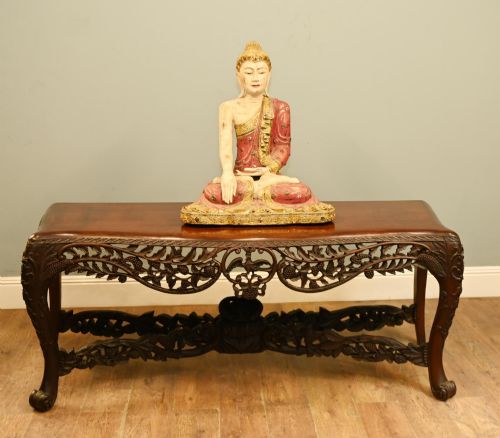
Makers drew on diverse regional vocabularies, incorporating French Empire design, Chinese Qing Dynasty carved hardwood, and Anglo-Indian craftsmanship into traditional British hall layouts. Buyers find both intimate single-drawer side tables and substantial architectural server pieces suited to grander entrance spaces.
Materials and Construction
Cabinetmakers relied on dense timber stocks like mahogany, rosewood, and oak, often selecting figured veneers to create striking grain patterns across flat surfaces. Structural integrity depended on traditional joinery techniques, while secondary timbers were used discreetly for drawer linings and internal framing.
Decorative embellishments involved specialist skills such as hand-carving, parcel gilding, and applied red lacquer over timber substrates. Marble tops were fitted to specific console and centre table designs, requiring precise stone-cutting to rest flush within wooden surrounds.
An eighteenth-century alter table meets a nineteenth-century hallway, proving that ancestors loved a dramatic entrance just as much as we do.
Distinctions in Execution
Quality rests in the precision of the joinery and the selection of timber, where superior examples exhibit continuous grain matching and crisp, hand-carved detailing. Lesser pieces often rely on simpler construction methods and secondary woods with less deliberate grain alignment.
The sophistication of the design execution separates standard utility furniture from high-status items attributed to notable workshops like Gillows. Detail refinement in the brass fittings, the crispness of parcel gilt, and the weight of integrated marble tops distinguish the upper tier of the range.
The Period Entry Table Glossary
- Demi-lune
- A half-moon shape commonly utilised for console tables designed to sit flush against a hallway wall. This profile maximises floor space while providing an adequate surface for display.
- Lowboy
- A small table with one or more drawers, originating in the early eighteenth century and frequently constructed from oak or walnut. It functions well as a compact surface in narrower passageways.
- Parcel gilt
- A surface decoration technique where specific carved elements or mouldings are highlighted with thin gold leaf. It creates contrast against a dark painted or polished wood background.
- Foldover
- A tabletop hinged to double its surface area when opened, often supported by a swing leg or a rotating mechanism. This mechanism allows the furniture to function as a compact side piece or a larger serving surface.
Period Entry Table: Frequently Asked Questions
Where should I place a console table?
These tables fit naturally against entrance hallway walls where floor space is restricted yet a focal surface is required. They offer an immediate drop zone for keys and post upon entering the home.
Larger variations also anchor long corridors or sit beneath hallway mirrors to balance vertical proportions.
How do I care for antique mahogany?
Maintain the timber by applying natural beeswax sparingly and buffing with a soft, lint-free cloth to preserve the historical sheen. Avoid placing the wood in direct sunlight or near heat sources to prevent timber shrinkage.
Keep moisture away from the surface by using coasters under any objects placed on the top.
What is a marble top table used for?
A marble top provides a durable, heat-resistant surface that originally served practical functions in grand entrance halls. It allowed inhabitants to place wet items or heavy objects down without marking the wood.
Today, the stone adds a contrasting textural element to wooden entrance schemes.
How do I identify a Regency table?
Regency pieces often display classical architectural motifs, bold brass mounts, and dark woods such as rosewood or parcel-gilt mahogany. Look for clean geometric lines influenced by French Empire and ancient classical styles.
Proportions during this period tend to be theatrical and confident, suited to prominent placement.