





Period Embroidery Panel
A period embroidery panel brings centuries of handwork into a room, offering tactile depth through silk threads, metallic work, and framed historic scenes.
Period Embroidery Panel
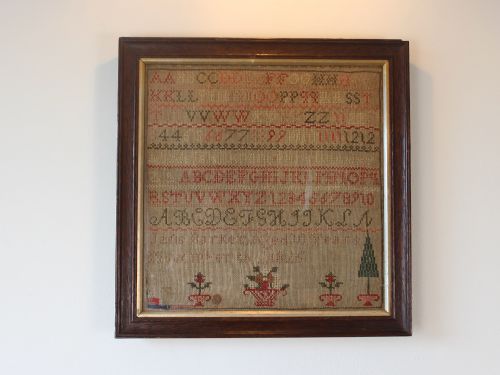
A period embroidery panel encompasses framed textile art, wall art, samplers, and folding screens produced across several centuries. These works include seventeenth-century Stuart stumpwork panels depicting royal figures, Georgian alphabets, and nineteenth-century Japanese silk depictions of geese.
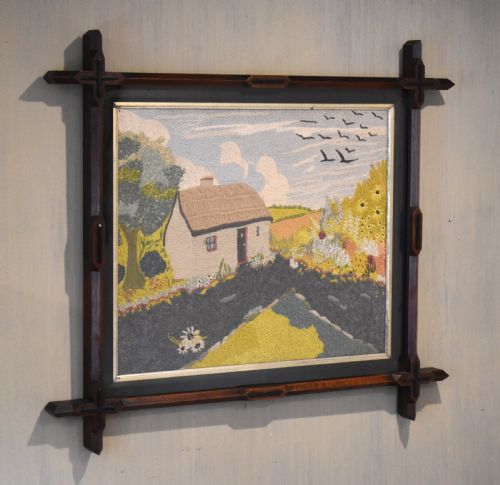
The versions most commonly met on this page range from early seventeenth-century needlework fragments and Stuart stumpwork to nineteen-hundred Arts and Crafts pictures and Persian felt applique work. Buyers also encounter nineteenth-century Japanese folding screens and textile art alongside Greek fragments.
Originating from British, Persian, Japanese, and Greek traditions, each period embroidery panel reflects the distinct aesthetic priorities of its workshop and era. The forms vary from intimate framed beadwork fragments to substantial four-fold screens.
How they were made
These textiles rely on foundations of linen, felt, and wood, combined with silk thread, wool, and metallic thread. Makers stitched complex imagery directly onto ground fabrics or applied felt cut-outs in layered arrangements.
Stumpwork techniques involved padded elements to create raised, three-dimensional figures of kings, queens, and courtly figures. Other pieces utilised intricate beadwork fragments and precise needlework samplers to demonstrate technical skill.
Many panels incorporate wooden frames, glass protection, and lacquer work to secure fragile textiles. Japanese works deploy extensive silk thread embroidery across large screens and wall art.
Period Embroidery Panel Retail Price Guide 2026
Typical asking prices for period embroidery panel among the pieces listed under this phrase on Sellingantiques today, from the lower quarter to the upper quarter. They describe what is for sale here now, not the wider market.
A seventeenth-century needlework panel captures King Charles II alongside his favourite mistress, preserving court gossip in silk.
What varies in quality
Quality rests upon the intricacy of the stitchwork, the complexity of the figural or floral design, and the survival of the original materials. Early Stuart stumpwork with detailed padded embroidery and metallic thread demonstrates high execution compared to simpler school samplers.
The integrity of the ground fabric and the vibrancy of surviving silk and wool threads dictate the overall visual impact. Persian felt applique and Japanese silk panels depend on clean execution and secure mounting within frames or screens.
The provenance and attribution to specific makers or distinct stylistic traditions elevate certain pieces. Condition plays a role, particularly how well fragile threads and beads remain attached to the linen or felt backing.
Iida Takashimaya Company
The Period Embroidery Panel Glossary
- Stumpwork
- A raised embroidery style popular in seventeenth-century Britain, using padded underlays to create three-dimensional figures and motifs. This technique often depicts historical or biblical scenes with elaborate costume detail.
- Sampler
- A piece of needlework produced to demonstrate a variety of stitches, alphabets, or patterns. Georgian examples often include dates, maker names, and pious verses.
- Applique
- A sewing technique where pieces of fabric, such as felt, are applied to a larger background material to form a design. Persian Rasht embroideries frequently utilise this method with silk on felt.
- Beadwork fragment
- A surviving section of textile art decorated primarily with small beads rather than thread. These fragments are typically mounted and framed for display.
- Needlework picture
- A framed textile composition designed to function as a wall hanging or artwork rather than a functional household item. These often reproduce portraits or narrative scenes.
Period Embroidery Panel: Frequently Asked Questions
How should I hang a period embroidery panel?
Mount these textiles on interior walls away from direct sunlight and damp conditions to protect delicate silk threads and linen grounds. Professional framing with UV-filtering glass helps preserve fragile seventeenth-century stumpwork and nineteenth-century Japanese panels.
Ensure the hanging hardware securely supports the weight of the wooden frame and backing board. Position the panel at eye level in a stable environment with minimal temperature fluctuations.
How do I identify a Georgian sampler?
Georgian samplers typically display alphabets, numbers, and geometric borders stitched in wool or silk on a linen ground. Many include dates, signatures, and moral verses worked by young practitioners during the eighteenth and early nineteenth centuries.
Stylistically, these pieces are more restrained than earlier Stuart works, focusing on orderly rows of lettering and botanical motifs. The presence of a clear date or Georgian monarch reference helps confirm the period.
What is Persian Rasht embroidery?
Persian Rasht embroidery is a traditional textile art characterised by intricate felt applique work and fine silk chain stitching. These pieces often feature central floral medallions and complex botanical scrolling.
Produced primarily around the city of Rasht, these textiles use vibrant coloured felts and threads. Their distinctive layering technique separates them from flat European needlework of the same era.