


Period Drop Leaf Console
A period drop leaf console offers folding leaves and versatile timber surfaces, spanning the seventeenth century up to the Regency era.
Period Drop Leaf Console
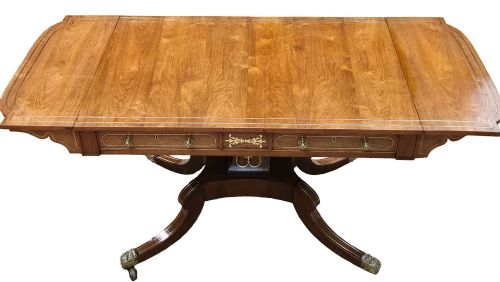
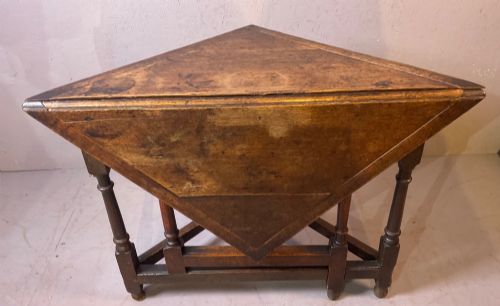
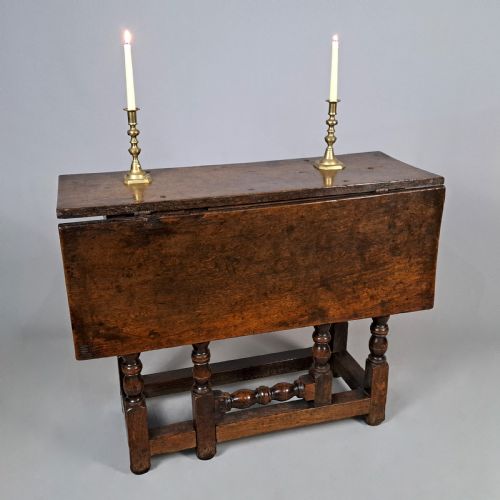
A period drop leaf console brings together folding leaf mechanisms and slender proportions, serving various domestic functions. The pieces gathered here range from seventeenth century oak gateleg and credence forms to eighteenth century Georgian dining tables and nineteenth century sofa tables.
Regency sofa tables in rosewood and mahogany dominate the selection, often featuring brass inlay and lyre ends. Alongside these, buyers encounter seventeenth century walnut and oak side tables, as well as French Empire and William IV examples designed for writing and display.
Materials and construction
Cabinet makers relied primarily on figured mahogany and rich rosewood, frequently enhanced with contrasting brass stringing, ormolu mounts, and parcel gilt highlights. Earlier examples utilise solid oak and walnut, displaying pegged joints and traditional gateleg folding actions.
Fine craftsmanship shows in the precise jointing of Pembroke and sofa table flaps, alongside the stability of central pillar supports and brass-shod caster feet. Timber selection dictates the visual depth, particularly in polished rosewood and quarter-sawn oak surfaces.
Several of these tables double as lady's screen writing desks, proving that eighteenth century multitasking was an art form.
Distinctions in quality
The standard of a period drop leaf console rests on the crispness of brass inlay work and the harmonious grain matching across extended leaves. Superior pieces maintain structural rigidity in their drop-leaf hinges and pivoting supports, avoiding the looseness common in heavily used examples.
Attribution to documented makers such as Jean-Joseph Chapuis elevates certain nineteenth century pieces, while original patination and untouched surface finishes separate masterworks from later restorations.
Jean-Joseph Chapuis
The Period Drop Leaf Console Glossary
- Drop leaf
- A table with folding flaps supported by hinged wooden brackets, rule joints, or swinging legs. This mechanism allows the surface area to expand or contract according to space and utility.
- Sofa table
- A narrow library or centre table designed during the Regency and Georgian periods to stand directly in front of a sofa. They typically incorporate two drop leaves and small twin drawers.
- Gateleg table
- A sturdy table featuring hinged legs that swing outward like a gate to support drop-down leaves. This construction method became widespread in seventeenth century English oak and walnut furniture.
- Brass inlay
- The technique of embedding thin brass strips or decorative motifs into routed channels within a timber surface. Regency cabinet makers utilised this method extensively on rosewood and mahogany.
- Credence table
- A folding table with a semicircular or D-shaped top supported by a swinging leg, originating in medieval and seventeenth century interiors. These pieces often served ecclesiastical or domestic display purposes.
Period Drop Leaf Console: Frequently Asked Questions
What is a period drop leaf console?
These pieces are functional antique tables featuring hinged leaves that lower or rise to alter the surface area. They encompass seventeenth century oak gateleg forms and Regency rosewood sofa tables.
Buyers select them for their flexible footprint and rich timber patination, fitting equally well behind upholstery or against walls as console tables.
How were these tables originally used?
In eighteenth and nineteenth century drawing rooms, sofa tables served for writing, reading, and needlework, positioned conveniently near seating. Earlier seventeenth century drop leaf and gateleg forms functioned primarily as dining or side tables.
The folding leaves allowed households to reclaim floor space when entertaining or when the room was not in full use.
How do I distinguish Regency from earlier periods?
Regency tables, dating from the early nineteenth century, frequently showcase dark rosewood, contrasting brass inlay, and lyre-shaped pedestal ends. They display classical influences and refined proportions.
Seventeenth and eighteenth century pieces rely instead on solid oak, walnut, or early mahogany, featuring visible pegged joinery and structural gateleg frames rather than pillar supports.
How do I care for antique timber surfaces?
Protect antique rosewood and mahogany finishes by avoiding direct sunlight and maintaining stable room humidity. Natural beeswax polish helps nourish the grain without building up synthetic residues.
Lift these tables rather than dragging them across floors to prevent straining the drop-leaf hinges and leg joints.