
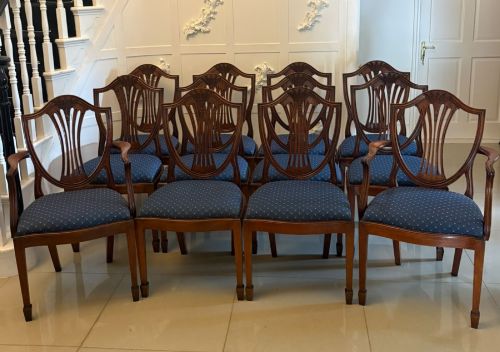
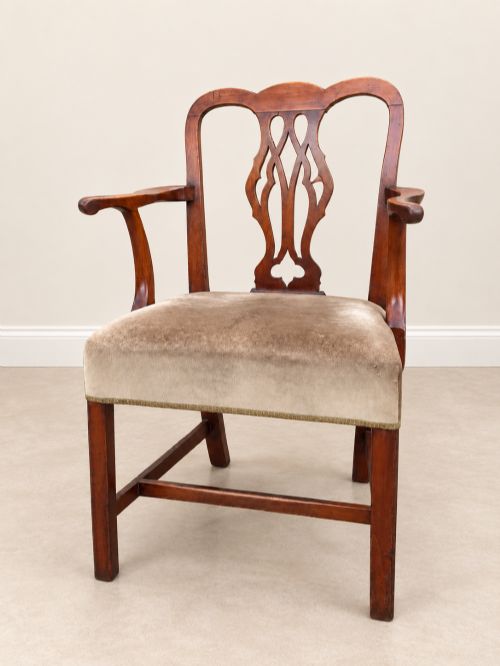
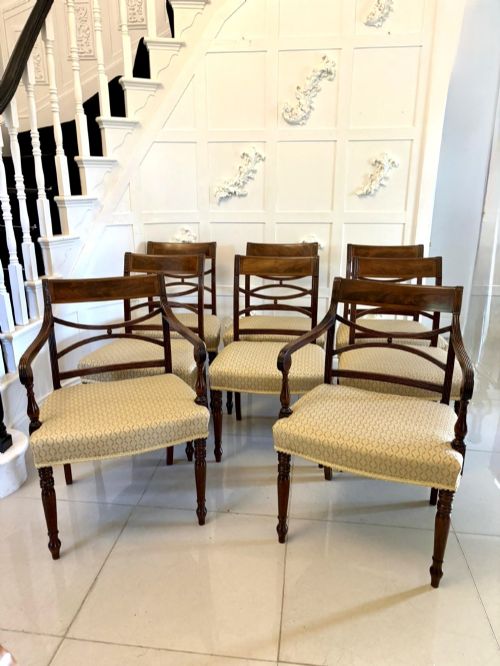
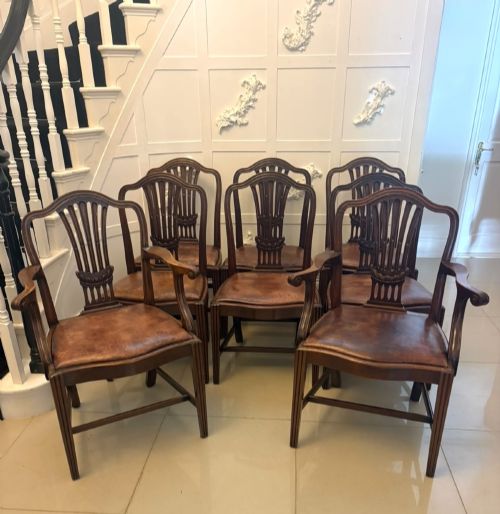

Period Dining Armchair
A period dining armchair is a substantial seat designed for the head of the table, offering both presence and comfort for long meals.
Period Dining Armchair
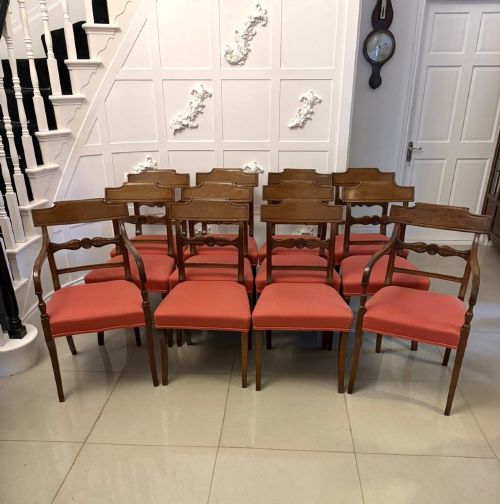
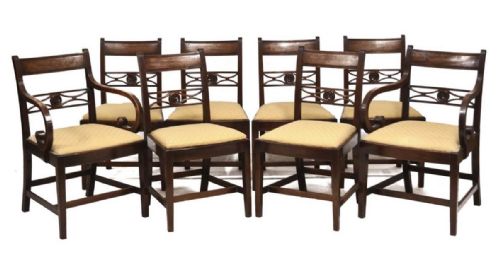
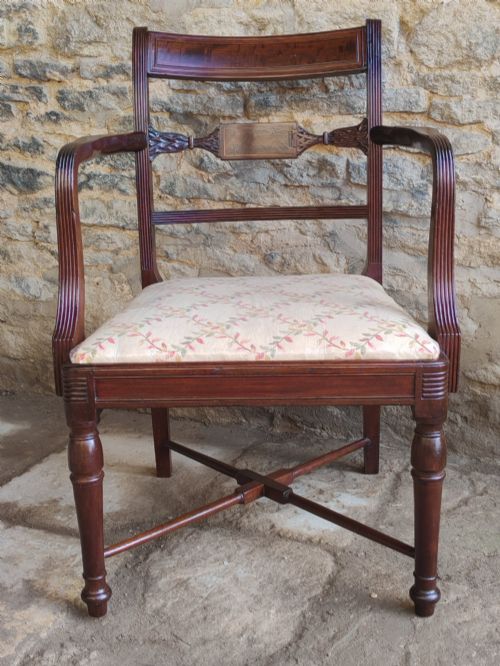
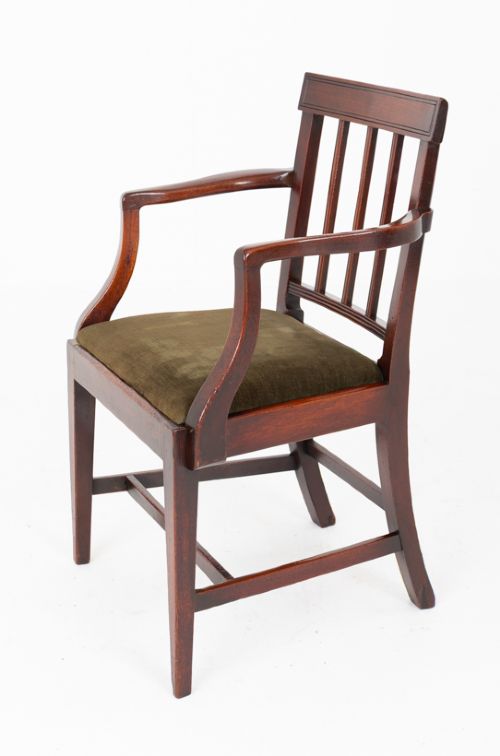
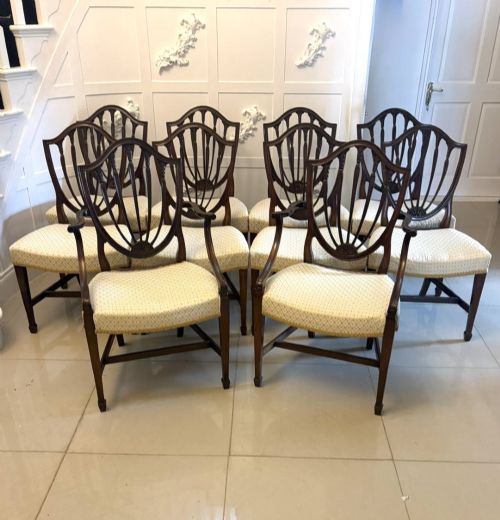
A period dining armchair functions as a substantial seat placed at the head of a dining table, designed with supportive arms to distinguish it from standard side chairs. When searching for a period dining armchair, buyers encounter pieces spanning several centuries, including 18th century examples and later 19th century interpretations.
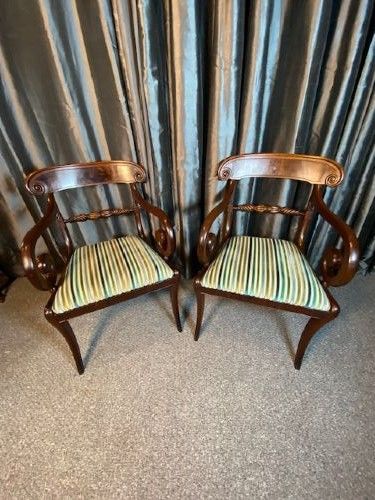
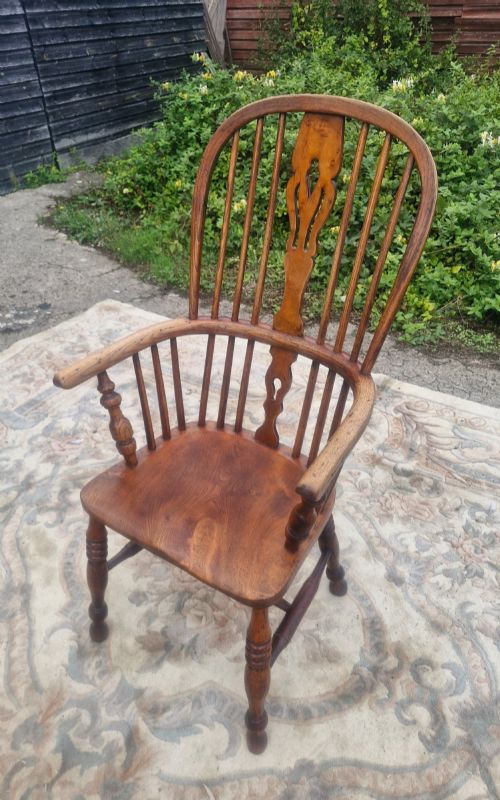
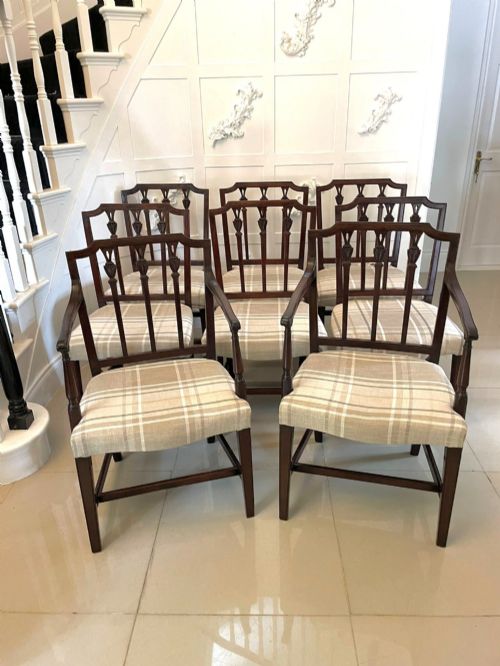
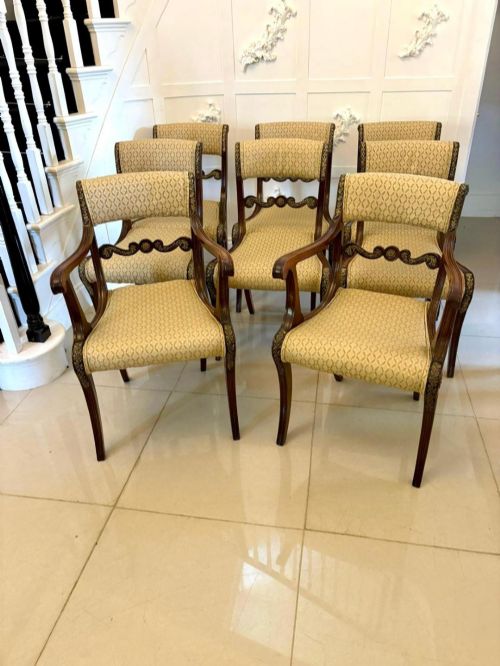
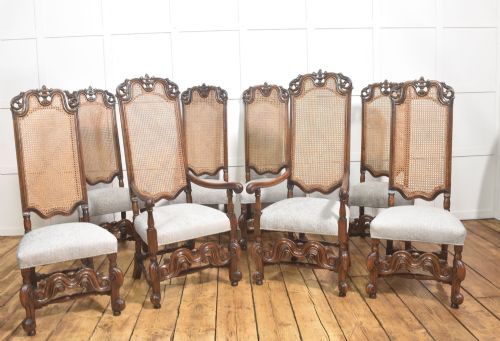
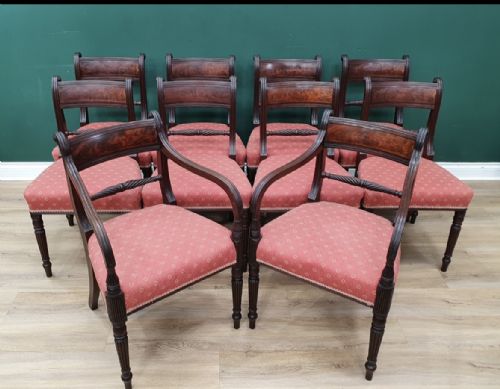
The forms vary widely across different eras, ranging from high-back Windsor and wainscot constructions to elegant George III shield backs and scrolled Regency carvers. Many survive as part of larger dining sets that include matching single chairs alongside the main armchairs.
Makers utilised various regional designs, producing Scottish, Irish, and English variants in workshops that adapted classical proportions for domestic dining. These chairs appear in woods such as mahogany, oak, and walnut, frequently incorporating upholstery or cane seating.
What varies in quality
The degree of crispness in the hand-carved ornament dictates much of the visual merit, distinguishing finely detailed splats and arms from simpler, mechanical work. Timber selection also plays a role, with dense, well-figured mahogany or burr walnut commanding greater appreciation.
Structural integrity relies on the preservation of original joints and minimal replacement timber during past interventions. The retention of early surface patination and original finish further separates ordinary examples from superior ones.
Object forms include standard dining chairs, high chairs, and carver armchairs produced in English, Scottish, and Irish workshops.
Maple and Co·Alfred Allen of Birmingham
The Period Dining Armchair Glossary
- Carver chair
- A term frequently used interchangeably with a dining armchair, denoting a seat with arms designed to sit at the table head. These chairs often matched a set of simpler single chairs.
- Wainscot armchair
- An early wooden armchair constructed with panelled backs and solid wooden seats, typically originating in the seventeenth century. These sturdy chairs represent heavier, vernacular domestic seating.
- Scroll arm
- An armrest curved downward and inward in a spiral or scroll contour, commonly found on Regency and Victorian dining armchairs. This feature provides a comfortable handrest while softening the linear geometry of the frame.
Period Dining Armchair: Frequently Asked Questions
How do I use a period dining armchair?
A period dining armchair is traditionally placed at the head or foot of a dining table to provide a commanding seat for the host. These chairs can also function as occasional seating in a study or hallway when not in use around the table.
Because they feature supportive armrests, they offer a comfortable option for prolonged sitting during formal meals or gatherings.
Are armchairs sold individually or in sets?
These armchairs appear both as individual pairs and as part of larger dining sets that include several single chairs. Sets typically comprise six or eight single chairs accompanied by one or two matching carvers.
Finding a matched pair or a complete set with integrated armchairs remains common within eighteenth and nineteenth century dining furniture.
What woods were used for these chairs?
Mahogany is the predominant timber found in eighteenth and nineteenth century examples, valued for its rich colour and stability. Earlier pieces frequently utilise oak or walnut, displaying darker tones and distinct grain patterns.
Regional workshops also employed alternative hardwoods such as maple depending on the period and local manufacturing traditions.
How can I tell different periods apart?
Different eras are identified by distinct stylistic vocabulary, such as the heavy panelled construction of seventeenth century wainscot chairs or the delicate carved splats of eighteenth century George III designs. Regency pieces often exhibit classical influences with reeded members and scroll arms.
Victorian examples tend to display heavier proportions and darker finishes, reflecting the manufacturing tastes of the later nineteenth century.