



Period Decorative Mirror
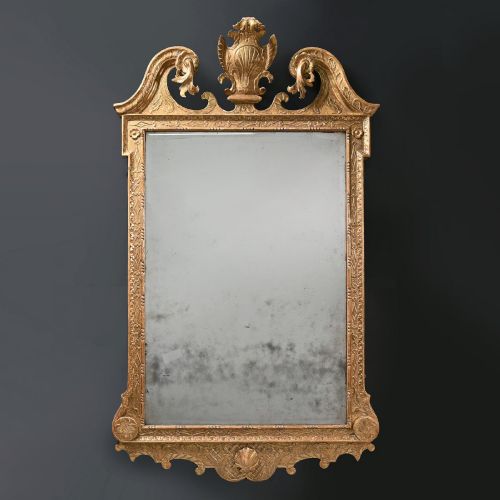
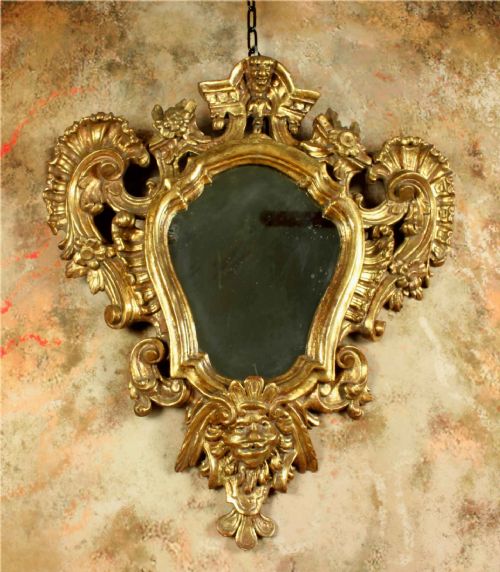
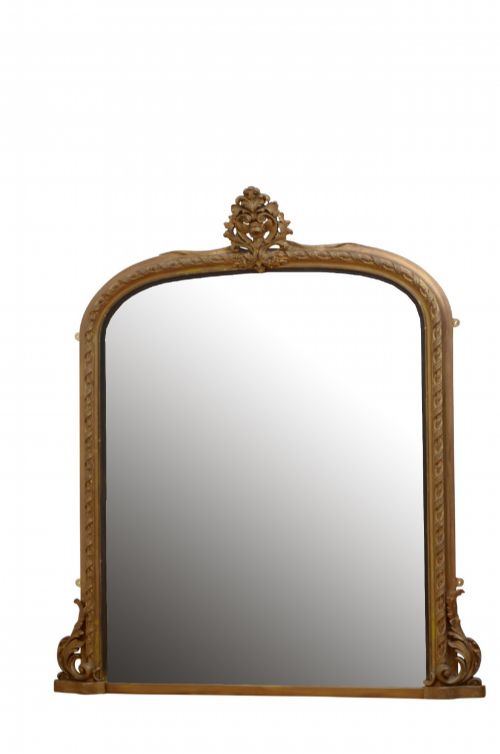
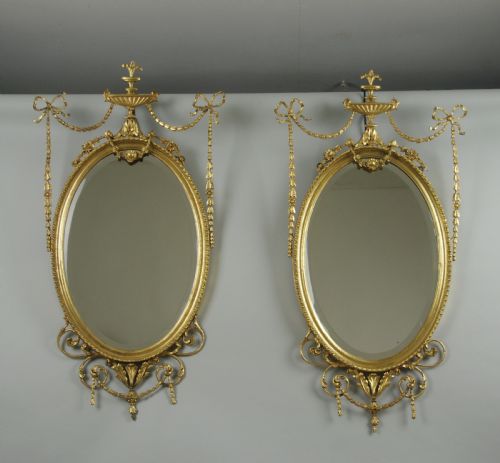
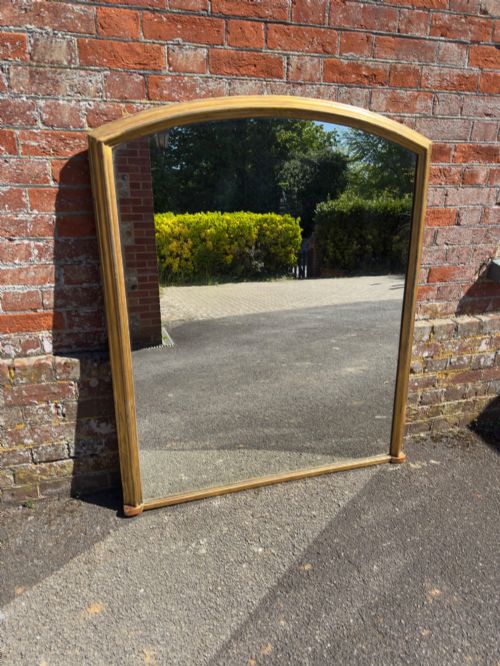
A period decorative mirror brings depth and historic craftsmanship to a room, captured here in diverse forms spanning centuries of design.
Period Decorative Mirror
A period decorative mirror encompasses wall-hanging plates, grand overmantels, and vanity pieces originating from eras such as the Regency, Victorian, and Georgian periods. These items served both practical reflection and architectural ornamentation in historic interiors.
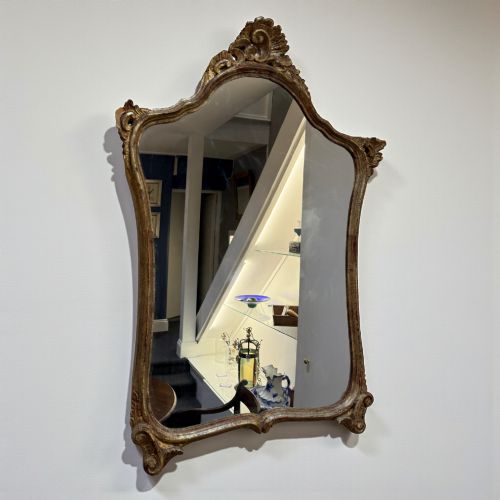
Origins stretch from English workshops to French chateaux, bringing distinct regional interpretations like Rococo flourishes and Aesthetic movement brass and copper detailing. Buyers encounter everything from compact early seventeenth-century ovals to large-scale nineteenth-century pier mirrors.
How they were made
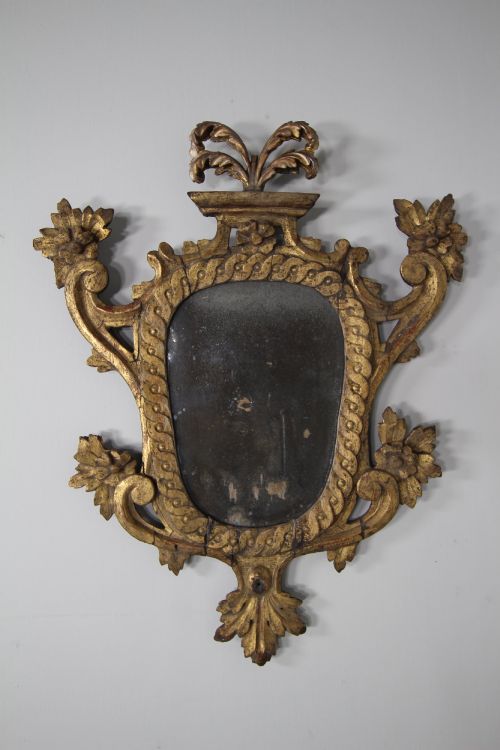
Carved wood and gesso form the structural foundation for many traditional frames, providing a pliable surface for intricate moulding and gilding. Artisans applied thin layers of gold leaf over prepared grounds to achieve a luminous finish.
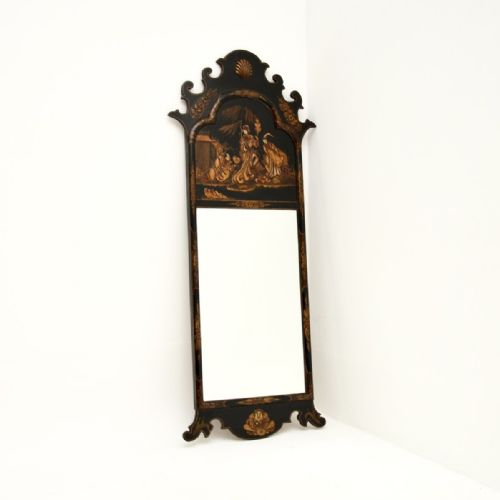
Alternative frames utilise ebonised wood, brass, copper, and mahogany, sometimes incorporating oyster veneers or painted decoration. Mirror plates range from clear antique glass to lightly foxed surfaces showing natural ageing over time.
Period Decorative Mirror Retail Price Guide 2026
Typical asking prices for period decorative mirror among the pieces listed under this phrase on Sellingantiques today, from the lower quarter to the upper quarter. They describe what is for sale here now, not the wider market.
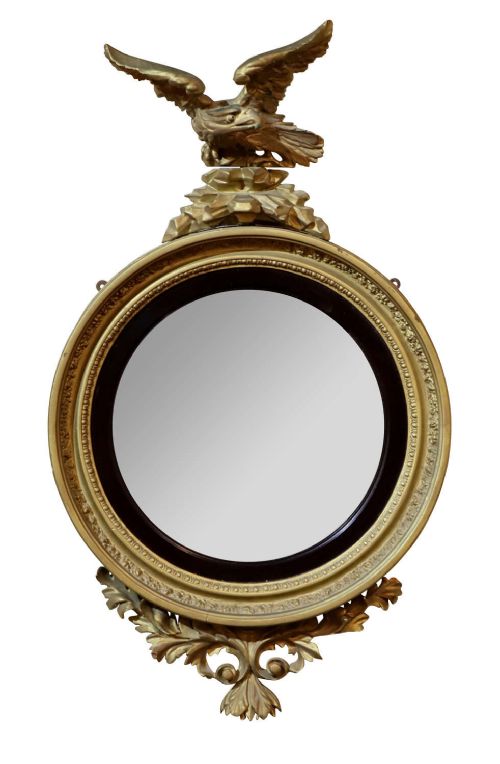
Several convex mirrors keep a watchful golden eagle perched on top, ready to oversee the room from the wall.
What varies in quality
Quality rests in the crispness of the hand-carved ornamentation and the integrity of the original gilding or surface treatment. Master craftsmen achieved sharp relief in gesso and wood details that lesser examples lack.
The preservation of the original mirror plate, whether lightly foxed or clearly etched, contributes significantly to the integrity of the piece. Proportion and balance between the frame and the glass define the most successful examples.
The Period Decorative Mirror Glossary
- Giltwood
- Wood carved and coated with gold leaf or gold paint. This technique defined the most opulent frames of the Regency and Georgian periods.
- Gesso
- A plaster-like mixture applied to wood frames and carved into intricate decorative relief before gilding. It allowed artisans to create complex sculptural motifs.
- Overmantel mirror
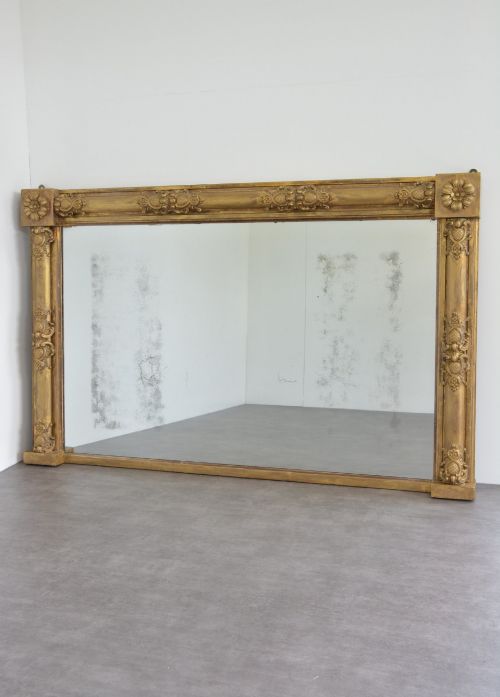
- A large mirror designed specifically to hang above a fireplace mantelpiece. These pieces often feature wide proportions to reflect light across the room.
- Convex mirror
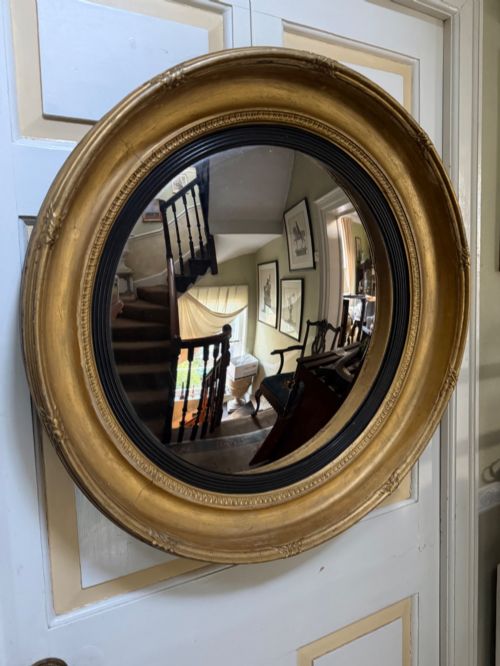
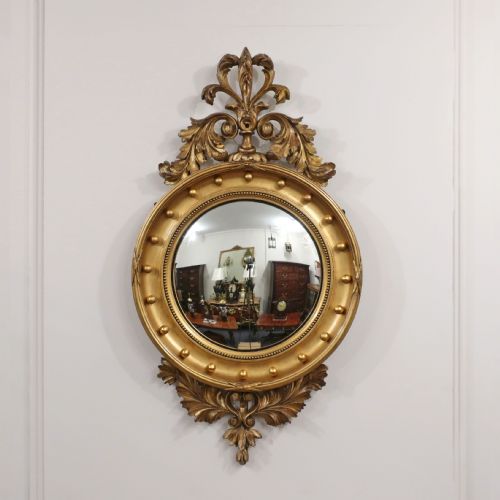
- A round mirror with a bulging spherical glass plate that captures a wide, distorted panoramic reflection of the interior. They often feature eagle surmounts in Regency designs.
- Foxed glass
- Mirror glass displaying dark spots and discoloration caused by the degradation of the silver backing over time. Collectors often prize this gentle ageing as a sign of authenticity.
- Trumeau mirror
- A decorative wall mirror combined with a painted panel or relief carving above the glass plate. Originating in France, these pieces functioned as permanent wall decoration.
Period Decorative Mirror: Frequently Asked Questions
How do I hang a heavy overmantel mirror?
Substantial overmantel mirrors require secure anchoring directly into wall studs or masonry using heavy-duty brackets suited to the weight of wood and glass. Professional installation is strongly recommended for large-scale pieces.
Ensuring the frame rests partly on the mantel shelf itself can also help distribute the downward load safely.
What causes foxed glass on antique mirrors?
Foxed glass occurs when moisture seeps behind the reflective silver or mercury backing over long periods, creating characteristic dark patches and speckles. This chemical ageing process is natural and does not detract from the historic charm of the piece.
Many buyers specifically seek out lightly foxed plates for their authentic period appearance.
Where should I place a convex mirror?
Convex mirrors excel in narrow hallways, dining rooms, or opposite light sources because their curved glass bends light to illuminate dark corners. Placing them at eye level maximises their unique panoramic reflection.
Avoid positioning them in direct, harsh sunlight to protect the historic frame.
How can I tell a Regency mirror from a Victorian one?
Regency mirrors frequently feature classical motifs like rope twists, reeding, and convex plates with eagle surmounts inspired by ancient Greek and Roman designs. Victorian examples often display heavier, more exuberant ornamentation and larger overmantel proportions.
Examining the construction methods and backing boards helps confirm the specific period of manufacture.