
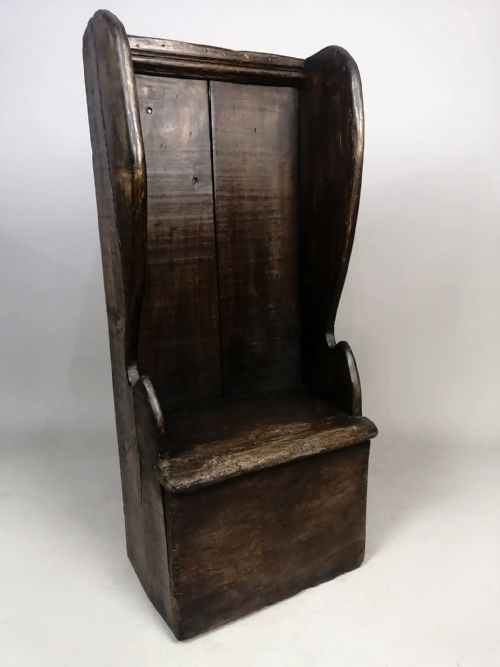


Period Children Seating
Period children seating brings scaled-down craftsmanship into the home, offering miniature chairs and high chairs shaped by centuries of domestic life.
Period Children Seating
Period children seating encompasses small-scale chairs, armchairs, rocking chairs, and high chairs designed for young occupants across past centuries. When you search for period children seating, you encounter furniture dating from the seventeenth century through to the Victorian era and the nineteen-thirties.
The pieces on this page span diverse domestic forms, including ladderbacks, lambing chairs, and chairs on stands. High chairs and rocking chairs appear alongside simpler child chairs fashioned for everyday use.
Origins stretch from the seventeenth-century vernacular traditions through the Georgian and Regency periods into Victorian interpretations. Walnut, fruitwood, mahogany, oak, ash, and elm shape these varied historical forms.
Materials and Construction
Cabinetmakers and rural joiners utilised sturdy timbers like oak, mahogany, fruitwood, ash, and elm to build these miniature seats. Turned frames, carved details, and joined structures provide the primary framework for both formal and vernacular pieces.
Seating surfaces incorporate traditional methods such as cane, rush, fabric, and buttoned leather. Brass accents and rosewood elements appear on specific refined examples from the nineteenth century.
The listings here feature timber varieties including mahogany, oak, fruitwood, ash, and elm across the seventeenth, eighteenth, and nineteenth centuries.
Distinctions in Quality
Quality reveals itself in the fidelity of proportion and the choice of timber, distinguishing simple vernacular work from polished cabinetmaking. Mahogany and rosewood pieces with carved and turned frames demonstrate high levels of period joinery.
The integrity of original materials, from rush seats to buttoned leather upholstery, separates unaltered examples from later adaptations. Subtle decorative choices, such as stands or ebonised finishes, elevate specific items above standard utility pieces.
The Period Children Seating Glossary
- Lambing chair
- An enclosed wooden seat designed to keep out drafts, featuring a high back and solid sides. Miniature versions provided sheltered seating for children.
- Ladderback
- A chair back constructed with horizontal slats or rails between the upright posts. This traditional form frequently appears on rush-seated high chairs.
- High chair
- An elevated seat raised on legs or a stand to allow a child to reach table height. These practical pieces date from the eighteenth century onwards.
- Vernacular
- Everyday furniture built by local tradesmen following regional traditions rather than metropolitan styles. These pieces often utilise native timbers like ash and elm.
Period Children Seating: Frequently Asked Questions
What periods do these chairs cover?
The selection includes pieces spanning from the seventeenth century through the Georgian and Regency eras to the Victorian period and the nineteen-thirties.
Craftsmanship reflects the prevailing domestic styles of each respective century.
How were high chairs used?
High chairs were elevated seating solutions designed to keep young children secure and level with adults at the dining table.
Many incorporated footrests or enclosed frames for added stability during family meals.
Are these chairs suitable for daily use?
While many historical pieces remain structurally sound, their primary appeal today lies in their decorative presence and historical interest.
Careful placement in a home preserves the fragile timbers and original upholstery fabrics.
How do I identify a Georgian child chair?
Georgian examples frequently feature mahogany construction, elegant proportions, and stylistic traits borrowed from adult furniture of the eighteenth century.
Details such as carved rails and sturdy legs help distinguish them from later Victorian vernacular pieces.