
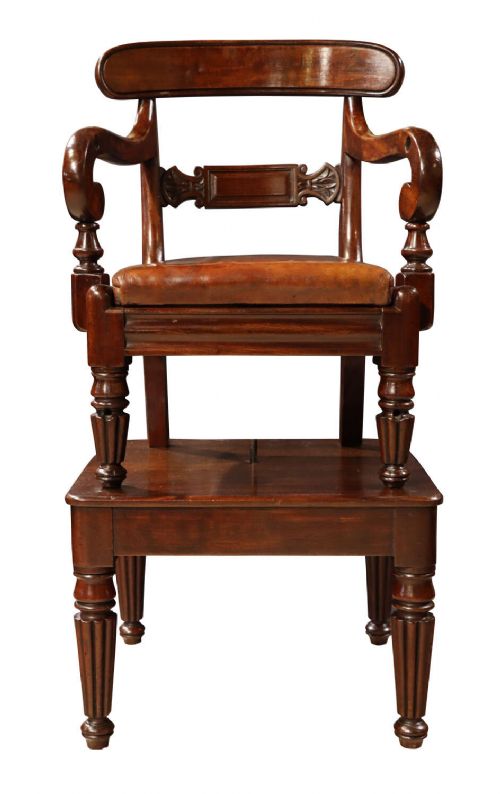


Antique Mahogany Highchair
An antique mahogany highchair brings domestic history into a modern room with timber rich in tone and centuries of use.
Antique Mahogany Highchair
An antique mahogany highchair offers domestic seating for children, taking forms from the Georgian, Regency, and William IV periods. These chairs appear as convertible metamorphic examples, tub highchairs with caning, or designs featuring a separate stand that raises the seat.
The materials recorded in these listings combine solid mahogany with cane, fabric, leather, brass, and tapestry. Such combinations reflect the changing domestic requirements of well-to-do households across the eighteenth and nineteenth centuries.
How they were made
Cabinetmakers constructed these frames primarily from mahogany, utilising the dense grain to support complex forms such as metamorphic mechanisms and tub seat structures. Joinery techniques ensured the stability required for children's furniture subjected to daily use.
Secondary materials like cane and brass fittings were integrated into the wooden frames. Caning provided a resilient and breathable seating surface, while brass hardware secured hinges and stands on convertible models.
Listings span the Georgian, Regency, and William IV periods, employing mahogany alongside cane, brass, and leather.
What varies in quality
The distinction between ordinary and exceptional pieces lies in the sophistication of the design and the integrity of the timber. Examples that retain their original stands or metamorphic functions demonstrate higher craftsmanship than standard fixed forms.
Surface finish and originality of materials dictate the standing of a piece within the range. The presence of period caning, leather, or tapestry influences how successfully the object preserves its historical character.
The Antique Mahogany Highchair Glossary
- Mahogany
- A durable tropical hardwood known for its deep reddish-brown colour and fine grain. Cabinetmakers favoured it for formal furniture throughout the Georgian and Victorian eras.
- Metamorphic
- A descriptive term for furniture designed to transform into multiple configurations. In these listings, a high chair converts into a lower chair and table combination.
- Caning
- A woven seating material made from split rattan. It provides a lightweight and flexible surface often found on nineteenth-century tub highchairs.
- Tub highchair
- A form of seating featuring a rounded, enclosing backrest supported on an elevated frame. This design kept infants secure during meals.
- Stand
- A separate wooden base designed to elevate a child's chair to table height. Examples can be detached to form a low chair and table unit.
Antique Mahogany Highchair: Frequently Asked Questions
How do I date an antique mahogany highchair?
Dating relies on stylistic markers associated with periods such as George III, Regency, and William IV. Structural details and joinery methods provide further clues to the decade of manufacture.
Comparing the turned members and hardware to dated examples in the listings helps confirm the era. Cabinetmaking fashions shifted noticeably between the eighteenth and mid-nineteenth centuries.
Can I use an antique highchair today?
These pieces were built for historical domestic use and require careful assessment regarding modern safety standards. Many collectors choose to display them as decorative items rather than for active seating.
Placing them in a room adds historical warmth, but daily functional use for infants demands caution due to their antique construction.
What is a metamorphic child's chair?
A metamorphic child's chair is a dual-purpose piece of furniture designed to change form. It typically shifts from an elevated highchair into a combined low chair and table.
This ingenious mechanism saved space in period nurseries and provided two distinct functions within a single timber frame.