

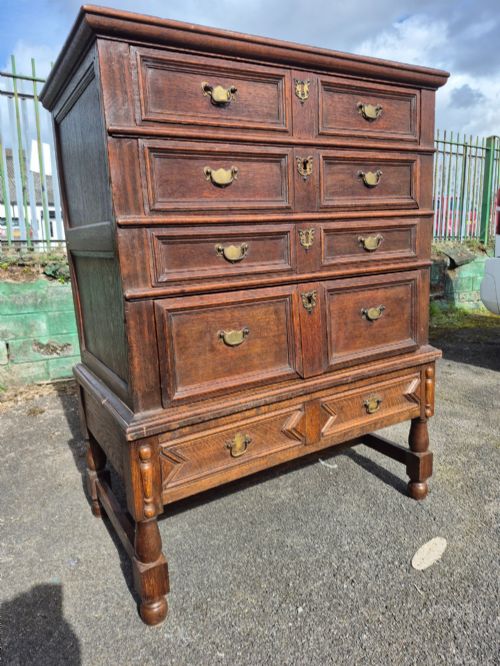
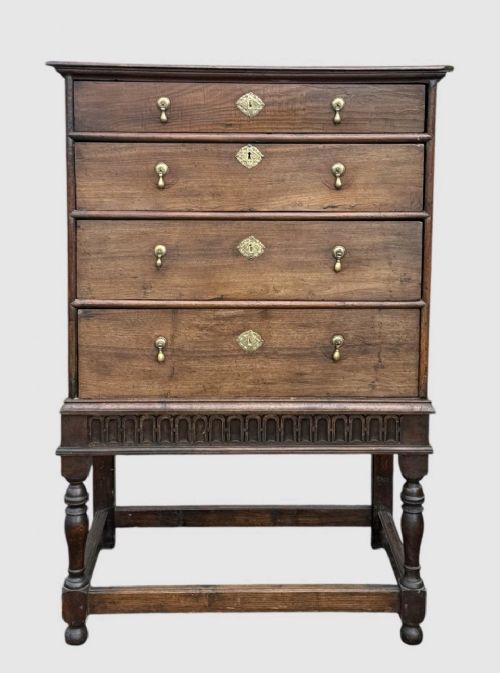


Period Chest on Stand
A period chest on stand combines elevated drawer storage with timber craftsmanship spanning the seventeenth and eighteenth centuries.
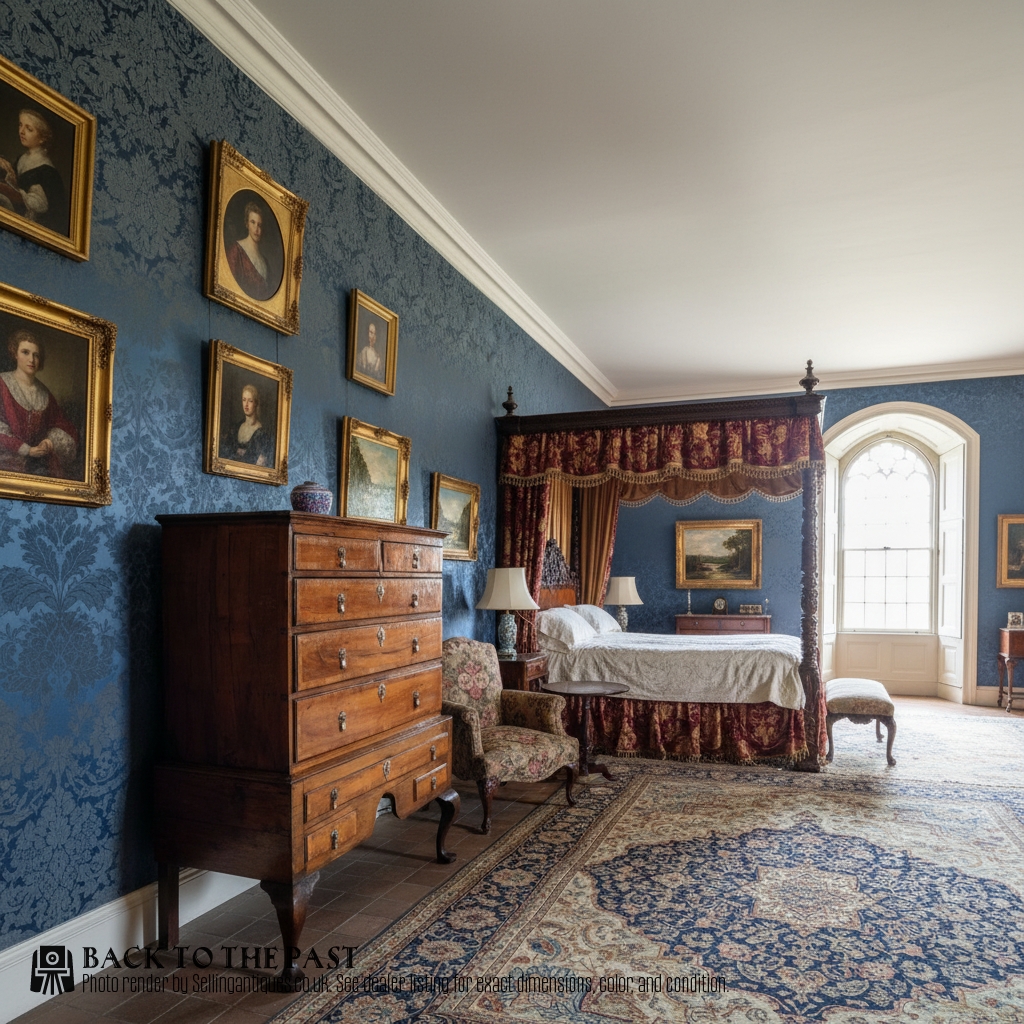
Period Chest on Stand
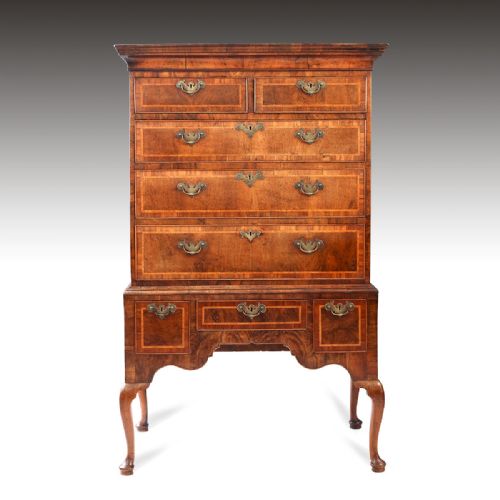
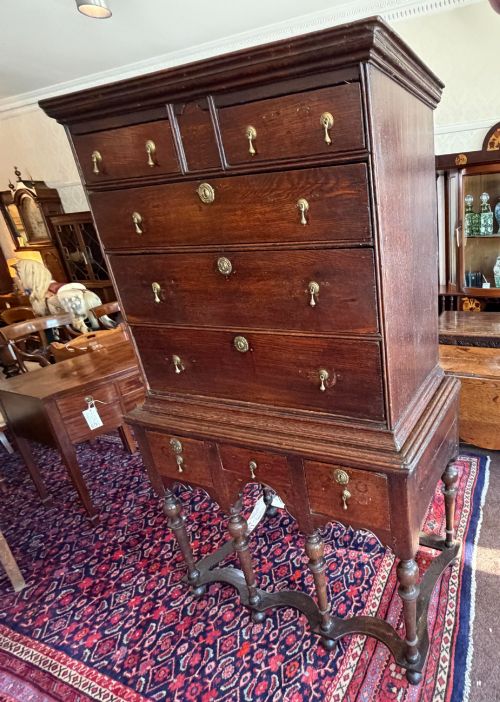
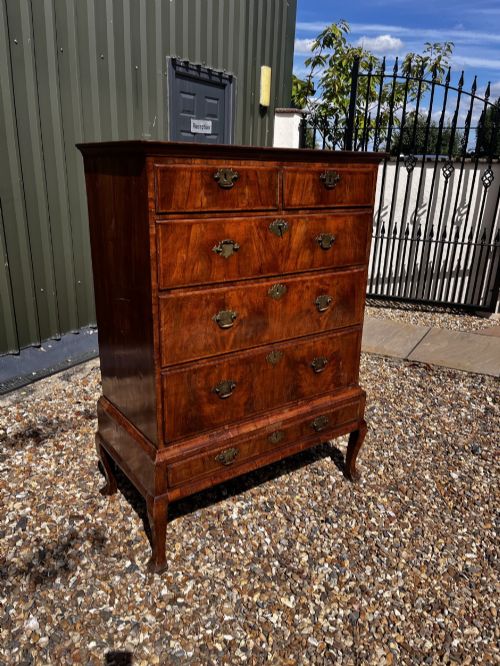
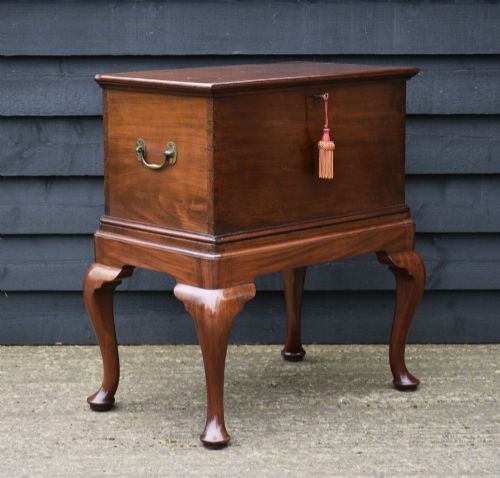
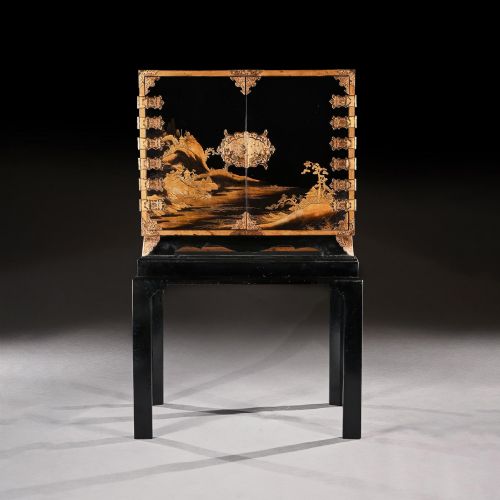
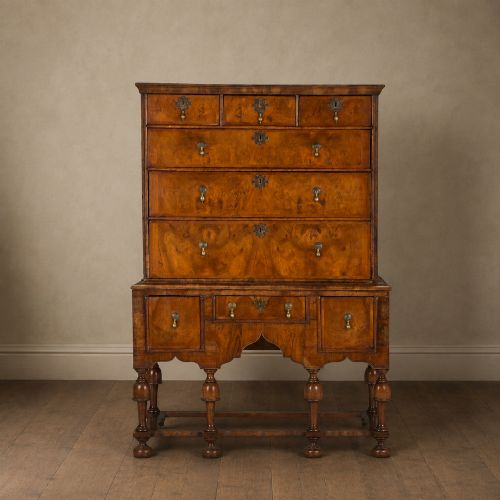
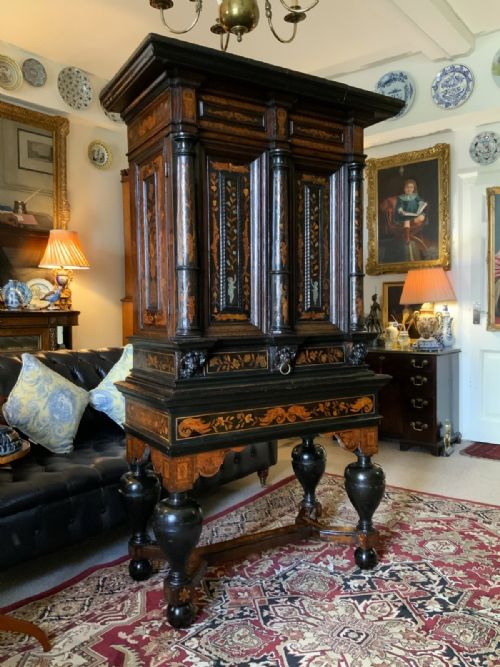
A period chest on stand is a two-part furniture form comprising an upper chest of drawers or cabinet sitting upon a lower supporting stand with legs. These pieces emerge primarily from the seventeenth and eighteenth centuries, traversing William and Mary, Queen Anne, and Georgian stylistic vocabularies. The user searching this phrase encounters robust oak examples alongside highly figured walnut veneered pieces.
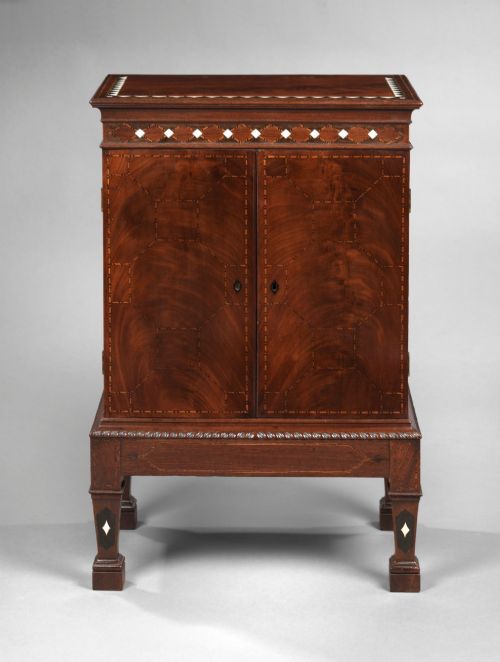
Most entries encountered on this page date from the late seventeenth century through the mid eighteenth century, featuring the characteristic lower stand with trumpet or cabriole legs. Variations include cellarettes, cabinets on stands, and larger coffers adapted to the raised stand configuration. Walnut and oak dominate the surviving examples, often displaying graduated drawer arrangements designed for domestic storage.
The form developed to keep valuable textiles and documents away from damp floors while offering accessible surface height for everyday use. Makers balanced the heavy proportions of the upper storage section with slender legs joined by stretchers or shaped aprons. Buyers navigating these listings select between plain provincial oak and elaborate veneered court furniture.
Materials and construction
Cabinetmakers constructed the carcase using solid timbers like oak or walnut, frequently applying fine veneers such as burr walnut, olive wood, or kingwood to the primary facade. Crossbanding and stringing lines defined the drawer fronts, while marquetry and pewter inlay decorated specialised continental examples. Brass drop handles and escutcheons secured the drawer openings and added metallic contrast to the timber surfaces.
Joinery techniques included hand-cut dovetails for drawer construction and mortise and tenon frames for the supporting stands. Oyster veneering involved slicing small branch wood crosswise to create circular patterning across the exterior panels. Stands utilised turned legs connected by flat stretchers for stability, evolving into curved cabriole styles as fashion shifted through the Georgian decades.
Listings feature oak, walnut, and mahogany timbers alongside specialised surfaces like olive wood oyster veneer and bone inlay.
What separates the grades
Quality in a period chest on stand rests upon the preservation of the original timber surfaces and the integrity of the underlying construction. Pieces retaining their original brass hardware, unblemished veneer patterns, and matching lower stands command greater attention than those with replaced elements or altered legs. The selection of figured wood grains, such as burr walnut or oyster olive wood, indicates high-status workshop production.
Subtle details in the execution of the drawer linings, hand-cut dovetailing, and the crispness of inlaid brass or pewter work distinguish master craftsmanship from provincial output. The proportional balance between the upper cabinet and the supporting stand reveals the maker's eye, as does the survival of the original finish beneath centuries of wax polish.
Gillows
The Period Chest on Stand Glossary
- Chest on stand
- A two-part furniture item consisting of a drawer chest or cabinet mounted upon a distinct leg frame. This raised design protected contents from damp ground levels.
- Oyster veneer
- A decorative surface created by cross-cutting small branches to produce oval wood sections resembling oyster shells. Cabinetmakers arranged these circular patterns across seventeenth-century drawer fronts.
- Cabriole leg
- A furniture leg featuring a double curve, swelling outward at the knee and tapering inward at the foot. This style became prominent during the Queen Anne and early Georgian periods.
- Crossbanding
- A narrow strip of veneer applied across the grain direction along the border of a drawer front or tabletop. It creates a contrasting frame for the central wood panel.
- Stretcher
- A horizontal wooden bar connecting the legs of a stand to provide structural rigidity. Early examples often feature intersecting saltire shapes.
Period Chest on Stand: Frequently Asked Questions
What is a period chest on stand used for?
These pieces served as secure domestic storage for linens, valuables, and documents in early modern households. The elevated design kept contents away from cold, damp floorboards while providing an accessible working height.
Today, they function as statement storage units in hallways or living spaces, offering surface display space alongside functional drawer capacity.
How do I date a period chest on stand?
Dating relies on identifying the primary timbers, leg styles, and hardware configurations associated with specific reigns. Seventeenth-century examples frequently feature oak or oyster veneer with flat stretchers, while eighteenth-century versions display walnut veneers and cabriole legs.
Examine the construction methods inside the drawers and the joinery of the stand to confirm whether the upper and lower sections belong together.
Are the upper and lower sections original to each other?
Many surviving pieces experienced separation over the centuries, leading dealers to reunite chests with compatible stands from the same era. Checking the timber species, wear patterns, and mounting marks helps determine whether the components started life together.
Expert examination of the bare wood beneath the carcase reveals dowel holes or bracket scars that confirm the original configuration.
How do I care for antique veneer?
Maintain stable indoor humidity levels and keep wooden furniture away from direct sunlight and heat sources to prevent the glue from failing. Periodic application of quality beeswax feeds the dry timber and preserves the natural sheen of the aged surface.
Avoid liquid polishes containing silicones, using only soft cloths to remove dust without disturbing fragile crossbanding.