
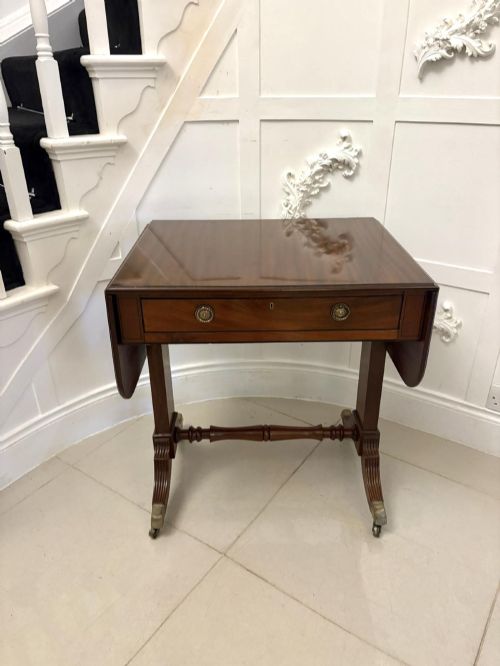
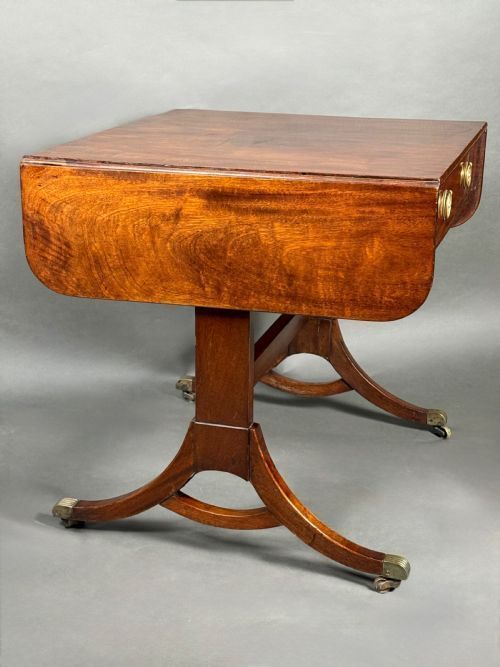
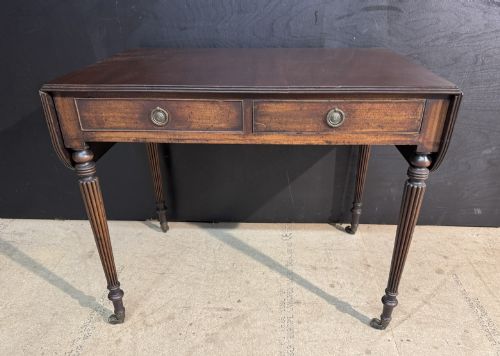
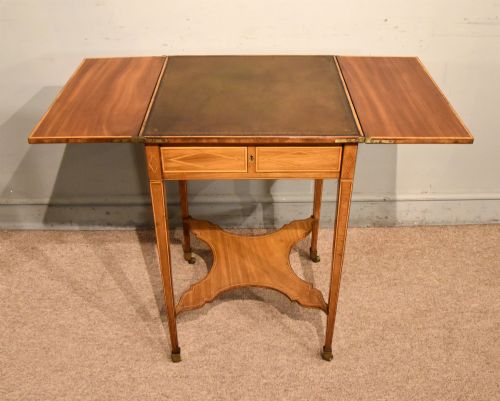



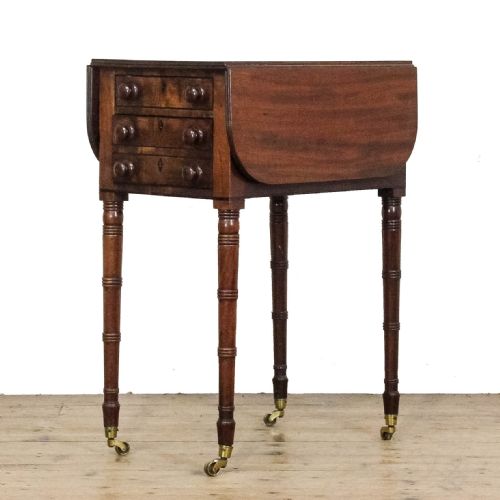
Pembroke Writing Table
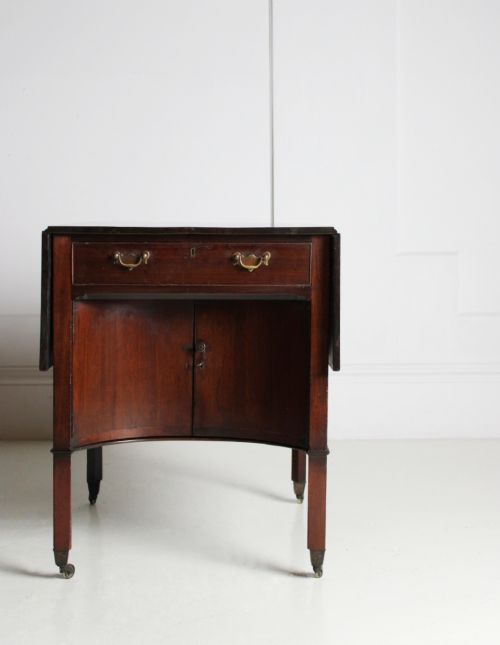
A pembroke writing table offers a clever folding surface designed for compact elegance and practical daily correspondence.
Pembroke Writing Table
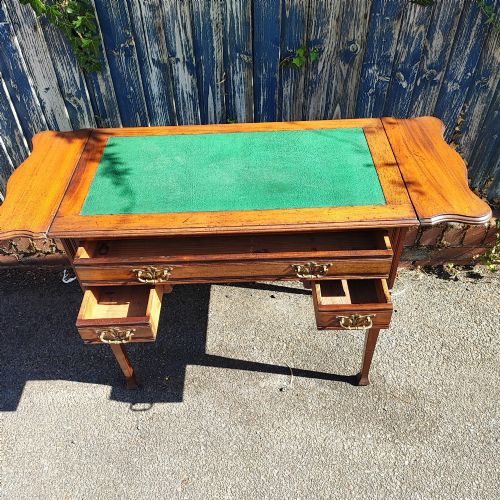
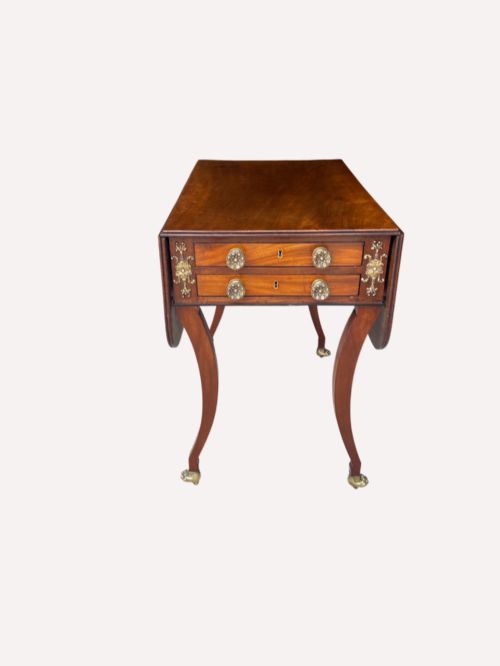
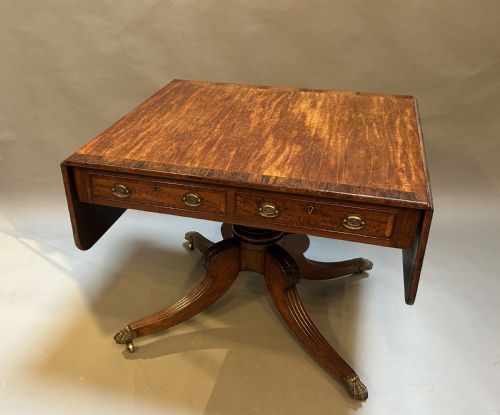
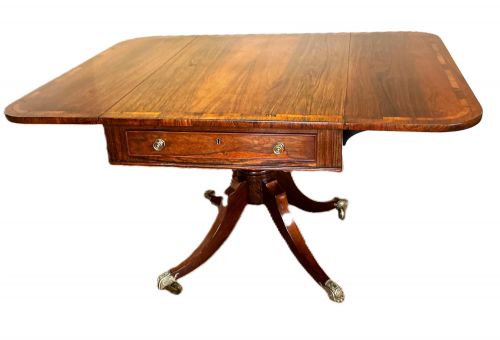
The selection on this page ranges from George III satinwood examples to nineteenth-century mahogany and rosewood designs, incorporating related forms such as sofa tables and work tables. Such tables served versatile functions in period interiors, moving easily from boudoir to library.
Georgian and Regency iterations dominate the selection, showcasing sophisticated wood inlay and pedestal or pillar supports. Buyers find everything from simple walnut drop-leaf tables to elaborate brass-inlaid rosewood library tables.
Materials and construction
Cabinetmakers constructed these tables using dense timbers like mahogany, rosewood, and walnut, frequently enhancing the surfaces with satinwood or burr walnut veneers. Boxwood and ebony stringing often define the edges and drawer fronts of Georgian and Regency pieces.
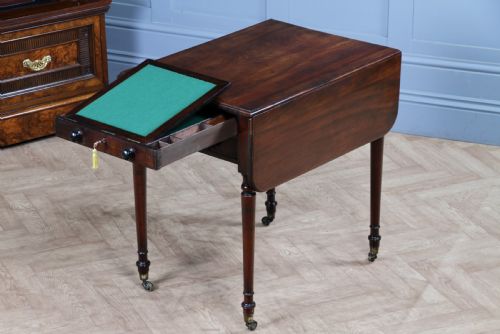
Makers utilised clever joinery to support the drop leaves, employing wooden swing brackets or gatelegs that pivot smoothly beneath the flaps. Drawer construction typically involves hand-cut dovetailing, housing fitted compartments for inkwells and papers.
The inventory records numerous variations, including pedestal sofa tables, pembroke work tables, and drop-leaf library desks.
Judging the work
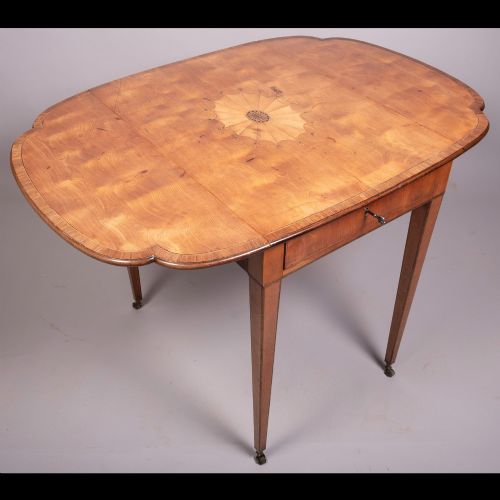
Quality in these tables rests on the selection of timber veneers and the precision of the brass or wood inlay. Finer examples display richly figured flame mahogany or carefully matched burr walnut across the entire top surface, including the drop leaves.
The refinement of the undercarriage and the crispness of any carved or turned details also separate standard production from master cabinet work. Well-executed tables maintain smooth mechanical movement in the drop flaps and tight, flush joints in the drawers.
Gillows of Lancaster
The Pembroke Writing Table Glossary
- Pembroke table
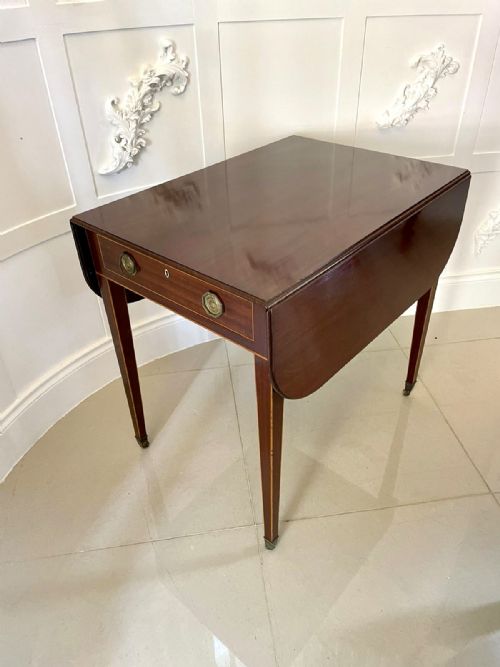
- A small occasional table featuring two hinged drop leaves on opposite sides and usually one or two drawers. Thomas Sheraton suggested the name derived from a Pembroke who first ordered such a design.
- Drop leaf
- A hinged flap attached to the fixed centre of a table top that lifts to extend the surface area. Supporting brackets swing out to hold the leaf in position.
- Satinwood
- A durable, yellowish-wood timber prized for its lustrous grain and used extensively for inlay and veneering in high-style eighteenth-century furniture.
- Stringing
- A narrow strip of contrasting wood or bone inlaid into the surface of furniture to form delicate linear patterns. It frames drawer fronts and tabletops on Sheraton and Regency pieces.
- Secretaire drawer
- A pull-out drawer fitted with a drop-front and internal pigeonholes or small compartments for writing. It transforms a side table or desk into a compact writing station.
Pembroke Writing Table: Frequently Asked Questions
What is a pembroke writing table?
A pembroke writing table is a versatile drop-leaf piece of furniture equipped with a drawer specifically configured for writing materials and correspondence.
These tables combine the space-saving convenience of folding side flaps with the functional surface required for writing letters in a parlour or study.
How do you use a pembroke table daily?
You can position the table against a wall with both leaves dropped to save space, opening one or both flaps when you need a surface for writing or reading.
The fitted drawers keep paper, ink, and small accessories close at hand without cluttering the main tabletop.
How do I distinguish Regency from Georgian pieces?
Georgian pieces often display restrained classical proportions, subtle mahogany veneers, and delicate satinwood stringing reflecting the influence of designers like Sheraton and Hepplewhite.
Regency examples tend to incorporate bolder contrasting rosewood veneers, brass inlay, and heavier pillar or pedestal supports reflecting nineteenth-century tastes.
Where were these tables placed historically?
Historically, these tables stood in withdrawing rooms, libraries, and bedrooms where residents needed a moveable surface for correspondence and reading.
Because they are finished on all sides, many freestanding versions could sit away from walls in the centre of a room.