






Pegged Oak Table
When you search for a pegged oak table, you enter a world of sturdy timber furniture built with traditional joinery that endures across the centuries.
Pegged Oak Table
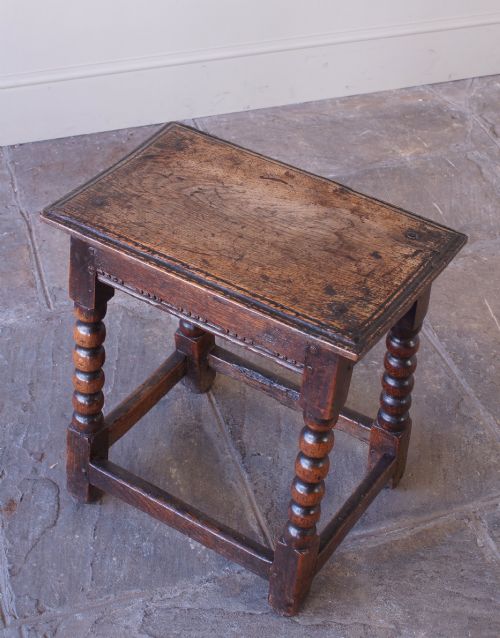
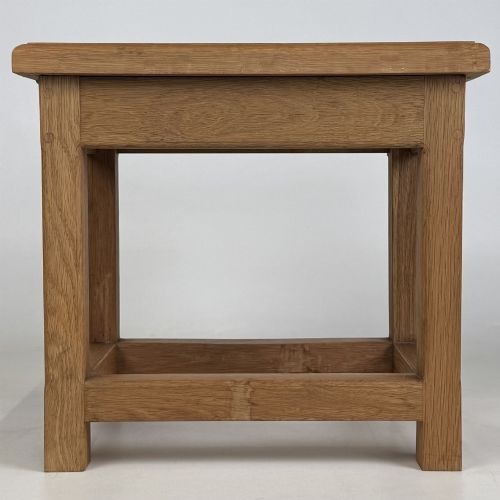
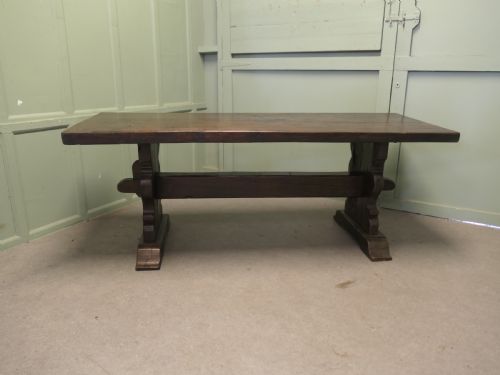
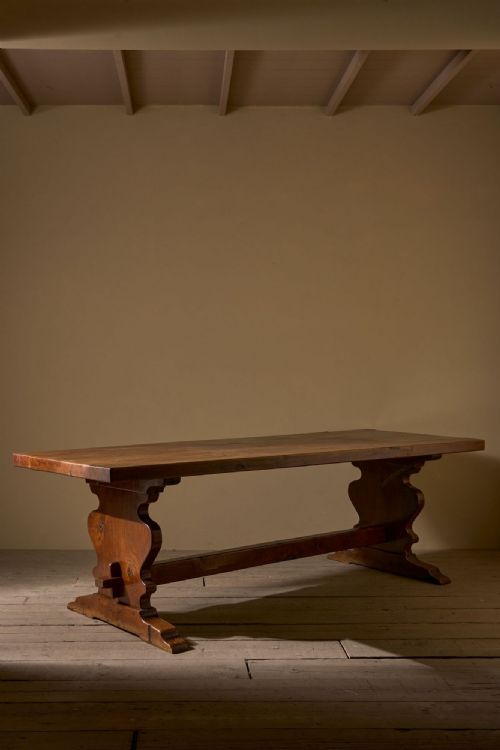
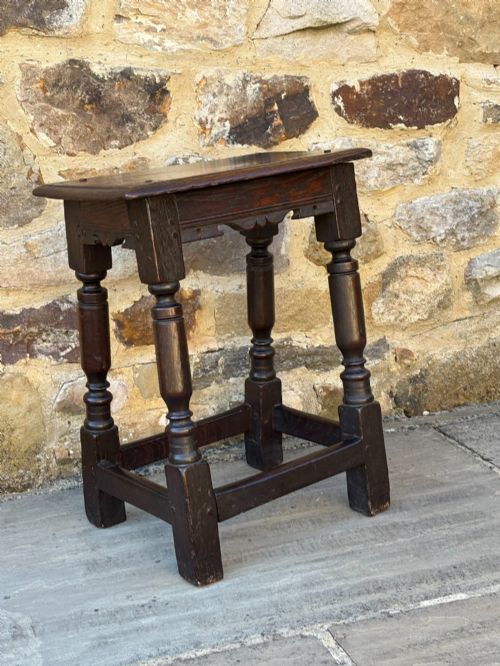
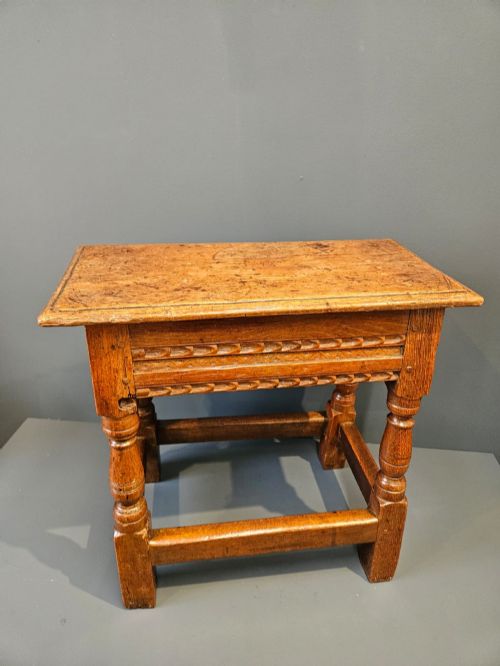
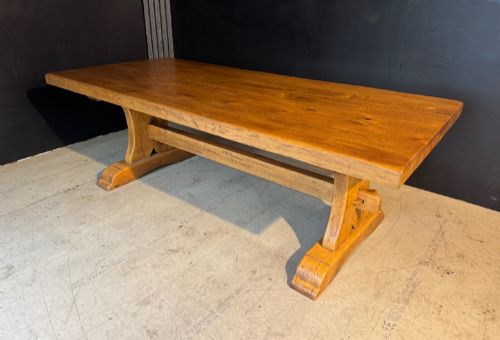
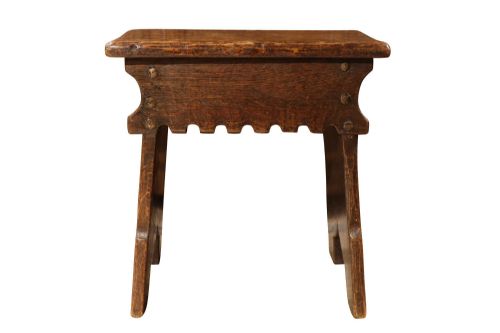
A pegged oak table represents a durable tradition of furniture making, spanning dining tables, refectory pieces, coffee tables, and side tables. When exploring these listings, you will frequently encounter rustic farmhouse forms, refectory tables, and joint stools constructed to handle daily use.
The materials and origins cover English oak and French oak, fashioned into styles such as Jacobean, Jacobean Revival, French Country, and French Provincial. Examples range from authentic seventeenth-century origins through Georgian drop leaf and gate leg designs up to twentieth-century revivals.
On this page, the selection centres heavily on robust dining tables and smaller low tables or stools, reflecting centuries of domestic utility. Buyers seek these pieces for their solid construction and the distinct character brought by solid oak timber.
What varies in quality
Quality in a pegged oak table rests primarily in the integrity of the timber and the honesty of its construction. Pieces fashioned from solid English or French oak with tight, original pegged joints sit at the upper end of the scale.
The depth of patination and the proportion of the plank top further distinguish finer examples from later revivals. Well-balanced proportions in refectory and trestle formats indicate superior craftsmanship from both seventeenth-century origins and later traditional periods.
Some stools were built so sturdily they doubled as short benches or emergency steps when the candle needed snuffing.
The Pegged Oak Table Glossary
- Pegged construction
- A method of joining timber components using wooden pins rather than iron nails or screws. This traditional technique allows the wood to move naturally with changes in humidity.
- Refectory table
- A long, narrow dining table traditionally used in monastic refectories and later adopted in domestic halls. These tables typically feature sturdy trestle or four-leg bases connected by stretchers.
- Joint stool
- A sturdy wooden stool constructed with mortise and tenon joints, often pegged for extra strength. They served as versatile seating or small side surfaces in early households.
- Plank top
- A table top assembled from several wide boards of solid timber joined edge to edge. On older furniture, the grain and shrinkage patterns tell the story of the tree from which they were sawn.
- Patina
- The surface sheen and colour developed over decades or centuries through handling, polishing, and exposure to light. A desirable patination shows genuine age rather than artificial distress.
- Gate leg table
- A drop-leaf table with hinged flaps supported by legs that swing out like a gate. This design allows the table to expand for dining and contract for storage.
Pegged Oak Table: Frequently Asked Questions
How do I clean an oak table?
Dust regularly with a soft, dry cloth to prevent dirt accumulation on the surface of the timber.
Avoid harsh chemical cleaners and maintain the wood by applying suitable natural waxes occasionally.
Can I use a refectory table daily?
These tables were built precisely for heavy everyday utility in domestic kitchens and dining rooms.
Their solid construction and durable oak surfaces handle regular family meals and gatherings with ease.
What is a joint stool used for?
Joint stools served primarily as sturdy seating around the dining board in earlier centuries.
Today they function flexibly as small side tables, plant stands, or occasional seats in living spaces.
How do I date an oak table?
Examine the construction methods, tool marks, timber selection, and overall wear patterns across the frame.
Pegged joints and hand-sawn plank tops often indicate seventeenth-century or eighteenth-century origins, while uniform machine processing points to later periods.
Will an oak table fit my kitchen?
Measure your available floor space carefully, keeping in mind the substantial widths and lengths of refectory and farmhouse formats.
Consider clearance for chairs or stools around the trestle or leg bases before placing your room.