
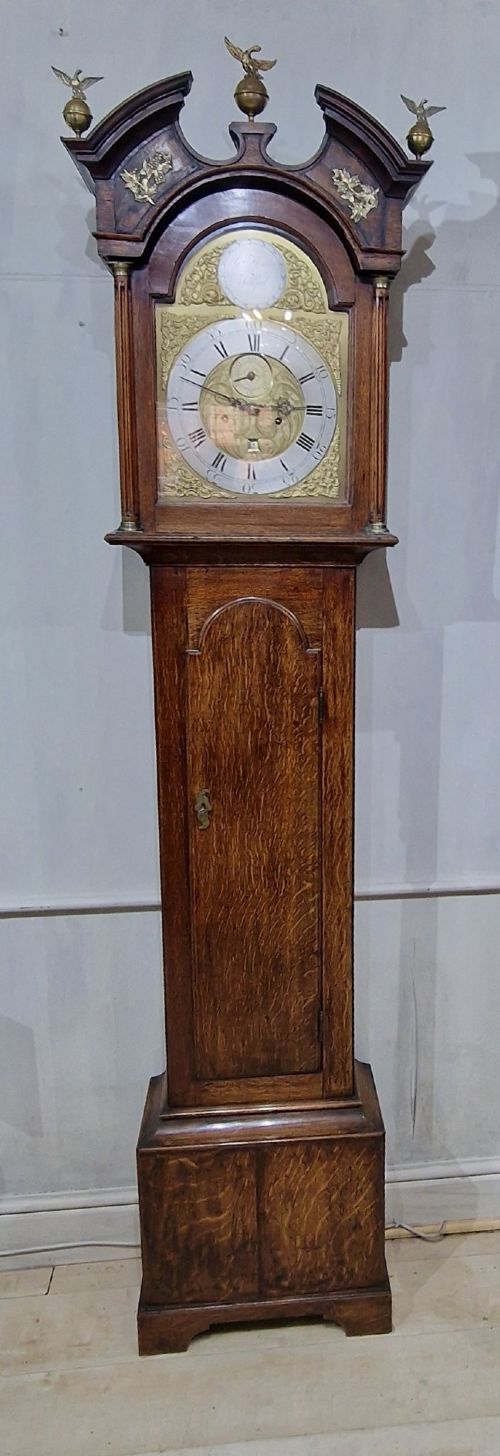
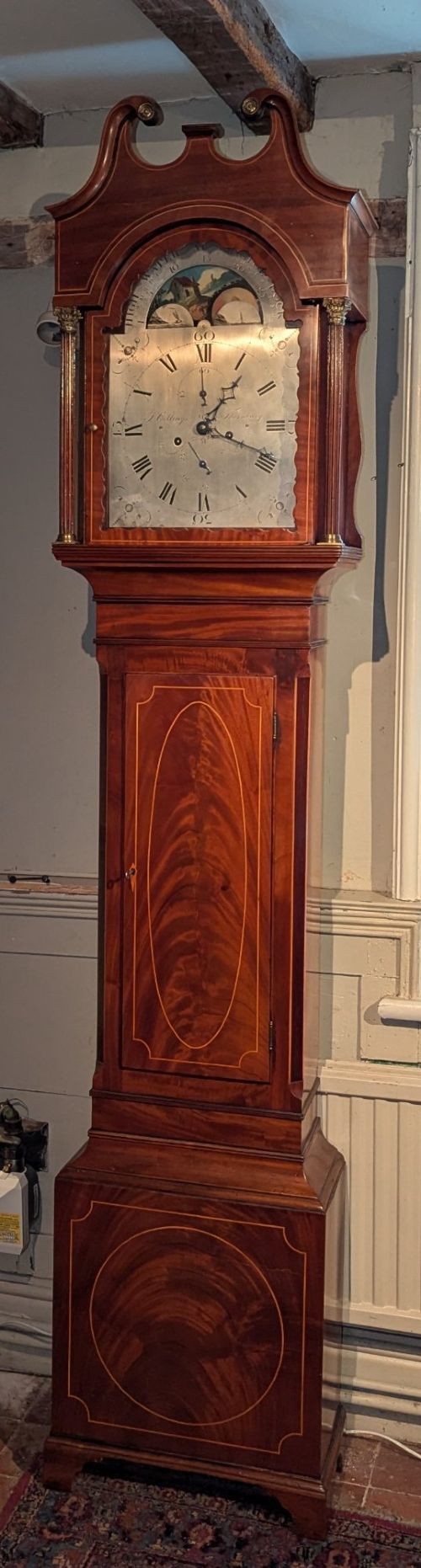
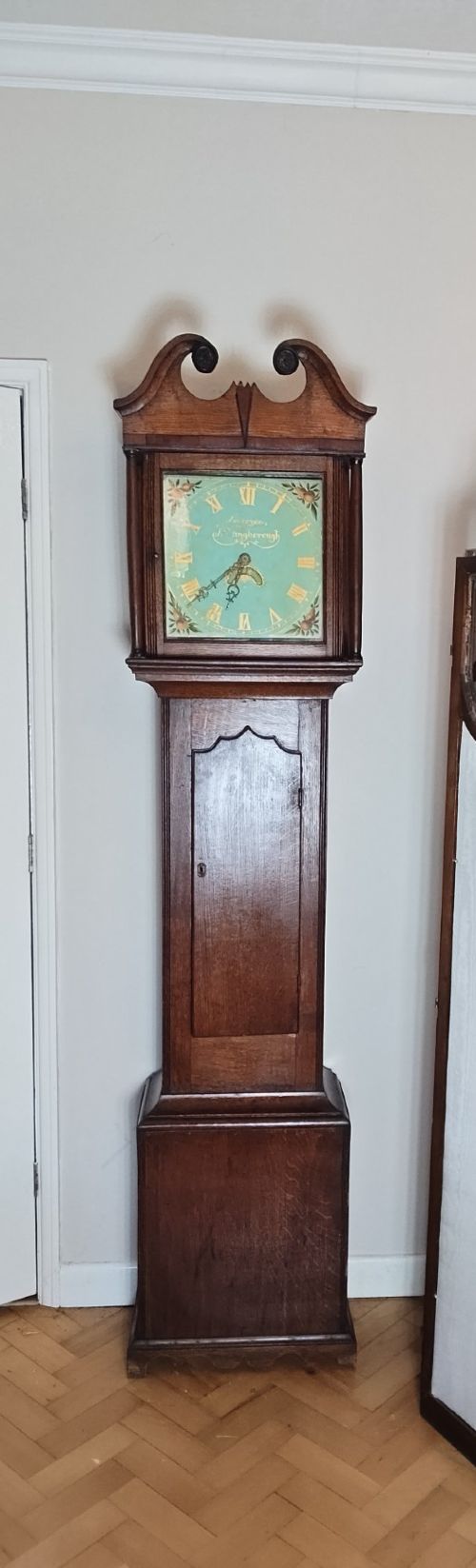
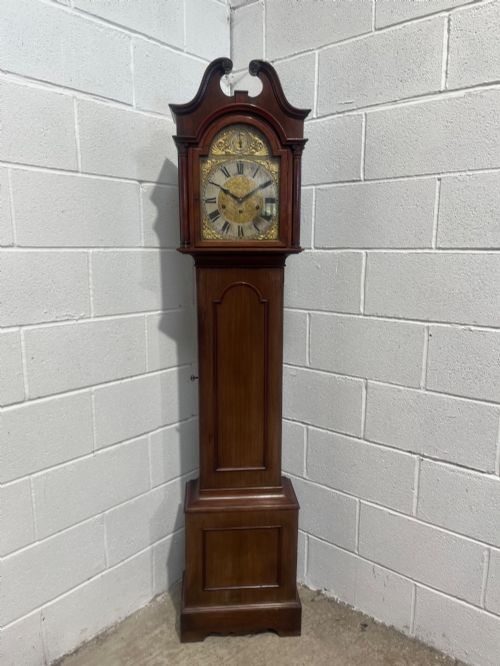
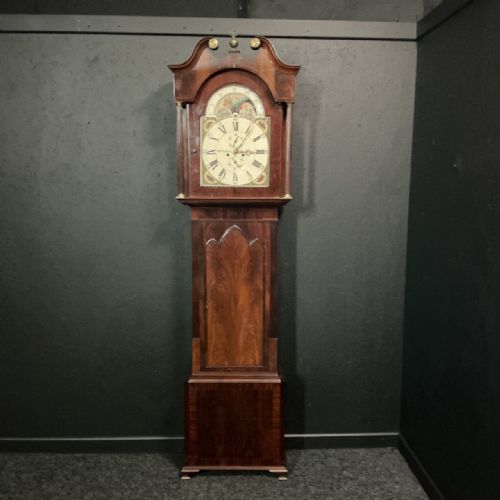
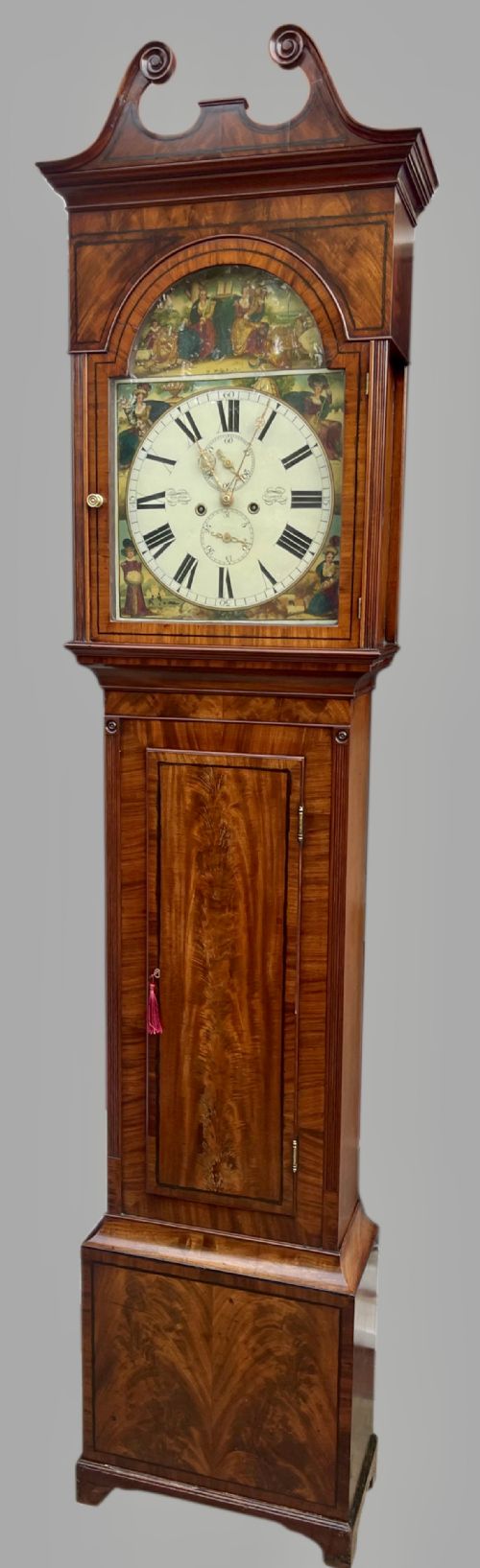
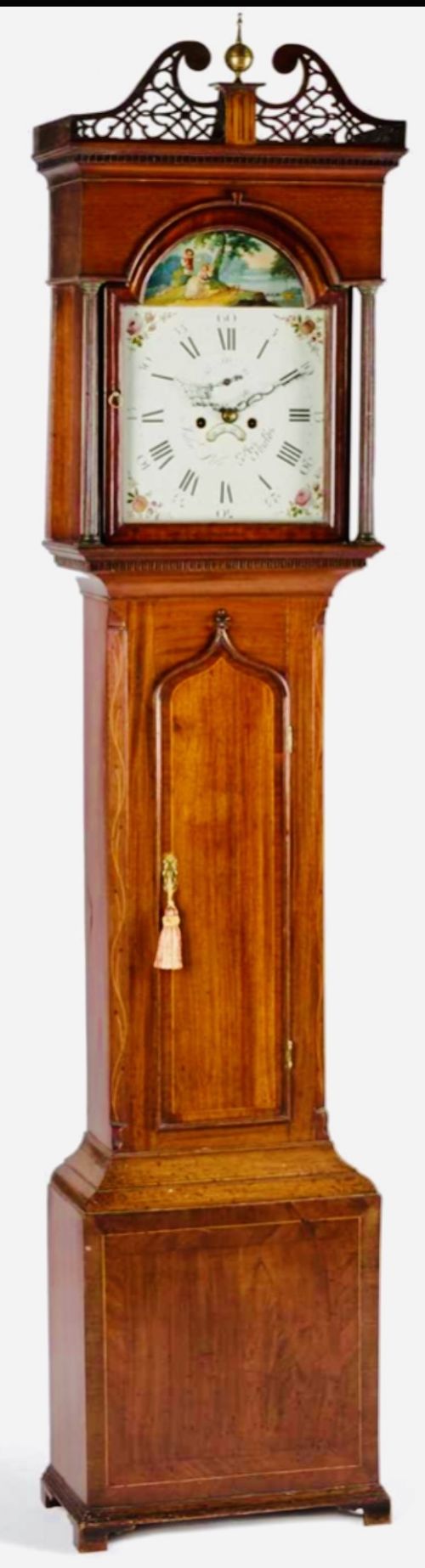
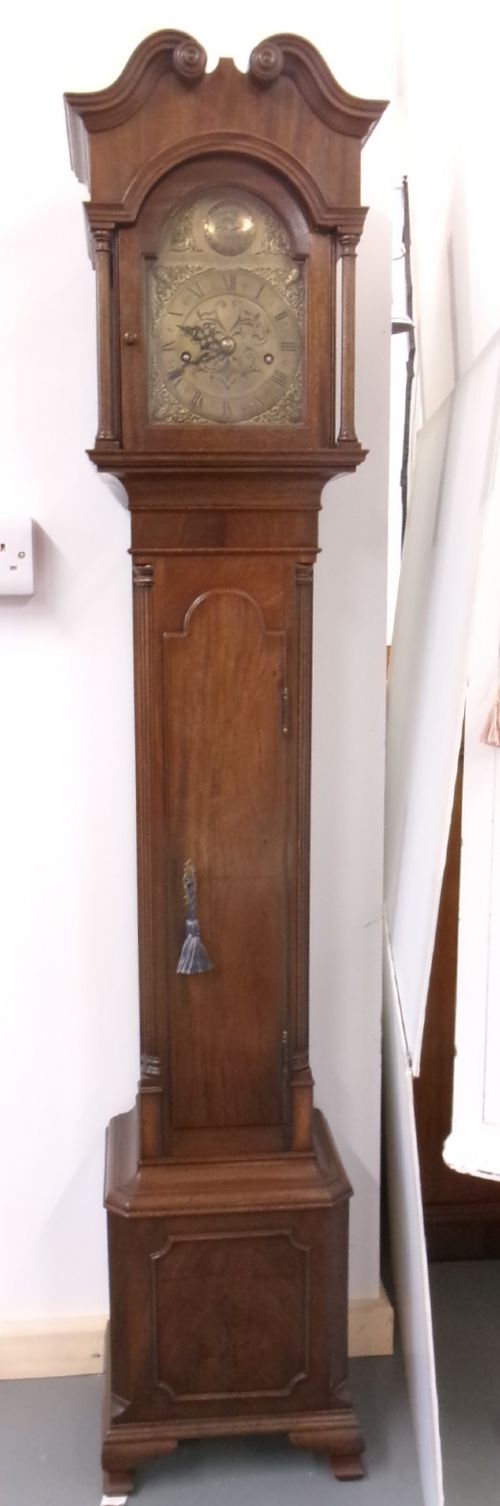

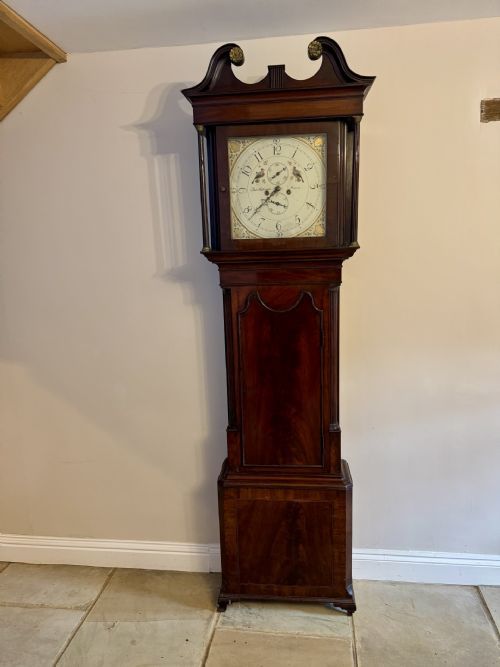
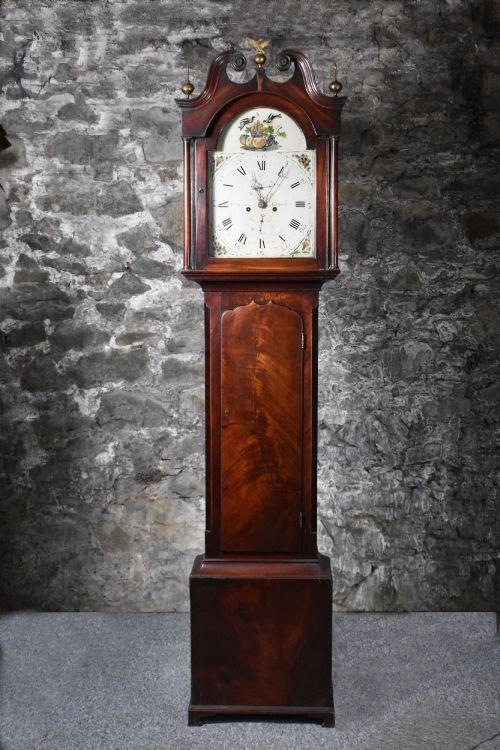


Pediment Longcase Clock
A pediment longcase clock stands tall in a hall, measuring time through the steady sweep of a pendulum and the slow drop of heavy weights.
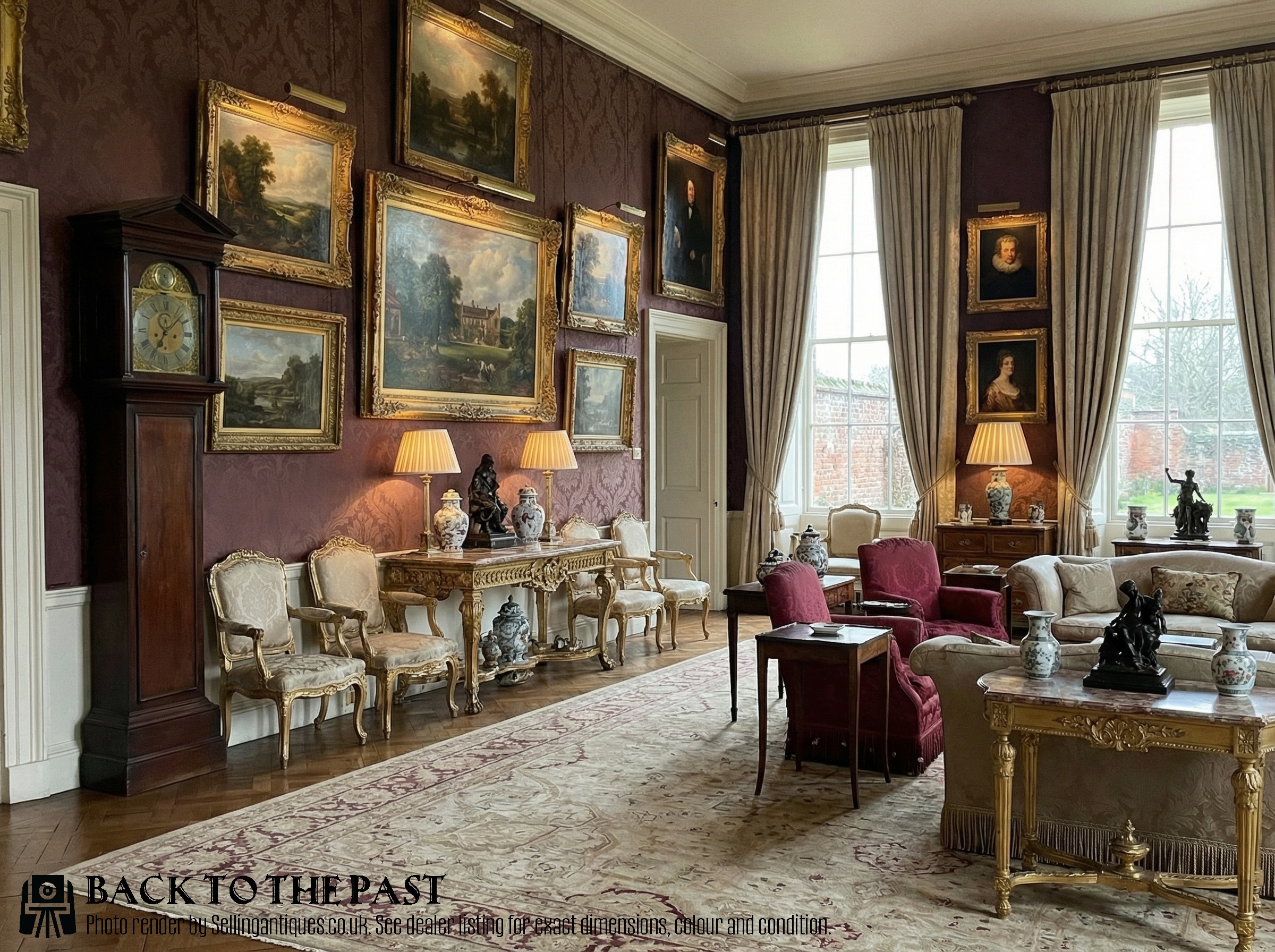
Pediment Longcase Clock
A pediment longcase clock is a tall floor-standing timepiece enclosing a weighted movement within a timber case, designed to anchor the proportions of a traditional interior. When searching for a pediment longcase clock, you encounter variations spanning the Georgian, Victorian, and Edwardian periods.
The material evidence on this page shows pieces constructed primarily in oak and mahogany, often enhanced by crossbanding, brass dial fittings, and glass panels protecting the face. Regional origins range widely from Scottish workshops in Glasgow, Paisley, and Forres to English centres such as London, Manchester, Liverpool, and Birmingham.
Most examples appear in the tall grandfather format driven by eight-day or single-hand movements, alongside smaller scale granddaughter and grandmother clocks originating from the later nineteenth and early twentieth centuries. Regional vernacular pieces sit alongside refined London and provincial town cabinet work.
What varies in quality
Quality rests in the harmony between the cabinet proportions and the integrity of the mechanical movement housed within. Superior pieces display crisp timber carving, finely figured mahogany grain, and robustly constructed brass movements signed by recorded makers.
Dial execution separates ordinary production from exceptional work, seen in the depth of brass engraving, the precision of painted moon phases, and the retention of original matching weights, pendulum, and hands. Case modifications, marriages of movements to later dials, and replaced hoods alter the standing of a piece.
Listings feature oak, mahogany, and walnut timbers, spanning Georgian, Victorian, and Edwardian periods across English and Scottish origins.
James Hendrie·William McEwan·Edward Shepley·Matt Wylie·Thomas Webbe·Richard Sharkey·David Craig·Gillows
The Pediment Longcase Clock Glossary
- Pediment
- The architectural crowning structure situated at the very top of the clock hood. It frequently takes a swan-neck, flat, or triangular pediment form.
- Moon dial
- A secondary arched dial mechanism tracking the lunar cycle over a twenty-nine and a half day period. It rotates behind a shaped aperture on the clock face.
- Crossbanding
- A decorative technique applying narrow strips of timber veneer across the grain of the primary wood panel. It frames the perimeter of clock doors and plinths.
- Anchor escapement
- A mechanical linkage between the gear train and pendulum controlling the release of power. It allows for accurate timekeeping in tall clock formats.
- Trunk
- The long central door section of the clock case enclosing the descending weights and swinging pendulum. It provides the vertical visual weight of the piece.
Pediment Longcase Clock: Frequently Asked Questions
What is a pediment longcase clock?
A pediment longcase clock is a tall wooden clock enclosing a weight-driven mechanical movement, featuring a decorative architectural roof structure above the dial face.
These pieces combine cabinet making and horology, serving as both precise timekeepers and commanding items of furniture for domestic interiors.
How do I wind an eight day clock?
Winding requires using a crank key inserted into the winding holes on the dial face to slowly draw the heavy internal weights back to the top.
Care must be taken not to overwind the movement, ensuring the weights are lifted smoothly without straining the gutlines or chains.
Where were these clocks made?
Clocks of this type were produced across Britain by regional makers and London workshops, utilising local timber supplies and prevailing regional styles.
Scottish centres like Glasgow and Paisley produced distinct tallcase proportions, while English towns added mahogany banding and painted moon dials.
What is the difference between a grandfather and a grandmother clock?
A grandfather clock is the standard full-sized tallcase clock standing over six feet tall, designed with heavy weights and long pendulums.
A grandmother clock is a smaller, more slender scaled version produced primarily during the twentieth century to fit lower ceiling heights.
How can I tell the period of a longcase clock?
Dating relies on examining the timber choice, dial construction, and architectural details of the hood and waist door.
Earlier eighteenth-century examples favour oak and square brass dials, whereas later nineteenth-century pieces often display mahogany veneers, painted iron arches, and drum head hoods.