
Pedestal Study Table
A pedestal study table provides a sturdy workspace, anchoring a room with period character and practical drawers.
Pedestal Study Table
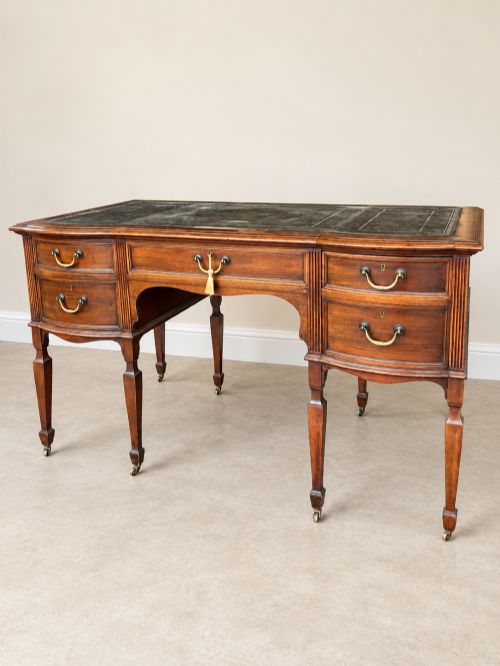
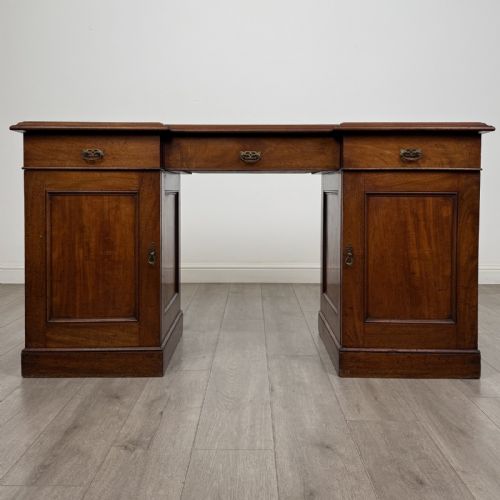
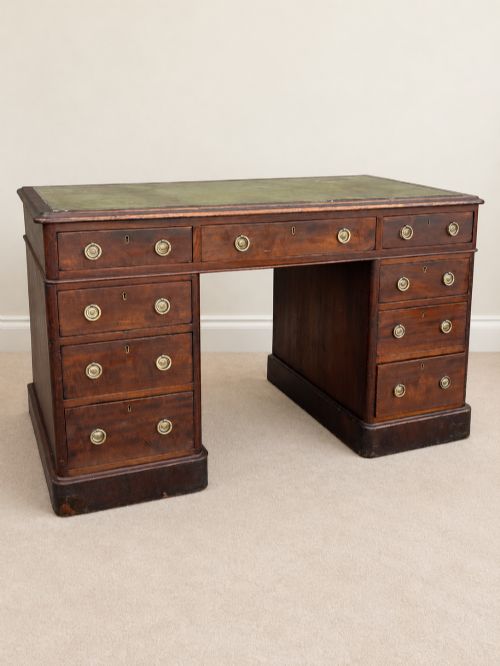
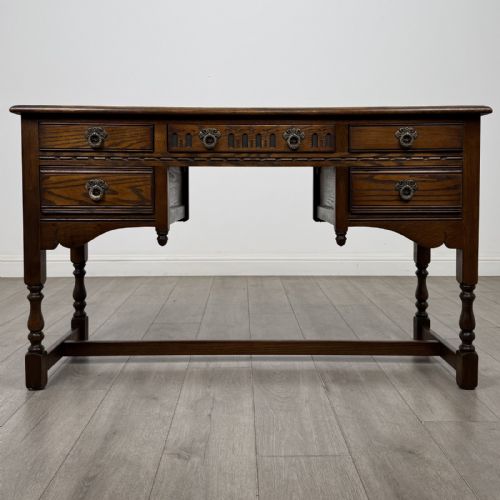
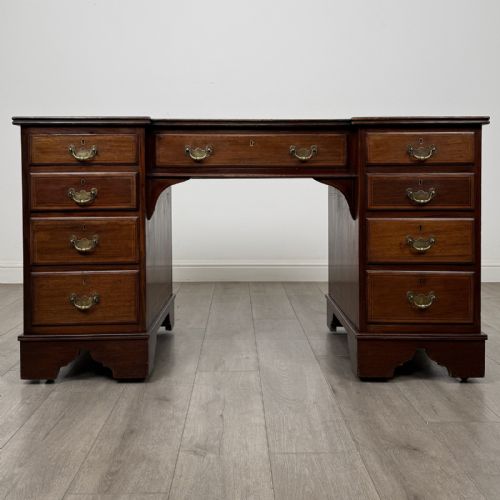
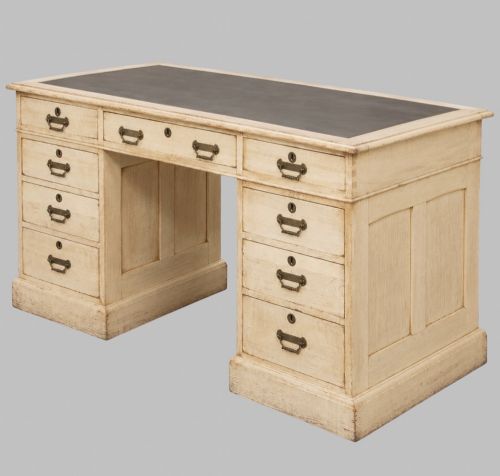
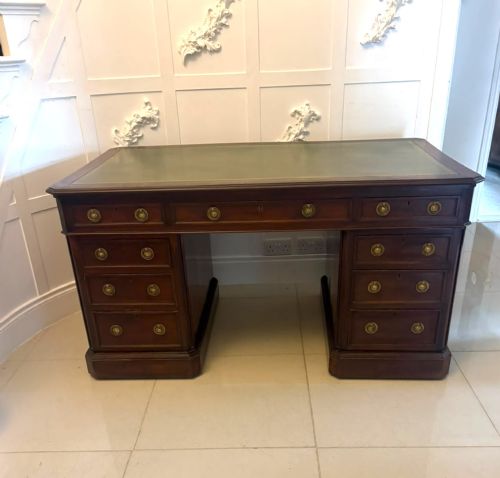
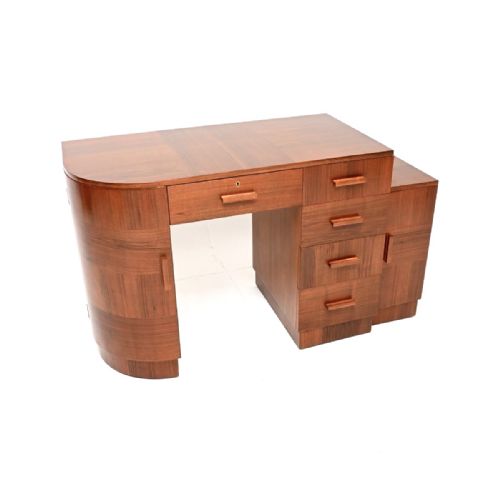
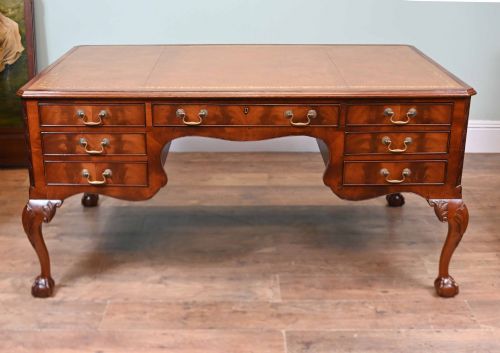
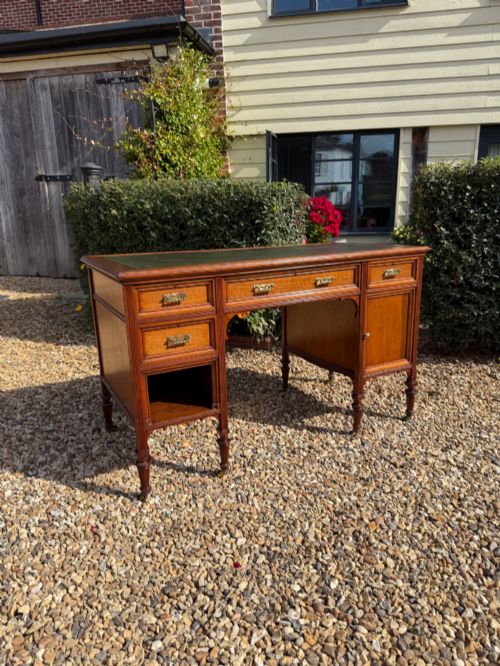
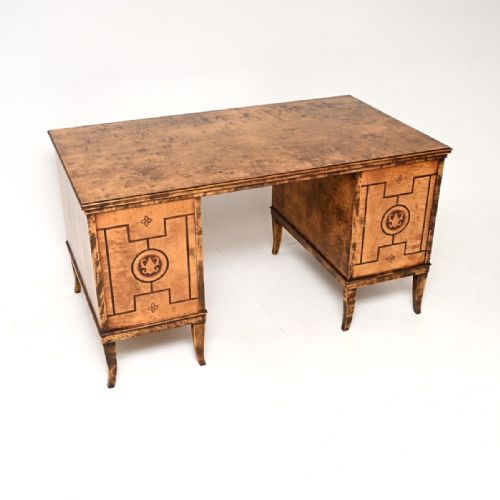
A pedestal study table brings together a substantial writing surface and two banks of supporting drawers, creating a formal workspace designed for the library or study. These pieces appear primarily in Victorian, Edwardian, and nineteenth-century iterations, alongside later Art Deco examples.
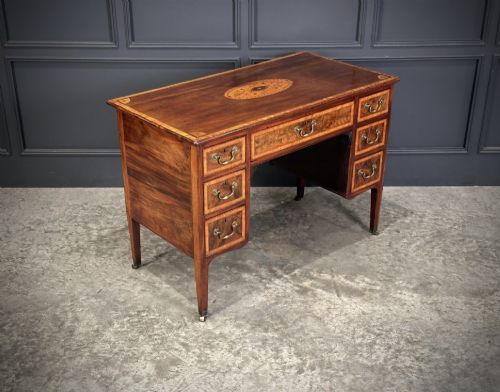
The desks and library tables on this page span styles from George III and William IV revivals to clean modernist lines. Most frequently, buyers meet twin pedestal forms in mahogany, oak, or walnut, often featuring inset leather writing surfaces.
Materials and Construction
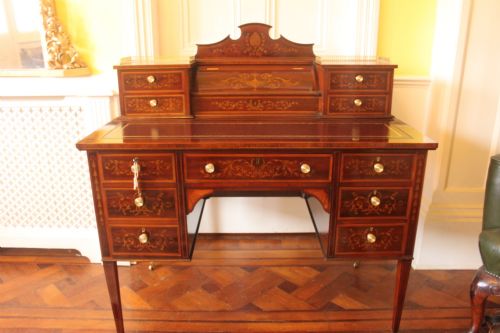
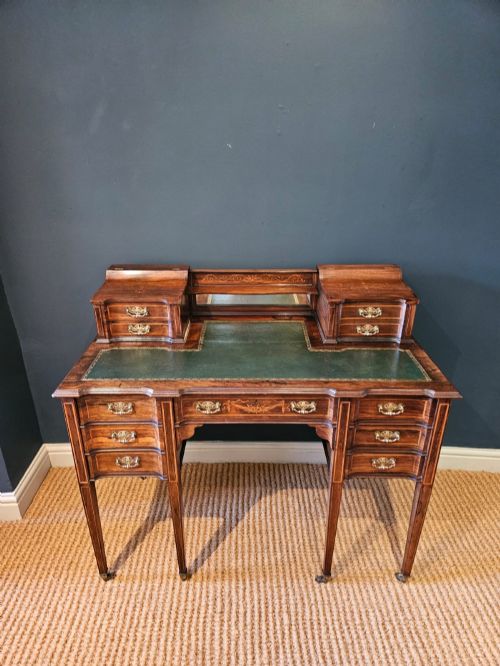
Cabinet makers built these tables using solid hardwoods like mahogany, oak, and walnut, frequently applying figured veneers such as burr walnut or flame mahogany to primary surfaces. Brass hardware, leather inserts with gold tooling, and occasional inlaid details complete the construction.
Joinery relied on traditional methods, housing drawers in twin pedestals that support the main writing slab. Timber selection dictated whether a piece received a polished mahogany finish or retained the distinct grain of oak and pine.
The listings span multiple eras, encompassing Georgian, Victorian, Edwardian, and Art Deco styles in oak, walnut, mahogany, and rosewood.
Judging Quality
Quality rests on the depth of the timber figuring, the crispness of carved details, and the integrity of the original construction. Pieces with secondary woods matching the primary carcass and retaining period brasses command greater attention.
Proportion and the handling of secondary elements, such as inlaid veneers or Wedgwood plaques, distinguish standard commercial furniture from superior workshops. The refinement of the tooled leather insert and the weight of the timber shift a piece within the range.
Trollope & sons·Edwards & Roberts·Maple and Co·Charles Andrea Nosotti·Jackson & Graham
The Pedestal Study Table Glossary
- Pedestal desk
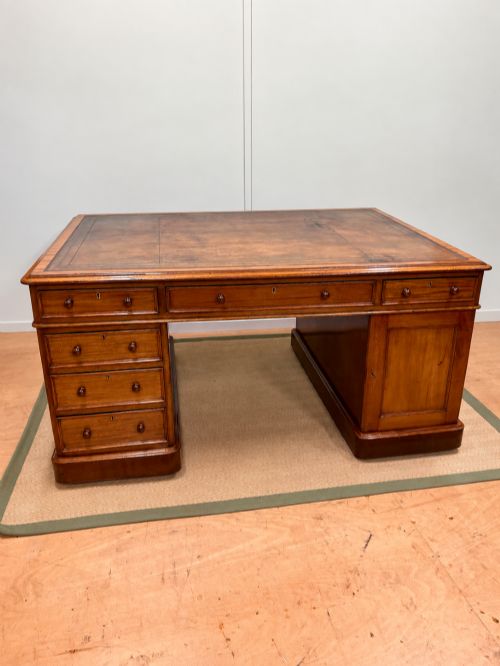
- A freestanding desk comprising two supporting columns of drawers with a central writing surface across the top. This configuration offers storage on both sides in partners variants.
- Partners desk
- A large double-sided desk designed for two people to work opposite one another, featuring drawers and cupboards duplicated on both faces. These pieces often served in nineteenth-century administrative or domestic libraries.
- Kneehole desk
- A compact writing table featuring a central recess for the user's legs, flanked by smaller banks of drawers. They frequently date to the eighteenth and nineteenth centuries.
- Library table
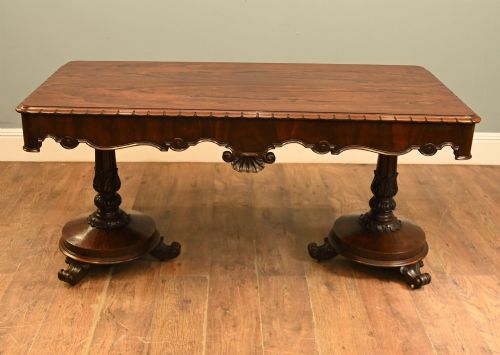
- A large freestanding table used for reading and writing, finished on all sides to sit in the centre of a room rather than against a wall.
- Tooled leather
- Leather inset into the top of a desk, decorated around the border with gold leaf or blind tooling stamps.
Pedestal Study Table: Frequently Asked Questions
What is a pedestal study table?
A pedestal study table is a heavy freestanding desk or library table supported by two columns of drawers. It provides a dedicated workspace with built-in storage.
These pieces emerged in various woods and revival styles, serving studies, libraries, and offices across the nineteenth and early twentieth centuries.
Where should I place a partners desk?
A partners desk is finished on all sides, making it ideal for the centre of a room rather than pushed against a wall. It allows two people to sit opposite each other.
Ensure you leave enough clearance around the entire piece for chairs to pull out comfortably in a larger study or library.
How do I date a pedestal desk?
Dating relies on timber choices, construction techniques, and stylistic revivals present in the piece. Victorian examples often use rich mahogany and walnut, while Edwardian pieces frequently feature lighter oak or inlaid mahogany.
Hardware styles, drawer linings, and overall proportions help narrow down whether a desk belongs to the Georgian period or a later nineteenth-century revival.
Can I use a antique desk daily?
Yes, these tables were built for heavy administrative and writing use from sturdy hardwoods like oak and mahogany. Their robust construction suits modern study environments.
Protecting the leather top and maintaining the timber with appropriate wax keeps the working surface resilient for everyday tasks.