
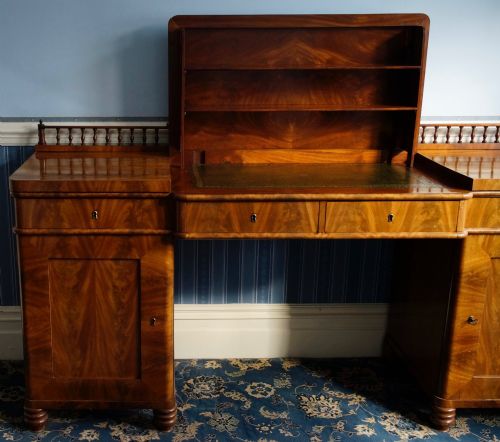
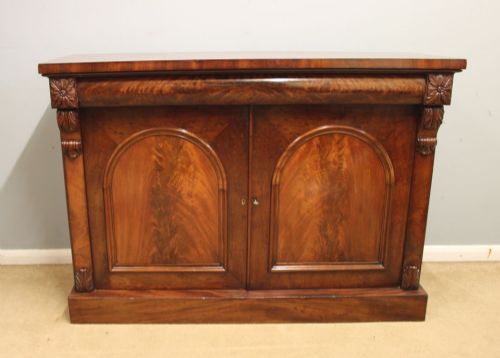
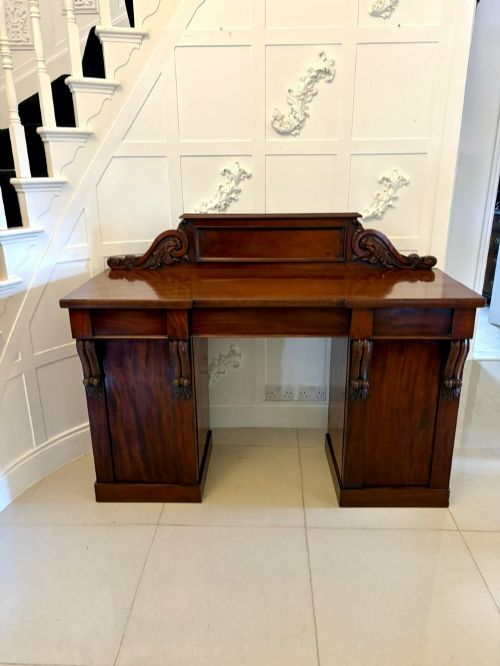
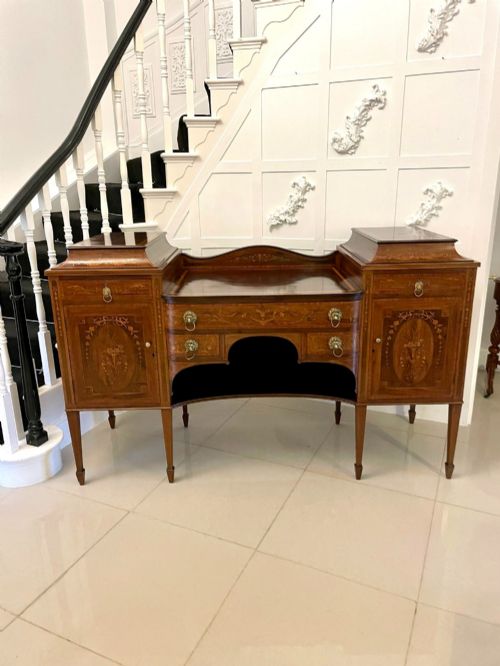
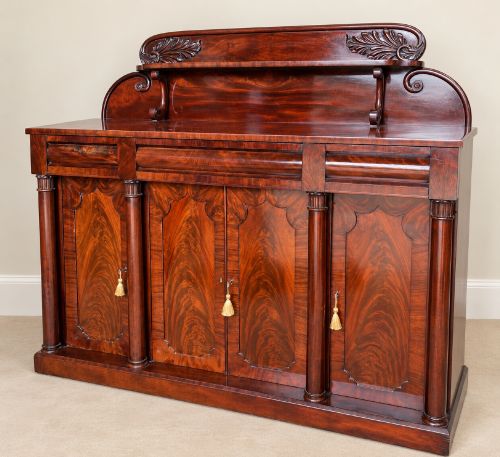
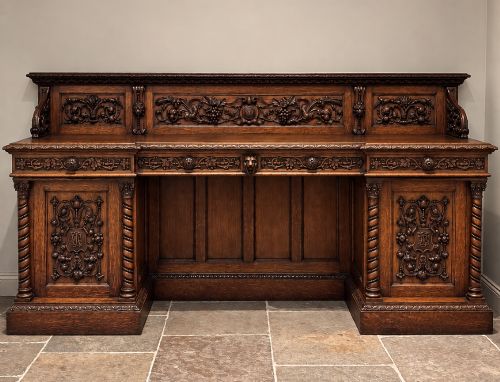
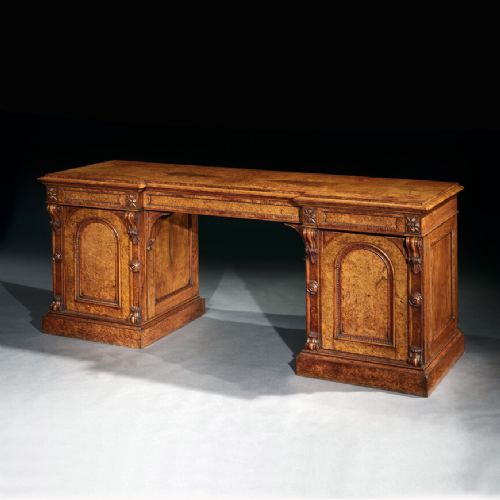
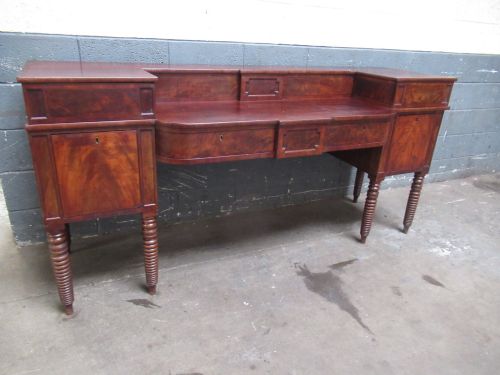
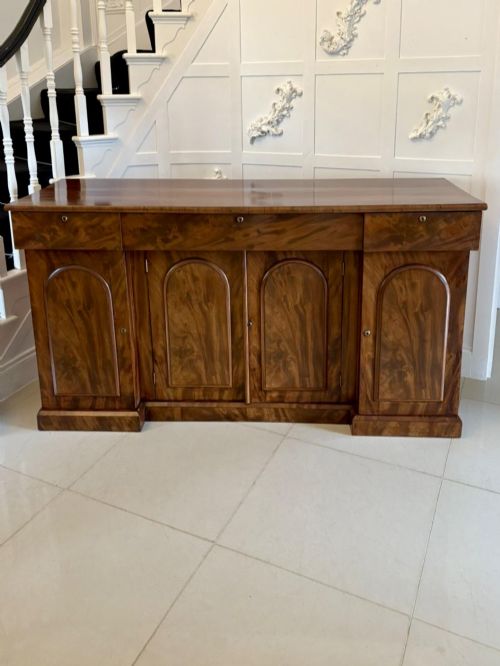
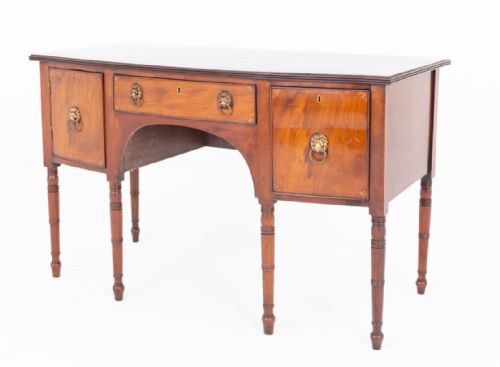
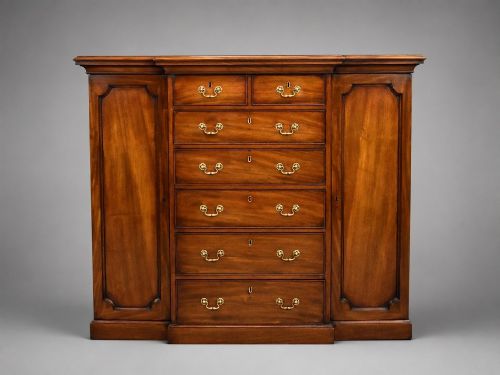
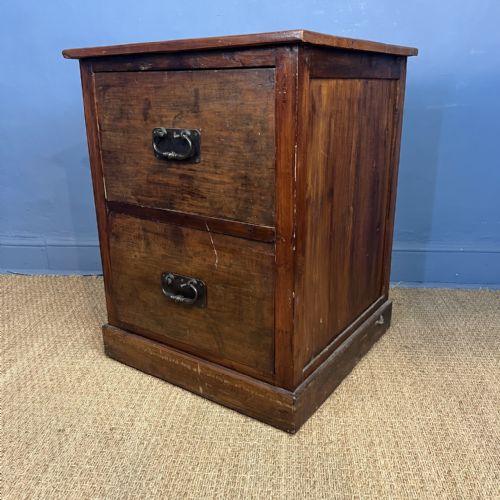
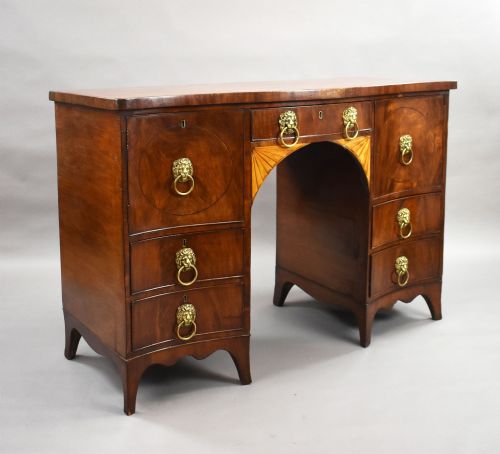


Pedestal Sideboard Cabinet
These pedestal sideboard cabinet examples anchor a dining room with gravitas, offering deep storage and stately timber surfaces built to last generations.
Pedestal Sideboard Cabinet
When you search for a pedestal sideboard cabinet, you examine substantial dining furniture designed to hold silver, linen, and glassware. The versions you meet most frequently on this page date from the nineteenth century, including Victorian, Regency, and William IV periods, alongside Georgian examples.
Makers constructed these storage pieces primarily in mahogany, flame mahogany veneer, and oak, often featuring pedestal ends flanking a central section. Forms range from Scottish stage-back designs to inverted breakfront pedestals and drop well configurations.
Origin details in the evidence point towards British craftsmanship, alongside distinct Anglo-Indian interpretations utilising padouk and teak. You also encounter related sideboard and side cabinet variations spanning chiffoniers and credenzas.
Materials and construction techniques
Cabinet makers utilised solid timbers alongside figured veneers, applying flame mahogany veneer and satinwood to create striking visual depth across large surfaces. Carved details frequently ornament the structural frames, showcasing traditional joinery methods appropriate for heavy dining furniture.
Brass fittings and glass elements appear as supplementary materials, complementing the primary woods like oak, rosewood, and yew. Workshops shaped these elements into robust pedestals, breakfront bases, and stage-back configurations designed for daily utility.
Some nineteenth-century sideboards feature secret cellarette drawers hidden inside the pedestals, originally built to keep wine bottles cool and out of sight.
Distinctions in craftsmanship and materials
The degree of figuration in the timber veneer dictates much of the visual appeal, separating standard sideboards from exceptional pieces utilising highly figured flame mahogany or satinwood. Finer examples display meticulous carving on the solid wood mouldings and pedestal mounts rather than plain surfaces.
Structural integrity and proportion define the upper tier of these cabinets, where large proportions maintain balance through careful architectural detailing like drop wells or stage-backs. The selection of secondary woods and the precision of the joinery further separate standard workshop output from designated maker pieces.
Hewetsons London·Epstein
The Pedestal Sideboard Cabinet Glossary
- Pedestal sideboard cabinet
- A large dining room storage piece featuring cupboards or drawers set into flanking pedestals connected by a central recess or board.
- Flame mahogany veneer
- A sliced timber sheet displaying a distinct feather-like flame pattern, applied to carcase fronts for decorative impact.
- Breakfront
- A cabinet facade where the central section projects forward from the flanking pedestals or side sections.
- Chiffonier
- A low sideboard or cabinet featuring enclosed shelving beneath, often topped with a small superstructure or mirror.
Pedestal Sideboard Cabinet: Frequently Asked Questions
What is a pedestal sideboard cabinet?
A pedestal sideboard cabinet is a substantial dining room storage unit featuring flanking pedestal cupboards connected by a central counter or recess. These pieces emerged to hold serving dishes, cutlery, and wine.
Craftsmen built them primarily in mahogany and oak during the Georgian and Victorian eras, incorporating heavy timber panels and carved details. They served as both functional storage and prominent dining room displays.
How do I date a mahogany sideboard?
Dating relies on observing the timber selection, construction methods, and stylistic cues present in the piece. Regency and William IV examples often feature bold carved scrolls and flame mahogany veneers, while Georgian versions lean towards refined bowfronts and inlaid marquetry.
Examining secondary woods inside drawers and the type of brass hardware used also helps narrow down the decade of production. Nineteenth-century pieces frequently display heavier proportions and deeper carving than their eighteenth-century predecessors.
Where were these sideboards placed?
These sideboards stood primarily against the dining room wall opposite the main table, ready for serving meals and holding silver. Their substantial proportions required ample space to let the pedestal ends and carved details stand clear.
In period homes, they acted as stationary furniture that remained in the dining room permanently rather than moving between chambers. Their heavy construction ensured they stayed firmly anchored in place.
How do I clean antique mahogany?
Maintain antique mahogany by dusting regularly with a soft, dry cloth to prevent dirt accumulation on the polished wood and veneer surfaces. Avoid modern silicone sprays or harsh chemical cleaners that can degrade the historic polish.
Apply a traditional beeswax polish sparingly when the wood appears dry, buffing it gently to restore the natural sheen. Keeping the cabinet away from direct heat sources and strong sunlight protects the flame veneer from splitting or fading.