







Pedestal Sheet Music Stand
A pedestal sheet music stand holds scores at the right height, bringing period warmth and practical utility to a music room.
Pedestal Sheet Music Stand
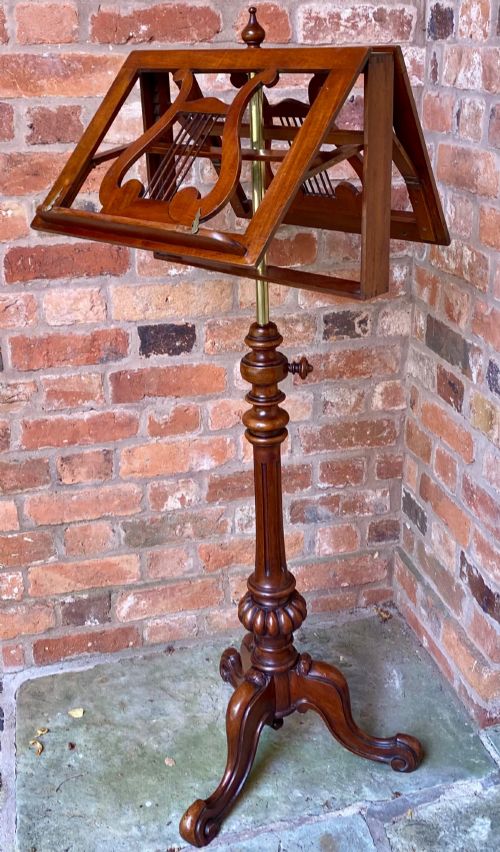
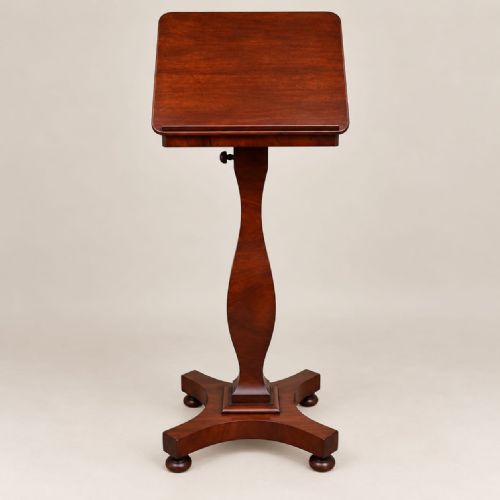
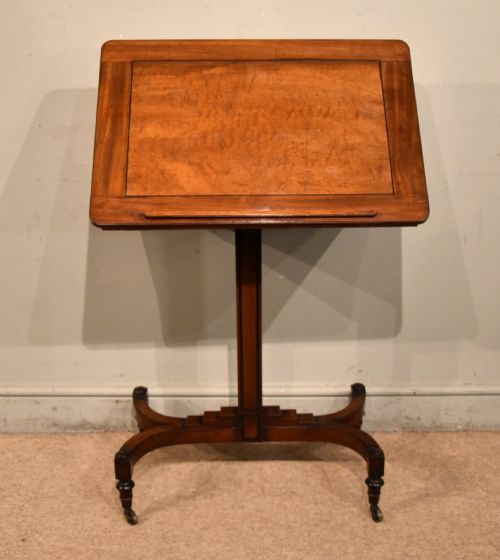
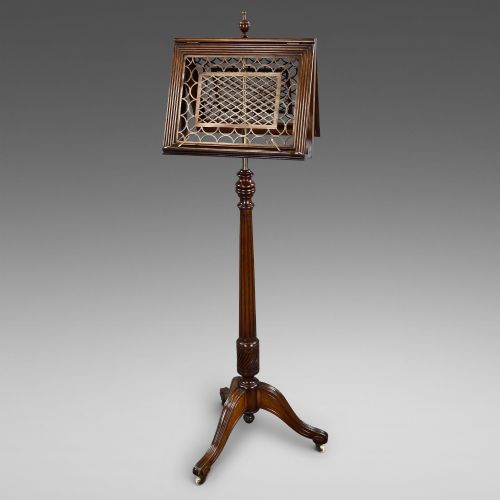
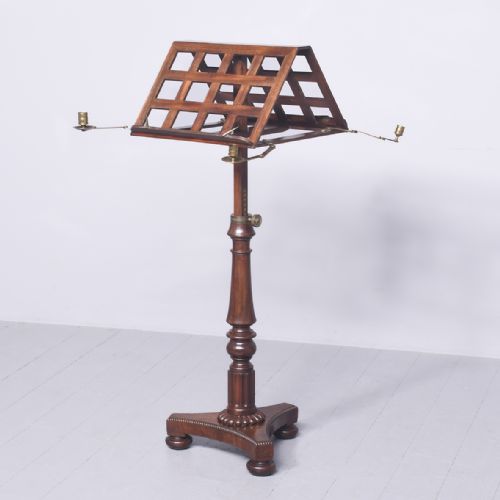
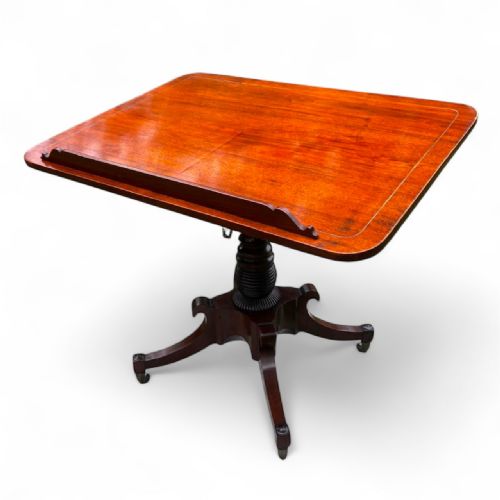
When you search for a pedestal sheet music stand, you are looking at practical furnishings designed to hold scores at a readable angle while practising or performing. These pieces range from upright cabinets and reading stands to dedicated duet stands mounted on single central columns.
The versions you are most likely to meet on this page hail from the Regency, Victorian, and Edwardian eras, with a strong showing of mahogany timbers and adjustable reading ledges.
Forms vary from simpler music tables and racks to elaborate fretted duet stands that accommodate two players simultaneously.
How they were made
Cabinet makers utilised dense hardwoods such as mahogany and rosewood, often enhancing the surfaces with brass inlay or ebonised details.
Many examples incorporate mechanical adjustment for height and angle, relying on clever engineering hidden within the central pedestal column.
Pedestal Sheet Music Stand Retail Price Guide 2026
Typical asking prices for pedestal sheet music stand among the pieces listed under this phrase on Sellingantiques today, from the lower quarter to the upper quarter. They describe what is for sale here now, not the wider market.
What varies in quality
The distinction between standard utility items and finer examples lies in the crispness of the turning on the pedestal and the sophistication of the adjustable mechanisms.
Selection of timber grain and the finesse of brass work or inlay separate basic workshop production from the more ambitious pieces made for wealthy parlours.
Denby & Spinks
The Pedestal Sheet Music Stand Glossary
- Duet stand
- A music stand wide enough for two musicians to read a shared score together. These often feature adjustable ledges and sophisticated pivoting mechanisms.
- Pedestal
- A single central pillar supporting the upper reading desk or cabinet above a weighted base. This design allows players to sit close without awkward legs in the way.
- Regency
- A style period spanning the early nineteenth century defined by classical restraint and polished dark timbers. Pieces from this era frequently employ brass stringing and bold pillar supports.
- Canterbury
- A low multi-section rack designed for holding sheet music, folios, or magazines near an instrument. It usually combines vertical partitions with a carrying handle or lower drawer.
Pedestal Sheet Music Stand: Frequently Asked Questions
How do I adjust the height?
Many period stands use a sliding wooden shaft secured by a brass thumbscrew or a peg mechanism hidden inside the central pillar. Turning or releasing this allows the desk to move smoothly to your preferred seating level.
Take care to support the heavy reading desk with one hand while releasing the fastener to prevent sudden drops that might strain the timber joints.
Can I use it for books?
The sturdy adjustable ledges make these stands well suited for holding heavy volumes, atlases, or modern tablets alongside traditional sheet music. The sturdy pedestal base provides reliable stability for daily reading.
Ensure the retaining pegs or lips on the desk are deep enough to catch the binding of thicker reference books securely.
Where should I place it?
Position your stand near a piano, in a corner, or beside an armchair where good natural light falls across the reading surface. The compact footprint makes them easy to integrate into existing room layouts.
Keep the timber away from direct heat sources and strong sunlight to protect the polish and prevent the wood from drying out over time.
How do I date these stands?
Look closely at the timber choice, turning styles, and construction methods to determine the period of origin. Regency pieces often show classical brass inlay and bold rosewood or mahogany grains, while Edwardian examples display lighter framing.
Hardware details like brass thumbscrews and screw types also offer reliable clues to the decade of manufacture.