
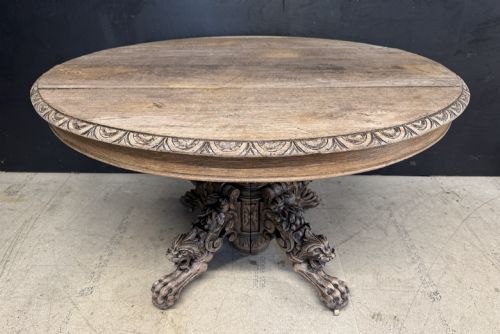
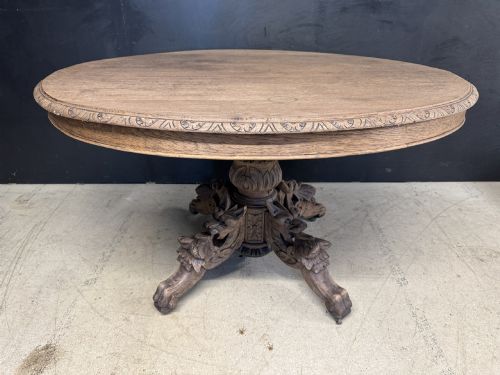
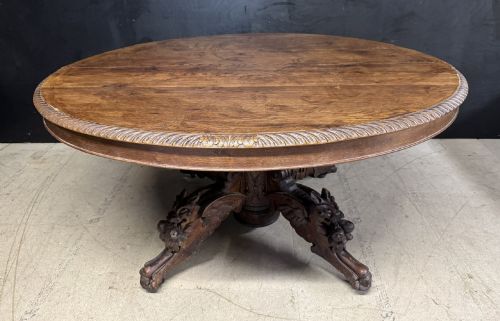
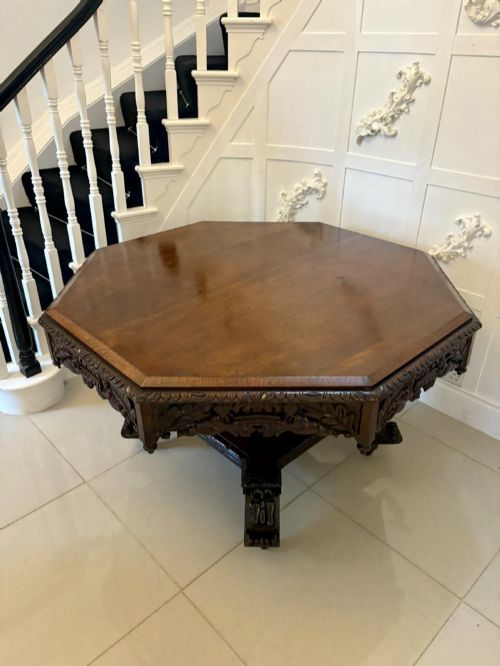



Pedestal Oak Centre Table
A pedestal oak centre table anchors a room with solid timber and classic form, offering a sturdy surface that suits daily use.
Pedestal Oak Centre Table
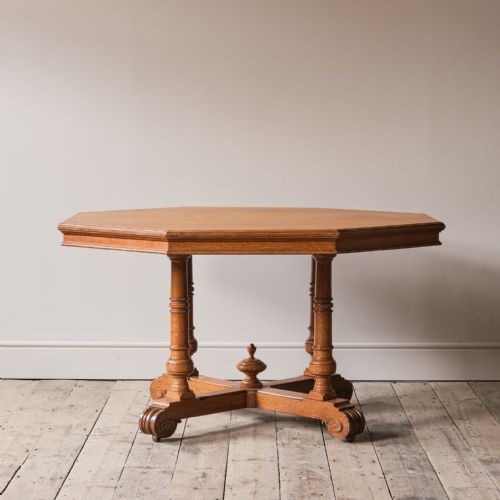
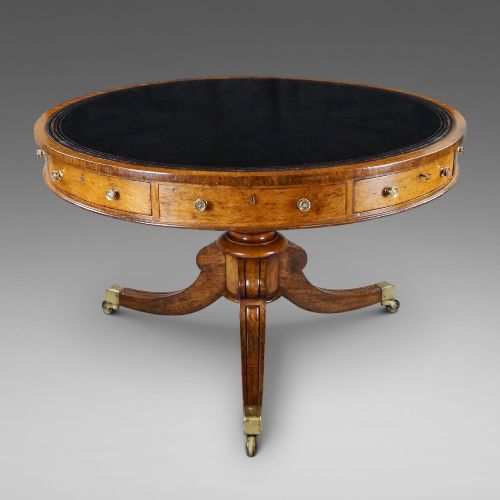
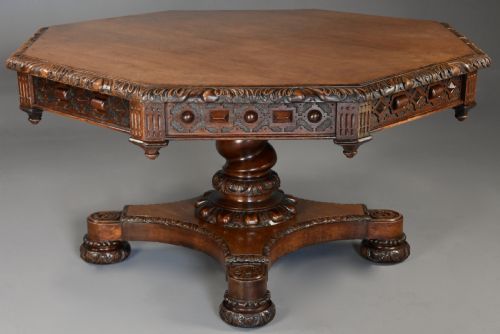
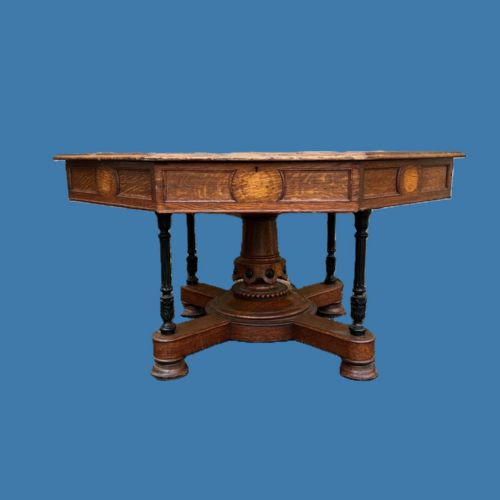
A pedestal oak centre table stands free in a room, supported by a central column or pillar rather than four corner legs. These tables appear in various forms across the 19th Century, including library drum tables, round breakfast tables, and octagonal occasional pieces.
Most examples found here date from the Victorian and Regency periods, utilising dense native timbers like pollard oak and burr oak. They serve practical functions in hallways, libraries, and principal rooms, providing generous surface area and sturdy construction.
Materials and construction
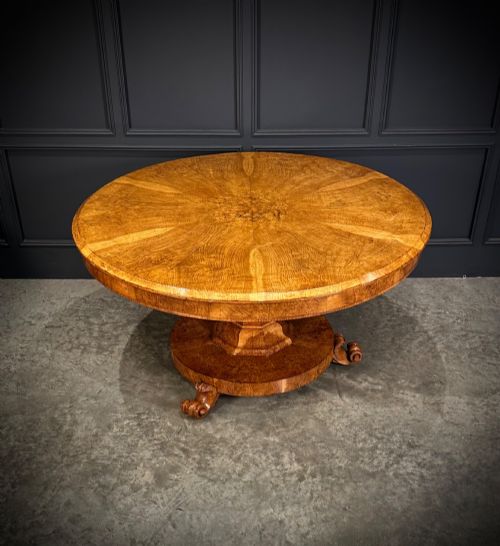
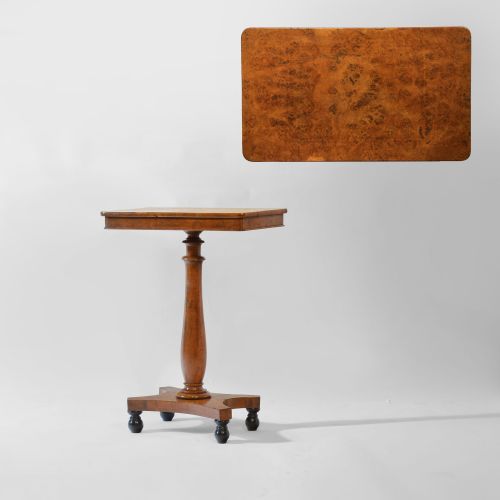
Cabinet makers utilised solid oak alongside decorative veneers such as pollard oak and burr oak to create rich grain patterns across circular and octagonal tabletops. These timbers were selected for their durability and figured surfaces.
Inlay work, ebonised wood details, and brass fittings often complement the primary timber, while heavy central pedestals provide the necessary structural support for large dining and library tables.
Some Victorian tables hid sewing compartments inside their deep drum tops, giving diligent readers a sneaky place to stash embroidery.
Assessing quality and craftsmanship
Quality rests in the selection of the timber, particularly where figured burr or pollard oak veneers create striking surface patterns. Superior pieces display careful matching of the grain across segmented tabletops.
Carved detailing on the pedestal and base distinguishes finer examples, showing crisp execution rather than flat, mechanical moulding. The stability of the central column and the precision of any incorporated drawers dictate the overall standard of manufacture.
The Pedestal Oak Centre Table Glossary
- Pollard oak
- Timber taken from trees that were cut back close to the trunk, producing a dense, highly figured grain pattern prized for tabletops. It creates a distinctive spotted and mottled appearance.
- Drum table
- A circular library table with a deep top containing drawers around the circumference, usually supported by a central pedestal. These pieces were designed for administrative and reading tasks.
- Burr oak
- Wood harvested from abnormal growths on oak trees, yielding swirling, knotty grain configurations. This material provides exceptional decorative depth on top surfaces.
- Pedestal table
- Any table supported by a single central column rising from a weighted base or feet. This design allows unhindered seating access around the perimeter.
Pedestal Oak Centre Table: Frequently Asked Questions
Where should I place a pedestal oak centre table?
These tables sit naturally in the middle of large hallways, libraries, or drawing rooms where they can be accessed from all sides. Their freestanding nature makes them ideal focal points for displaying lamps or decorative objects.
Ensure there is sufficient clearance around the circumference for movement and seating. Avoid placing them in direct sunlight to protect the timber polish.
How do I clean an antique oak table?
Dust the surface regularly with a soft, dry cloth to prevent dirt accumulation in the grain and carved sections. Avoid using modern silicone sprays or abrasive household cleaners.
Apply a traditional beeswax polish sparingly every few months to nourish the timber and maintain a soft lustre. Buff the surface gently after application.
Can I use these tables for dining?
Many larger examples, such as breakfast tables and specific dining variants, were built precisely for eating and daily gatherings. Their sturdy central pedestals provide robust support for meal service.
Check the height and legroom beneath the top before daily use. Use protective mats for hot dishes and liquids to safeguard the antique finish.