


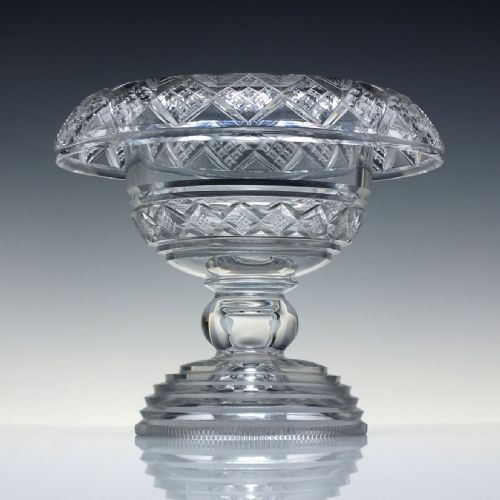


Pedestal Glass Bowl
When you handle a pedestal glass bowl, you hold centuries of table service tradition raised on solid stems for display.
Pedestal Glass Bowl
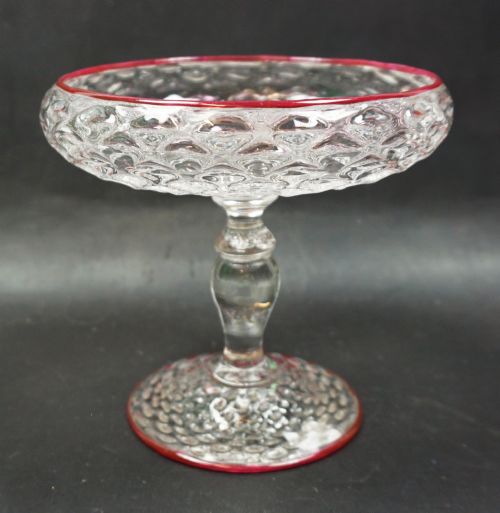
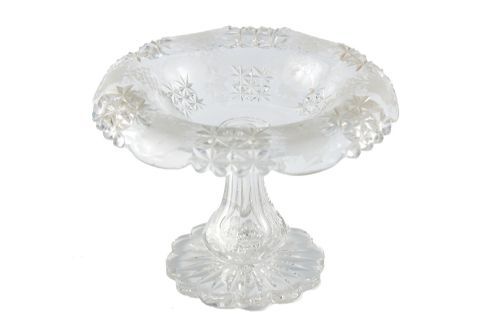
A pedestal glass bowl sits on a raised stem or foot, serving historically as a table centrepiece, tazza, or fruit dish for dining rooms. You will encounter Victorian and Edwardian cut glass examples most frequently alongside Art Deco variations from the twentieth century.
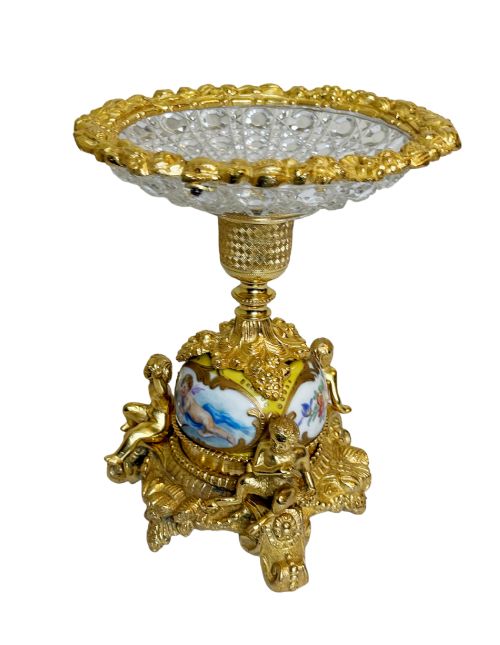
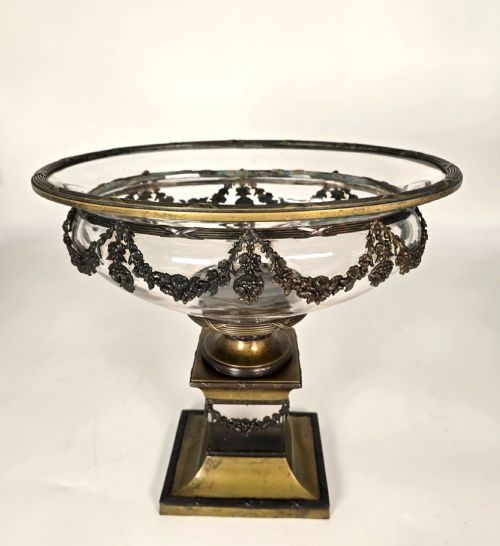
The forms range from shallow dessert tazzas and comports to deep standing fruit bowls and sweetmeat glasses. Makers employed lead crystal, pressed glass, and coloured glass with mounts of silver plate, gilt bronze, and pewter.
Originating across England, Ireland, France, Germany, and Bohemia, these vessels fulfilled domestic display functions during formal meals. They appear on this page in styles spanning Georgian simplicity, Victorian elaboration, and Art Nouveau fluidity.
What varies in quality
The weight and clarity of the metal or crystal set the baseline, alongside the crispness of the wheel cutting or moulding. Sharp facets and deep wheel engravings separate ambitious studio or factory output from routine domestic tableware.
Integration between the glass body and any metal mounts, whether gilt bronze, silver plate, or pewter, dictates the structural ambition of the piece. Hand-finished details such as gilded rims, enamel work, and figural supports elevate standard vessels into significant decorative objects.
Sailors and princes occasionally share the dining table when nautical silver plate centrepieces hold court.
Graystan·Monart·Wedgwood·WMF·Orivit·Christofle et Cie·Viners·Davidson·Etling·Waterford
The Pedestal Glass Bowl Glossary
- Tazza
- A shallow bowl or dish mounted on a stemmed foot, used historically for serving fruit or small sweetmeats.
- Comport
- A large standing dish on a pedestal, traditionally placed at the centre of a dining table for fruit or confections.
- Sweetmeat glass
- A small, stemmed glass vessel designed for holding preserved fruits, nuts, or sweet confectioneries.
- Hobnail
- A raised, faceted glass pattern resembling the iron studs on heavy boots, catching light across the bowl exterior.
- Ogee
- A double-curved architectural profile shaped like an elongated S, seen in the curving bowls of eighteenth-century stemware.
- Lead crystal
- Heavy, brilliant glass containing lead oxide that increases refractive index and allows deep, sharp cutting.
Pedestal Glass Bowl: Frequently Asked Questions
What was a pedestal glass bowl used for?
These vessels served as formal table centrepieces for displaying fruit, flowers, and sweetmeats during dining.
Hosts positioned them in the middle of dining tables to elevate delicacies above the surface of the board.
How do I date an antique pedestal glass bowl?
Examination of the pontil mark, cutting style, and glass colour helps determine the era of production.
Victorian pieces often feature heavy lead crystal and deep wheel cutting, while Art Deco examples show geometric moulded lines.
How do I style a pedestal bowl at home?
Place a standing bowl on a dining table, sideboard, or entrance hall console as a focal display object.
Leave the bowl empty to showcase the glass clarity and cutting, or fill it seasonally with fruit or glass spheres.
What is the difference between a tazza and a comport?
A tazza is typically shallower and flatter, designed primarily for serving small pastries or sweets on a footed base.
A comport offers a deeper bowl capacity suited for fruit displays and centrepiece arrangements.