
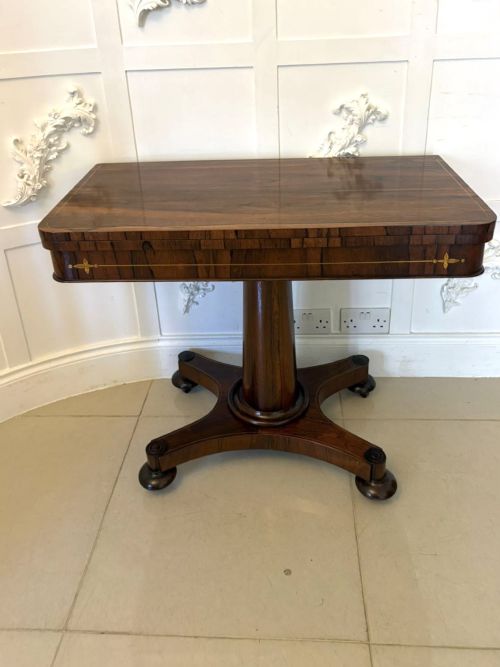
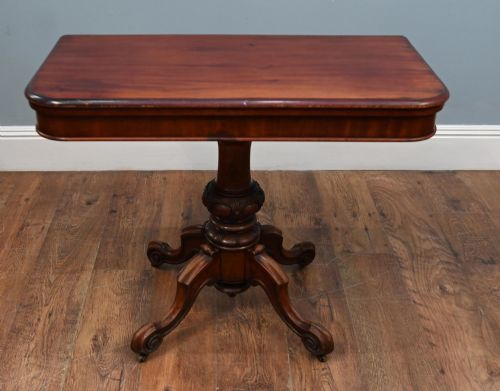
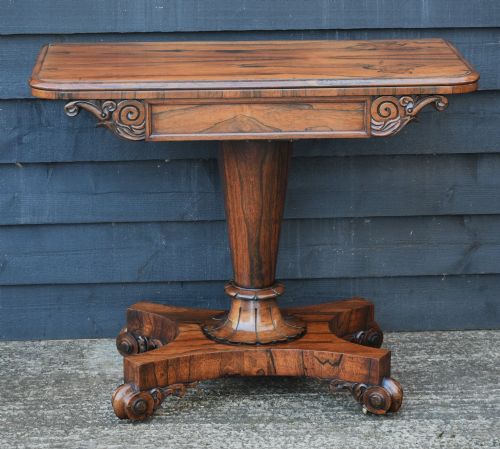
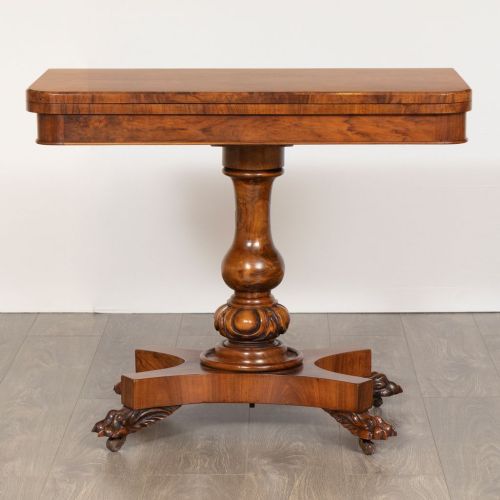
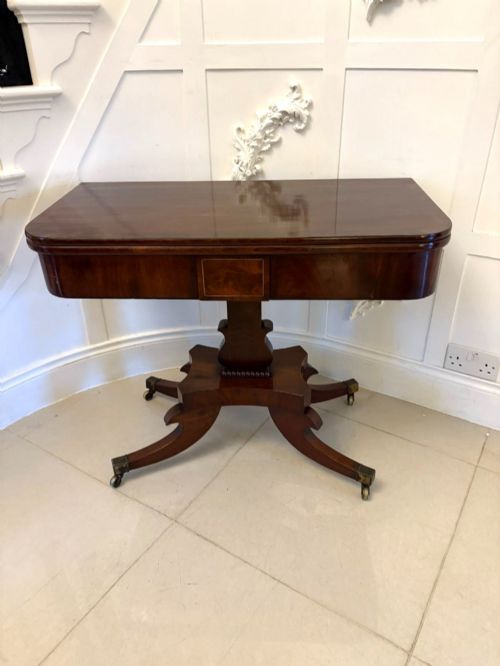
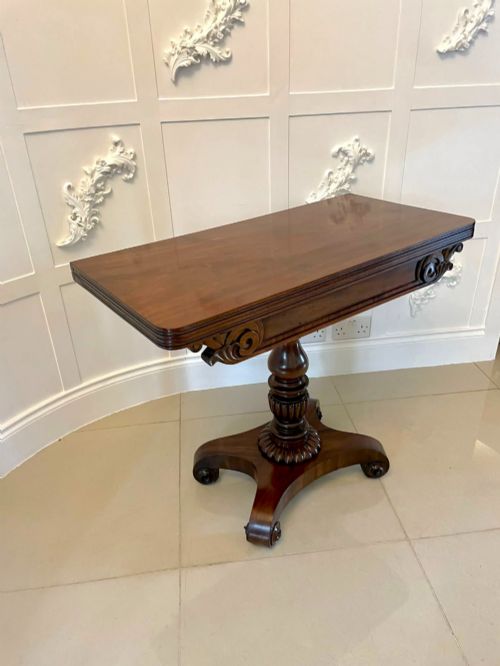
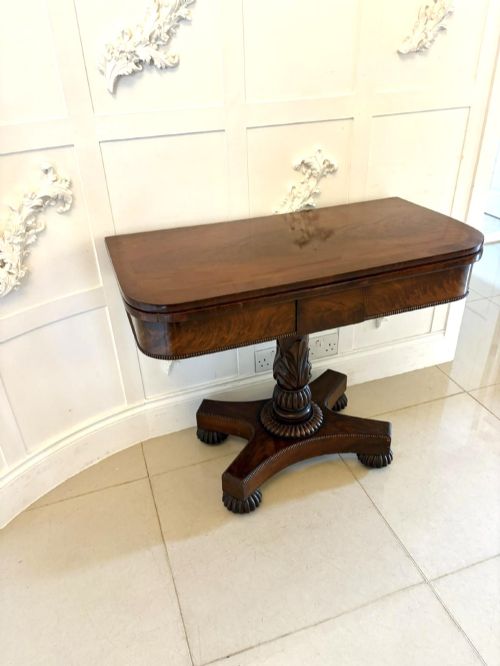
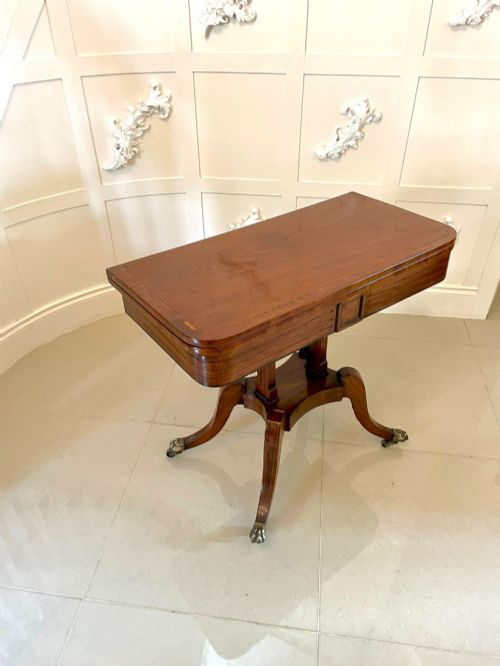
Pedestal Fold Top Table
A pedestal fold top table provides a dual surface for tea or cards, resting on a central pillar and stable base.
Pedestal Fold Top Table
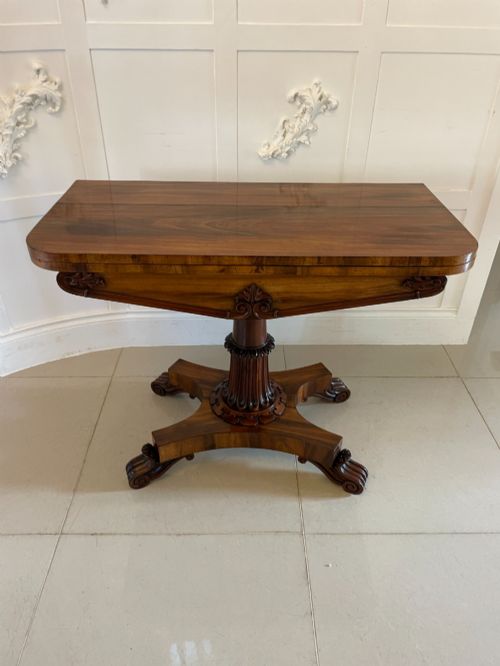
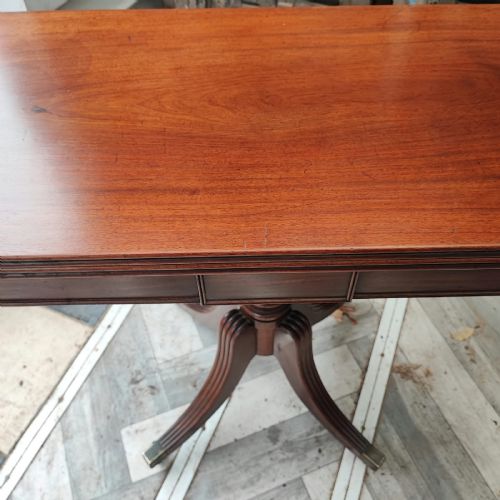
A pedestal fold top table serves multiple domestic uses, functioning as a console, tea table, or card table depending on the arrangement of the hinged leaf. The form appears across the Georgian, Regency, William IV, and Victorian periods, remaining a flexible item of furniture for the principal rooms of a house.
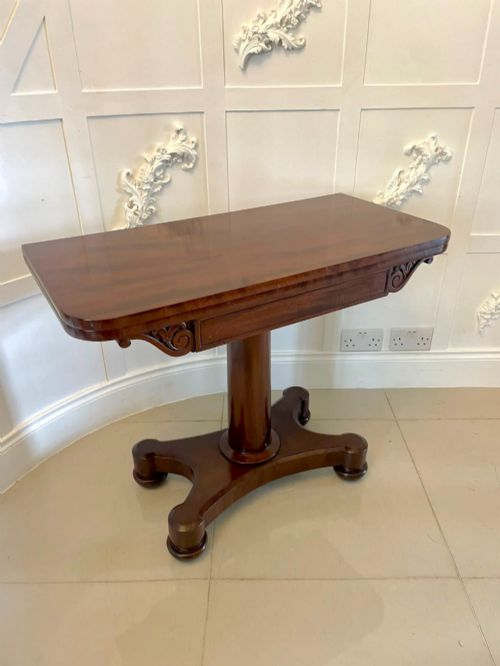
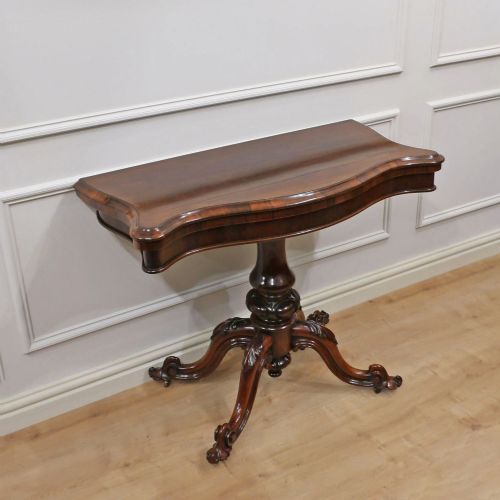
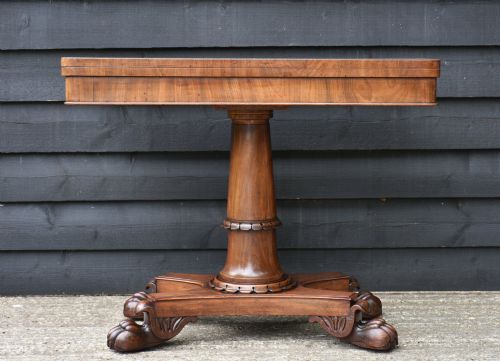
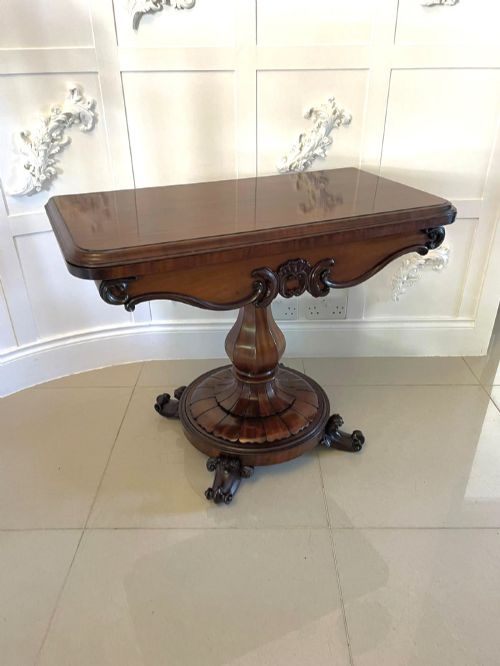
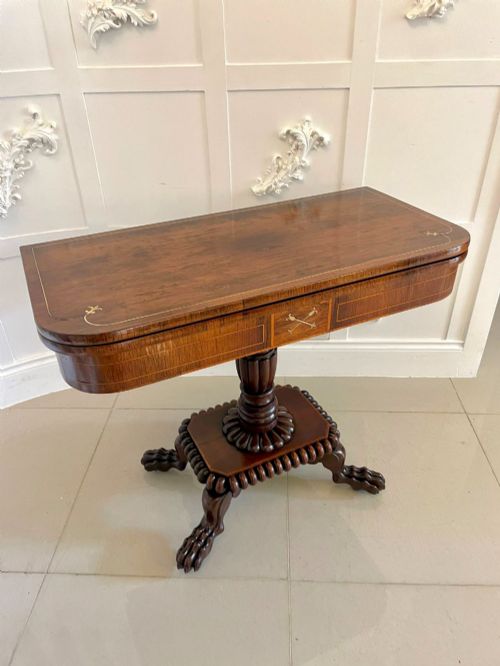
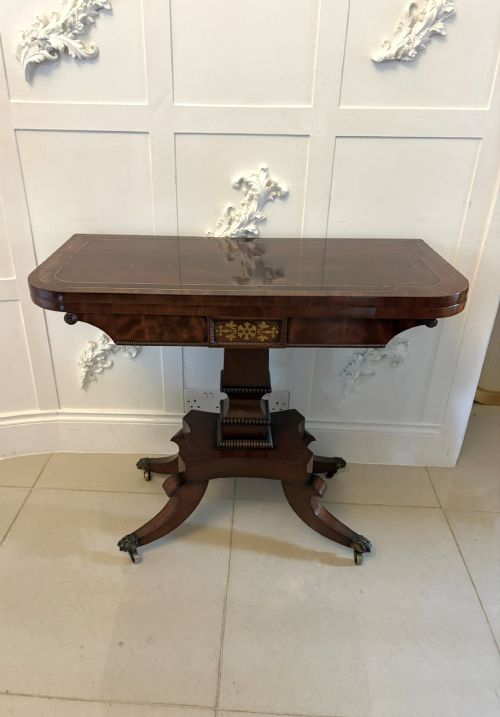
Makers construct these tables with a single central pedestal rising from a platform base or supported by carved feet, carrying a top that rotates and folds open to reveal a baize-lined playing surface or a polished timber top.
Examples on this page span the nineteenth century, including specific decades such as the eighteen-fifties and eighteen-sixties, alongside broader stylistic designations like Grand Regency and Early Victorian.
Materials and Construction Methods
Cabinet makers utilise dense timbers such as mahogany, rosewood, and walnut, frequently selecting figured or flame veneers to cover the primary surfaces.
Workshops apply decorative elements including brass inlay, satinwood banding, and carved details on the pedestal supports, sabre legs, and scroll feet.
The hinge mechanism allows the top leaf to pivot and fold flat onto the frieze, requiring precise joinery to ensure the two halves align correctly when open.
Listings feature woods including mahogany, rosewood, walnut, burr walnut, satinwood, and olive wood across the nineteenth century.
Factors That Distinguish Quality
The choice of timber grain dictates the visual impact of the piece, with carefully matched flame mahogany or burr walnut marking the higher tier of cabinet work.
The crispness of carved details on the pedestal, paws, and scroll supports separates standard production from superior workshops, as does the precision of inlaid brass work and contrasting veneers.
Gillows
The Pedestal Fold Top Table Glossary
- Baize
- A coarse woolen fabric used to line the playing surface of card and games tables. It provides a flat, soft texture that prevents cards from sliding.
- Frieze
- The horizontal band of wood situated directly beneath the tabletop. This section often houses the pivoting mechanism and hidden compartments.
- Turnover top
- A hinged tabletop design that folds in half to double the surface area when opened. It rests on a rotating pivot to distribute weight evenly across the pedestal.
- Sabre leg
- A sharply curved leg that tapers toward the foot, commonly seen on Regency pedestal tables. This form provides lateral stability without heavy bracing.
- Veneer
- A thin layer of figured timber applied over a secondary wood base to create decorative patterns. Cabinet makers select burr walnut or flame mahogany for this purpose.
Pedestal Fold Top Table: Frequently Asked Questions
What is a pedestal fold top table used for?
These pieces function primarily as side tables or console tables against a wall when closed. Opening the hinged leaf creates a stable surface suitable for serving tea or playing card games.
The interior compartments often store playing cards and counters, making the furniture central to evening entertainment in nineteenth-century drawing rooms.
How do I tell a Regency table from a Victorian one?
Regency examples typically feature cleaner architectural lines, brass inlay, and rosewood or mahogany timbers with sabre legs or platform bases. They lean toward classical restraint and lightness of form.
Victorian pieces generally display heavier proportions, darker burr walnut veneers, and more elaborate carved supports or scroll feet reflecting mid-nineteenth-century taste.
How do the folding mechanisms work?
The top consists of two matching leaves hinged together along the back edge. Users lift and pivot the upper leaf ninety degrees so it rests squarely across the framework.
Support brackets or a swing leg attached to the frieze pull out to hold the unfolded leaf level while in use.
Where should I place a pedestal table in a room?
Place the closed table against a hallway or living room wall where it functions as a console or side table. The shallow depth keeps walkways clear.
Pull the table into the centre of the room and open the top when extra surface area is required for gatherings or games.