

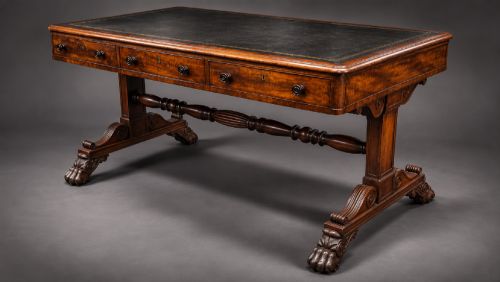
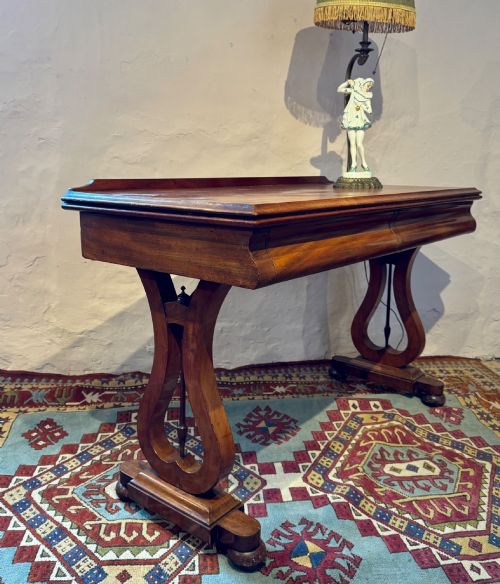
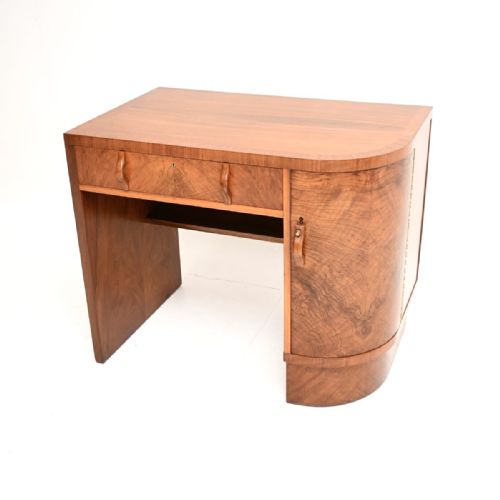
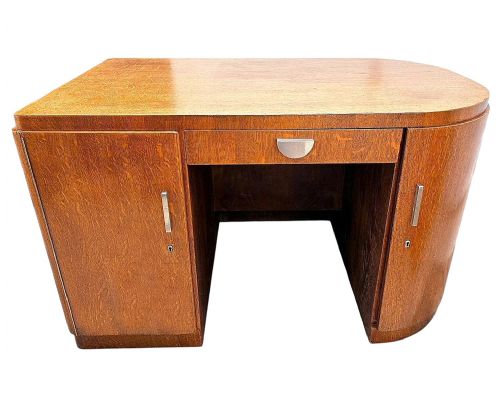
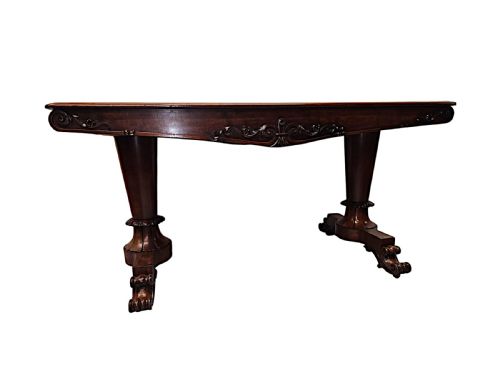
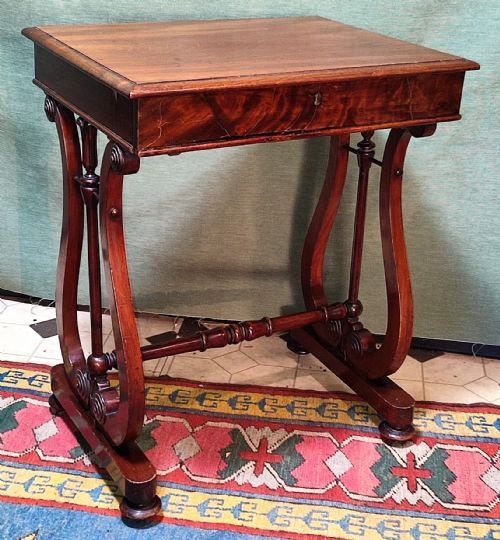


Pedestal End Writing Table
A pedestal end writing table offers a commanding centrepiece for any study, combining functional work space with sculptural grace.
Pedestal End Writing Table
A pedestal end writing table is a substantial form designed for serious study or administrative work, featuring a top supported by substantial ends or pillars. These pieces appear frequently across the nineteenth century and into the twentieth century, reflecting shifting domestic and professional requirements.
The selection on this page demonstrates remarkable variety in origin and aesthetic, spanning Regency, William IV, Victorian, and Art Deco periods. Makers utilised robust timbers such as mahogany, rosewood, oak, and walnut to construct these enduring forms.
Buyers frequently encounter related desk and table formats alongside standard writing tables, including library tables, sofa tables, and occasional tables. These related pieces share the same architectural focus on end supports, whether shaped as lyres, columns, or modernist pedestals.
How they were made
Cabinet makers constructed these tables using solid cabinet timbers alongside carefully selected veneers, applying flame mahogany and figured walnut to large planar surfaces. These woods were often polished to a high lustre to emphasise the natural grain patterns.
Structural integrity relied on traditional joinery techniques, paired with metal components such as brass fittings and hardware. Later twentieth-century examples integrated chrome details alongside walnut veneer to achieve a streamlined modernist aesthetic.
Pedestal End Writing Table Retail Price Guide 2026
Typical asking prices for pedestal end writing table among the pieces listed under this phrase on Sellingantiques today, from the lower quarter to the upper quarter. They describe what is for sale here now, not the wider market.
Some tables feature musical instrument shapes carved into their very legs, ensuring the furniture plays a silent tune.
What varies in quality
Quality rests upon the selection of timber and the ambition of the design, distinguishing standard workshop production from pieces attributed to notable makers. Figured veneers and decorative elements such as lyre ends elevate the visual impact of the piece.
Proportion and execution define the hierarchy of these tables, where balanced architectural lines and refined finishing separate exceptional library and writing tables from simpler utilitarian forms.
Williams and Gibton
The Pedestal End Writing Table Glossary
- Pedestal end
- A structural support placed at the extremity of a table rather than central legs. This arrangement maximises legroom and creates a distinct architectural silhouette.
- Veneer
- A thin layer of decorative wood applied to a secondary timber base. Figured varieties such as flame mahogany or walnut enhance the surface pattern.
- Lyre end
- A table support shaped in the form of an ancient stringed musical instrument. This motif is frequently encountered in Regency design.
- Library table
- A large freestanding table designed for the storage and consultation of books. These pieces often feature finished backs allowing placement anywhere in a room.
Pedestal End Writing Table: Frequently Asked Questions
Where should I place a pedestal end writing table?
These tables function best when positioned centrally within a study or library rather than pushed against a wall. Many examples feature finished backs suitable for viewing from any angle.
Ensure adequate clearance around the pedestal ends so the architectural supports remain visible as a primary design feature.
How do I identify a Regency period table?
Regency pieces often display classical architectural motifs, such as lyre supports, brass inlay, and dark tropical timbers like mahogany and rosewood. Proportions tend to be precise and disciplined.
Later revival styles from the twentieth century often adopt cleaner lines or utilise different veneer treatments while referencing these earlier forms.
What is the difference between a writing table and a library table?
Writing tables are typically configured primarily for correspondence and paperwork, sometimes incorporating drawers beneath the top surface. Library tables are generally larger and designed for general reading and book storage.
Both forms utilise robust end supports to bear the weight of books and working materials.
How do I care for antique wood surfaces?
Maintain polished wood surfaces by dusting regularly with a soft, dry cloth and avoiding placement near direct heat sources or strong sunlight. Periodic application of appropriate wax preserves the sheen of the timber.
Protect the top from moisture and excessive friction to preserve the underlying grain and veneer.