



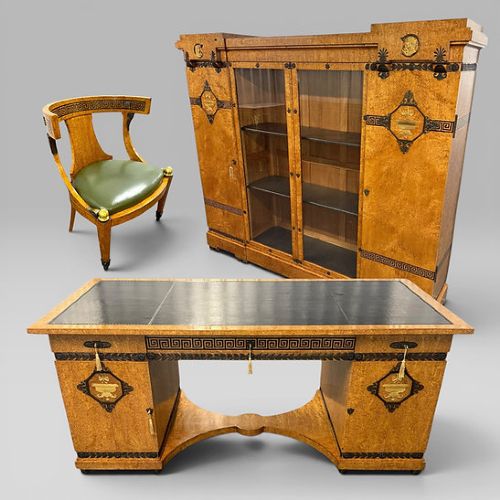



Pedestal Display Cabinet
A pedestal display cabinet brings vertical presence and glazed enclosure to small objects, drawing the eye upwards while keeping contents secure.
Pedestal Display Cabinet
When you search for a pedestal display cabinet, you are looking at tall, freestanding furniture designed to showcase ceramics, glass or curios within a compact footprint. These pieces elevate collections off the floor, utilising vertical space rather than spreading wide across a room.
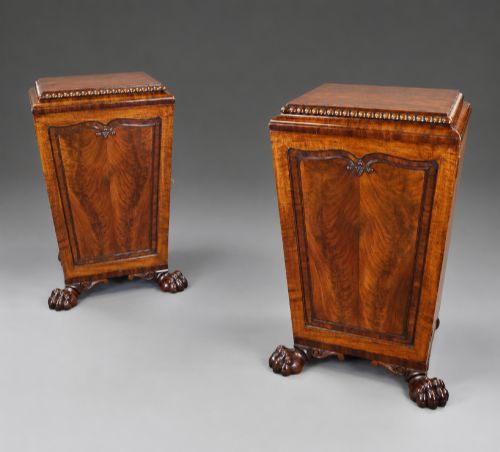
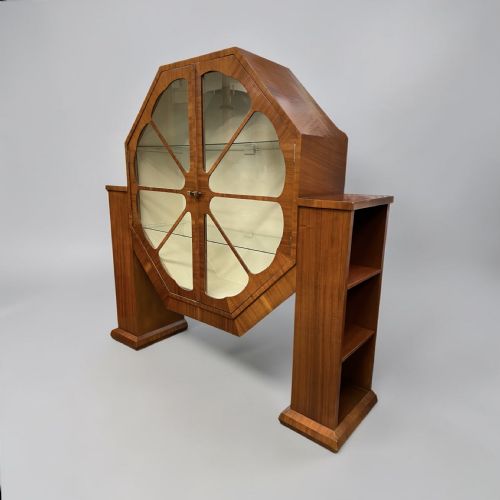
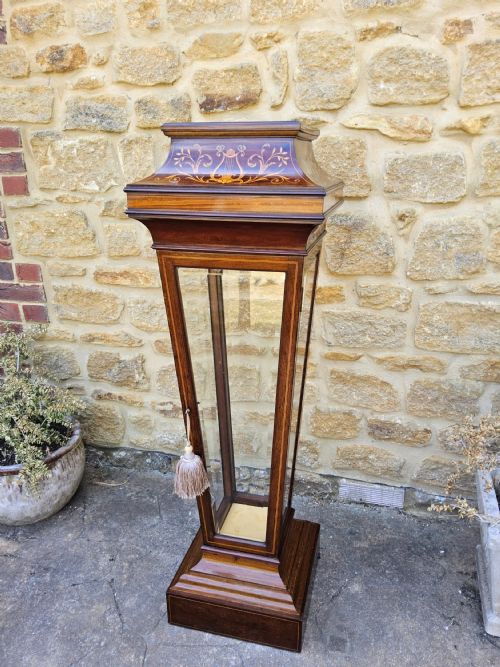
The version you are most likely to meet on this page is the Edwardian inlaid mahogany pedestal display cabinet. These Edwardian and Victorian iterations frequently incorporate glass panels on multiple sides, sometimes described as vitrines, alongside satinwood stringing and mahogany construction.
How they were made
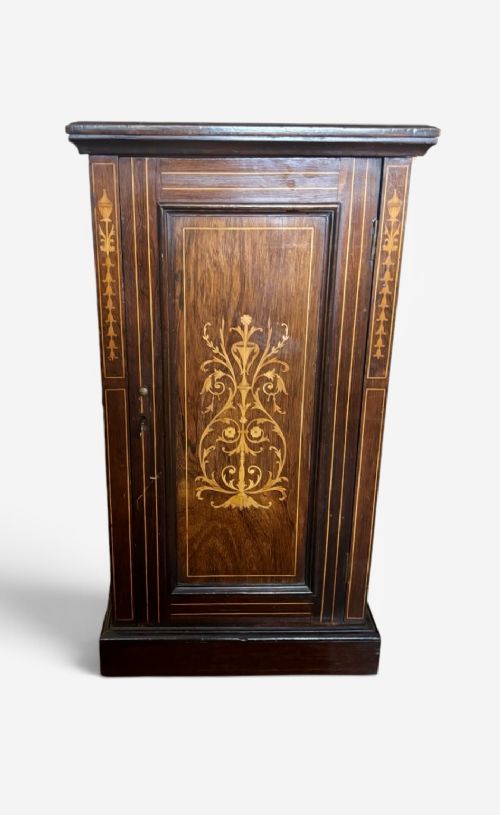
Makers built these cabinets using dense hardwoods such as mahogany and rosewood, often applying satinwood inlay or contrasting stringing to define the upright panels. Glazing required precise carpentry to house glass securely within slender wooden frames while maintaining structural rigidity.
Brass fittings, marble inserts and occasionally giltwood or cinnabar lacquer appear across various pieces to accent the primary timber structure. Joinery relied on traditional framing techniques to support the weight of glazed doors and internal shelving without warping over time.
Pedestal Display Cabinet Retail Price Guide 2026
Typical asking prices for pedestal display cabinet among the pieces listed under this phrase on Sellingantiques today, from the lower quarter to the upper quarter. They describe what is for sale here now, not the wider market.
Listings for pedestal display cabinets span the Victorian and Edwardian eras, predominantly featuring mahogany construction paired with glass vitrine panels.
What varies in quality
The refinement of the timber and the crispness of the inlay distinguish standard production from exceptional work. Finer examples display carefully chosen grain patterns, balanced satinwood banding and neatly integrated brass hardware that sits flush with the wood.
Structural proportion also dictates distinction, separating well-balanced upright forms from heavier, stockier alternatives. The integration of curved glass or specialised shapes like bow fronts demands higher carpentry skill than simple square enclosures.
Mercier Frères
The Pedestal Display Cabinet Glossary
- Vitrine
- A glass-fronted cabinet or display case designed specifically for showing fragile objects and curios. The term often applies to tall, freestanding pedestal forms.
- Bijouterie cabinet
- A specialised display case with a glazed top or upper section meant for holding small valuables, jewellery or medals. These sit at a height that allows downward viewing.
- Satinwood inlay
- A decorative technique using thin strips of contrasting yellowish satinwood embedded into a darker ground timber like mahogany. It creates delicate borders and geometric patterns.
- Stringing
- Narrow lines of contrasting wood inlay used to outline panels, drawers or doors on cabinet furniture. It provides subtle visual definition without heavy carving.
Pedestal Display Cabinet: Frequently Asked Questions
Where should I place a pedestal display cabinet?
These tall cabinets suit corners, narrow wall spaces or gaps between windows where wider furniture will not fit. Their vertical orientation draws the eye upward without dominating the floor plan.
Because they feature glass on multiple sides, positioning them near a light source helps illuminate the objects displayed inside without requiring internal wiring.
How do I secure the door on an antique cabinet?
Most period cabinets use small brass lever locks operated by a key rather than modern magnetic catches. Keeping the original key ensures the door remains shut and properly aligned.
If the wood expands slightly with seasonal humidity changes, gently lifting the door by the handle while turning the key relieves pressure on the latch.
What items look best inside a vitrine?
Small porcelain figures, pocket watches, glassware and miniature silver pieces sit comfortably on the narrow shelves typical of these cabinets. Grouping items by material or period creates a coherent display.
Avoid overcrowding the interior, as the slim proportions of a pedestal cabinet rely on visible empty space around each object to maintain visual balance.
How do I distinguish Edwardian from Victorian examples?
Edwardian pedestal cabinets generally feature lighter mahogany timbers, finer satinwood stringing and more restrained neoclassical or Sheraton revival motifs. They often appear with slender, tapered legs.
Victorian pieces tend to be heavier in build, utilising darker rosewood or solid mahogany with more assertive mouldings and occasionally heavier carved details.