



Pedestal Cut Glass Bowl
A pedestal cut glass bowl holds fruit or serves as a centrepiece, catching the light with deep facets raised high on a foot.
Pedestal Cut Glass Bowl
A pedestal cut glass bowl sits elevated on a foot, functioning primarily as a fruit bowl, centrepiece, or comport across Georgian, Victorian, and Edwardian periods. Buyers searching this phrase encounter forms ranging from large Irish turnover bowls and oval fruit dishes to tazzas and covered sweet containers.
The material composition extends beyond plain clear glass to include lead crystal and cut crystal, occasionally paired with silver plate, gilt bronze, or Dutch silver mounts. Victorian examples frequently appear with etched decoration, while earlier pieces display traditional Irish crystal and hobnail patterns.
Most items on this page date through the nineteenth century, alongside late eighteenth-century items and early twentieth-century Edwardian pieces. These range from simple small bowls to grand pairs and large hand-blown table centrepieces.
Materials and Techniques
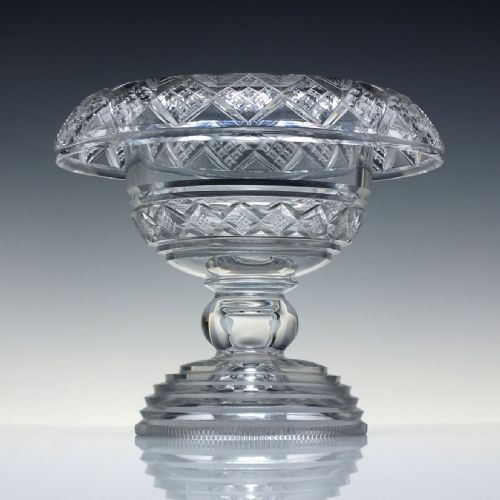
Makers shaped these objects through hand blowing and heavy crystal cutting, producing sharp facets and deep geometric patterns such as hobnails. Lead crystal provided the weight and clarity necessary for crisp light refraction across the surface.
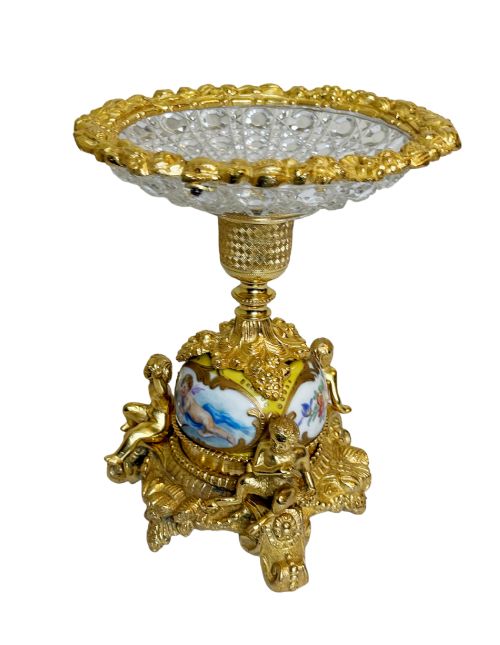
Metal components involved silver plate, gilt bronze, and Dutch silver, secured to the glass body as mounts, stands, or decorative figures like cherubs. Etching complemented the cut facets on Victorian tazza stands and fruit bowls.
A sailor prince guards one nineteenth-century centrepiece, standing tall amidst nautical silver plate and cut crystal.
Markers of Quality
Quality depends on the depth and crispness of the cutting, where sharp, clean geometric lines distinguish superior glasswork from softer, more rounded facets. Weight and clarity in the crystal further separate standard production items from grander, finer examples.
The integration of secondary materials such as cast gilt bronze, silver plate, or hallmarked silver mounts indicates higher ambition and status in nineteenth-century centrepieces. Hand-blown irregularities and proportions between the bowl and its pedestal define the balance of the piece.
Christofle et Cie·Waterford
The Pedestal Cut Glass Bowl Glossary
- Comport
- A raised dish on a foot used for serving fruit or sweetmeats at the table. These often match the materials and cutting styles of large centrepieces.
- Tazza
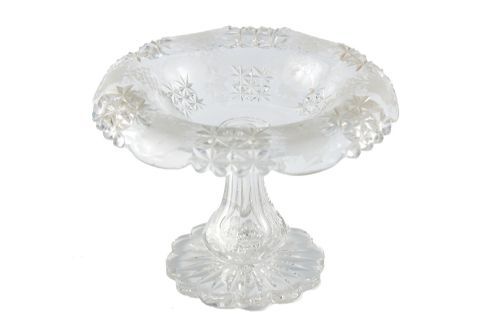
- A shallow pedestal bowl or saucer-like dish raised on a standard. Victorian examples frequently feature etched lead crystal.
- Hobnail
- A raised, faceted pattern resembling the hobnails on rustic boots, common on nineteenth-century bowls. This texture maximises light reflection across the body.
- Turnover bowl
- An early form with an everted rim turned over during manufacture, typical of late eighteenth-century Irish glass. These pieces require skilled hand manipulation while hot.
- Centrepiece
- A large decorative table vessel designed to anchor a dining setting. They often incorporate silver plate or gilt bronze mounts alongside cut crystal.
Pedestal Cut Glass Bowl: Frequently Asked Questions
How do I date a cut glass bowl?
Dating relies on combining the form, weight, metal mounts, and cutting style with historical evidence. Georgian pieces often show heavier metal content and specific Irish cutting traits.
Victorian and Edwardian items introduce machine assistance, lighter proportions, and different mount designs like silver plate or gilt bronze. Examining the pontil mark underneath also helps establish the age of hand-blown examples.
Were these bowls used for fruit?
Many large pedestal bowls served as fruit bowls or centrepieces on nineteenth-century dining tables. Their elevated foot kept fruit visible and prominent among other table wares.
Others functioned as comports for sweetmeats, or covered sweet containers for after-dinner service.
What is the difference between crystal and glass?
Lead crystal contains lead oxide, which increases the weight, refractive index, and softness of the material. This softness makes it ideal for deep facet cutting.
Standard glass lacks this lead content, resulting in a lighter feel and different acoustic resonance when tapped.
What is a tazza stand?
A tazza stand is a flat-topped pedestal vessel used for presenting small dishes, fruit, or sweetmeats. They appear in Victorian table settings alongside traditional bowls.
The raised flat surface allows light to pass through etched lead crystal.