



Pedestal Ceramic Vase
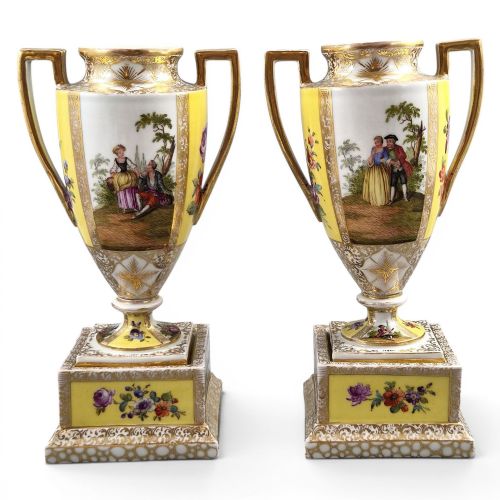
A pedestal ceramic vase carries height and presence, offering a structured display for flowers or standing alone as sculptural ornament.
Pedestal Ceramic Vase
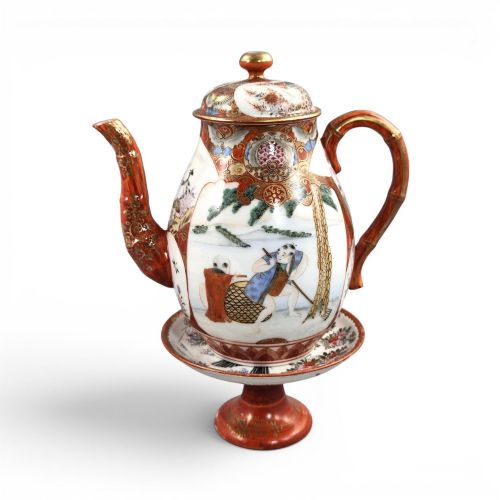
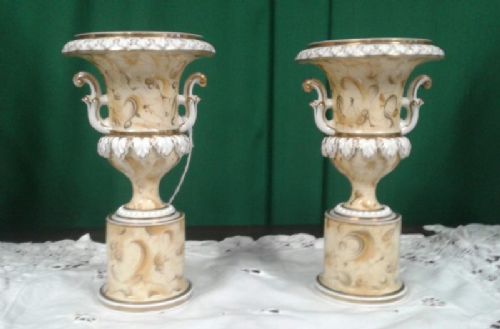
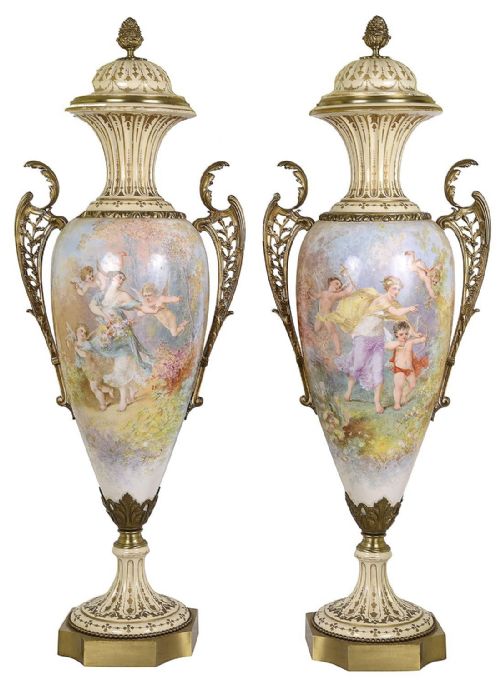
When you search for a pedestal ceramic vase, you find elevated vessels designed to hold flowers or stand as decorative urns and ewers. These pieces range from classical campana shapes to large majolica jardinières and lidded forms.
The selection leans heavily toward nineteenth-century production, spanning Victorian, Edwardian, and Art Deco periods. European porcelain factories and potteries dominate the offerings alongside Japanese Kutani wares and early Chinese pottery.
Forms include pairs of campana urns, beaker-form vases with dolphin bases, and signed porcelain ewers. Many rest upon dedicated stands or integrated pedestals that elevate the main body of the vessel.
Materials and methods
Potters shaped these vessels using porcelain, earthenware, terracotta, and faience, often applying coloured glazes or majolica enamels. Manufacturing methods combined traditional throwing and moulding with specialised surface decoration.
Many pieces incorporate hand-painted details, white bas-reliefs, or transfer printing. Artisans added richness through gold leaf, gilding, or gilt highlights, and sometimes mounted porcelain bodies in ormolu frames.
Listings feature 19th Century, Victorian, Edwardian, and Art Deco eras, alongside a Pre 16th century Chinese Tang Dynasty pottery piece.
Judging the work
Quality rests on the crispness of the moulding and the skill of the painted or modelled detail. Finely executed hand-painting, such as signed bird or floral studies, elevates a piece above standard factory output.
The weight and stability of the pedestal base, the evenness of the glaze, and the preservation of gilt or enamel layers determine the overall execution of the vessel.
Helena Wolfsohn·Ridgeways·Meissen·WEDGWOOD·Ulisse Cantagalli·Doulton Burslem·Minton·Hadley's Worcester·Sevres·Mougin·Royal Worcester·Eichwald·Royal Crown Derby·Capodimonte
The Pedestal Ceramic Vase Glossary
- Campana
- A bell-shaped garden urn or vase form with a flaring rim and a pedestal foot. This classical shape originates from ancient Roman metal and stone vessels.
- Majolica
- A type of earthenware coated with a tin-glaze and painted with metallic oxide colours. It achieved great popularity in the nineteenth century for brightly coloured sculptural and decorative works.
- Ewer
- A large jug with a wide spout and a shaped handle, often designed for decorative display rather than utility. These vessels frequently appear paired with matching basins or mounted on pedestals.
- Jasperware
- A type of fine stoneware developed by Josiah Wedgwood, characterised by a matte surface and contrasting applied white relief decorations. It appears frequently in blue and other pastel shades on nineteenth-century urns.
- Garniture
- A set of three or more ornamental vases or urns designed to be displayed together on a mantelpiece or sideboard. These matched groups often comprise a central lidded vessel flanked by a pair of smaller matching pieces.
Pedestal Ceramic Vase: Frequently Asked Questions
What is a pedestal ceramic vase?
A pedestal ceramic vase is an elevated vessel raised on a distinct base or foot. These pieces function as decorative urns, ewers, or centrepieces.
Potters produced them in various styles throughout the nineteenth and early twentieth centuries for interior display.
How were campana urns used?
Campana urns served primarily as ornamental vessels for interiors and gardens. Their bell shape and footed base made them stable table ornaments.
In domestic settings, they held floral arrangements or stood empty as classical decorative accents.
How do I identify Victorian porcelain?
Victorian porcelain is identified through factory marks, glaze types, and decorative styles like majolica or blush ivory. Many pieces carry specific registry numbers or maker stamps on the base.
Stylistic cues such as neoclassical motifs or Renaissance Revival details also point to this era.
Can these vases hold water?
While many historical ceramic and porcelain vases can hold water, glazed earthenware and majolica require careful handling. Porous bodies or old repairs mean some owners prefer dry floral displays.
Checking the interior glaze helps determine if a vessel remains suitable for fresh stems.