




Pearlware Ceramic Figures
These pearlware ceramic figures bring the character of late Georgian and Victorian mantelpieces straight into a modern room.
Pearlware Ceramic Figures
When you search for pearlware ceramic figures, you encounter decorative groups, animals, and literary subjects modelled in British potteries during the Georgian and Victorian eras. The selection on this page centres on earthenware bodies finished with characteristic pale glazes and hand-painted enamel colours.
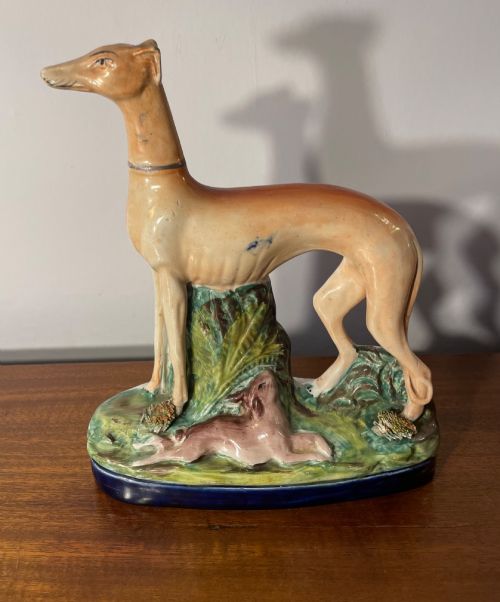
Most pieces date from the late eighteenth century through to the middle of the nineteenth century, capturing subjects ranging from classical figures to domestic animals like sheep, lions, and dogs. Forms vary from simple flat-based models to functional spill vases and pepper pots.
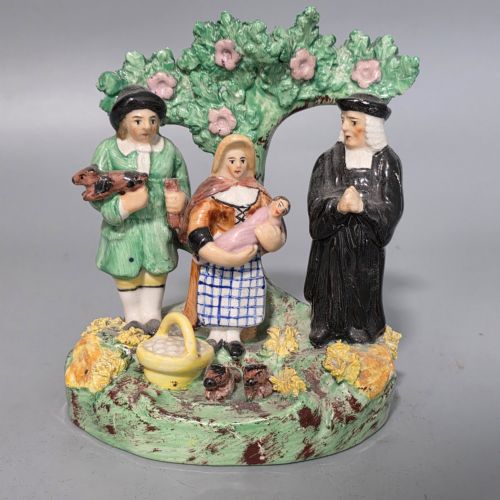
Makers working in Staffordshire and Yorkshire produced these figures for everyday display on parlour mantelpieces and sideboards. They reflect the popular tastes and moral tales of the period, executed in distinctive earthenware and pearlware glazes.
How they were made
Potters shaped these figures using press moulds and slip-casting techniques, building up hollow bodies from earthenware clay before firing. Artisans then applied a thin lead glaze containing small amounts of cobalt, which pooled in crevices to create the characteristic bluish tinge associated with pearlware.
Once glazed and fired for a second time, the figures were hand-painted using metallic oxide enamels in shades of blue, orange, yellow, and brown. Some workshops utilised Pratt-type underglaze colours, producing vibrant hues that fused directly with the glaze during the main firing.
Listings feature earthenware and pearlware ceramics spanning the Georgian and Victorian periods, including Staffordshire and Yorkshire productions.
What varies in quality
Preservation of the original enamel colours and the stability of the pearlware glaze influence the desirability of a piece. Examples that retain their bright pigments without extensive flaking or overpainting hold greater appeal for collectors.
Ralph Wood·Enoch Wood factory·Walton·Lakin & Poole·Mexborough
The Pearlware Ceramic Figures Glossary
- Pearlware
- An earthenware body covered in a clear lead glaze with a small addition of cobalt oxide. This formulation creates a subtle bluish pooling effect that distinguishes it from earlier creamware.
- Prattware
- Pottery decorated with specific underglaze metallic oxides, typically blue, ochre, yellow, and brown. These colours were applied beneath the glaze and withstood high kiln temperatures without running.
- Spill vase
- A hollow cylindrical holder designed to store taper spills used for lighting candles or pipes. These are frequently integrated into animal and figural ceramic groups.
- Earthenware
- Porous pottery fired at lower temperatures than stoneware or porcelain. It forms the structural base for nearly all the figural ceramic pieces seen here.
- Enamel
- Coloured glass powders mixed with an oily medium for hand-painting onto already glazed and fired pottery. These pigments required a low-temperature muffle kiln to fix them to the surface.
Pearlware Ceramic Figures: Frequently Asked Questions
What is pearlware?
Pearlware is a refined earthenware developed by British potters in the late eighteenth century to imitate Chinese porcelain. A small amount of cobalt added to the clear lead glaze gives the ceramic surface a pale bluish tint, particularly where the liquid pools in recesses.
Potters used this bright white body as the standard canvas for hand-painted enamel decoration across figures, animals, and tableware until the mid-nineteenth century.
How were these figures displayed?
These decorative objects sat on mantelpieces, sideboards, and brackets in nineteenth-century homes to add colour and moral or literary commentary to the room. Owners arranged pairs of animals or figural groups symmetrically to anchor the domestic interior.
Some pieces, such as spill vases and pepper pots, served a dual purpose as functional items on the dining or drawing room table while maintaining their sculptural appearance.
How do I date a figure?
Dating relies on stylistic clues, clothing fashions, and the specific chemical composition of the glaze and clay body. Pieces from the late eighteenth century often exhibit finer modelling and subdued enamel palettes, whereas Victorian examples tend to feature heavier earthenware bases and bolder, simpler painting.
Marked pieces or documented factory attributions also provide secure chronological markers, though the vast majority of Staffordshire and Yorkshire figures remain unmarked.
Are these figures functional?
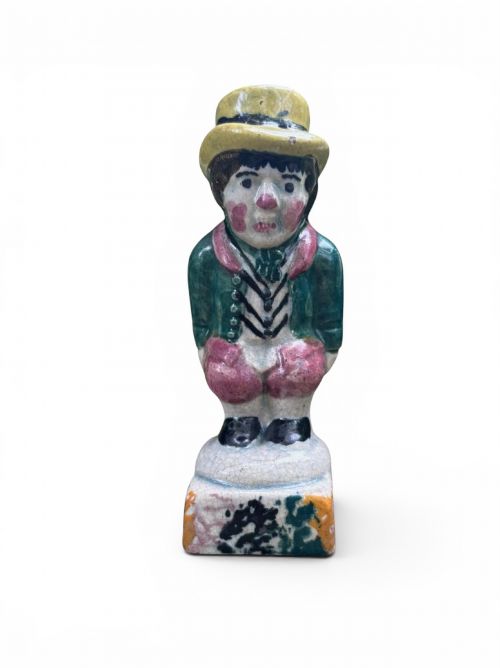
While the majority of these ceramic works served purely as ornamental figures on display, some specific forms incorporated practical uses. Spill vases held wooden tapers for lighting fires, and items like the Roger Giles piece functioned as pepper pots on the dining table.
Most surviving examples were valued primarily as decorative ornaments rather than kitchen or dining utensils, which helps explain their survival in domestic settings.