



Georgian Staffordshire Figurines
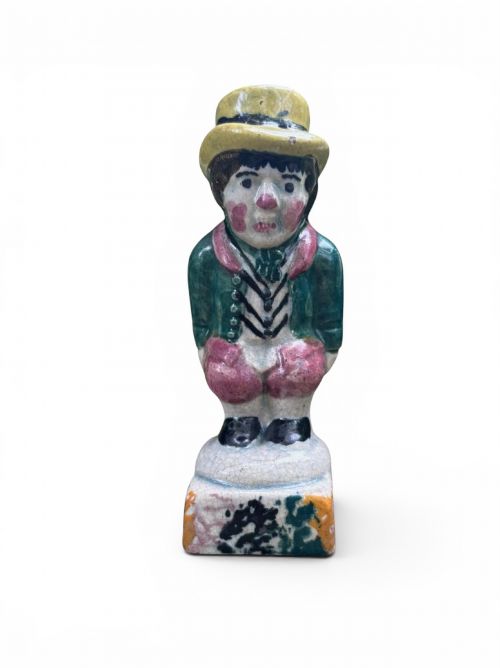
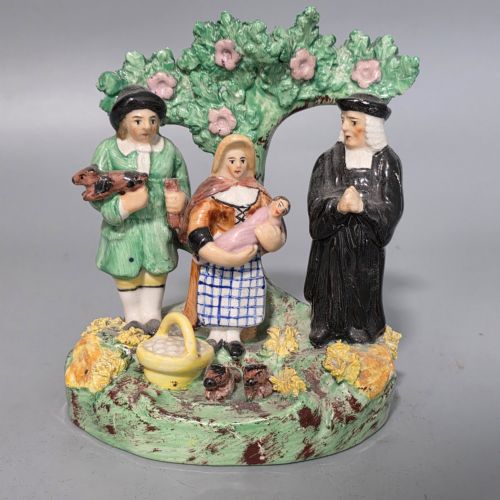
Georgian staffordshire figurines are earthenware figures of animals, biblical scenes and literary pairs that bring primitive charm and colour to a mantelpiece.
Georgian Staffordshire Figurines
When you search for georgian staffordshire figurines, you encounter ceramic figures modelled as lions, pugs, dogs, cows, sheep and lambs, alongside human subjects like milkmen, gardeners, and biblical groups such as Elijah and the widow or Abraham offering up Isaac. These decorative objects take the form of single figurines, pairs, figure groups, spill vases and even pepper pots.
The pieces on this page span the georgian and victorian eras, stretching from the mid-eighteenth century to the nineteenth century. You meet pearlware figures with characteristic blue-tinted glazes, prattware cottage models, and white bisque pottery figures alongside soft-paste porcelain examples.
How they were made
Makers shaped these earthenware and pearlware pieces using ceramic clay, applying enamel colours over or under the glaze to bring life to dogs, birds, and human figures. Potters utilised specialised pearlware glazes to achieve a pale, bluish pool in crevices, while others employed white bisque pottery for unglazed, matte finishes.
Factories such as those run by Enoch Wood, alongside makers like Walton and Lakin and Poole, formed these ceramic figures in moulds before hand-finishing and firing them in kilns. Enamel pigments were painted onto the surface to highlight details on spillholders, figure groups, and animal models.
Listings feature earthenware, pearlware, and soft-paste porcelain across the nineteenth century and georgian periods.
What varies in quality
Attribution also separates the tiers, with marked or identifiable factory pieces by makers like Enoch Wood or Walton commanding greater interest than unmarked work. The survival of original enamel colours without excessive rubbing determines how well a figure preserves its visual impact.
Longton Hall·Mexborough·Walton·Lakin and Poole·Enoch Wood factory·Minton
The Georgian Staffordshire Figurines Glossary
- Pearlware
- A fine earthenware developed in the eighteenth century featuring a subtle blue-tinted glaze that pooled in recesses. It was widely used for figures and tableware before the widespread adoption of whiteware.
- Prattware
- Earthenware decorated with limited high-fire enamel colours, typically blue, ochre, brown and green, under a clear glaze. This technique is frequently found on early jugs, cottage models and small pots.
- Bisque
- Porous, unglazed ceramic fired once to create a matte, biscuit-like surface. White bisque pottery was utilised for figures where a smooth, stone-like texture was desired.
- Spill vase
- A hollow cylindrical holder designed to keep wooden spills used for lighting candles and pipes. These are often incorporated into the backs of animal and human ceramic figures.
- Figure group
- A sculptural ceramic composition featuring more than one figure or animal interacting within a single scene. Common examples include biblical pairs, musical groups and domestic subjects.
Georgian Staffordshire Figurines: Frequently Asked Questions
How do I date these figures?
Dating relies on the ceramic body, glaze type, and stylistic traits associated with the nineteenth century and the georgian period. Pearlware glazes with a bluish tint and specific earthenware bodies point towards earlier production phases.
Makers' marks, where present, help narrow the timeline, while comparison with documented factory output from potters like Enoch Wood or Walton provides further chronological context.
What is a spill vase figure?
A spill vase figure combines a decorative ceramic model of an animal or person with an integrated hollow cylinder. This tube held wooden splints used for transferring flames from the hearth to candles.
These combination pieces served a practical household function alongside their decorative role on mantelpieces.
Are all these pieces marked?
Many staffordshire figures lack any factory stamp, signature, or mark. Potters frequently produced unmarked decorative earthenware for regional markets.
Attribution typically depends on modelling style, glaze characteristics, and known factory forms rather than stamped names.
How should I display them?
These ceramic figures suit stable shelves or mantelpieces away from heavy foot traffic or vibration. Good lighting helps reveal the hand-painted enamel details and glaze variations.
Keep them away from direct heat sources and damp environments to protect the earthenware body and painted surfaces.