

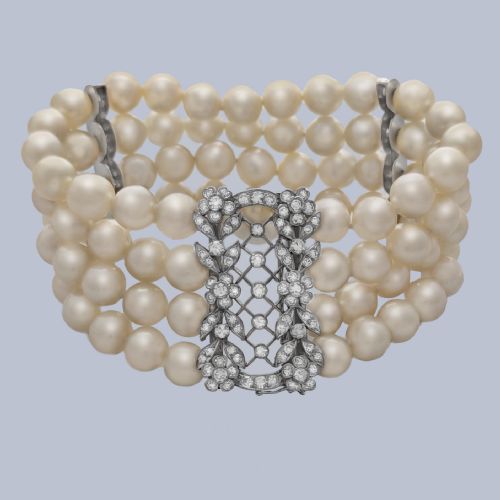
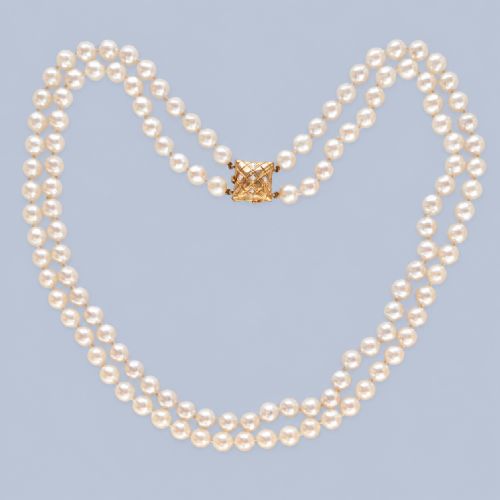
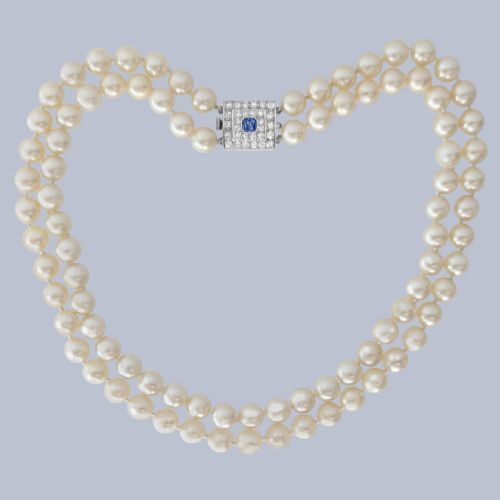
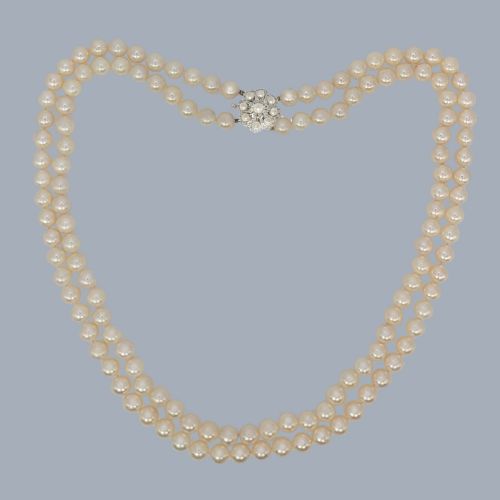


Pearl Diamond Clasp
A pearl diamond clasp finishes a multi-strand necklace or bracelet with secure precious metal and gems.
Pearl Diamond Clasp
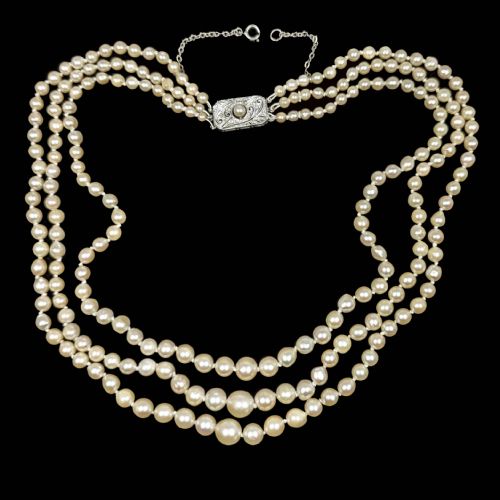
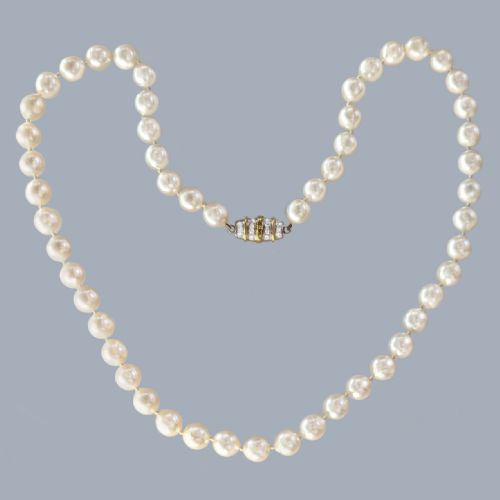
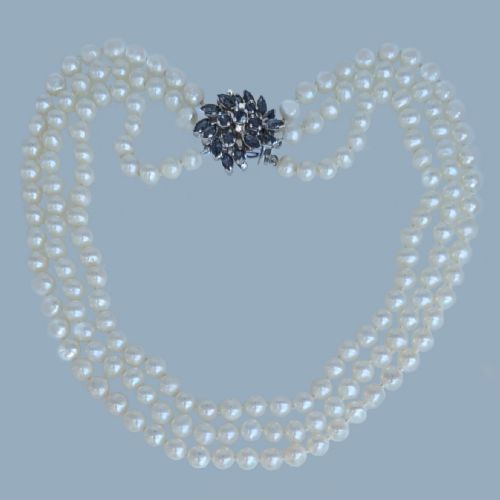
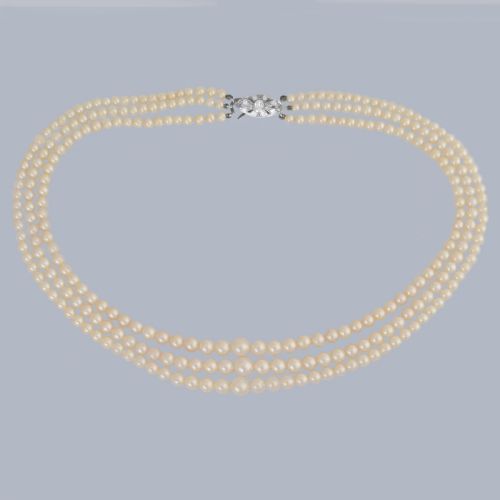
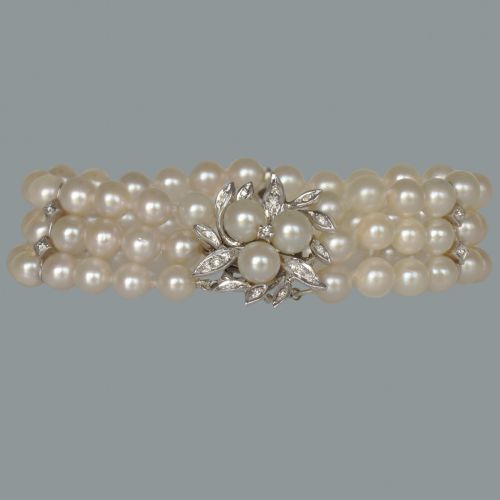
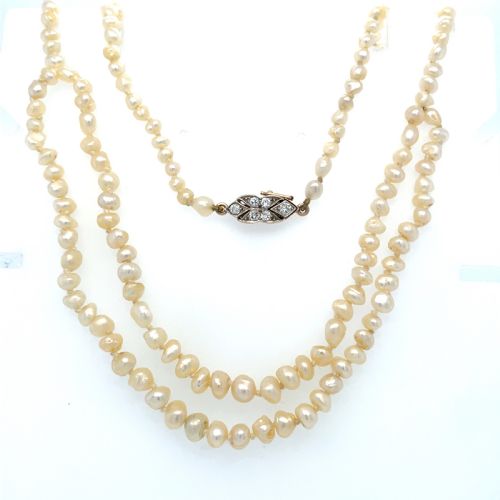
When searching for a pearl diamond clasp, a buyer examines multi-strand necklaces, chokers, and bracelets where the fastener forms a decorative centrepiece. These items span Victorian, Edwardian, Art Deco, and mid-century periods, running from the early twentieth century through the nineteen-sixties.
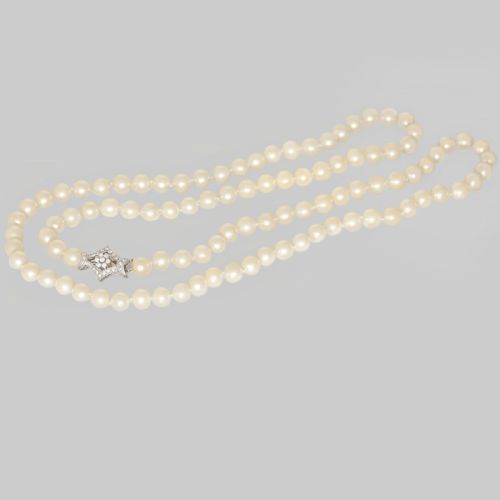
The single strand or multi-row necklaces often feature cultured or natural saltwater pearls paired with white gold, yellow gold, or platinum clasps. Many examples incorporate floral, foliate, or geometric cluster designs set with diamonds alongside sapphires, emeralds, or rubies.
How they were made
Goldsmiths and jewellers constructed these mountings using 9ct, 14ct, and 18ct white or yellow gold, alongside platinum, securing diamonds in old-cut, rose-cut, or brilliant-cut configurations. Pearls are threaded in single, double, triple, or multi-strand layouts, frequently accompanied by certification reports confirming natural or cultured origins.
Clasps utilise box fittings, tongues, or safety catches designed to support heavy multi-row strands. Gemstones such as sapphires, emeralds, rubies, and turquoise are flush-set, grain-set, or claw-set into the metalwork alongside the primary diamonds.
Pearl Diamond Clasp Retail Price Guide 2026
Typical asking prices for pearl diamond clasp among the pieces listed under this phrase on Sellingantiques today, from the lower quarter to the upper quarter. They describe what is for sale here now, not the wider market.
Some mid-century clasps hide the fastener entirely within a dense cluster of floral diamonds, leaving onlookers wondering where the necklace opens.
What varies in quality
The grade of a piece depends upon the lustre and uniformity of the pearls, whether natural saltwater or high-grade cultured varieties, matched with the cut and clarity of the diamonds on the clasp. Maker attribution, original gem certificates, and robust precious metal hallmarking elevate the standing of an item.
Construction intricacy also dictates value, distinguishing simple geometric boxes from complex floral or foliate clusters incorporating calibré-cut rubies, sapphires, or emeralds. The structural integrity of the restrung strands and the secure snap of the clasp mechanism complete the assessment.
The Pearl Diamond Clasp Glossary
- Cultured pearl
- A pearl formed by the introduction of an irritant into an oyster or mollusc by human intervention. These pearls form the majority of mid-century necklace strands.
- Natural saltwater pearl
- A pearl grown organically within a saltwater mollusc without human seeding. These scarce specimens appear frequently in Edwardian and antique pieces.
- Old-cut diamond
- A vintage diamond cutting style characterised by a small table, high crown, and open culet. These stones are typical of Edwardian and Art Deco clasps.
- Rose-cut diamond
- A domed diamond cut featuring a flat base and triangular facets arranged in a symmetrical pattern. This historical cut appears frequently on Victorian and early twentieth-century jewellery.
- Clasp
- A mechanical fastener securing a necklace or bracelet. In these pieces, the clasp serves a dual purpose as an ornate jewelled focal point.
Pearl Diamond Clasp: Frequently Asked Questions
How do I secure a multi-row pearl clasp?
Most clasps utilise a tongue and box mechanism where a spring-loaded metal tongue clicks firmly into a hollow housing. A secondary safety catch or side figure-of-eight safety chain often provides additional security for heavier multi-strand pieces.
Checking that the tongue engages with a crisp snap ensures the fastener holds the tension of multiple pearl rows safely during wear.
Are these pearls natural or cultured?
The pieces span both natural saltwater origins, common in Edwardian and antique items, and cultured varieties which became widespread through the mid-century decades. Gemological laboratory reports often accompany specific pieces to verify their exact origin.
Examining certificate details helps determine whether the pearls grew organically or with human assistance.
How do I date a pearl and diamond clasp?
Stylistic cues such as geometric Art Deco lines, Edwardian openwork platinum, or 1950s floral motifs offer primary chronological indicators. Official hallmarks stamped onto the metal components provide precise assay office years and gold purities.
Combining the decorative style with legible metal stamps reveals the exact decade of manufacture.
Can necklaces with these clasps be restrung?
Many vintage and antique pearl strands are routinely restrung on fresh silk thread to maintain structural integrity. Professional restringing secures individual knots between each pearl, protecting the silk from abrasion against neighbouring beads.
Regular maintenance prevents strand breakage and keeps multi-row necklaces hanging evenly.