




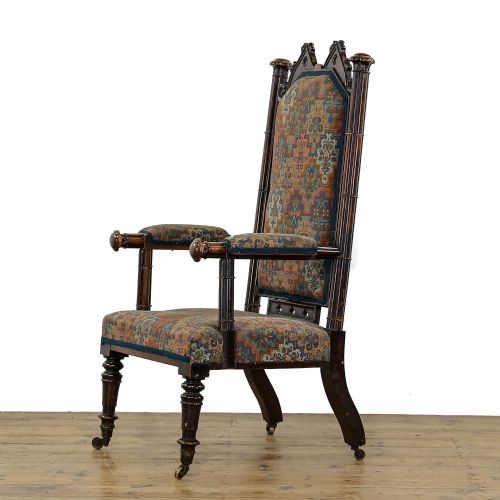
Patterned Oak Armchair
A patterned oak armchair brings tactile warmth and period character to a room, offering robust seating shaped by Victorian, Edwardian, and Arts and Crafts makers.
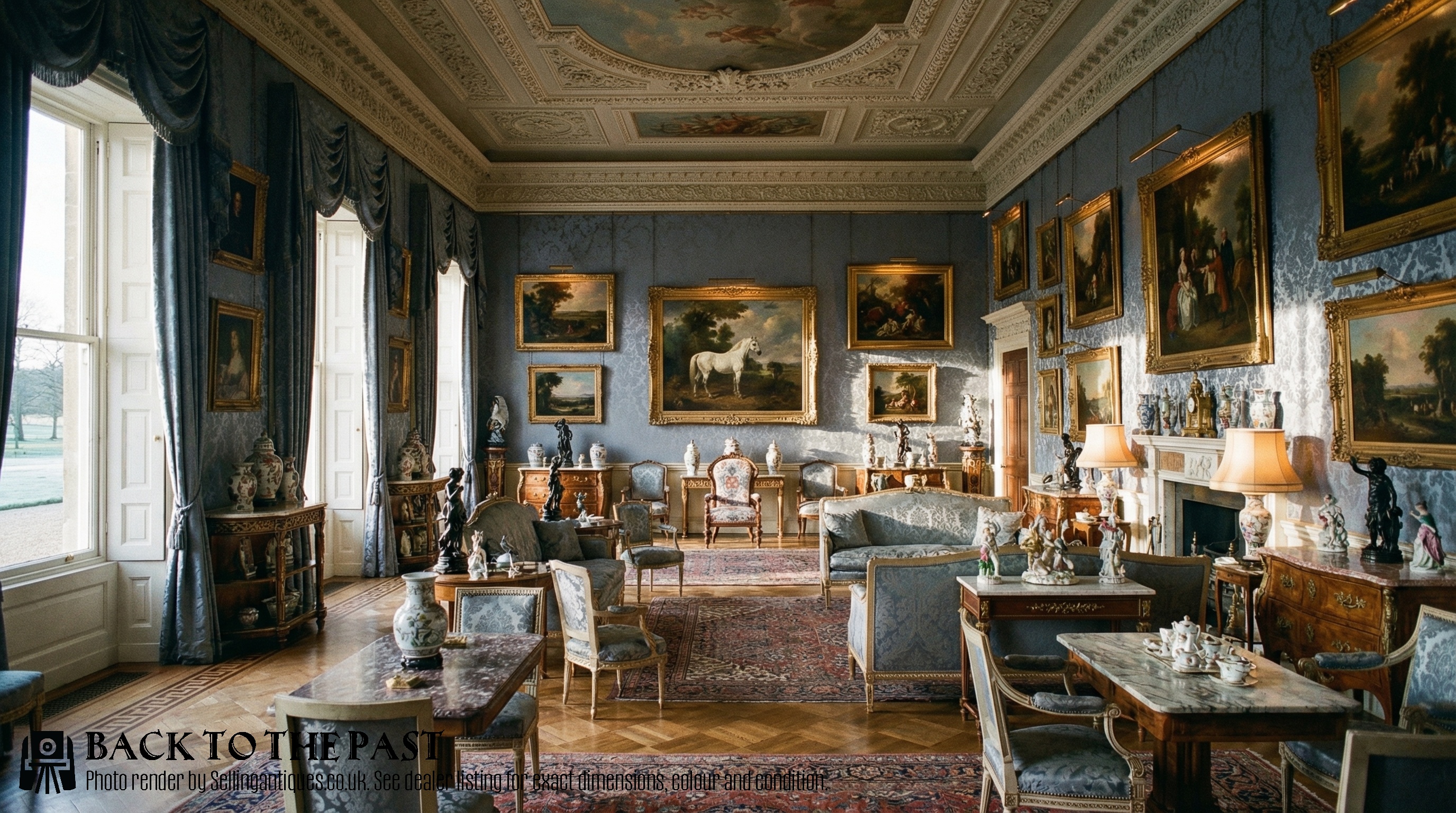
Patterned Oak Armchair
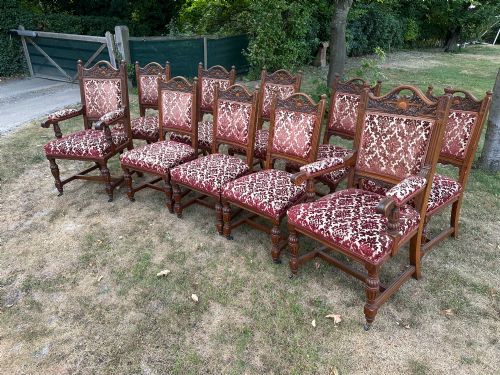
When you search for a patterned oak armchair, you encounter robust timber frames softened by textiles, velvet, leather, and fabric upholstery. These seating forms span the Victorian and Edwardian eras, alongside pieces dated around nineteen-hundred and nineteen-ten.
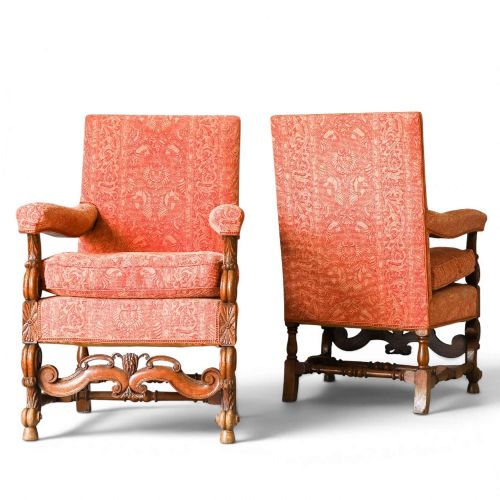
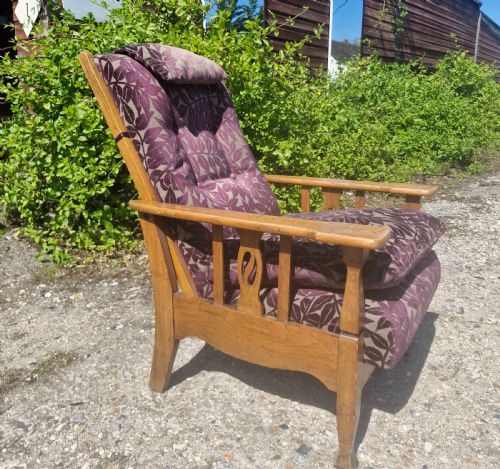
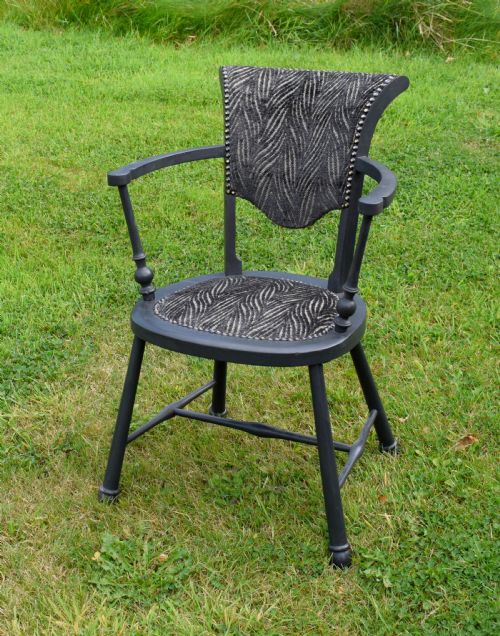
The selection on this page ranges from substantial library and aesthetic armchairs to reclining chairs, corner chairs, and dining armchairs. Many pieces reflect revival movements, including Gothic Revival, French Renaissance Revival, and Jacobean Revival styles.
You meet both open-arm designs and fully upholstered wingback or folding campaign forms. The woodwork displays varied treatments, from carved details to barley twist turnings and curule X-frames.
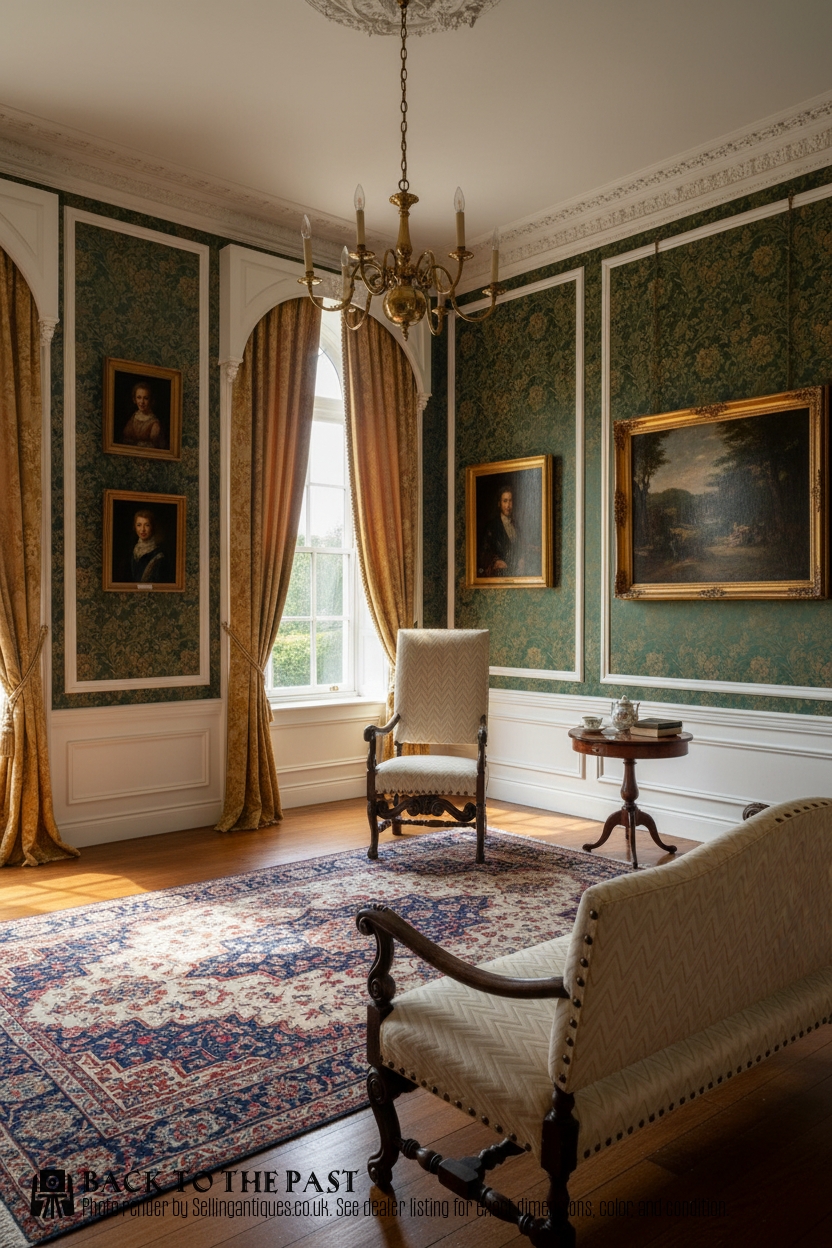
How they were made
The timber frames rely on solid oak, shaped through carpentry techniques that often incorporate carved ornament, turned supports, and structural pegging. Metal elements such as brass appear in functional hardware and structural joints.
Upholstered components combine traditional stuffing and webbing with diverse textile coverings. Velvet, leather, cane, and patterned fabrics are secured to the wooden frameworks using upholstery tacks.
The documented styles range from Gothic Revival and French Renaissance Revival to Arts and Crafts and the Aesthetic Movement.
What varies in quality
The distinction between standard seating and superior examples lies in the crispness of the timber carving and the architectural ambition of the frame. Robust construction of joints and the retention of original surface patination elevate the standing of a piece.
The choice and execution of the upholstery materials also differentiate the range. High-grade textiles, thoughtful pattern matching, and sympathetic restoration work preserve the integrity of the design across Victorian and Edwardian examples.
Charles Bevan·Waring
The Patterned Oak Armchair Glossary
- Curule X-frame
- A form of seating featuring intersecting curved supports derived from ancient Roman magistrate chairs. This X-shape appears frequently in Renaissance Revival designs.
- Barley twist
- A woodworking turning technique resembling a twisted rope, carved into chair legs and structural supports. It adds dynamic visual rhythm to mid-Victorian frames.
- Corner chair
- A seating form designed to fit into the corner of a room, typically featuring a diagonal orientation and a continuous curved backrest supported by turned pillars.
- Aesthetic Movement
- A late nineteenth-century design ethos prioritising visual beauty over narrative or moral function. Pieces from this movement often display refined geometric or naturalistic carved details.
- Reclining armchair
- A mechanical or adjustable seating form that allows the backrest to tilt. Edwardian examples often utilise timber ratchet mechanisms for positioning.
Patterned Oak Armchair: Frequently Asked Questions
How do I date an oak armchair?
Dating relies on observing structural characteristics, joinery methods, and stylistic cues associated with specific periods like the Victorian or Edwardian eras. Finer details such as turned elements and carving styles help narrow down the decade of production.
Comparing the timber finish and hardware to documented examples provides further context. The presence of specific revival motifs often points toward the late nineteenth or early twentieth century.
Where should I place a patterned armchair?
These armchairs function effectively as reading chairs in studies, occasional seating in living rooms, or statement pieces in bedrooms. Their robust wooden frames and patterned textiles anchor a room visually.
Consider the scale of the chair and the direction of the armrests relative to surrounding furniture. Open-arm and corner variations also work well in smaller spaces where solid upholstery might feel heavy.
Are these chairs comfortable for daily use?
Many of these pieces were built for functional relaxation, particularly the reclining armchairs and upholstered wingback forms from the Edwardian period. Their deep seats and padded armrests offer substantial physical support.
Comfort levels can depend on the condition of the internal upholstery stuffing and webbing. Restored pieces often provide a supportive sit suited to regular daily use.
What is an aesthetic period armchair?
An aesthetic period armchair reflects the late nineteenth-century push for artistic design, often featuring stylised carving and geometric ornamentation. These chairs prioritise visual harmony and decorative integrity over strict historical revival.
You will notice distinct linear patterns and thoughtful joinery that set them apart from standard Victorian seating. They often incorporate contrasting materials like brass accents alongside dark oak.