



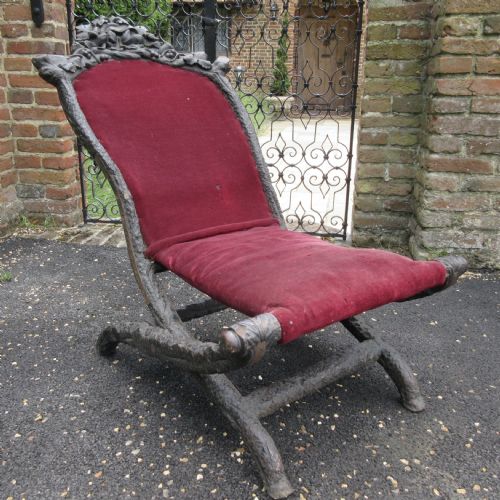

Carved Oak Lounge Chair
A carved oak lounge chair offers robust timber framing and deep seat comfort, spanning centuries of revivalist design.
Carved Oak Lounge Chair
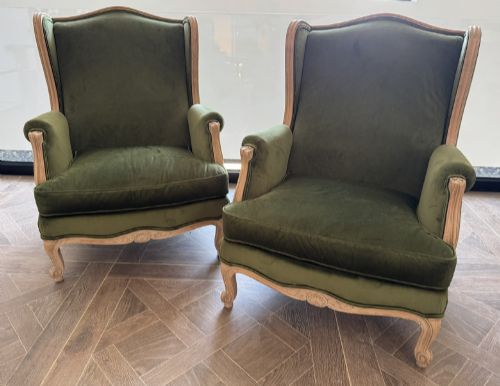
A carved oak lounge chair brings together heavy timber frames and upholstered seating across various revival styles. Buyers searching for a carved oak lounge chair will encounter pieces ranging from eighteenth-century French wingbacks to early twentieth-century Arts and Crafts designs.
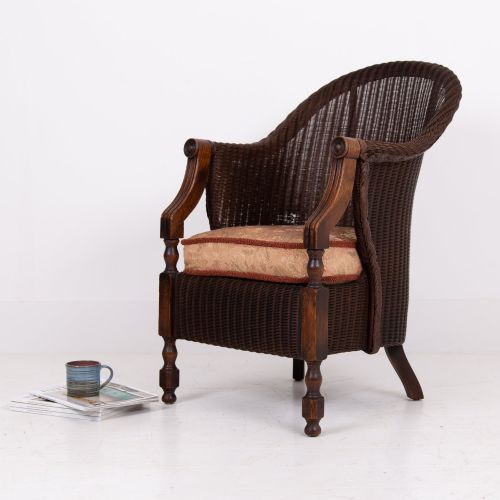
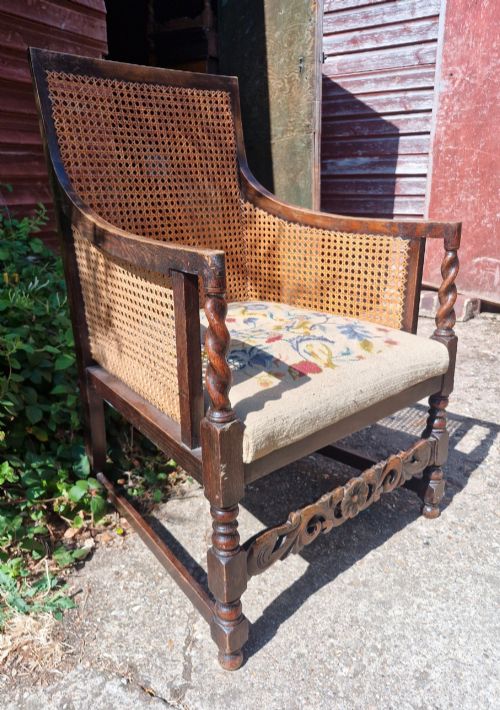
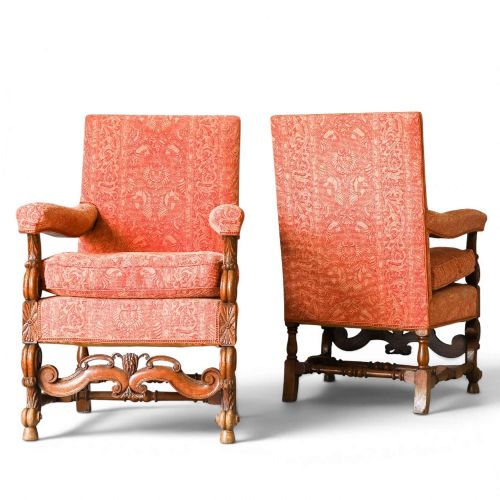
The selection includes distinct forms such as bergere armchairs with cane panels, reclining chairs, and expansive Victorian frames finished with velvet or leather. French Renaissance Revival and Carolean styles appear frequently alongside simpler English workshop pieces.
What varies in quality
Quality rests upon the crispness of the timber carving and the integrity of the oak frame construction. Superior examples exhibit deep, well-defined relief work on the arms and cresting without loose joints or excessive timber shrinkage.
The grade and authenticity of the upholstery materials, from supple leather to tight cane mesh, distinguish standard production pieces from finer workshop commissions. Proportional balance and the preservation of original surface finishes further divide the range.
One Black Forest folding chair manages to combine portable convenience with fierce carved woodland creatures.
The Carved Oak Lounge Chair Glossary
- Bergere
- An enclosed upholstered armchair with a wooden frame, often featuring cane work on the back and sides. This French seating form gained popularity for domestic comfort.
- Carolean style
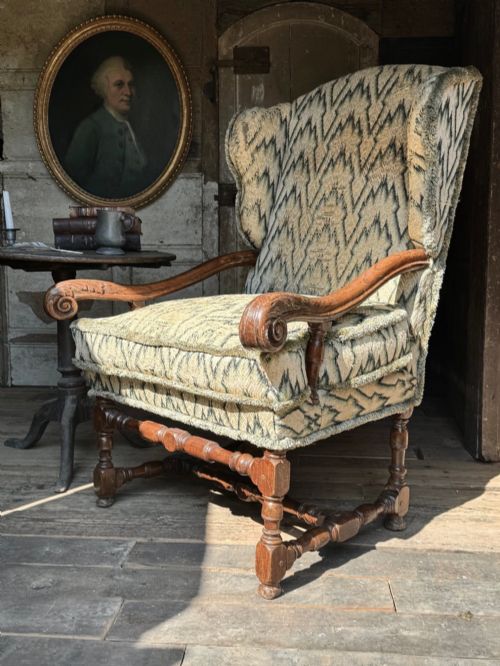
- A revival design echoing the ornamentation of the reign of Charles II, characterised by rich carving, scrollwork, and crown motifs. Frames of this type make heavy use of turned wood components.
- Bobbin
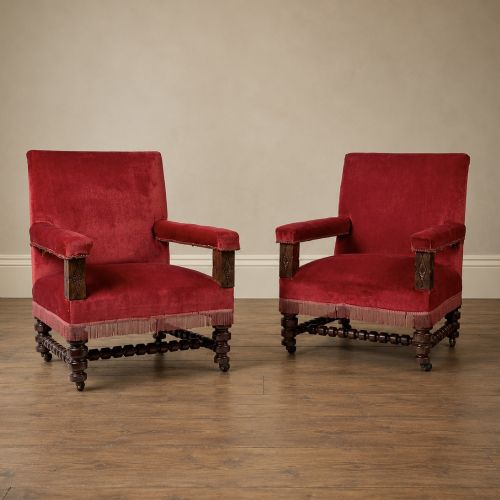
- A style of turning resembling a string of wooden beads used on chair legs and stretchers. This decorative turning technique appears frequently in seventeenth-century English furniture and later revivals.
- Wingback
- An armchair with high sides attached to the back, designed to shield the occupant from drafts. Early examples utilise substantial oak framing beneath leather or textile upholstery.
- Cane
- Woven rattan material used for seat panels and backs, providing a resilient and flexible surface. This technique lightens the visual weight of heavy oak armchairs.
Carved Oak Lounge Chair: Frequently Asked Questions
How do I care for antique oak frames?
Clean the timber surfaces using a dry or slightly damp cloth, avoiding harsh chemical polishes that strip the finish. Apply occasional quality beeswax to nourish the wood and maintain a soft sheen.
Keep the chair away from direct heat sources and strong sunlight to prevent the oak from splitting or drying out over time.
Are these chairs suitable for daily use?
Most antique oak lounge chairs are structurally robust and built to support everyday sitting, provided the joinery remains tight. Check that the frame bears weight evenly before settling in.
Lighter models with cane panels require more careful treatment to avoid puncturing the woven material through heavy impact.
How do I identify a revival style?
Revival pieces borrow specific decorative motifs and construction traits from earlier centuries, such as seventeenth-century Carolean scrollwork or French Renaissance carved figures. Cabinetmakers during the Victorian and Edwardian eras produced these accurate interpretations using older timber techniques.
Examine the tool marks and the condition of the wood to distinguish a nineteenth-century revival from an original period piece.
What is a bergere suite?
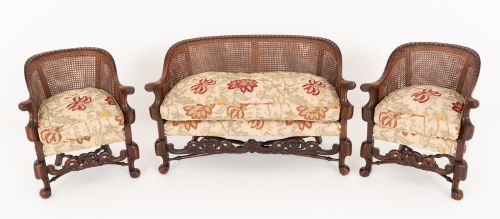
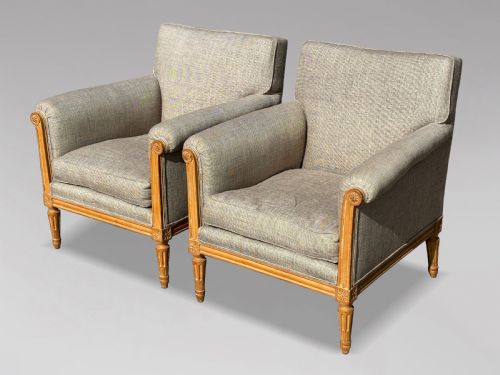
A bergere suite consists of matched upholstered armchairs and sometimes matching sofas featuring exposed wooden frames and woven cane sides. These sets were designed to coordinate the seating arrangements in formal drawing rooms and garden rooms.
Matching suites provide a uniform aesthetic while offering deep, comfortable seating proportions.