
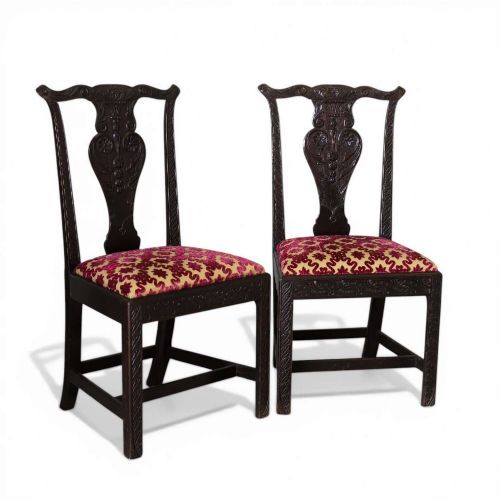
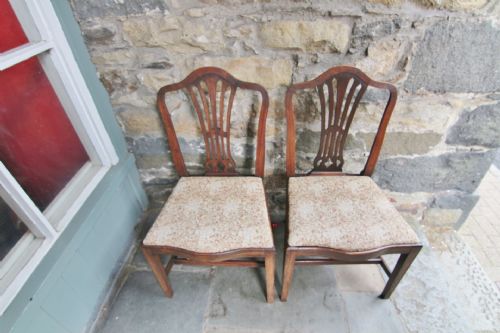


Patterned Fabric Side Chairs
Patterned fabric side chairs bring texture and colour to a room, spanning periods from the eighteenth century to the twentieth.
Patterned Fabric Side Chairs
Patterned fabric side chairs encompass seating upholstered in textiles such as velvet, Zoffany fabric, and contemporary materials over wooden frames. These pieces include single items like George III mahogany chairs alongside sets from the Victorian and Art Deco eras.
Buyers will encounter various forms across this page, ranging from dining chairs and salon chairs to occasional chairs and Gothic prie dieu seats. Frames span multiple centuries and feature timbers such as oak, walnut, mahogany, and rosewood.
Victorian sets with balloon backs or contemporary fabric sit alongside earlier Georgian designs and twentieth-century Arts and Crafts or Art Deco examples. Walnut and oak predominate among the listed timber frames.
How they were made
Makers constructed these chairs using hardwoods such as mahogany, oak, walnut, and rosewood for the structural frames. Joinery methods varied by period, supporting carved details, inlaid mahogany, and folding mechanisms.
Upholstery involved textile applications directly onto the frames, utilising fabrics like velvet, Zoffany designs, and contemporary weaves. Brass components sometimes appear alongside metal elements on specific chair types.
Listings feature four main timber types: oak, mahogany, walnut, and rosewood.
What varies in quality
Quality differences emerge in the execution of the woodwork, from plain structural frames to intricate carvings and inlaid mahogany details. The selection of upholstery fabric, whether period-appropriate velvet or high-end designer textiles, also distinguishes the pieces.
The integrity of the frame construction and the preservation of original timber characteristics differentiate standard production pieces from finer examples. Set uniformity remains a factor when evaluating matched groups of dining or salon chairs.
The Patterned Fabric Side Chairs Glossary
- Side chair
- A chair without arms, traditionally used at a dining table or placed against a wall. These pieces feature prominently across various historical periods.
- Balloon back
- An oval-shaped backrest resembling a balloon, characteristic of Victorian seating design. This style often appears on walnut dining chairs.
- Prie Dieu
- A devotional chair featuring a low seat and an upper shelf designed for kneeling and prayer. The Victorian rosewood example listed demonstrates this form.
- Inlaid
- Woodwork decorated by embedding contrasting strips of wood or other materials into the surface. Edwardian salon chairs frequently exhibit this technique.
- Arts and Crafts
- A design movement prioritising traditional craftsmanship and simple forms over mass production. Oak framed chairs represent this aesthetic.
Patterned Fabric Side Chairs: Frequently Asked Questions
What periods do these chairs cover?
The listings span from the eighteenth century through the Victorian era up to the 1930s. Pieces include Georgian, Victorian, Edwardian, and Art Deco designs.
Timbers and upholstery styles change across these eras, showing shifts from mahogany and oak to walnut and rosewood.
Are these chairs sold as sets?
Many listings comprise sets of chairs, such as groups of four, six, or eight dining and salon chairs. Single items also appear alongside pairs.
Matched sets typically share timber frames and upholstery patterns suited for dining or reception rooms.
What woods are used in the frames?
Frames utilise traditional hardwoods including mahogany, oak, walnut, and rosewood. Some pieces feature inlaid mahogany or carved oak details.
The choice of timber generally aligns with the period of manufacture, from eighteenth-century mahogany to twentieth-century oak.
What types of fabric cover the seats?
Upholstery materials range from velvet and Zoffany fabric to contemporary woven textiles. Fabric choices often reflect either the original period or later reupholstery work.
Patterns vary from plain textured finishes to decorative designs across dining and accent chairs.