

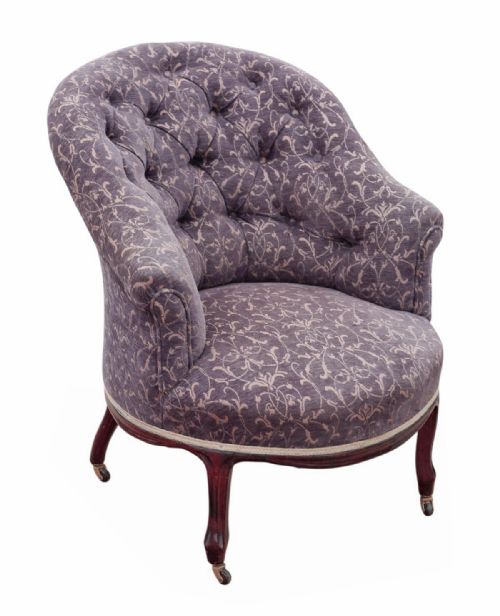


Patterned Bedroom Chair
A patterned bedroom chair brings comfort and colour to a private room, drawing on nineteenth-century forms.
Patterned Bedroom Chair
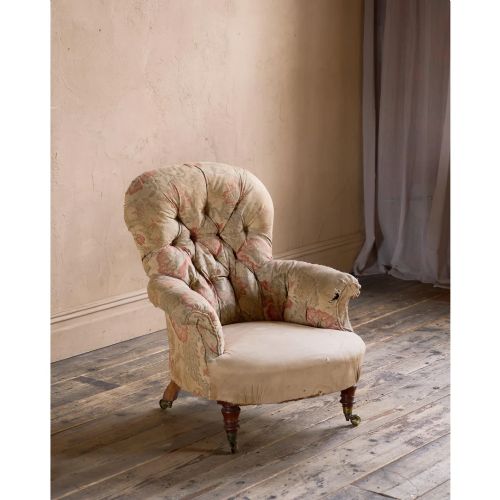
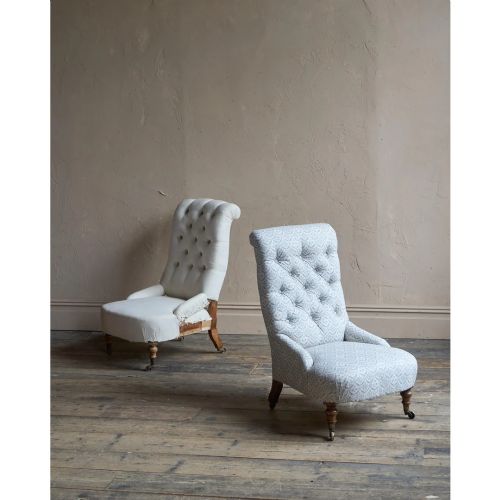
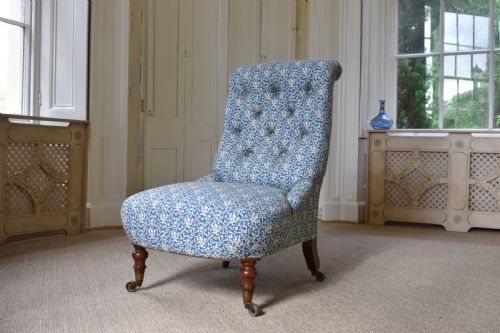
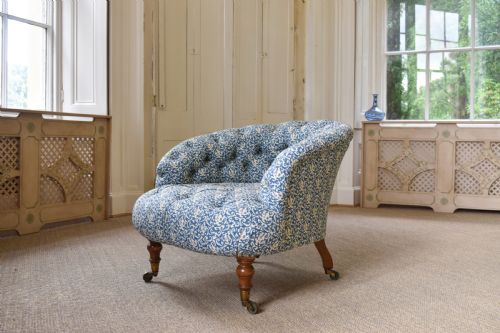
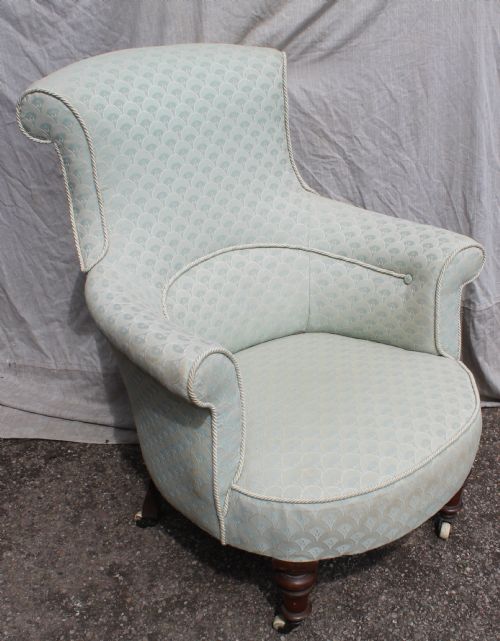
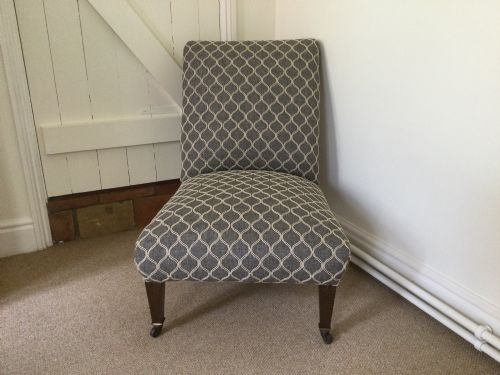
A patterned bedroom chair is typically a compact upholstered seat designed for private chambers, drawing rooms or dressing spaces, most commonly found from the Victorian and Edwardian periods. These pieces appear as low-slung slipper chairs, button-backed tub chairs, nursing chairs and small armchairs.
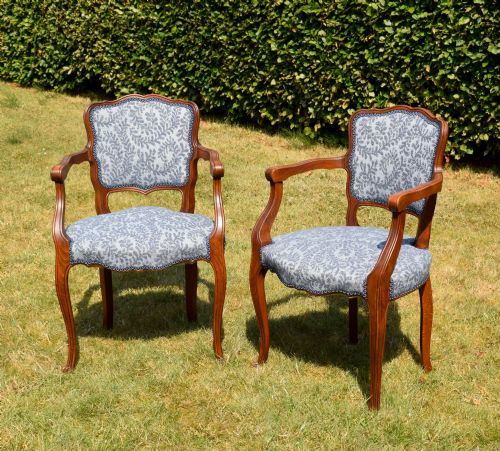
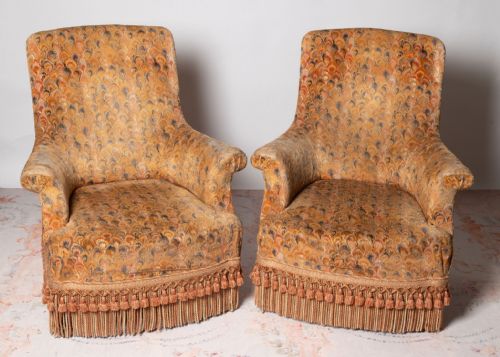
The selections span nineteenth-century English and French workshops, encompassing revival styles such as Louis XV, Gothic and Napoleon III alongside simpler country house forms. Low seats and supportive backs define the functional typology intended for intimate domestic use.
Materials and construction
Frames rely on timbers including mahogany, walnut, rosewood, oak and general hardwood, shaped with turned legs, gilt details or inlaid decoration. Metal components such as brass castors often support the mobility of heavier armchairs.
Upholstery employs traditional fabrics ranging from velvet and silk to modern geometric and patterned textiles applied over sprung or stuffed foundations. Exposed wooden frameworks showcase carved scroll arms, ebonised finishes and button-backed padding.
Assessing quality and craftsmanship
Quality rests in the integrity of the underlying timber frame and the precision of the joinery supporting the arms and legs. Maker attribution, particularly to notable nineteenth-century London firms, elevates the standing of an individual piece.
The refinement of carved details, such as turned front legs, gilt accents or delicate wood inlay, separates standard utilitarian seating from high-end parlour and bedroom furniture.
Holland and Sons·Howard and Sons
The Patterned Bedroom Chair Glossary
- Slipper chair
- A low-seated upholstered chair originally designed for bedrooms to allow comfortable dressing. These pieces lack arms and sit close to the floor.
- Tub chair
- An armchair featuring a continuous curved back and arms forming a rounded enclosure. This form provides deep, enclosed seating.
- Nursing chair
- A low-seated Victorian armchair designed with an upright back to hold infants comfortably. The reduced height assists maternal use.
- Prie Dieu chair
- A devotional prayer chair characterised by a narrow, high back often topped with a resting rail. These nineteenth-century examples frequently feature Gothic revival detailing.
Patterned Bedroom Chair: Frequently Asked Questions
What is a patterned bedroom chair?
A patterned bedroom chair is a compact nineteenth-century or early twentieth-century seat covered in decorative fabric. These chairs were intended for dressing rooms and private chambers.
They appear in forms such as slipper chairs, tub chairs and nursing chairs. The wooden frames are often mahogany, walnut or rosewood.
Where were these chairs placed?
These chairs were placed in bedrooms, dressing rooms and boudoirs for personal use. Their lower height suited private domestic tasks.
They provided comfortable seating without dominating the floor space of smaller private rooms.
How do I date a Victorian bedroom chair?
Dating relies on the frame style, timber choice and construction methods visible beneath the upholstery. Victorian pieces often feature turned wooden legs with brass castors.
Revival styles and maker stamps help narrow the period of manufacture between the early nineteenth century and the Edwardian era.
What are slipper chairs used for?
Slipper chairs were traditionally used in bedrooms for sitting while putting on shoes or garments. Their low profile made them practical for dressing areas.
Today they function as decorative accent seating in living spaces and bedrooms alike.