

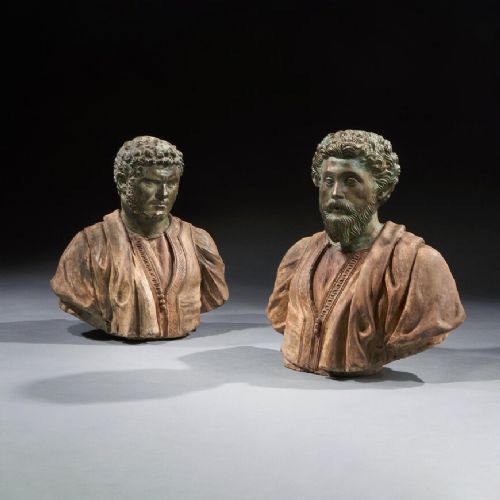
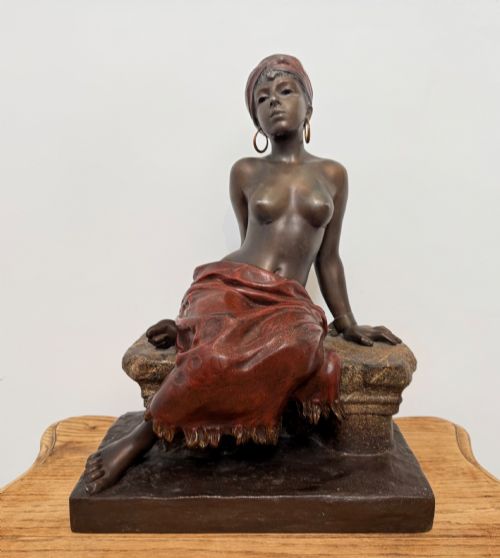


Patinated Terracotta Sculpture
These patinated terracotta sculpture pieces bring classical figures, animals and Art Nouveau subjects into the room with rich surface finishes.
Patinated Terracotta Sculpture
When you search for patinated terracotta sculpture, you are looking at figurative works, busts and statuettes shaped from clay and finished to resemble metal or stone. The examples you meet on this page span the nineteenth century, the Edwardian era and the art deco period.
The subjects range from classical figures and orientalist studies to French animalier dogs and female busts. Many pieces draw directly on antique models or carry signatures of well-known makers from the period.
Materials and technique
The primary material is fired terracotta clay, sometimes accompanied by plaster or supported with internal metal wire. Makers shaped these substances into detailed busts and statues, capturing the folds of drapery and the expressions of the subject.
Surfaces received specialised treatments involving paint, pigment and bronze finishes to create the characteristic patinated look. Some works also incorporate wooden elements or bases to mount the sculpture securely.
Patinated Terracotta Sculpture Retail Price Guide 2026
Typical asking prices for patinated terracotta sculpture among the pieces listed under this phrase on Sellingantiques today, from the lower quarter to the upper quarter. They describe what is for sale here now, not the wider market.
The listings span from 1880 through the Edwardian period to 1930, showing materials including terracotta, plaster, bronze, and metal wire.
Judging quality and execution
The application of the patination dictates how well the terracotta mimics bronze or stone. Skilled surface treatment preserves the subtle textures of the clay underneath while achieving a convincing metallic or aged appearance.
E Villanis·Pietro Calvi·Foucher·B Rezl·Frederic Goldscheider
The Patinated Terracotta Sculpture Glossary
- Terracotta
- A porous red-brown earthenware clay used for sculptural works. Firing hardens the material before it receives its surface finish.
- Patinated
- A treated surface finish applied to give terracotta the appearance of aged bronze, metal or stone. This coating alters the visual tone of the piece.
- Animalier
- A nineteenth-century artistic style focusing on realistic depictions of animals. French animalier pieces often portray dogs or wildlife with close attention to anatomy.
- Bust
- A sculpted representation of a person from the chest or shoulders up. These pieces focus on the head, expression and immediate dress of the subject.
- Neoclassical
- A style inspired by the classical art and culture of ancient Greece and Rome. Works in this vein often depict classical women or copy antique statues.
Patinated Terracotta Sculpture: Frequently Asked Questions
What is patinated terracotta?
Patinated terracotta is fired clay finished with paint, pigment or metallic coatings to resemble bronze, metal or aged stone. This treatment enhances the visual depth of the sculpted surface.
These finishes were applied by makers to give earthenware the gravitas of more expensive materials while retaining the fine modelling details achievable in clay.
How do I clean a terracotta sculpture?
Dust these pieces gently with a dry, soft brush to prevent accumulation in the recesses of the modelling. Avoid using water or liquid cleaners, which can harm the painted or patinated surface.
Keep the sculpture away from direct moisture and extreme temperature changes to protect the underlying clay and any internal reinforcement.
How can I tell the period?
Dating relies on the stylistic markers of the era, such as Art Nouveau curves, Art Deco geometry or Victorian classical revival subjects. Signatures, stamps and registration marks left by the maker or foundry also help place the piece in time.
Comparing the handling of the clay and the specific patination technique against documented examples from the nineteenth and early twentieth centuries provides further clarity.