




Patinated Metal Vase
A patinated metal vase brings centuries of classical dignity and metallurgical skill into a room, offering rich tactile depth through aged chemical surfaces.
Patinated Metal Vase
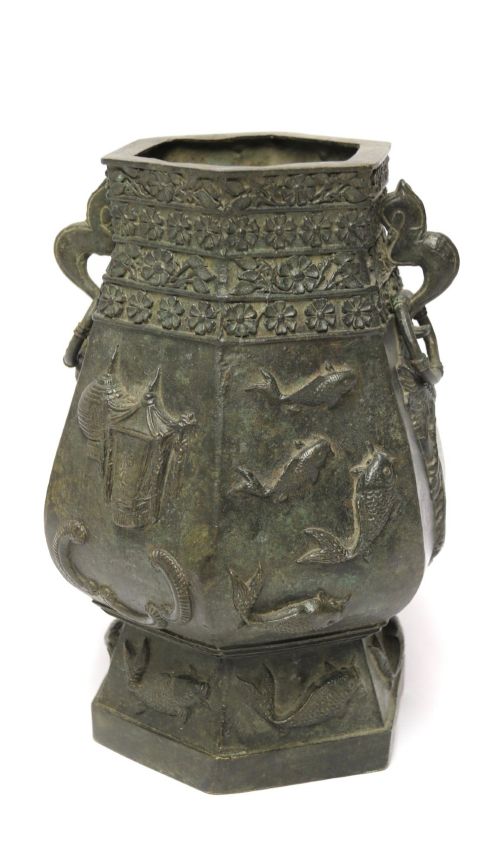
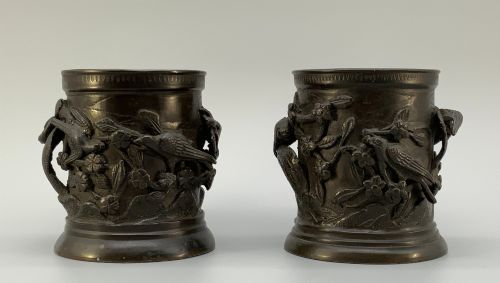
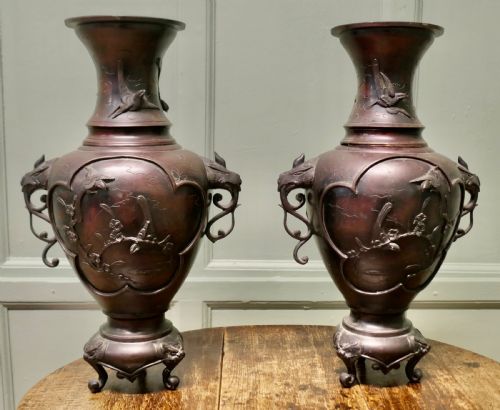
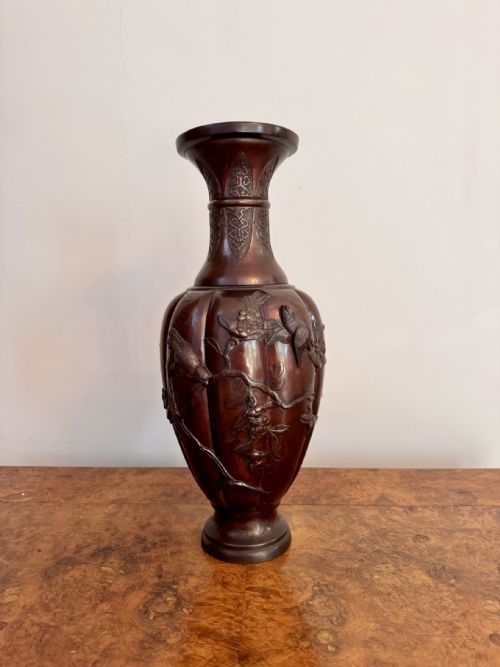
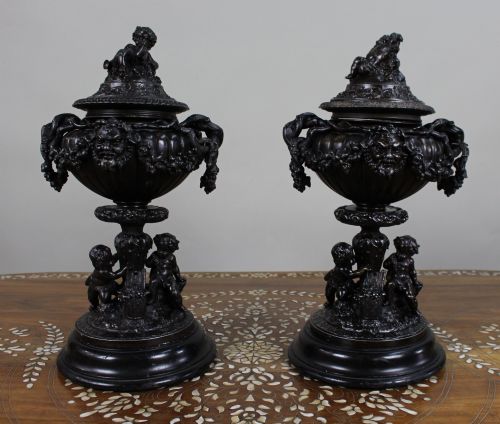
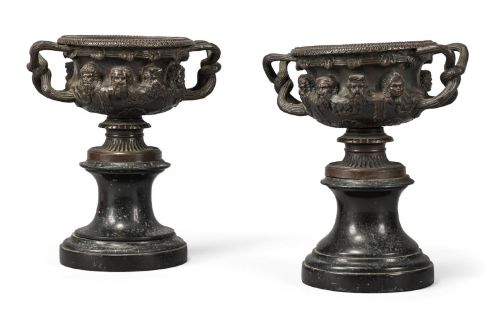
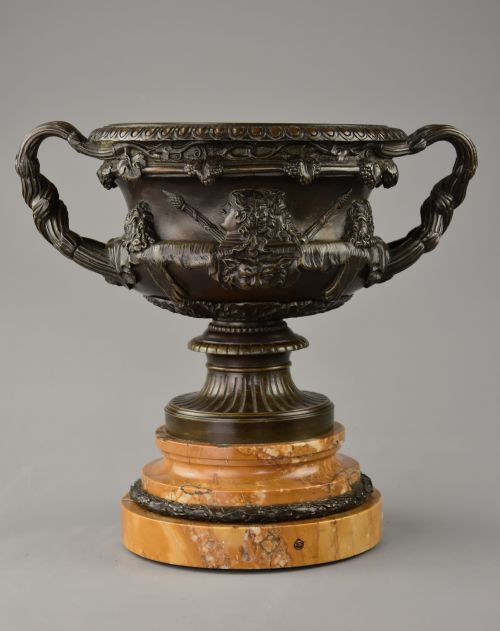
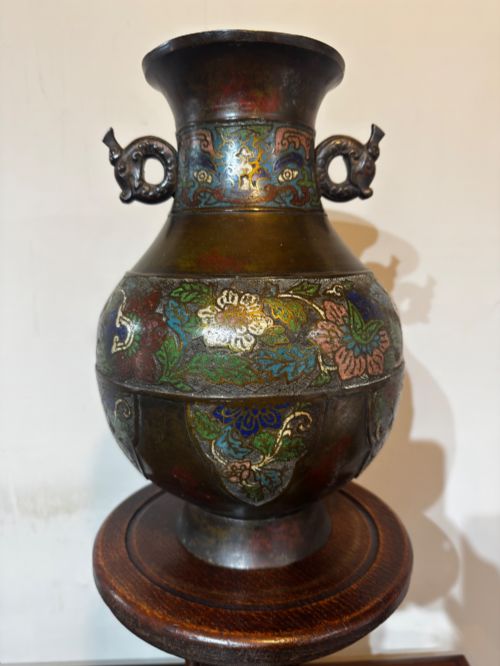
A patinated metal vase encompasses decorative vessels, urns, and ewers shaped from bronze, spelter, and mixed metal alloys. Buyers seeking a patinated metal vase encounter diverse forms ranging from French neoclassical campana shapes to Japanese Meiji period floral designs.
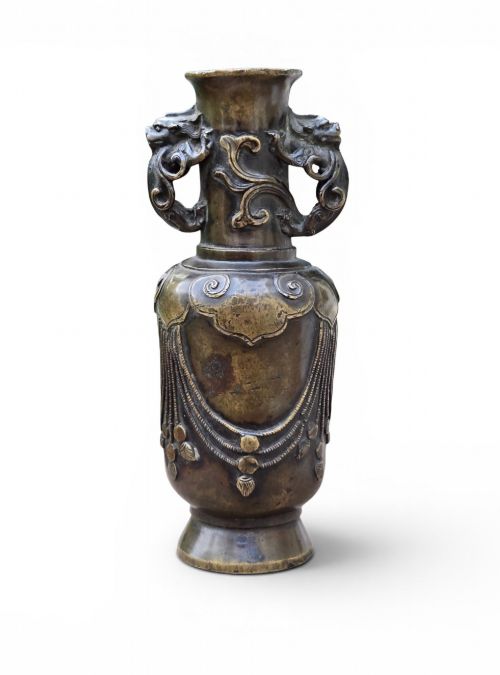
Originating across European, East Asian, and Indian workshops, the pieces span domestic decorative objects and garden temple vessels. The forms incorporate handles shaped as birds, dragons, and mythological figures, reflecting both classical revival and Asian export traditions.
How they were made
Metalworkers utilised casting techniques such as lost-wax methods to form complex vessels in bronze and spelter, often finishing surfaces with applied ormolu, champlevé enamels, and mixed metal inlays. Artisans achieved distinct patinas through chemical treatments that accelerated oxidation, producing deep brown, green, and black tones on the metal skin.
Detailed ornamentation on these objects relied on hand chiselling, chasing, and deep carving to define feathers, blossoms, and dragon motifs. Bases and mounts combined marble plinths with turned timber pedestals, anchoring heavy cast metal bodies.
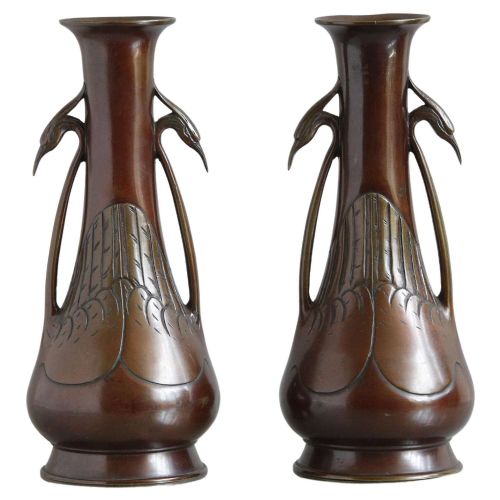
Several nineteenth-century bronze vessels feature handles shaped like inquisitive egrets peering over the rim.
What varies in quality
The standard of a casting separates ordinary production from exceptional work, visible in the crispness of chased details like bird feathers and Bacchic masks. Superior examples retain deliberate chemical patination that highlights the depth of the metal relief rather than masking a flat surface.
Artisanal attribution and sculptural ambition also determine standing, where named makers or published provenance elevate a piece significantly. The integration of mixed metals and well-preserved fire gilding or ormolu mounts further distinguishes masterworks from standard foundry output.
Jules Moigniez·Charles Korschann·Clodion
The Patinated Metal Vase Glossary
- Patina
- A chemical surface alteration acquired through age or intentional treatment that colours exposed metal. This finish provides both protective qualities and aesthetic depth.
- Campana
- A bell-shaped vessel form typical of classical antiquity and revival styles. These urns feature flared rims and tapered lower bodies.
- Grand Tour
- A nineteenth-century cultural excursion undertaken by wealthy Europeans acquiring classical souvenirs. Such objects often include bronze reductions of famous ancient sculptures.
- Spelter
- A zinc alloy frequently utilised as a less costly alternative to bronze in nineteenth-century decorative castings. It accepts bronze-tone finishes effectively.
- Ormolu
- Finely ground high-carat gold applied to a bronze base through a mercury amalgamation process. This technique creates a bright golden decorative surface.
Patinated Metal Vase: Frequently Asked Questions
What is a patinated metal vase?
A patinated metal vase is a decorative vessel cast from bronze, brass, or spelter and treated to create an aged, dark, or coloured surface finish.
These pieces range from classical European urns to Japanese Meiji period floral and animal bronzes, serving as ornamental centrepieces.
Are these vases waterproof?
Most antique metal vessels are constructed from multiple cast sections or feature historic patination that reacts poorly to standing water.
Use a discreet glass or plastic liner inside if you plan to display fresh stems rather than filling the vessel directly.
How can I tell a nineteenth-century bronze from a newer copy?
Nineteenth-century pieces exhibit hand-chased surface details, natural wear patterns on high points, and heavy, quality casting methods.
Examine the underside and interior for evidence of old tooling marks, patination depth, and the specific composition of the metal alloy.