
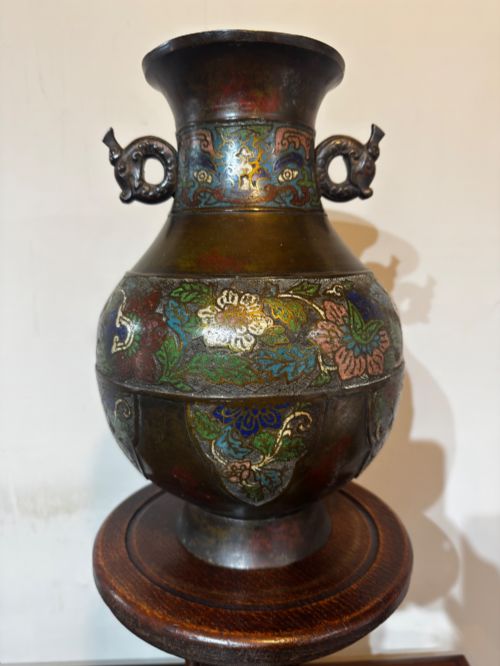


Patinated Bronze Urn Vase
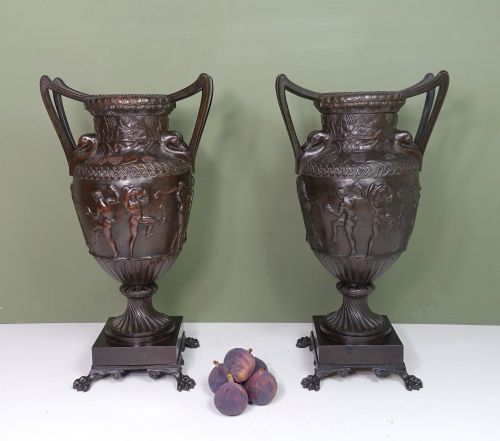
These patinated bronze urn vases combine neoclassical gravity, Meiji precision, and French foundry skill, offering timeless focal points for any room.
Patinated Bronze Urn Vase
A patinated bronze urn vase brings classical antiquity or East Asian craftsmanship into a room, spanning forms from grand tour reductions to Japanese temple vessels.
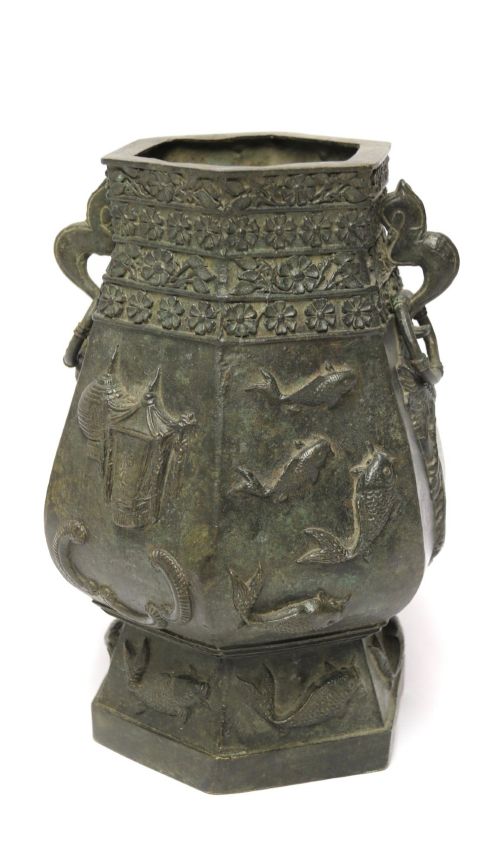
Most examples found here date from the nineteenth century, encompassing French neoclassical campana shapes, Chinese ritual vessels, and Japanese Meiji period creations.
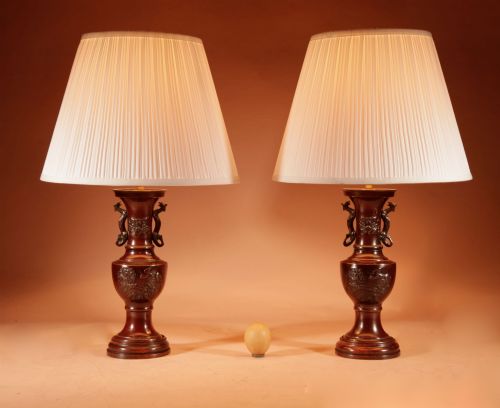
These pieces function variously as decorative urns, display vases, table lamps, and garniture sets, often retaining rich patination developed over decades.
Materials and casting techniques
Foundries utilised traditional bronze casting methods, frequently applying chemical patination to achieve deep brown, black, or verdigris surface tones.
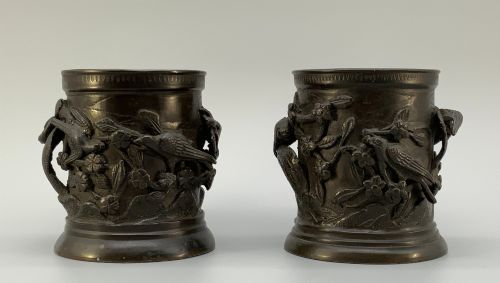
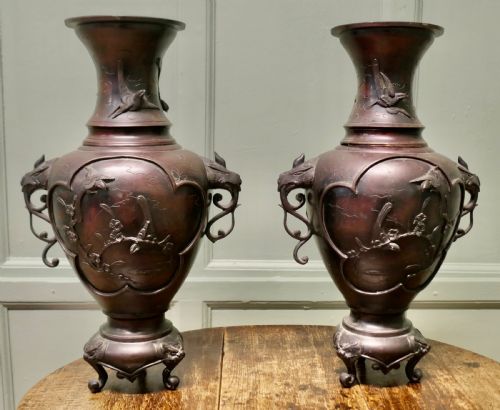
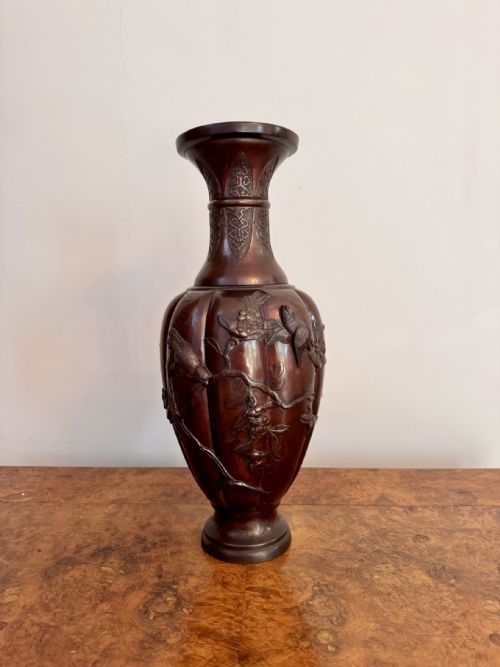
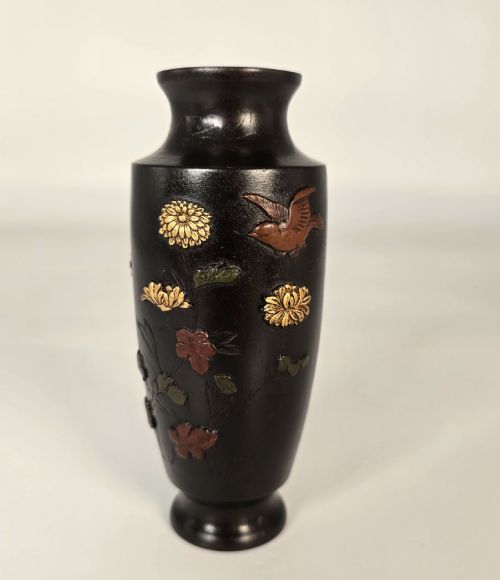
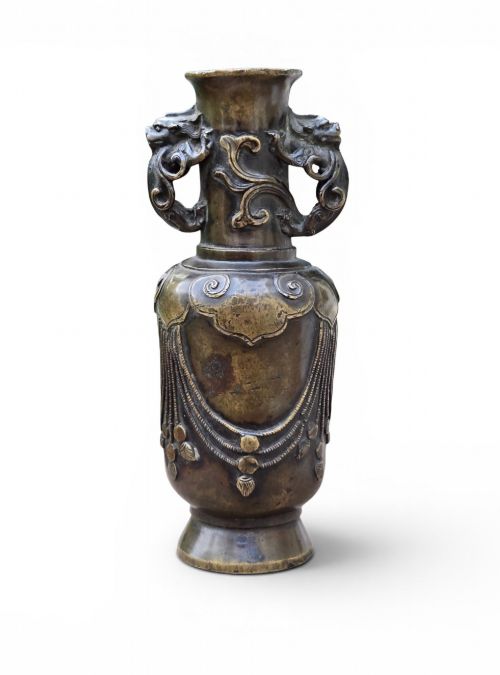
Many Japanese items incorporate mixed metal applications, detailing birds, dragons, and blossoms in silver and copper highlights.
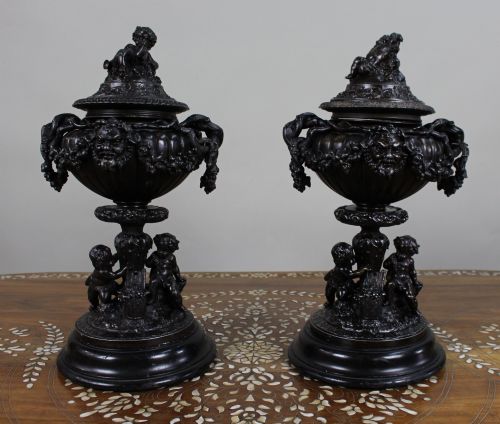
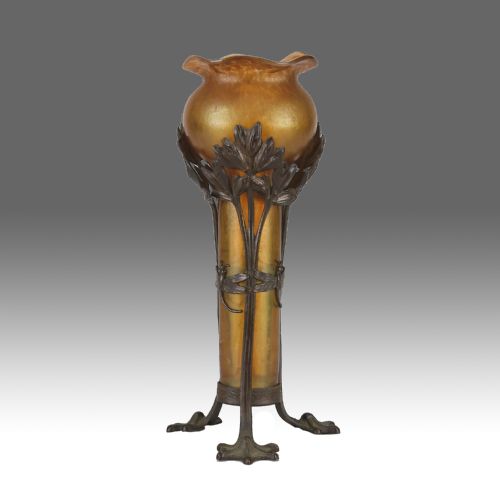
European makers combined cast bronze with ormolu mounts, marble plinths, and occasionally supplementary materials such as glass or fabric.
Storks occasionally guard nineteenth-century French bronze rims, watching over domestic mantelpieces with unexpected avian vigilance.
Markers of superior execution
Quality rests in the crispness of the chased detail, where hand-finished feathers, floral motifs, and classical masks remain sharp and distinct.
The integrity of the patina differentiates masterworks, showing stable, natural depth rather than flat, uniform modern coatings.
Substantial weight, balanced proportions, and maker signatures or foundry marks elevate particular items above standard decorative production.
Jules Moigniez·Loetz·Charles Korschann
The Patinated Bronze Urn Vase Glossary
- Patina
- The surface coloration and sheen developed through age or chemical treatment. This skin protects the metal and reveals the history of the piece.
- Campana
- A bell-shaped vessel form originating in ancient Rome. These classical garden urns heavily influenced nineteenth-century European metalwork.
- Meiji
- The period of Japanese history from 1868 to 1912. Metalworkers during this era produced highly detailed bronzes for international export.
- Champlevé
- An enamelling technique where troughs are dug into the bronze surface and filled with vitreous paste before firing.
- Garniture
- A set of matching decorative vases or urns designed for symmetrical display on a mantelpiece or sideboard.
Patinated Bronze Urn Vase: Frequently Asked Questions
How do I clean a patinated bronze urn?
Dust gently with a dry, soft brush to preserve the historical surface layer. Avoid commercial metal polishes, which strip away original patination.
Apply a light microcrystalline wax sparingly if protection from atmospheric moisture is strictly necessary.
Were these urns made for use or display?
Many grand tour and Meiji period examples served purely as decorative focal points in nineteenth-century interiors. Others originated as ritual vessels or functional garden planters before entering the collector market.
Some nineteenth-century items arrived already adapted for domestic lighting or display as garniture sets.
What is a grand tour bronze?
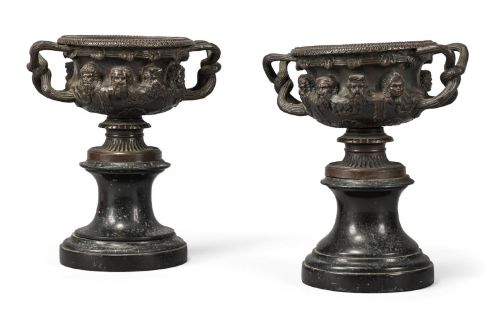
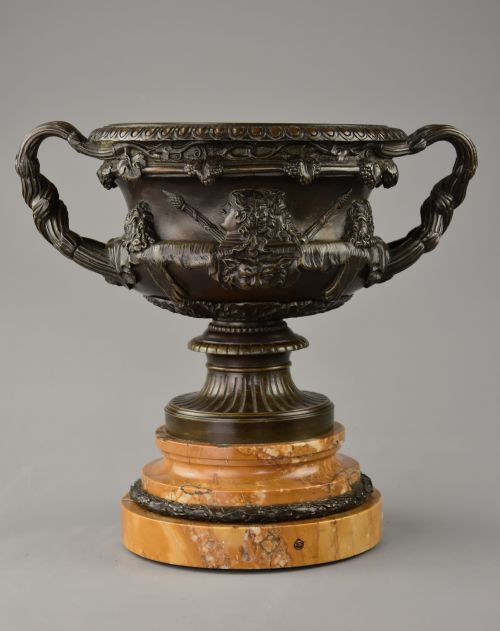
Grand tour pieces are reduced-scale models of famous classical antiquities, collected by travellers touring Italy and Europe during the eighteenth and nineteenth centuries.
These bronzes capture iconic monuments like the Warwick vase for private domestic display.
How can I tell Japanese bronzes apart from European ones?
Japanese Meiji pieces typically feature organic motifs such as egrets, dragons, and cherry blossoms, sometimes rendered in mixed metals. European works lean towards classical neoclassical lines, Bacchic masks, and architectural plinths.
Signatures on Japanese bronzes often appear as carved artist seals rather than Western foundry stamps.