


Bronze Urn Marble Plinth
These bronze urn marble plinth pieces are neoclassical Grand Tour souvenirs and decorative vessels that bring classical authority to a room.
Bronze Urn Marble Plinth
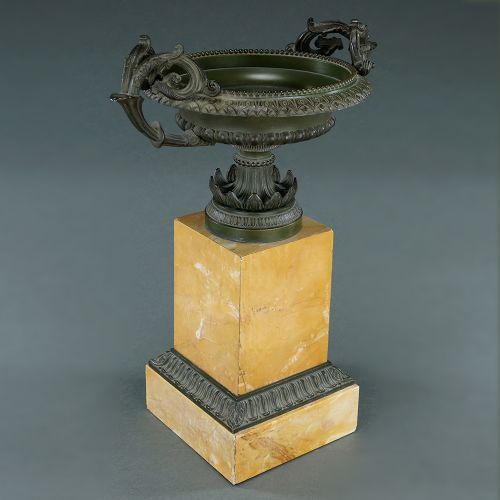
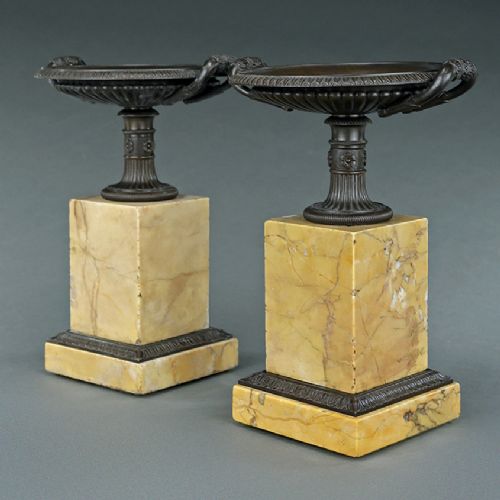
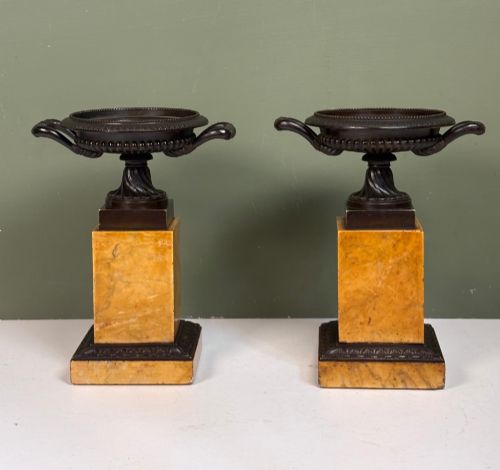
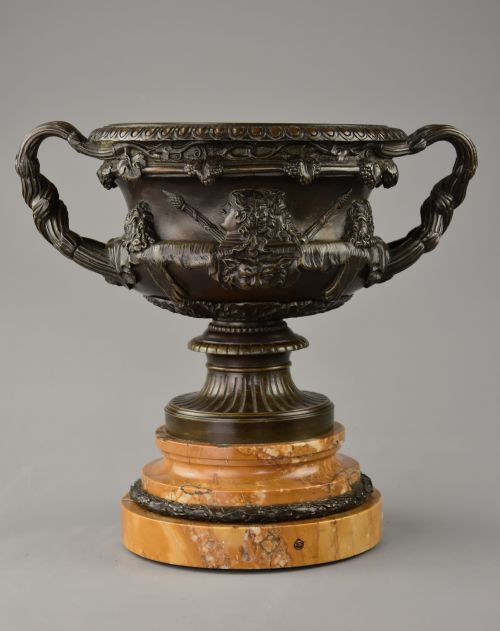
When you search for bronze urn marble plinth, you are looking at nineteenth-century decorative urns, tazzas, and vases raised upon stone bases. The versions most commonly met on this page are French and Italian Grand Tour souvenirs dating from the eighteen-sixties through the eighteen-nineties.
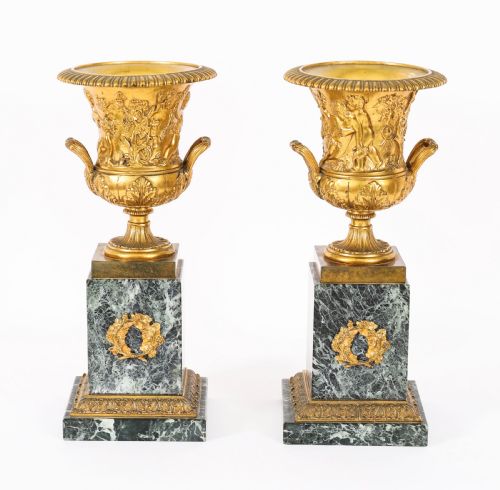
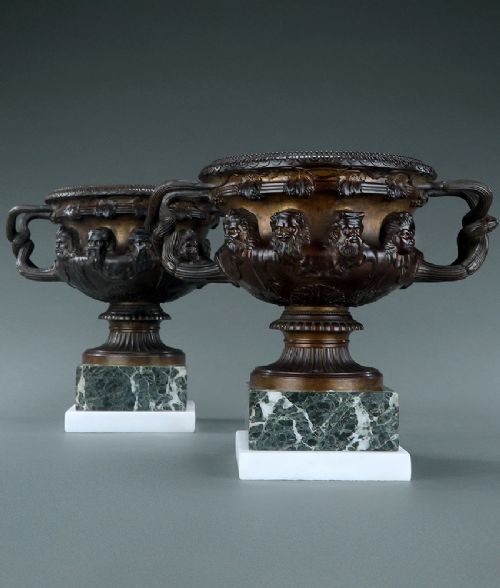
The forms draw directly on classical antiquity, including campana shapes and reductions of famous antiquities like the Warwick Vase and the Albani Vases. Makers also produced associated decorative bowls, pedestals, and bust stands to display these works.
The materials combine cast metal with various stone plinths, uniting sculptural bronze bodies with heavy architectural foundations. Neoclassical and French Empire styles dominate the selection, alongside occasional Gothic Revival and classical revival designs.
How they were made
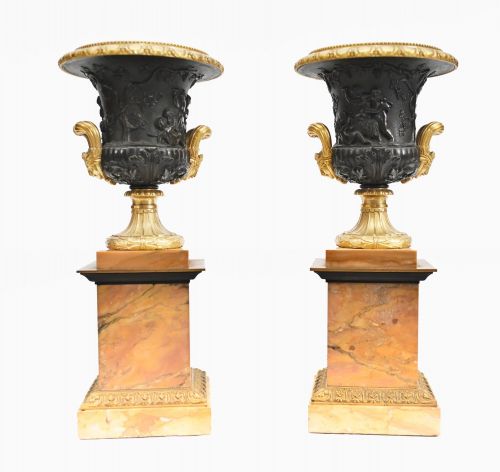
The metal components rely on bronze casting, frequently enhanced with gilt bronze or ormolu mounts that provide contrasting metallic tones. Foundries shaped these elements using traditional techniques to replicate ancient sculptural models.
The stone elements utilise natural marbles, with green marble, white marble, and siena marble appearing across the plinth bases. Masons turned and polished these mineral blocks to create stable, weighty pedestals that elevate the metal vessels.
Bacchus and cherubs frequently peer from the sides of these urns, reminding every serious scholar that ancient parties involved quite a lot of wine.
What varies in quality
The standard of the casting dictates the definition in the metalwork, separating sharply rendered figures and foliage from softer, blurred surfaces. Finer examples retain crisp chording on classical handles and precise detailing in relief figures like cherubs and Bacchus motifs.
The selection of the stone plinth also alters the character of the piece, as rich veining in siena or green marble elevates the visual weight against the bronze. The quality of the ormolu and gilding applied to the mounts determines how successfully the two mediums balance each other.
The Bronze Urn Marble Plinth Glossary
- Grand Tour
- A traditional trip through Europe undertaken by upper-class travellers in the eighteenth and nineteenth centuries to study classical art. Souvenirs purchased on these journeys formed the basis of many nineteenth-century collections.
- Tazza
- A shallow cup or vase on a pedestal foot, frequently used in classical design for serving or display. Nineteenth-century examples often follow ancient Roman prototypes in bronze or marble.
- Campana
- A bell-shaped vessel form derived from ancient pottery and metalwork found at archaeological sites in Italy. These urns feature flared rims and distinct footed bases.
- Ormolu
- Finely ground high-carat gold applied to a bronze base using a mercury amalgamation process, or the gilded bronze itself. This technique creates a rich, warm metallic finish that resists tarnishing.
- Neoclassical
- A Western cultural movement drawing inspiration from the art and culture of classical antiquity. It manifests in these objects through strict symmetry, architectural plinths, and classical motifs.
Bronze Urn Marble Plinth: Frequently Asked Questions
How were these urns used historically?
Historically, travellers collected these objects during educational tours of Italy and France as tangible reminders of classical antiquity. Displayed within nineteenth-century libraries and drawing rooms, they signaled learning and refined taste.
Unlike utilitarian vessels, they existed purely to ornament interiors and celebrate classical forms. Their placement on pedestals and plinths elevated them as focal points within a room.
How do I live with a bronze and marble urn?
Position these substantial pieces on sturdy surfaces such as sideboards, console tables, or dedicated pedestals where their weight is supported. Because they combine heavy stone and metal, placement away from high-traffic edges prevents accidental tipping.
Pair them with complementary nineteenth-century furniture to maintain a cohesive neoclassical interior scheme. Maintenance requires only gentle dusting of the bronze and careful cleaning of the marble without harsh chemicals.
How can I tell different periods apart?
Objects from the early nineteenth century often reflect strict French Empire characteristics, utilising clean architectural lines and rich siena marble. Pieces from the later decades of the nineteenth century frequently show broader Grand Tour revival influences and varied green or white marble plinths.
Stylistic cues, such as the intricacy of the cast figures and the depth of the patination, help indicate the decades between eighteen-sixty and eighteen-ninety. Comparing the integration of the bronze mounts to the stone base also reveals manufacturing norms of specific periods.