

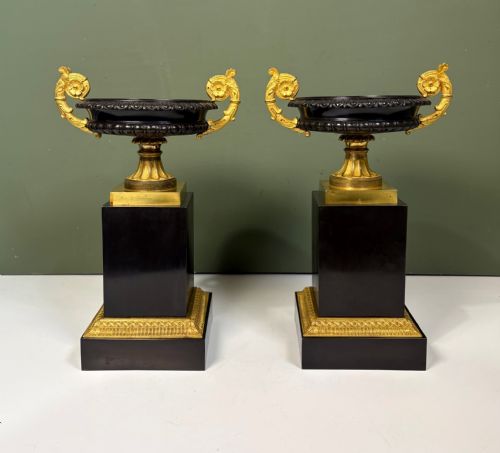


Dark Bronze Classical Urn
A dark bronze classical urn brings the weight of antiquity and the grand tour into a room through patinated metal and classical form.
Dark Bronze Classical Urn
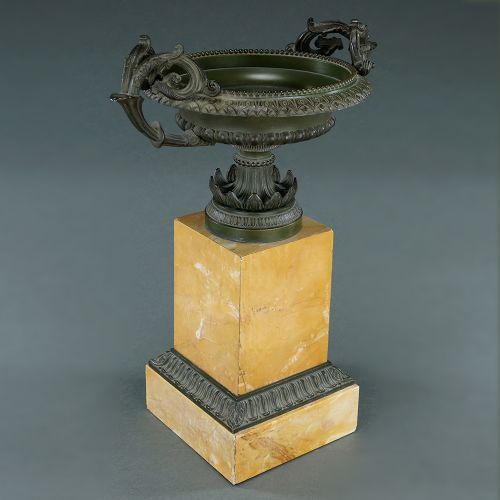
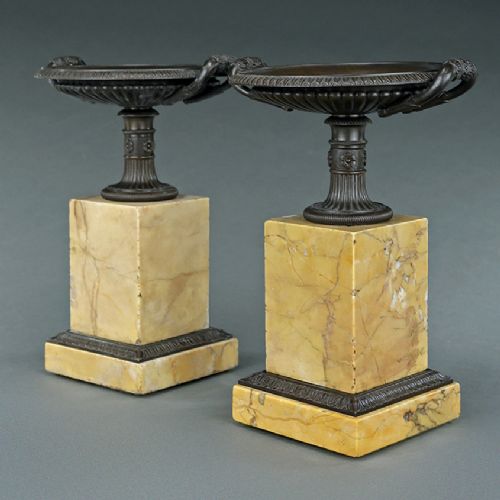
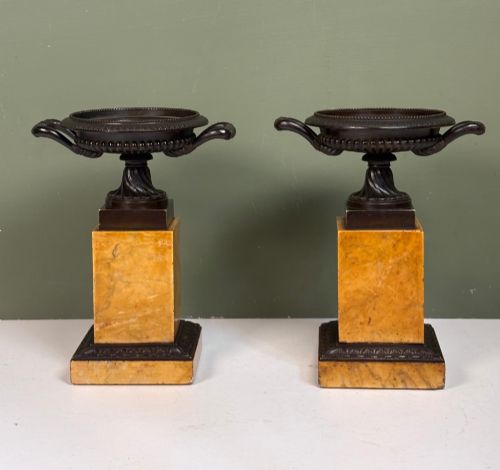
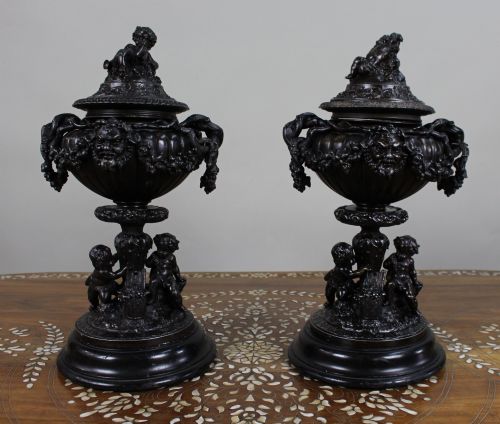
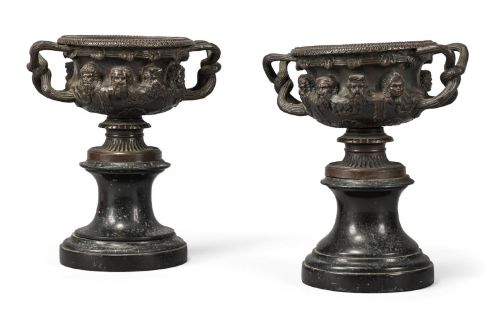
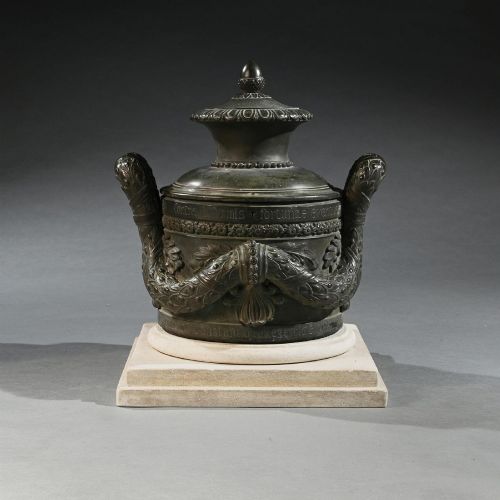
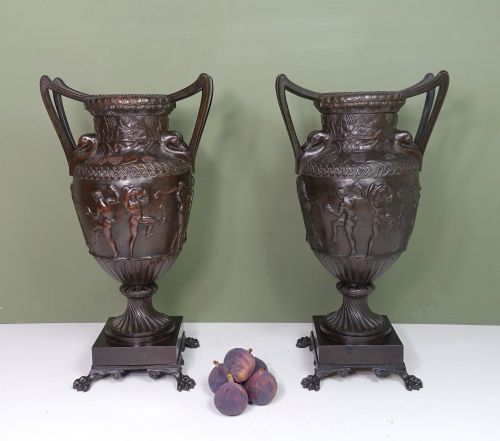
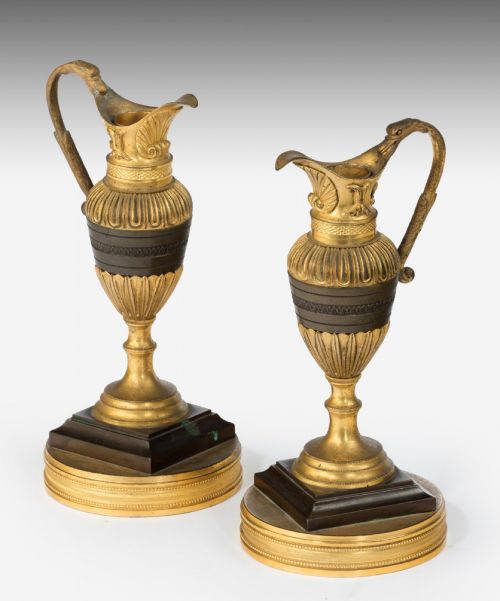
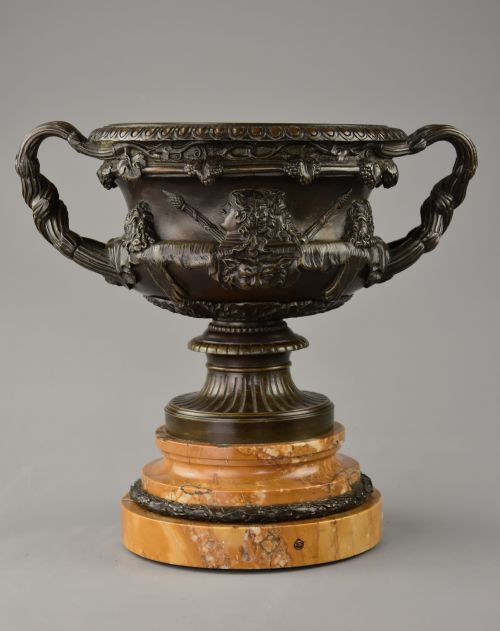
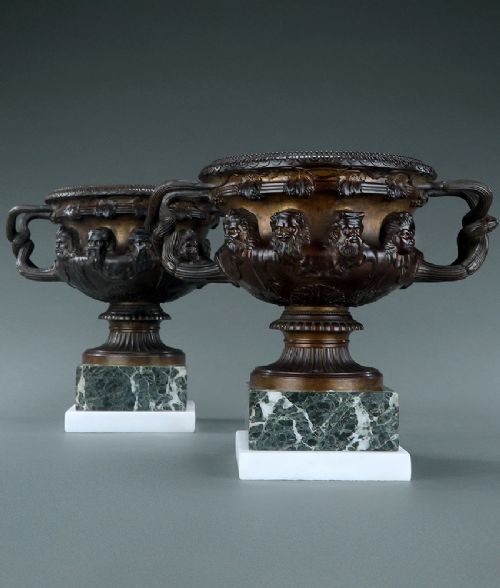
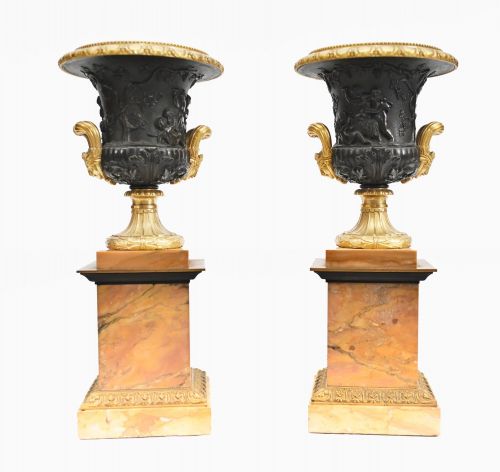
When you search for a dark bronze classical urn, you encounter objects shaped by neoclassical revival taste, predominantly originating from nineteenth-century workshops and the grand tour tradition. These pieces take the form of campana urns, Warwick vases, tazzas, and ewers, often cast in patinated bronze or bronzed spelter.
The selections on this page bridge domestic ornamentation and classical archaeology, drawing on ancient Roman and Greek models collected by travellers across Europe. Many examples rest upon marble plinths or stepped bases, functioning as decorative vessels, planters, or converted lighting.
How they were made
The physical presence of these pieces relies upon metal casting, typically utilising bronze, patinated bronze, or spelter, combined with marble and ormolu mounts. Founders utilised lost-wax or sand-casting methods to achieve detailed relief work such as bacchic masks, cherubs, and classical foliage.
Patination was applied chemically to dark surfaces, creating the aged appearance desired by nineteenth-century collectors, while ormolu details introduced contrasting highlights of gilt bronze.
Design styles span Regency, French Empire, and Neoclassical Revival.
What varies in quality
Quality rests in the crispness of the cast and the depth of the patination, distinguishing sharp, hand-finished chasing from softer, mass-produced metalwork. Superior examples display carefully articulated details in high relief and substantial weight from solid bronze construction rather than lighter alloys.
The integration of materials also determines the tier of the piece, where fine marble bases and fire-gilded ormolu mounts elevate the object beyond standard decorative foundry work.
Clodion
The Dark Bronze Classical Urn Glossary
- Campana urn
- A bell-shaped vessel with a flaring rim and a footed base, derived from ancient pottery forms. These pieces often feature handles shaped as vines or classical figures.
- Grand tour
- A cultural journey undertaken by wealthy young Europeans through France and Italy to study classical antiquities. Souvenirs bought along the way included miniature bronze models of famous ancient vases.
- Warwick vase
- A large Roman marble vase discovered at Hadrian's Villa and subsequently housed at Warwick Castle. Nineteenth-century founders produced reduced bronze copies of this specific form.
- Tazza
- A shallow bowl or cup mounted on a stem and foot, frequently cast in bronze or marble during the nineteenth century. These objects served as decorative centrepieces or serving vessels in classical interiors.
- Ormolu
- Finely ground high-carat gold applied to bronze through a mercury amalgamation process, or cast gilt bronze used for decorative mounts and accents. This technique provides a bright contrast to dark patinated surfaces.
Dark Bronze Classical Urn: Frequently Asked Questions
What is a dark bronze classical urn?
A dark bronze classical urn is a nineteenth-century decorative object cast in metal to mimic ancient Greek and Roman vessels. These pieces were created during periods of neoclassical revival and grand tour collecting.
They take forms such as campana shapes and Warwick vases, often featuring patinated surfaces and classical motifs like bacchic masks.
How were these urns used originally?
In the nineteenth century, these vessels served as decorative centrepieces in libraries, drawing rooms, and studies. Wealthy travellers displayed them to signal classical learning and sophistication.
Some functioned as posy vases, wine-coolers, or planters, while later examples were adapted into table lamps.
Are these pieces actually ancient?
The pieces listed here date predominantly from the nineteenth century rather than antiquity. They are revival pieces inspired by archaeological discoveries made in Italy and Greece.
Craftsmen used historical models to create souvenirs and decorative art for European interiors during the Victorian and Regency eras.
What is the difference between bronze and spelter?
Bronze is an alloy of copper and tin that yields a heavy, durable material capable of holding sharp cast details. Spelter is a softer zinc-based alloy used as a less expensive alternative in nineteenth-century manufacturing.
Spelter items are typically lighter and require patinated finishes to simulate the appearance of true bronze.
How do I style a classical urn at home?
These urns suit traditional interiors, studies, and mantelpieces where their architectural silhouettes stand out. They pair well with wood furniture, leather, and marble surfaces.
Larger versions can sit on pedestals or tables as standalone focal points, while smaller tazzas work well on sideboards.