



Victorian Classical Bronze Urns
Victorian classical bronze urns bring the noble symmetry of antiquity straight into nineteenth-century interiors through finely cast metal and carved stone.
Victorian Classical Bronze Urns
Victorian classical bronze urns encompass decorative vessels, mantel garnitures, table lamps, and desk accessories created during the nineteenth century. These objects draw heavily upon archaeological discoveries and the neoclassical taste that shaped elite European interiors of the period.
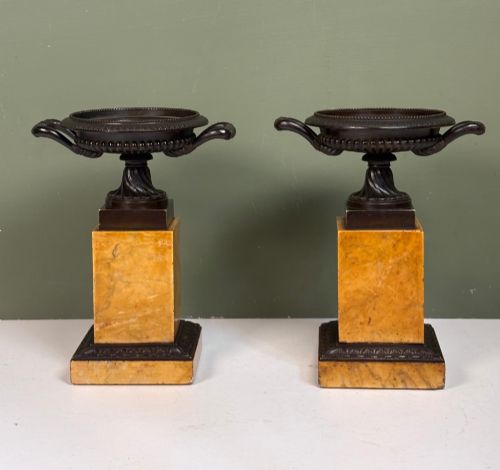
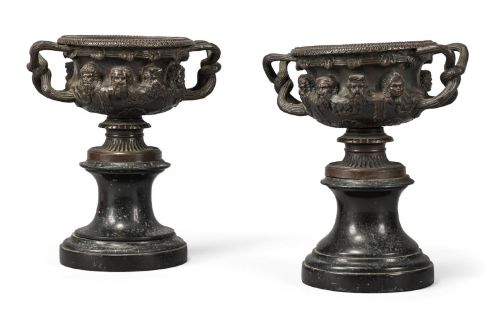
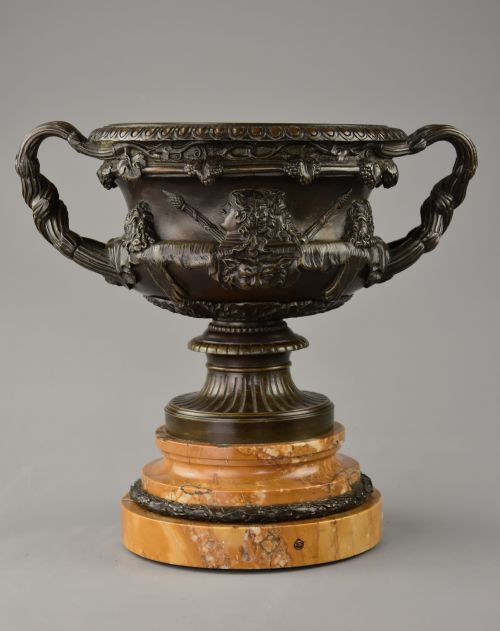
Buyers will most frequently encounter Grand Tour souvenirs, ornamental ewers, and reduction vases inspired by famous antiquities like the Warwick or Townley vases. Many pieces combine dark patinated bronze with contrasting marble plinths, rouge griotte bases, or gilt bronze mounts.
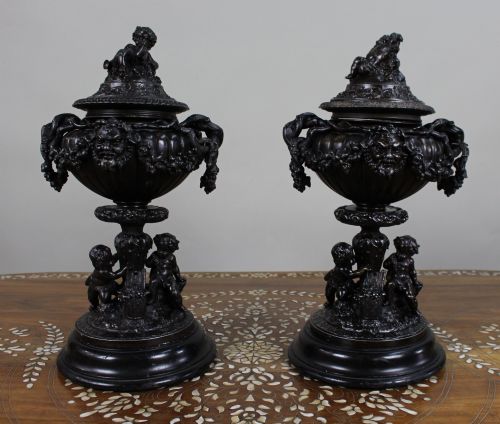
The selection ranges from small desk inkwells and posy vases to large lidded display vessels and candelabras produced across England, France, and Italy. These works frequently incorporate classical motifs such as bacchic masks, putti, and rams' heads.
Materials and casting methods
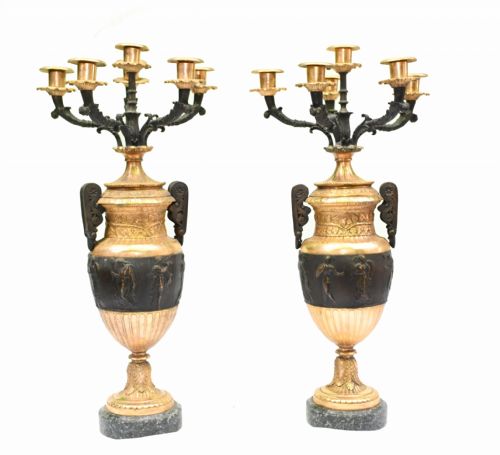
The construction relies primarily on cast bronze, patinated bronze, and gilded brass, often paired with white or coloured marble plinths and onyx. Ormolu and gilt bronze highlights accentuate the rich dark tones of the primary metalwork.
Manufacturers utilised traditional lost-wax or sand-casting techniques to achieve crisp relief on handles, classical figures, and acanthus scrollwork. Many surviving items show subsequent nineteenth-century adaptations, such as conversions into oil or electric table lamps.
Several nineteenth-century bronze ewers spent decades hiding as table lamps before remembering they were classical works of art.
Distinctions in execution
Quality rests on the sharpness of the chasing and the finesse of the casting, where superior examples display crisp facial expressions and deep relief on figurative elements. Softer details indicate secondary production runs or worn moulds.
The selection of secondary materials further separates standard items from exceptional ones, particularly the weight and figuring of the marble bases, the purity of the fire-gilt or ormolu, and the stability of the patination.
A.D Mougin·James Ritchie and Son
The Victorian Classical Bronze Urns Glossary
- Grand Tour
- A nineteenth-century tradition where wealthy travellers collected classical souvenirs across Italy and France. These pieces replicate famous archaeological finds in miniature bronze or marble.
- Ormolu
- Finely ground high-carat gold applied to a bronze base using a mercury amalgamation process, or simply bright gilt bronze. It provides durable golden highlights on nineteenth-century clock garnitures and urns.
- Cassolette
- A dual-purpose decorative vessel featuring a reversible lid that functions either as an urn or a perfume burner. They frequently appear in pairs on marble and ormolu bases.
- Tazza
- A shallow cup or vase raised on a slender stem and foot, modelled after ancient Greek and Roman drinking vessels. They are commonly cast in bronze and mounted on marble plinths.
Victorian Classical Bronze Urns: Frequently Asked Questions
What is a Grand Tour bronze urn?
A Grand Tour bronze urn is a nineteenth-century souvenir cast in Europe to replicate famous ancient Roman or Greek archaeological discoveries. Travellers brought these home as physical evidence of their classical education and travels.
These pieces typically combine patinated bronze bodies with marble bases. They served strictly decorative purposes in Victorian libraries, drawing rooms, and studies.
How were these urns used in Victorian homes?
Victorians displayed these urns on mantelpieces, pedestals, and library tables as visual statements of classical learning and refined taste. Some items functioned practically as inkwells, planters, or lidded desk accessories.
Many examples were later adapted during the period or in subsequent decades to serve as table lamps or candelabras. Their heavy bronze and marble construction provided sturdy bases for lighting conversions.
How do I identify a nineteenth-century piece?
Nineteenth-century pieces display specific casting techniques, patination styles, and material combinations typical of Victorian workshops in Britain, France, and Italy. Examining the underside of the marble bases and the joining screws often reveals period assembly methods.
Stylistic cues such as Grand Tour motifs, neoclassical revival shapes, and specific patination types help distinguish these nineteenth-century objects from later twentieth-century reproductions.
Are lamps and clock garnitures original?
Many nineteenth-century urns and ewers were converted into table lamps either during the Victorian era or in later decades. Clock garnitures often kept their original matched candelabras or side urns as part of a three-piece mantel set.
Evaluating the wiring or clock movement helps determine the age of the conversion while the bronze vessel itself remains firmly rooted in nineteenth-century manufacturing traditions.