



Patinated Bronze Lion Pair
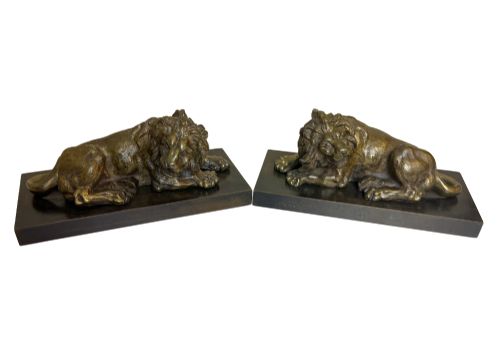
These patinated bronze lion pair examples bring the enduring weight of nineteenth-century animalier sculpture and neoclassical design straight into a room.
Patinated Bronze Lion Pair
A patinated bronze lion pair comprises matching sculptural castings intended to stand as mantel ornaments, bookends, or architectural accents. Buyers exploring this category typically encounter nineteenth-century works executed in bronze, patinated bronze, or gilt bronze, often mounted on marble bases or featuring classical details like paw feet.
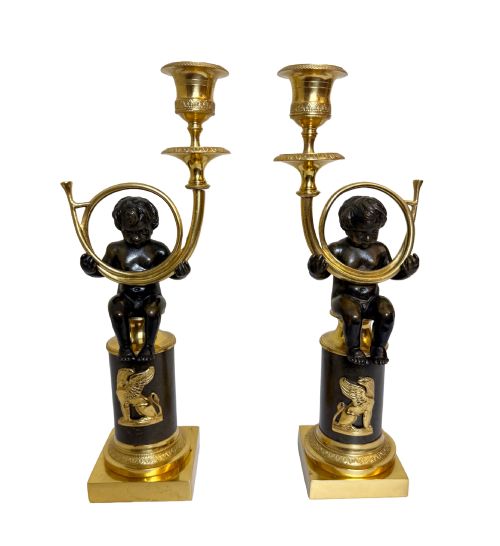
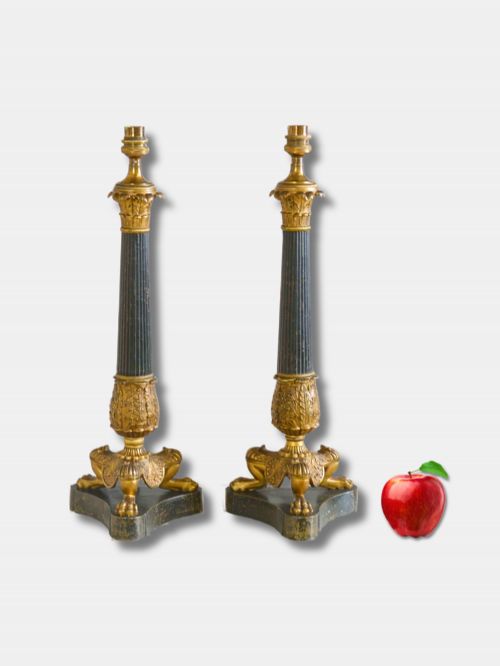
The selections on this page range from French animalier studies and Grand Tour souvenirs to Victorian decorative objects and Tibetan temple lions. Alongside traditional recumbent or seated big cats, the listings encompass related forms including foo dog incense burners and neoclassical column lamps with lion motifs.
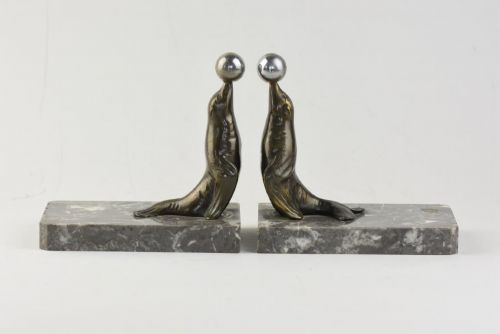
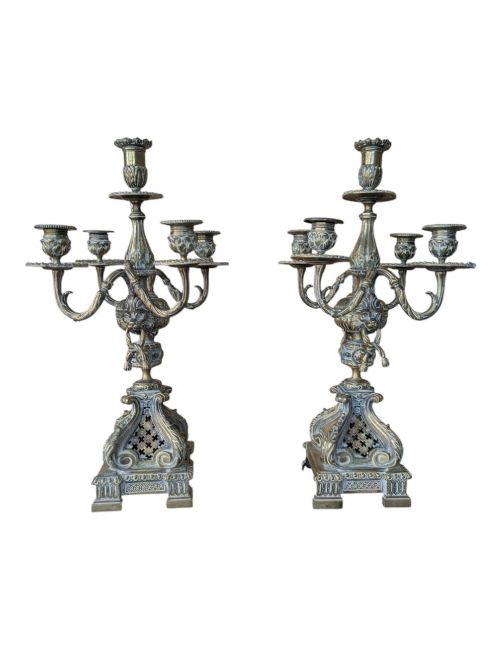
Originating from diverse traditions including French Empire, Art Deco, and Himalayan craftsmanship, these matched pairs reflect varied regional interpretations of the lion form. Whether shaped as resting beasts, bookends, or candleholders, each set demonstrates the enduring appeal of cast metal animal sculpture across different periods.
Materials and construction methods
The pieces in this category rely primarily on bronze and brass, frequently enhanced with surface patination, ormolu, or gilt bronze accents. Artisans shaped these metals through traditional casting methods, sometimes pairing the bronze figures with contrasting marble plinths or timber elements.
Surface finishes range from dark chemical patinas to bright gilding and chrome highlights, achieved through meticulous chemical treatment and polishing after the initial metal cast cooled. Detail work on manes, claws, and facial expressions was typically refined by hand using chisels and gravers.
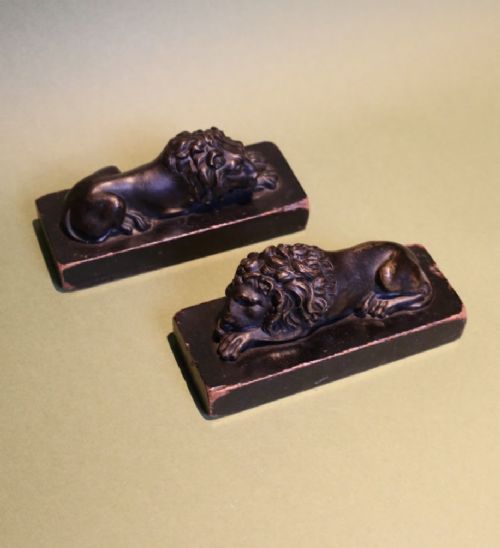
Canova lions bring neoclassical dignity to the table, though they rarely look as though they have missed a meal.
Distinctions in quality and execution
The quality of a patinated bronze lion pair also depends on the integration of secondary materials, such as the stability and polish of marble bases or the precision of ormolu mounts. Finer pairings maintain a balanced composition where both figures match closely in proportion, patination, and wear.
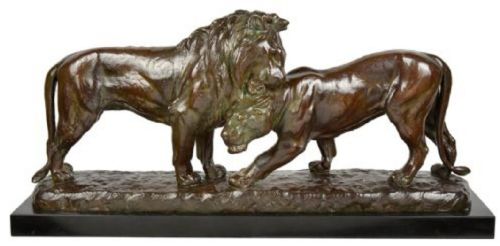
Louis Riche
The Patinated Bronze Lion Pair Glossary
- Patinated bronze
- Bronze that has been treated with chemical solutions to produce a specific surface colour, ranging from dark brown to green. This treatment protects the underlying metal and adds visual depth.
- Animalier
- A nineteenth-century artistic movement focused on the realistic depiction of animals, particularly predators and horses. Sculptors in this style studied live subjects closely to capture naturalistic movement.
- Ormolu
- Gilded bronze produced by applying a mercury and gold amalgam to a bronze object and heating it to vaporise the mercury. The technique creates a durable, golden surface finish common in neoclassical pieces.
- Grand Tour
- A traditional trip through Europe undertaken by upper-class young men in the eighteenth and nineteenth centuries to study classical art. Travellers frequently purchased small bronzes and sculptures as souvenirs.
- Foo Dog
- A traditional Chinese guardian lion, usually depicted in pairs as male and female. These mythical beasts were placed outside temples and homes to provide spiritual protection.
Patinated Bronze Lion Pair: Frequently Asked Questions
What is a patinated bronze lion pair?
A patinated bronze lion pair consists of two matching metal sculptures depicting lions, created using traditional casting techniques and treated with chemical patination to colour the surface.
These matched figures were designed historically as decorative mantel ornaments, bookends, or architectural supports for interiors.
How were these lion sculptures used?
Historically, matched lion figures served as decorative mantelpieces, weighted bookends, or ornamental candleholders within nineteenth-century domestic interiors and studies.
Larger examples, such as temple lions, were created to flank doorways or sit upon altars as protective symbols.
How do I style a lion pair at home?
These bronze pairs work effectively when placed symmetrically on mantelpieces, sideboards, or flanking a collection of books on a shelf.
Their heavy materials and classical or animalier designs allow them to anchor both traditional and eclectic modern interior spaces.
How can I tell the period of a bronze lion?
Dating relies on examining the casting technique, the style of the base materials such as marble or brass, and the specific artistic movement evident in the sculpture.
Nineteenth-century animalier works often show distinct patination and chasing styles compared to earlier neoclassical or later Art Deco pieces.